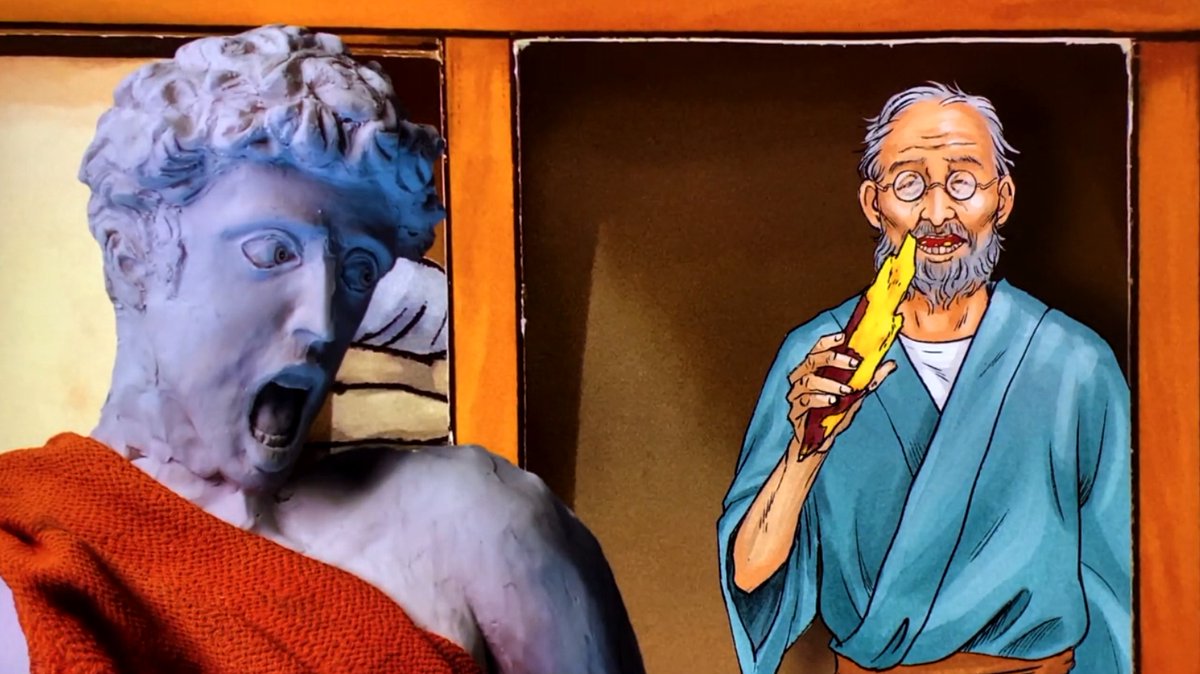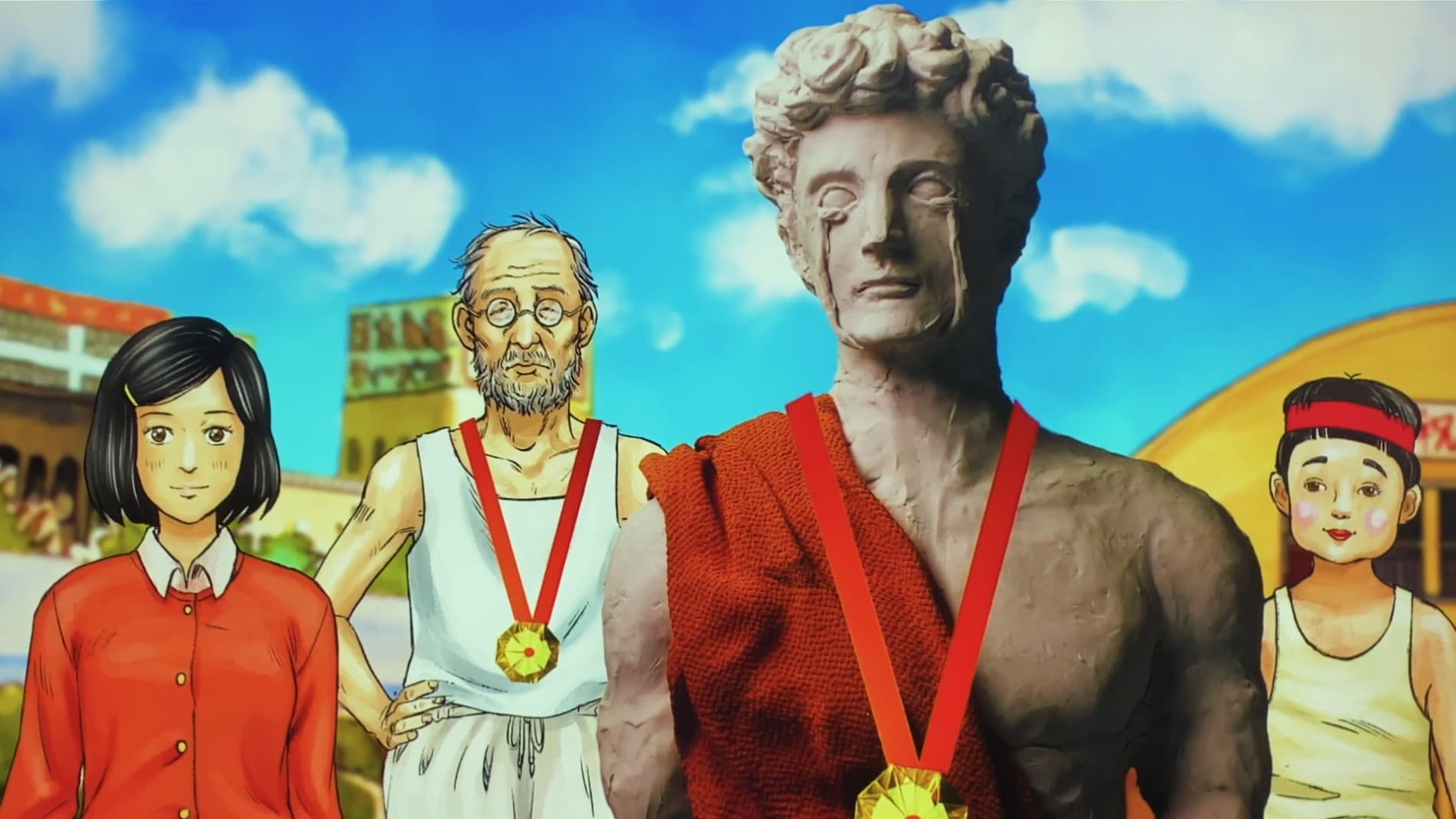

Where do we draw the line at "anime", exactly? This isn't about whether Western "anime-influenced" cartoons count, but something quite different--the niche realm of Japanese stop-motion animated shows, of which Bessatsu Olympia Kyklos is one. Some purists seem hesitant to classify these as "anime", but I'll defer to this site and the official English-language distribution. Now, with that out of the way...
Bessatsu Olympia Kyklos is perhaps one of the more interesting and unique professional productions of 2020, as well as a victim of the unprecedented events of this calendar year. Intended to coincide with the 2020 Summer Olympic Games in Tokyo, the COVID-19 pandemic caused both the delaying of said event to 2021 and the much shorter delay of the second half of this animated short by a couple of months, causing it to end midway through the Fall 2020 anime season rather than at the end of the Summer 2020 anime season. Thankfully, these unfortunate events did little to hamper a fairly enjoyable short.
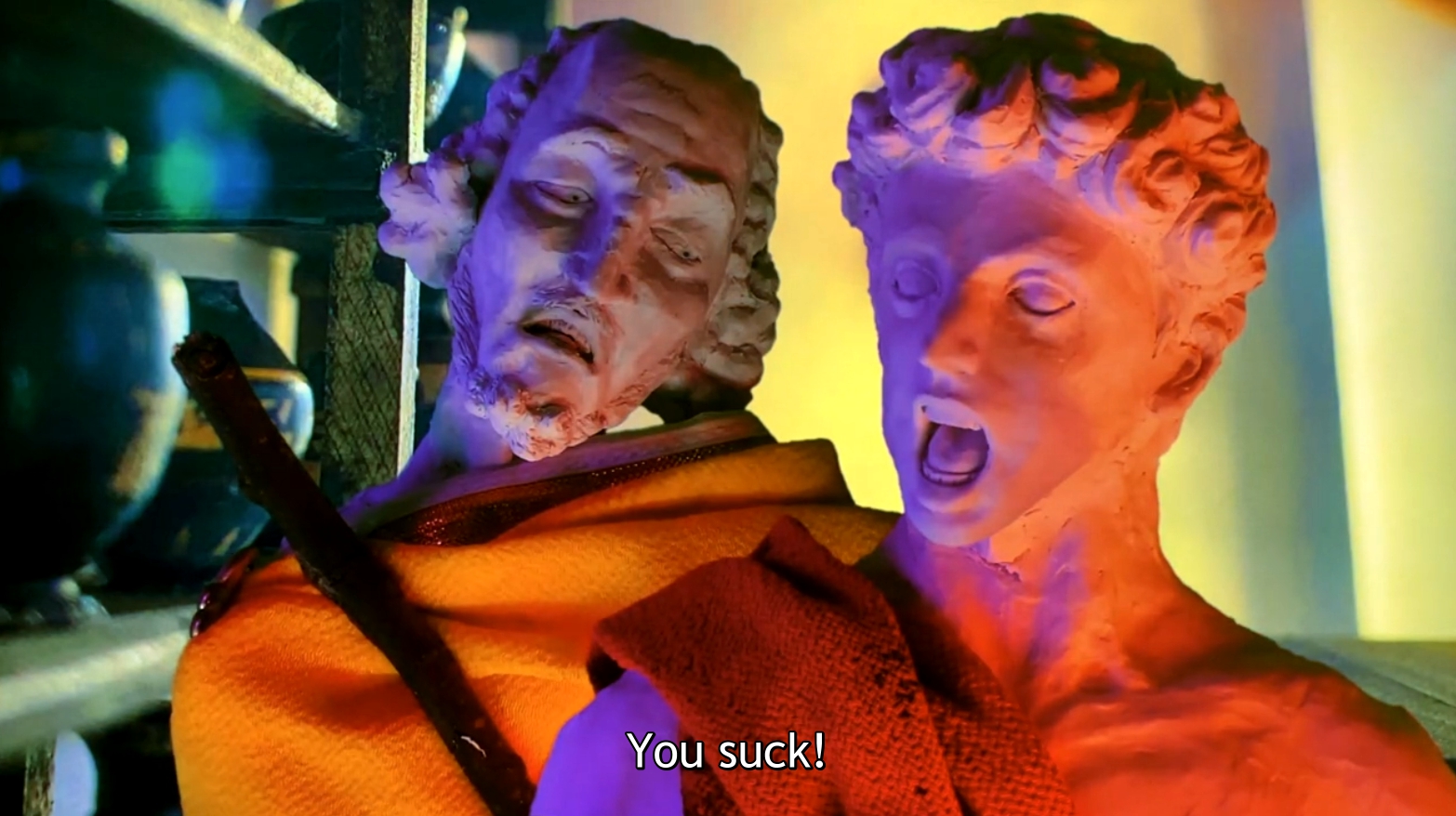
The series centers on a mild-mannered and athletic man named Demetrios, who resides in the small village of Tortonia and, like all other Greek characters in the series, is depicted as a marble statue (though made of clay). Beginning in the first episode and at least once in nearly every episode, Demetrios is magically transported to Tokyo in 1964, on the eve of the 1964 Summer Olympics (and where all Japanese characters are depicted as paper cutout figures) while attempting to apply the things he learns to his village, culminating in a plot to create a competition to the (ancient) Olympic Games, known as the Tolympics. Each episode has a unique ending in the form of a humorous educational song covering a topic related to ancient Greece and/or the Olympics, making this one of the anime where I would suggest sticking around for the ED every time.
In practice, while the humor (despite having a fully-fleshed story arc, this is primarily a comedy rather than a serious drama) can be a mixed bag, the short episodes are both visually interesting and well-paced enough to be enjoyable, and the funniest episodes (which are generally in the second cour) are actually very funny. The animation and background art, particularly in 1964 Tokyo, are fun and well-put together, and while not a substitute for a book or class, there's a decent amount of educational value if you can ignore the time travel and sentient land dolphins as the story weaves together aspects of both Greek and Japanese history.