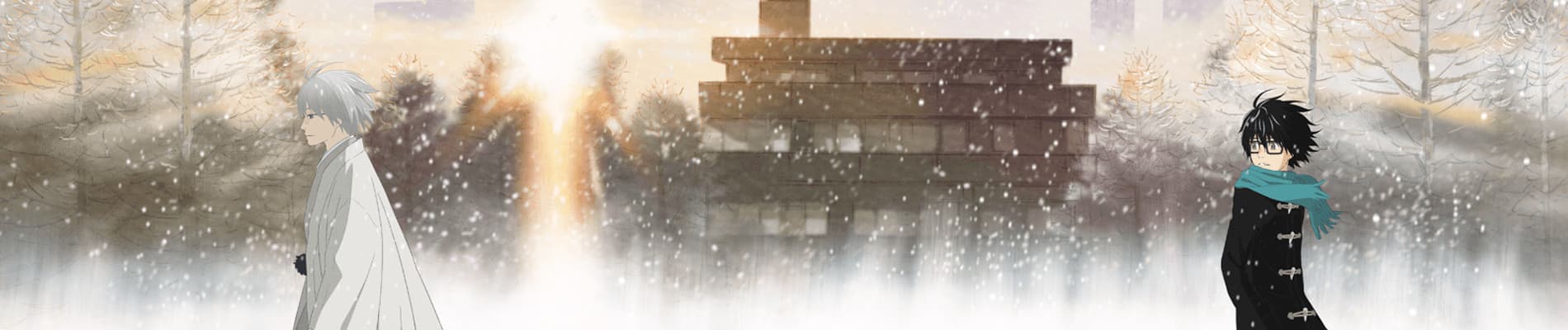
There is a bit of folklore about March. The saying goes that “if March comes in like a lion, then it will go out like a lamb.” Essentially it means that if the Month of March starts off with cold and harsh winter, it will end with a warm and welcoming Spring. Or in its literary meaning, a character who starts off cold and distant, but ends up learning how to live.
March Comes in Like a Lion follows 17-year old Rei Kiriyama. We don’t know much about him besides that he’s depressed and really good at board games, namely “Shogi” or Japanese Chess. Well actually, now that I think about it … I know nothing about Shogi, and after watching March Comes in Like a Lion…I still don’t know anything about Shogi besides that one really sad scene from Naruto (yes that one).
In the case of Sangatsu, Rei made his decision long ago that he would cultivate his innate talent for Shogi, and well where did it get him. While he's never defined as having any kind of psychological or psychiatric disorders, he's frequently portrayed as a few steps outside the norm. He shows frequent evidence of clinical depression and has poor social skills. Combined with an inability to understand others' feelings and an obsession with a singular subject, namely Shogi, it begs the question, where did it all go wrong?
March Comes in Like a Lion is a gentle tale about people trying to regain something. For Rei, it’s the feeling he had when he was a child. The desire to win for someone other than himself, to play with a purpose, to have that passion and enjoyment of the game. And this is a story that just does that. It’s a story of redemption that uses Shogi matches and human interaction to further develop our character. The progression feels natural, as if you’re there with the person, watching them progress in real time.
Studio SHAFT manages to pull this feat off by adapting each and every chapter of the source material faithfully and accurately, as each episode is named after the chapters it adapts. In order to tell a compelling story, you need a few things.
Sangatsu is a very simple story, but the animation knows when to go out of this world when it needs to be.
Movies such as Pixar’s Inside Out personify our emotions to make those emotions easier to understand. We see Joy as bright yellow ball of sunshine, and Sadness as a blue and gloomy cloud of sadness. We can display physical conflict with large grandiose fights and clashing swords, but how do we properly express the desire to stay in the game when all of your friends have died, or a bully arc that is the most realistic portrayal of bullying that I’ve seen in any medium. Well, you force the viewer to dive right in. Bombard them with incredible visuals, and make them accept the reality that you’ve presented them. Studio SHAFT empowers storytelling through visual motifs and stunning presentation, bringing everything to life with powerful imagery to reflect the mood each scene portrays. Every visual element is a sight to behold, with gorgeous backgrounds, varying styles and ability to speak many words through its delivery that bring out many emotions from the viewer.
You see the weight that Saku feels during his match with the cords and the burnt field around him. You feel the isolation and hostile emotions when Hina is being bullied. You feel a fluffiness in your heart when Rei realizes that he is needed by someone. You feel all these emotions because they’ve force-fed you all these emotions, and you have no real choice but to feel what they want you to feel.
The series just captured depression and the struggle with inadequacy so well. Without going into specific details because I truly want people to experience this show with their own two eyes, the series just does a fantastic job of thoroughly fleshing out its characters so that each one is believable no matter how they’re presented. Nichijo is so much more than just a rival, Kyoko is so much more than a step sister, and Saku is so much more than just a geezer who should have retired ages ago.
Our lives are oftentimes defined by the people we surround ourselves with. Whether it be willingly or against our wishes, those people all play a supporting role in our own epics. But with depression, that’s different. It’s easy to feel like you’re not even the main character in your own story. You meet so many people so vibrant and full of life, that it makes so much more sense to revolve the story around them. That isn’t the case with March Comes in Like a Lion. Rei is hurting, and oftentimes he doesn’t know why, yet the center never shifts from him that much. We see his sleepless nights, his intrusive thoughts, his inability to have a normal conversation, and his need to push all his problems aside to help someone else. We endure every single step of his journey with him, and after some time has passed it feels like we went through it ourselves.
Eventually you start to realize that all you can do, is experience what is directly in front of you.
“You refuse to make an effort with anything because you’re scared of learning your own capacity and being disappointed by it. But… it’s okay to be disappointed. Once you learn your own capacity, you at last understand what it is you should do. When you understand yourself, what you want to do will also become more clear. Once you do that, you’ll at least be able to get past your incredible anxiety. I can guarantee at least that.”
March comes in Like a Lion taught me to live my life with both arms open, and ready for whatever comes next. It’s cheesy, but sometimes, it just takes that one piece of work that radiates with you and resonates with your entire being for you to see a message that has been obscured for the last two decades. It’s a series I will never stop loving, with messages that I will never stop quoting:
“This time is precious. But it’s flowing onward, and I can’t stop it.”
38.5 out of 39 users liked this review