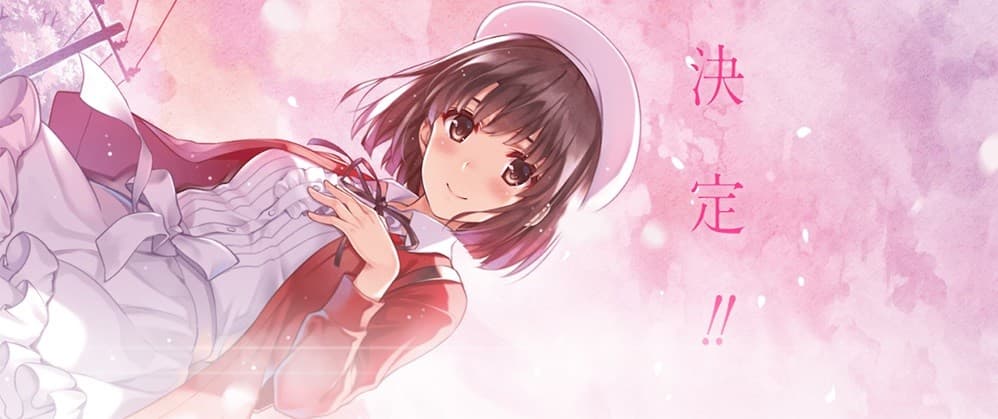
Two years ago, Saekano introduced me to fanservice. It was one of the first anime I ever watched. I was bewitched by a YouTube clip of Utaha eating Pocky, and guiltily came seeking more.
I made a great choice by accident. Despite my inexperience, I could tell I was watching an uncommonly well-made indulgence - though indulgence it clearly was. Variously charming heroines… let’s call them “classic”… rendered with beautiful character designs, stylish editing, creative cinematography, and bright, buttery animation. All these elements are powered by A-1’s financial might. But Saekano also delighted with self-referential humor, and good comedic timing, and a good-faith approach to the harem fantasy. These things sustained my fondness for the show long after I learned about the stereotypes it employs. Revisiting this formative series after two years, I wondered - could I still enjoy it?
Anime film finales are a special art. I loved the Bunny Girl Senpai show as much as I did Saekano, if not more, but Dreaming Girl (my first in-theater anime experience) was a bitter disappointment for me. Film is usually more dramatic than television, and not every cast or setting responds well to being drenched in drama. It’s too easy to end up tugging at heartstrings for the sake of it – and if your audience feels pandered to, you’re through. Usually.
That’s the magic of otaku-class anime: the audience expects to be pandered to. There is an understanding – a friendly relationship – between the creators and the consumers. Entertainingly, the plot of Saekano Fine revolves around capitalizing on this relationship, and the work’s success revolves around it too.
This film, much like its show, strikes a skillful balance between self-awareness and self-insert standard fare. It trenchantly mocks wish-fulfillment otaku mush while cheerfully ladling out said mush. I can’t help but grin at that sort of behavior, especially when it’s so sweetly executed. It’s hard (for me) to be too cynical. Saekano Fine was clearly made with love, skill, and care, by real adults who know just how silly this genre’s formula is – and don’t mind. Neither do I.
In this way, Saekano is in the tradition of Wotakoi (another great A-1 production) and Nisekoi (Shaft; more good company). People who put up an obvious façade to make themselves likeable often fail. Shows and films that contemptuously bait otaku may sell dakimakura, but they will not earn respect. All it takes is a little self-awareness - the willingness to poke fun at one's own absurdity - and you can win people's favor. I don't know why this is so difficult. It doesn't take Nisioisin.
There’s something oddly appealing to me about stories built on the VN format. Clannad and Yosuga no Sora are other good examples. I like explorations of causality, and I also think VNs are fundamentally more honest about what their viewers are seeking. This is what Fine gets so right. Romantic moments, cliché yet tender, elicit the exquisite “happy cringe”. Painful, absolutely. But cute, sweet, and beautifully drawn. Candy!
Does this film attempt to teach its viewers a lesson? To look for one is to miss the point - it offers plenty to look at, and plenty to feel, for those experienced or inexperienced enough to be receptive.
In response to his critics, Michael Bay once quipped, “I make movies for teenage boys. Oh, dear, what a crime.” In the same way, Saekano Fine is a movie for harem otaku – and like Transformers (2007), it is a superb example of its class of drug.
Outsiders to anime might characterize enjoyment of this film as a human failure – degeneracy, plain and simple. (Such people are mercifully unaware of Eromanga Sensei, let alone Monogatari.) I would characterize enjoyment of the film as capability, not deficiency. If people can be honest with themselves, they have little to be ashamed of. Tomoya, Megumi, Utaha and Eriri ultimately are honest with themselves. The creators of Saekano Fine are honest with themselves. Those who enjoy the film are honest with themselves - and I pity those who would like to enjoy watching cute girls for two hours, but will not allow themselves to. In the meantime, I will dream of Utaha.
76.5 out of 81 users liked this review