
[[ Please be aware that the following review will contain critical analysis of specific instances of homophobia, pedophilia, and sexual harassment of minors present in this film ]]
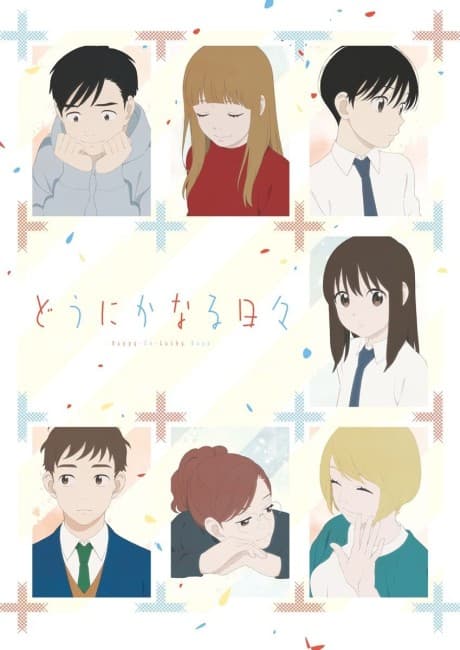
I will be up-front by stating that this title is quite frankly a complete disappointment. HAPPY-GO-LUCKY DAYS casts an ugly light upon queer individuals, and combined with shameful choice of direction, creates a distasteful narrative in which the love of two adult women is somehow equivalent to that of a pedophile’s disturbing “love” for his male students. This is not even the worst HAPPY-GO-LUCKY DAYS has to offer to its unsuspecting viewers.
Within this review, I will be breaking down my thoughts on each of the three short stories. I will also put it out there that I have not read the manga. I went into watching HAPPY-GO-LUCKY DAYS with no prior knowledge of it, other than knowing is was written by Takako Shimura and supposedly centered around LGBTQ+ topics. With that information out there, let’s get started with this review.
# Story #1
Spoiler, click to viewclick to hide

This first short story created a hopeful start. The narrative centers two women, Ecchan and Aya-san, who first meet after both being invited to their mutual ex-girlfriend’s wedding. They, of course, bond over their nostalgia for their past relationships with their ex. The rest of the short is full of wonderful, intimate, and heart-warming scenes featuring this couple. To be quite honest, this was the first time I had seen a sexual relationship between two women handled with such grace within the anime medium. I am happy it exists, but the overarching theme of, "love is love," that this film attempts to carry over into the subsequent two shorts tarnishes the first short in its entirety.
#Story #2
Spoiler, click to viewclick to hide

Get your "nani the fuck?" memes ready because this is the point of no return for HAPPY-GO-LUCKY DAYS.
Story #2 features Sawa-sensei, a teacher at an all-boys school. From the get-go, we are given the information that he is gay and also that he is secretly hoping for one of his students to confess to him. Well, he gets his wish, and one of his students, on the day of graduation, confesses to him. It goes nowhere (thankfully), and we are then given a fast-forward to years down the road of this man being lonely and creepily longing for his students. The majority of this short is Sawa-sensei projecting his loneliness onto the underage boys in his class, and it is quite uncomfortable to watch. At one point, there is a scene in which he admits to his sister that he, "loves high school kids." And to make it worse, he also puts blame on the students for "messing with him." That is textbook victim-blaming. So, this short is the stereotypical narrative of the elder queer person being depicted as a pedophile. Not that we don't have enough of those false claims flying around in real life already, right? I'm not even going to go into detail about how incredibly homophobic this narrative is and the damage it causes to queer communities. Anti-LGBTQ+ groups eat this type of thing up.
We hate to see it.
#Story #3
Spoiler, click to viewclick to hide

This last story is the icing on the dumpster fire that is HAPPY-GO-LUCKY DAYS. It apparently can be more problematic than the previous short story. So, this story features Mika-chan and Shin-chan. This is a heterosexual pairing of two minors, just so we are clear here. These two seemingly grew up together. At some point, Shin-chan's cousin, Sayoko, is kicked out of her house for filming a sex tape, and she comes to live with Shin-chan and his family. Now, let it be known that I have absolutely no problems with sex work, folks gotta eat and pay the bills somehow in this capitalistic society, but her character is honestly the worst.
This whole section of the film is probably the most disturbing of the three, due to the fact that, on multiple occasions, it displays scenes in which Sayoko is sexually harassing both Shin-chan and Mika-chan. So, more pedophilia to add to this title. To make it even worse, Sayoko pressures Shin-chan into watching her sex tape. Eventually, Mika-chan ends up seeing it too. She is visibly terrified by it and runs out of the house. The parents do not even react to anything that actually happens, and most of these glaring issues created by Sayoko's presence are ignored. The parents are complacent in the harassment of their son and his friend, brushing it off completely. Let's be clear here: this is not under any circumstances an acceptable response to seeing your child being sexually harassed on a daily basis.
So, with all of that being said, let's talk about the overall themes the creator had for this title, "love is love," and "all love and lifestyles have the same value." So, I'm going to take a gander and say that most folk are fairly familiar with the slogan of, "love is love." It has been used historically by queer people all around in argument for LGBTQ+ rights and freedoms. However, never once should it be used in the context of arguing for cases of pedophilia or sexual harassment. Those are not characteristics of LGBTQ+ communities. We do not claim those people. Starting HAPPY-GO-LUCKY DAYS off with a wonderful tale of wlw romance, then immediately diving into the hellish depths of pedophilia, all in an attempt to make broad claims that all love is the same... is concerning, to say the least.
Tl;dr: The first story in this anime is its only redeeming quality, and for that, I will at least give it 10 points.