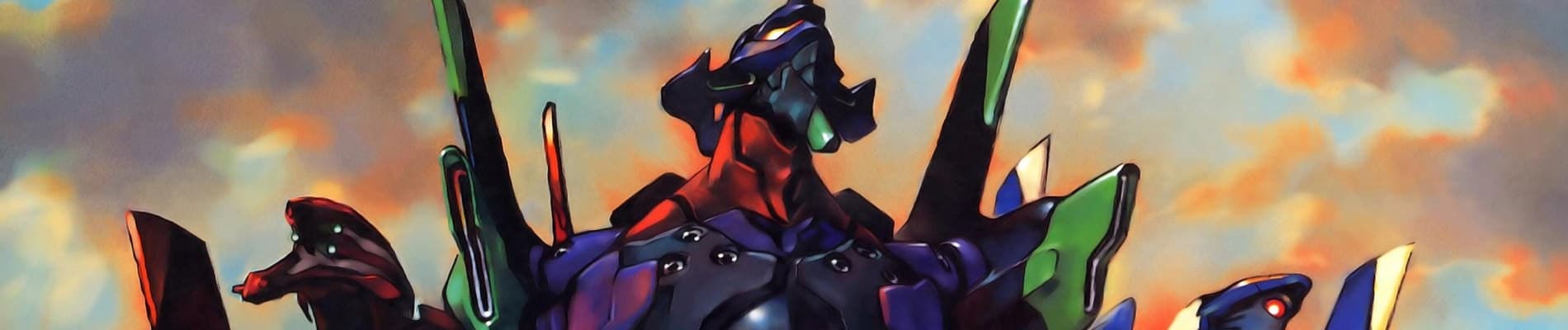
How do you begin an analysis of Evangelion? In his video on the series and how it connects to its highly controversial film, Folding Ideas describes it as “practically myth” which I couldn't agree more with. With the amount of coverage the series has gotten, trying to find a common consensus about what to make of all of this is impossible. Discussions about the metanarrative of Evangelion, its jumbled production, thematic explorations, there should be a rule of the internet constituting that “if it exists, there’s an in-depth discussion about its relevance to the Evangelion text”. And I feel this may be why it is such a renowned series; Evangelion is a perfect starting point for any discussions one might have for any theme or idea. It has a lot going on, a lot of imagery that’ll inevitably lead to 40 different interpretations, yet doesn’t feel chaotic. The simple use of the Christian cross is probably one of the biggest discussions of the series, which is just the tip of the iceberg that is the community surrounding Evangelion. A lot of different people have watched and enjoyed Evangelion and it seems everyone has taken something unique from the series. It makes it a very interesting essay topic as it’ll never become overdone, or at least in concept. And I think what I want to focus on in this analysis is what I feel lies at the center of everything about the series, Hideaki Anno and his transformation throughout the series.
This review will contain some major spoilers, be cautioned
After a set of circumstances unimportant in this context, the newly brought fourth child is being controlled by the 13th angel and manipulates their Evangelion unit. None of the children want to take down the angel knowing that a child lays inside of it, and when the angel stands in front of Shinji, refusing director Ikari’s commands, the unit’s ‘Dummy Plug System’ is activated, and the evangelion proceeds to slaughter the angel in a senseless rage. The juxtaposition between the action-heavy and dramatic music that we’ve gotten used to, to the horrific actions being illustrated is chilling and an element that is at its peak the episode later. As Shinji finally enters the Evangelion after revolting from the trauma he went through the day before, he loses control of it again. As the Eva’s true nature escalates in power, it slays the 14th angel and eats its remainders like an animal. The scientists stand in morbid fascination and disgust for what they’ve created, as the evangelion rips of its armor. This speaks nothing to the changes in which the series redirects its characters, but is nonetheless a dramatic presentation of the direction that Anno changed the series towards. It’s not simply a self-insert action show that it might’ve been before.
As the initial screenplay had to be rewritten and abandoned, we can see this effect as a larger focus is put on the mental state of each of its lead characters. Opening up their mind, exploding them in a sense. Asuka’s performance declines, exposing her obsession with attention and being of use, and its source. We learn that her narcissistic tendencies stem from her lack of support from her mother, being mistaken with a doll. Her insistence that she is the best, prompted by the feeling that you have to be the best in order to be worth anything. We learn about Rei’s true nature as an attempt to revive Ikari’s wife, while her own self-image and philosophy start centering around this conflict of what is and isn’t selfhood. Can Rei really be her own person if there are effectively hundreds of other vessels who could have taken her role, and two that already have? Is the fact that she is herself enough to overlook the fact that her selfhood is forged? Shinji’s behavior is seemingly made aware of, or at least uncovered, from both the staff as well as the characters in the show. Imagery symbolizing his increasing willingness to essentially merge with his female acquaintances, his dependence on the emotional and sexual affirmation growing stronger and noticeable. It all culminates into the two last episodes of the series where we witness the characters confronting their most honest and worst selves. Shinji momentarily accepts human instrumentality and is shown the consequences of this. A loss of individuality and what it means to us. This is presented admittedly very abstractly because of the inadequate production budget the staff had to work with, but it effectively conveys the state of mind Shinji is in and the message it reaches for. Throughout the series, Shinji defines himself with exterior elements like his relationship with his father, work acquaintances, and his role as an evangelion pilot, and it is only when all of these elements are taken away from him that he realizes that he can only live as an individual to achieve satisfaction, that living as a mass of other people and others’ decisions won’t lead to a life worth living. This is not only important for Shinji to learn but for everyone in the series who expects the world to live for them. It is an important message both for the audience that was watching the series, but also for Anno himself. When I watch the original ending of Evangelion I get the feeling that Anno finally found an answer to his own question, that he could satisfy himself. You can almost see Anno himself getting congratulated by all of his characters, who are all in a sense an extension of himself.
And of course, everyone had to fucking hate him for it. The series, already controversial as it was as it started changing, was the focus of many death threats that the studio and Anno himself received after the final episodes. Even now 25 years later it is looked down upon as an inferior conclusion to the series in comparison to one we will be discussing, if even to be considered one at all. People wanted doom and gloom, more glamorization of its characters and the lifestyle it promoted and a less metaphorical and symbolic expression of this. It led to Anno Hideaki creating several alternative conclusions to his project, still going on to this day. And it’s not surprising then how frustrated he seems about this. After all of the changes that Anno went through in the production of the series, it was all for nothing. Finally getting his own little meaning to life only to have it stripped away from him in an instant. Anno gave the fans what they wanted but in another sense the complete opposite. End of Evangelion is a pure incarnation and adaptation of Anno Hideaki’s anger towards the fans that led to its creation and himself for giving in to it. It has no interest in conveying whatever it wants to say through nuance particularly, but aggressively presents its disgust with the project and the people watching it. The only sexually-focused scenes in the film end with Shinji ejaculating over Asuka’s comatose body, the only fight scenes ending in either lovecraftian horror and gore-filled slaughter. Even as Shinji goes through the realization he made in the original ending of Evangelion, Anno throws him back into the abyss like he was himself. We might react to this harshly, that it is antithetical to the message of the series and only serves the purpose of shocking the audience that hated the original ending. But I feel the frustration that is so apparent in Anno to be what saves the series from being so. Anno fucking hates everything and needs you to know about it, and I feel this immense satisfacion watching this. The film serves as a cycle of aggression and depression that never let us go. An expression of the cyclical despair he went through, wanting to give us the same nightmare. Many people have tried to form their own little canon where End of Eva was the true ending that was rejected for budgetary reasons, or a physical representation of the thematic development the series goes through in the conclusion, all of which might be true. But I don’t think I can accept it as anything but a sequel to Neon Genesis Evangelion: the phenomenon.
42 out of 46 users liked this review