
20th Century Boys
a review by Jaekoi
a review by Jaekoi
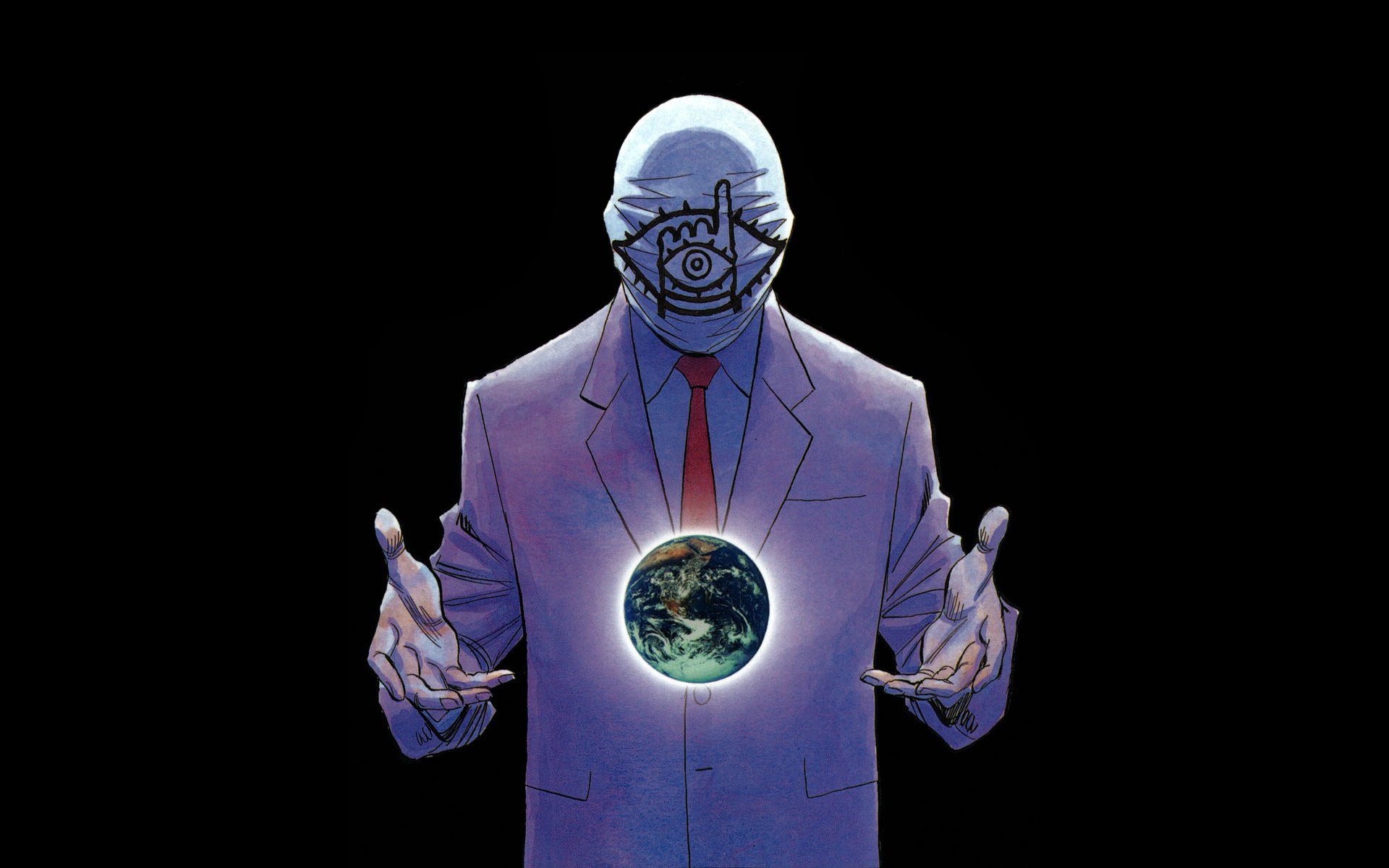
The progressive occurrences of the past always have some sort of relation to the modernized present. Respectively, today’s present is the cumulative source of the unexpected future. And with a perplexing hypothesis like this, Naoki Urasawa’s 20th Century Boys utilizes this conception to its fullest potential. With a deceptive narrative that consistently jumbles the events of the nostalgic past, the changed present, and the unknown future, the formula of prediction is no longer present in Urasawa’s writing direction. 20CB’s world is not only vast, but the timeline of its plot focus ranges as far as the Apollo moon landing of 1969 to modern-day 2018. Furthermore, Its narrative structure is formed by constant ricochets of the past and present through expansive, well-made characters who not only have clear association with one another, but also play a valuable role in advancing the narrative. However, even through momentary flashbacks of its historical scope consisting of sci-fi elements and the supernatural or the constant skipping of time frames, Naoki Urasawa never rejects nor abandons the complexion of 20CB’s developed, formative themes.
Additionally, 20CB takes many society-driven problems concerning political falsification, exploitation of government power, experimentation, biological weaponry, and the painful side-effects of bullying through repetitions of showcasing childhood memories, presented through its main cast.
Despite how chaotic and disorganized the foundation is, each chapter has elements of eerie, yet indulging overtones of well-flourished hooks that produces genuine buildups, substantial stakes involving Friend’s insanity, and the humanization of each character, which makes up for real, poignant themes. For the record, there are major references to cultural phenomena that only add to the experience involving NASA, pop-culture, and fictional characters like Wolverine, and the Transformers. Throw in the clever use of historical allegories and rock songs in the mix as well.
The themes surrounding World Domination are vividly present within the narrative, mainly through the Friend Democratic Party. On the surface level, it’s initially viewed as the authoritative source of motivation and inspiration in Friend’s actions and decisions. The contrasting qualities between Friend’s motivation and the apprised rebellion/faction are viewed as two sides where one plans to put an end to the other’s goals while the other forcefully desires to pursue the “ideal” world. The execution of this concept is established properly through creating nuanced stakes and giving authority to Friend’s existence. However, World Domination itself has always been viewed as an impossible pipedream in reality. It seemed childish, yet at the same time… seemed realistic and truthful.
Common events similar to building forts with childhood friends by creating a club can actually be the fuel to cataclysmic fallacies that may occur in the future; the seed that started everything. Insanely enough, 20CB is creatively immersive and fascinating since the significant, threatening weight of value cannot be anticipated/perceived in the exact moment of their occasion.
Kenji and his friends, as children, believed in subjective justice, the cliche-heroism that they’d save the world from evil. To make it more appealing, they created the “Book of Prophecy” to affix their idealism. Though eventually, their actions and decisions would cause the uprising of Friend’s Cult in the future. Resulting in the cycle of predetermined course of events in terms of taking responsibility for the sake of justice. Even the smallest, minor, and simple actions may cause an unprecedented future that one may not be able to overcome. It’s similar to moments like these that cement the chaos, madness, and insanity of 20CB. Even cliched idealism may be the entity that becomes the harsh reality.
Naoki Urasawa’s writing direction is unparalleled. The migration of switching between protagonists in each arc is done so fluidly it’s awe-inspiring. He doesn’t follow any rules in maintenance, especially in terms of status quo’s and circumstances. There’s a sense of variation and it allows the appeal and thematic focus of 20CB to have individuality and distinction from other pieces of fiction through the correct methods and encompassment.
20CB gives the limelight to almost every character included in the equation. At times, it may be Kenji, who embodies the protagonist's role with influence over the story, other times it could be as a supporting character transitioning into a being with vast significance over the cast, or the antagonistic faction, where in the heat of the moment, may seem like one may be considered as the protagonist. It’s essentially a completed orchestra, not inherently in terms of characters, but in generation, genre/categorization, and character age. The smallest events in the earlier volumes may actually be the seed to vital plot mechanics in order to push things forward. In other words, it’s all part of a prearranged formula set in stone that oozes a euphoric experience.

Derived from a character-driven narrative, 20CB channels many plot mechanics from what you’d read in a Stephen King Novel. It utilizes the events of the past containing innocent childhood promises and blossoming character relations in the present to initiate the birth of an apocalyptic future. It’s a thrilling, Sci-fi mystery heavily driven by the supernatural and the vast complexity of psychology. The smallest of actions turning into detrimental consequences. The question of who “Friend” is, an eerie entity who hides behind a mask. A rebellious, bandful group of outcasts reuniting to stand against the laws of society, a totalitarian regime, a menacing threat, and to take responsibility for their misgivings. This is the theme that defines its appeal.
The lingering, mysterious atmosphere of each chapter brings valuable suspense and progression to not only the plot, but most importantly, the characters themselves by how they function separately and how they cooperate successively. Urasawa is a mastermind when it comes to dissimilarity between ‘good’ and ‘evil’, and principally, the ground-breaking placement of its mystery and deception through establishing the motivations of Friend and justifying rebellion.
20th Century Boys is transfixed on pursuing a coming-of-age venture, and succeeds at it. Urasawa proves that he is self-aware on how to bestow extensive character development, gradually filtering its interweaving narrative, producing individuality and high-stake scenarios. The authoritative presence of Friend is a remarkable presentation of deception, temptation, and childish, yet truthful idealism that brings villain writing to newborn standards. The use of intricate pacing in each chapter was a spectacle to view through multiple character perspectives. 20th Century Boys is catastrophic, yet it's poignantly truthful with coruscating characters that hold genuine importance. The realism of its art emphasizes attentively well towards the general atmosphere. Indispensably, It’s a thrilling battlefield fought by different parties of humanized people through not only physical confrontation, but also deceptive mind-games, politics concerning the state of society, terrorism, and the sheer idealism of each individual. But for the most part, 20th Century Boys is an exploration of society itself and what it means to have a responsibility. Because at some point during the unexpected, someone must eventually take accountability for the past in order to move forward.
172.5 out of 175 users liked this review
