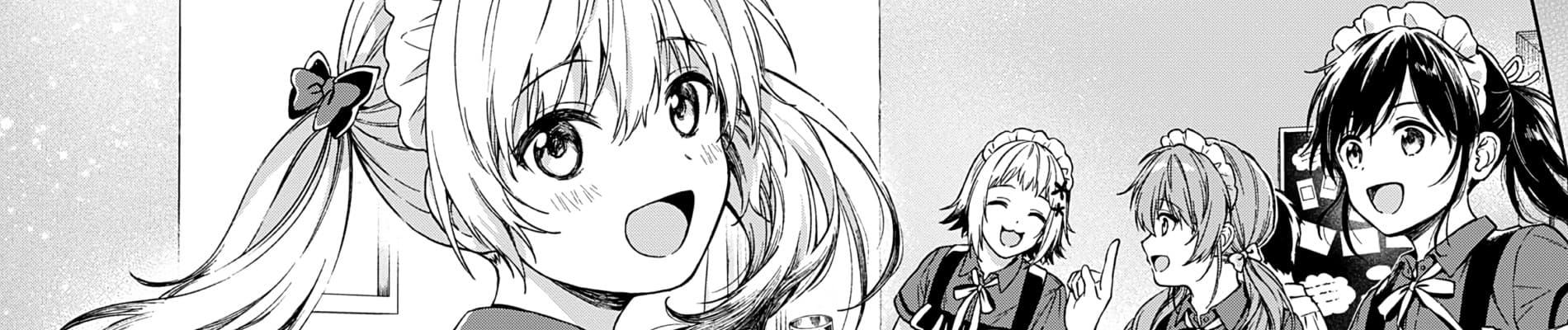
\Note: This review was written on 2021/3/3, before chapter 28 was released\
“Love me for who I am” follows the life of non-binary teenager Ryuunosuke Mogumo and their journey towards being accepted by the ones they love. It is a beautiful and touching story of love, acceptance, and reconciliation. Whether or not you are part of the LGBTQ community, Mogumo’s inner desire to be understood by those around them is something we can all relate to.
Minor Spoilers Alert
Ryuunosuke Mogumo is a teenager who identifies as non-binary. In short, they do not feel like they are either a boy or a girl. Finding Mogumo’s wish of “having friends who will understand them” at a wishing tree, their classmate Tetsu Iwaoka invites Mogumo to the cross-dressing maid cafe his brother owns. Once there, Mogumo meets many other cross-dressers, each doing so for their own reasons. However, Mogumo feels uncomfortable being seen as a girl by the others at the cafe and almost quits in the process. Reassuring Mogumo, Tetsu encourages Mogumo to just be themselves, even if he and the others do not understand it just yet. Their wish finally coming true, Mogumo now faces their biggest challenge yet; returning home and reconciling with their parents.
Major Spoilers Alert
The story is an interesting take on the LGBTQ topic, something not usually discussed in Japanese media. It immediately dives into the various issues and stigmas surrounding gender. How does gender affect love? What are the societal expectations that are bestowed upon us by our gender? Is it wrong to love someone regardless of their gender? These are all major themes the manga explores, and it answers these questions through the growth of Mogumo, and the experiences and hardships they must overcome. The story feels very realistic, and it is something you can especially relate to if you are part of the LGBTQ community. For the most part, this is a heartwarming slice of life manga that follows the life of a non-binary teenager. The story is very well-paced, with the growth and development of Mogumo and the challenges they face all building towards the final confrontation between them and their parents. Overall great execution on a topic not often covered but deserves more attention and awareness. 10/10
Mogumo and Tetsu are the first people we meet, and other characters are gradually introduced to us throughout the story as we explore more into the lives of Mogumo and Tetsu. Each character in the story serves a purpose, and they are all unique and distinguishable from each other. Tetsu is a high schooler that often helps out at his sister’s cross-dressing cafe. He first notices Mogumo when they write a wish on a wishing tree wishing for friends who will understand them. Noting how he has always seen Mogumo alone at school, he takes it upon himself to help them and introduces them to the cafe.
Here we meet a wide array of characters core to the story each cross-dressing for their own reasons. Suzu cross-dressing because the person he loves is a boy, and his fear of rejection based on his gender led him to the cafe. Mei has always liked girly things and eventually realizes she would much rather live as a girl than be seen as a “girlyboy”. Finally, Tenmaru cross-dresses because he simply likes to cosplay. The characters feel connected and also special in their own regard. We also get a glimpse into the past of other side characters through their interactions with Mogumo, namely Sakura and Kotone. They were both a big part of Mogumo’s childhood but have since fallen out due to Mogumo’s new identity. Their struggles in coming to terms with Mogumo’s new identity and how they overcome them are what defines their characters. The diversity in characters is what really takes this story to the next level, and it is what makes the story so relatable for people within and outside of the LGBTQ community. Like players in an orchestra, together they form a harmonious melody to tell this heartwarming coming-of-age story.
The art was nothing less than superb. It is has a very clean feel to it with a lot of attention to detail while remaining very simple and not overly cluttered. Compared to action mangas like Attack on Titan, it has a lot more detail mainly due to each page having a lot fewer panels. The faces of characters would often be simplified (think of UwU face) or exaggerated to lighten the mood. The expressions and emotions of the characters are carefully crafted and give another level of depth. Love, sorrow, hatred, regret, fear, anger. These emotions are what make us human, and it is what brings these characters to life.
Although I have not read many mangas, this was by far the manga I enjoyed the most (aside from AoT, but you cannot compare apples to oranges). The story felt real and the problems the characters had to face are relatable. Chapter 27 was the first time I have cried from a manga. The acceptance of Mogumo by their parents reflected my deepest desires, and while there are not always happy endings in real life, seeing the story and journey of Mogumo has given me a ray of hope for my life ahead. The final scene of Chapter 27 is undoubtedly the most powerful in the entire manga. Mogumo thanks their parents for giving birth to them the way they are, and it is because of that they were able to meet the people important to them; people who love them for who they are.
If you are looking for a slice of life and coming of age manga exploring the lives of LGBTQ people, in my opinion, this is one of, if not THE best mangas in existence. Even if you are not part of the LGBTQ community, there are some lessons and takeaways we could all learn from this, although I will admit my review is probably very biased due to how emotional I am and how much I related to the manga. So I say give it a try. Read the first few chapters and see if you like it, because you never know what you may find.
As the quote goes, “Do not cry because it is over; smile because it happened”. Although I wished to see more of Mogumo, the manga is drawing to a conclusion as of March 2021. Maybe there will be a sequel, who knows. After all, this manga itself is the sequel to Kimi Dake no Ponytail (warning: hentai). I also hope to see this adapted into an anime someday. Modern animes have gradually featured more and more queer characters and with the success and popularity of the manga maybe one day my dream will come true. This is my first time writing a review, and it probably is not very good, but I hope I was able to at least do the manga some justice and convey its message. Thanks for reading till the end!
122 out of 133 users liked this review