
Sailor Moon
a review by MrFlats
a review by MrFlats
As the first major directorial job of the famed director Junichi Satou— of Ojamajo Doremi, Princess Tutu, and Aria fame—as well as being one of the most influential magical girl anime of all time, Sailor Moon has steep expectations to live up to. And while it might at some points stumble under the weight of its own production, I believe that it ultimately sticks the landing.
While the animation is nothing to write home about, its style is one of its hallmarks. The show is constantly aglow with color, bringing forward an innocent charm; a richly lit Tokyo Tower always features prominently in the beautifully drawn streets of the Juban District, where much of the show takes place. As the series goes on, the Juban District becomes a close and familiar place for viewers, with characters constantly interacting with their environment—whether at the arcade or discussing team plans at Hikawa Shrine—in a way that allows for the area to feel very lived in and serving to strongly increase the comfortability of the viewer.

The music of the show remains a highlight. While the soundtrack of Sailor Moon is not utilized very expansively—the average episode will typically utilize at least 3-5 of the same songs—it is nevertheless a joy to listen to. With a mix of orchestral instruments as well as those typically utilized in rock and jazz, the show constantly has an energy lent to it by its sound, an energy that constantly lends to both the fast-paced comedy and touching romance that the show loves to juxtapose itself by.

On a different note, I must admit that the mainline story of Sailor Moon is not my favorite. That is not to say that it is “bad” or “inadequate,” but I firmly believe that this is not a show where the greatest strengths lie in its main story. Of course, this is not a universally agreed upon opinion; Sailor Moon Crystal exists if only to appease the parts of the fanbase who complained about how the 1992 show strayed so far from the original visions of mangaka Naoko Takeuchi. I am not one such fan. While the overarching romance between Usagi and Mamoru could be compelling, I found myself diverting my attention towards episodes—such as the episode where the gang goes to an anime studio or the episode about the boy who has a crush on Ami—that according to some are simply skippable filler. To put it in simpler terms, this is very much a show that I feel shines in its “filler” over the “essential” episodes.
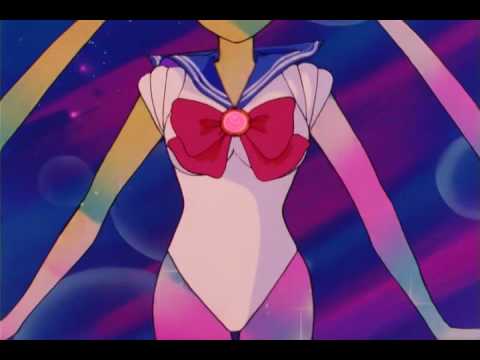
Arguably my biggest complaint about Sailor Moon is rather asinine. The transformation sequences for the Sailor Senshi are incredible, and rightly praised as such, with concise and dramatic posing framed by beautiful fabric animation that make them a joy to watch on an episode-to-episode basis. However, they are utilized inconsistently throughout the show. By Episode 33, all five Sailor Senshi are introduced into the show, meaning that, at most, there are going to be five transformations within a given episode, with some episodes not featuring all five transforming at once. One would think that the show would accommodate this and set a standard order and timing for every order of transformations, as a modern magical girl such as Precure would do. Sailor Moon does not do this, which means that in some episodes, transformations will be sped up, cut up, and otherwise fragmented. This obviously does not make the show unwatchable, but, especially within the context of binging, it makes watching segments of every episode somewhat jarring.
The Tokyo of the 1990s is a land of fads. While not strictly an intentional component of Sailor Moon’s ethos, it is nevertheless worthwhile to examine how the anime functions as a representation of the waning years of Japan’s economic bubble. Much of the “filler” of Sailor Moon takes place in new buildings or experiences that crop up across Tokyo every other day, whether that means an aerobics studio, a love cruise, or even a princess training camp, places that offer no practical value and that are, at times, relatively absurd. This anime is able to capture the end of an era for Japan, the closing of a time where people had more money than they knew what to do with, who put it in all in unrealistic ventures that would mostly collapse.

Bishoujo Senshi Sailor Moon is a lot of things. It is one of the most aesthetically pleasing shows I have ever watched. It is a show jampacked with charming characters and lovely music. It is a conceptual jumble that at times can be downright bewildering to view. But above all, it is an anime that delivers on a promise of showcasing the “Miracle of Romance,” and I truly do love it for that.
73 out of 95 users liked this review
