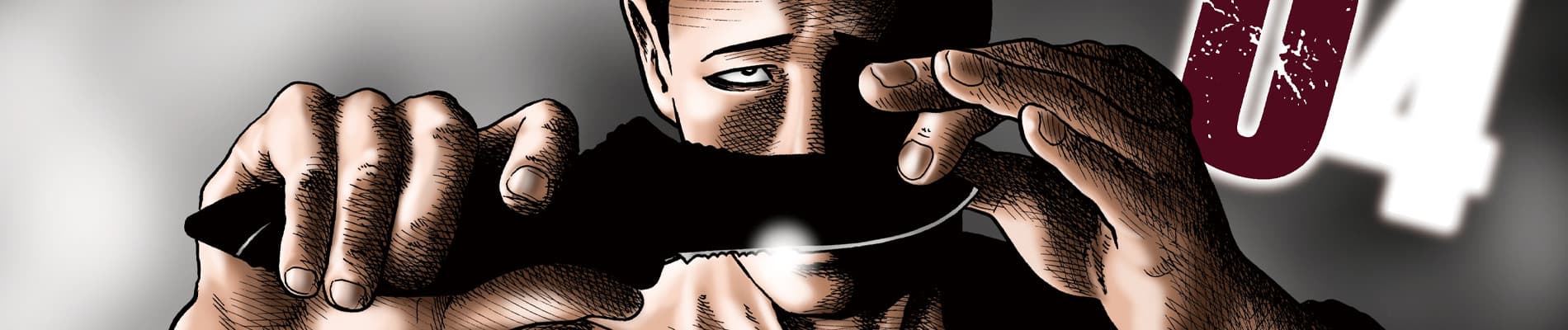
The Fable
a review by saulgoodman
a review by saulgoodman

Assassination and comedy have surprising chemistry these days. It's a bit of a small niche, with SPY x Family and Assassination Classroom as its poster-boys, but The Fable is my favorite up-and-comer in this hybrid genre recess.
"You got another target to take care of … to kick back and have fun!"
In Satou and Youko's one-year vacation in a quaint, humble town to lay low profile, their attempts at relaxation are often thwarted by mischievous drama that can smell the blood on their hands. From outdoor camping, job hunting, pet caring, bar drinking and other recreational activities yet to come, Satou's reputation as the legendary Fable seems to cuck him out of these attempts at casually passing the time. For better or worse, Satou unintentionally drags himself into ridiculous situations, all still with his stoic face.
With its slow, easy-going pacing, you're sure to thoroughly relish the absurdity of the arcs and new characters. Thus far (86 chapters), there've been only 2 arcs that bear no clear-cut indication of a real, overarching plot looming about. That said, I'm enjoying the absurd misadventures of Satou and Co., sprinkled with heavy drama.
The heavy drama does well to remind of the seinen tag. The Fable has no earnest favoring towards dark comedy. When it portrays dark and gruesome scenes plastered with death and other explicit taboos, the series tends to treat them as such, without much comedy. Though I consider myself a connoisseur of dark comedy, I think it was in good choice that there's a clear-cut division of comedy and death in The Fable. That is, so that more concrete weight is given to both the story and Satou's character. Had the entire story been a listless episodic comedy series, I'm confident that my enjoyment would've been halved. The story, though still infantile in its development, has been interesting and investing with the yakuza subplot. The dramatic, dark aspect of the story definitely doesn't take precedent after the comedy. There's a fine symmetry between both that'll leave you both smirking and shaking your leg in impatient anticipation for more.
Laughably and surprisingly, The Fable excels as an iyashikei in occasional intervals. From Satou prepping and frying fish to him camping out in the woods, there's an actual air of tranquility to these scenes that depict Satou as nothing more than a carefree guy enjoying his life.


The series excels in character mannerisms, particularly with the pseudo-siblings, Satou and Youko.
For a lack of better words, Satou's a human trying to be human. The context of his dark past and present bloody career would paint him as a reptilian, ice-blooded murderer, but it's moreso that Satou's a child unaware of the world. He certainly follows with the most fundamental laws, but he also wouldn't blink an eye at disregarding them if he sees fit. He also has no interest or knowledge in interpersonal connections, like friendship or love. This and his arcane interests, such as his love for a comedian named Jackal, give him such loveable charm and depth beyond black-and-white. From the get-go, Satou took this one year hiatus not as a vacation as Youko did, but simply another job. Despite this cog-like mentality, however, Satou still seeks enjoyment and pleasure doing so. His rather naïve and easily influenced nature churns out a number of mundane situations contrary to Satou's offbeat character, yet they end up just as bizarre as him. Not to take him an imbecile, either. Satou also possesses quick wit, technical and survivalist knowledge and animalistic instinct bred from his dark life and line of work. His offish, goofy nature also doesn't warrant him a dunce cap. In critical and grim situations, his professionalism takes face. The quirky richness of Satou's character is extremely humorous to bear witness to, both in lone screen-time and how others react to this anomalous assassin. On a less lighthearted note, though, Satou's character is one full of plenty potential to grow as a human, as well.
Youko, on the other hand, has been surprisingly humorous in her shenanigans, as well. I had originally dismissed her as a dreary tsukkomi to the boke that is Satou, albeit broken by some amusing moments and personality quirks. Her drunken state and sadist tendencies, however, are quite a hefty contribution to the current state of comedic affairs in The Fable. Being much more outgoing and sociable than Satou, not to mention attractive, Youko attracts supporting characters and dresses them up to be wildly entertaining during their interactions. In consideration to Satou, the two have a strange chemistry. Not quite dichotomous as dog and cat, oil and water, but their banter often resulting from Satou's idiosyncratic character and Youko's modern and somewhat valley girl quirks is fun. What more she has to offer, I very much look forward to.


The art-style is an idiosyncratic thing. It has take shape in pseudo-realism, and while it's nothing new, Minami Katsuhisa's style is still somewhat uncanny. I suppose I could liken it to Ikegami Ryoichi's art-style, but more expressive and less detailed. Regardless, while it may be a bit offbeat to any typical art-style, it measures up quite nicely with its detail in shading and animated, slightly grotesque expressions.
Though I suggested reaction face comedy to be somewhat mundane for my taste at the start, I have absolutely no qualms with it, if not wildly exaggerated in the fashion of Jim Carrey in The Mask. Coupled with its pseudo-realistic style, The Fable excels and exceeds at this with subtlety. No Looney Tunes eye-popping, unhinged jaws or unrolled tongues are found, with only natural, slightly-distorted expressions of panic, laughter, smugness found. The simplest things can grandly elevate anything, and it's no exception here.
Comedy and character designs aside, the art has significant level of detail in other areas. Particularly, it's obvious the author has an artistic fetish for guns, tactical weapons and cars. The level of realism and detail in them beg the question if computer art programs and 3D models were used in a similar vein to Gantz, but I'm greenhorn in that area. For a story about the yakuza and assassins, this specialized detail is certainly fitting.


The Fable is both a well-written crime syndicate story and comedy. Relying on subtlety on multiple planes, it's a well recommended read if you ever find yourself growing weary of the more boisterous and in-your-face comedies. The comedy tag shouldn't fool you, as the story is seeded with plenty of dark scenes and characters. There's a refined cut and balance of comedy and drama. Neither one softens the impact of the other, but acts to refine the overall story. The art may be somewhat uncanny at first glance with its pseudo-realistic style, but its detail and colorful expressions will soon alleviate any pecking discomfort.
The story is still maturing, with its slow-stead pace, but The Fable has proven to be an excellent read for any seinen and comedy fan.

106 out of 107 users liked this review
