Hundred Scenes of AWAJIMA ‒ Episodes 11-12
How would you rate episode 11 of
A Hundred Scenes of AWAJIMA ?
Community score: 4.2
How would you rate episode 12 of
A Hundred Scenes of AWAJIMA ?
Community score: 4.2

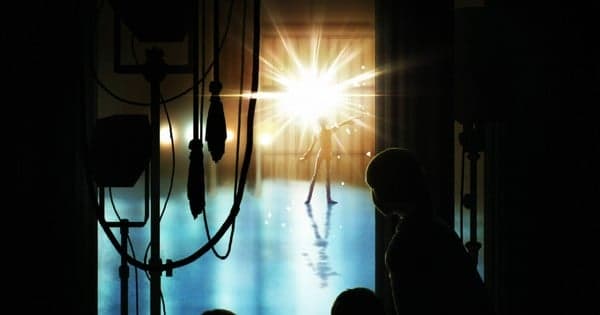
It was not my original intention to review these two episodes together, so it is fortunate for me that they fit together as well as they do. A Hundred Scenes of AWAJIMA, for all intents and purposes, ends on a two-parter about Wakana's book on Emi Okabe and the tragedy enacted on her at Awajima. As is typical of the series, though, the book itself receives minimal detail and attention. It exists between the two halves. Rather, the first part focuses on Wakana's research and writing, and the second part focuses on the aftermath of its publication. The specific contents of the text are almost irrelevant.
I say this is typical of Awajima because, despite the academy's specialty, the show very rarely focused on the theatrical side of these girls' and women's lives. It's not like each episode built up to a climactic scene on the stage that neatly encapsulated the prior events and themes. These stories were always quieter than that. Wakana herself embodies this attitude. She's as “main” a character as we've gotten in this series, and she's not a career actor. She tried it out, abandoned it, and became a writer. That's the kind of story Awajima has told over and over. It takes a bird's-eye view of the school and its legacy, and it does not forget that the vast majority of its alumni are not actors—and, in fact, they cannot be actors. The business is too tough and too exclusive. But as Wakana explains to Ibuki on her deathbed, that does not mean her time at the school was wasted. It got her where she needed to go. It's an indelible part of her journey.
As an aside, this is an attitude I've struggled with a lot after accepting that I needed to transition. It was a decision that, from a certain perspective, cleaved my life in two. My experience after that point has been incredible so far, with a deluge of ups drowning out the handful of downs. But my years and decades before that decision are now laden with regret and sunken into a sea of “what if”s and “if only”s. Ultimately, I have to accept that my journey is my journey. It's the only way I could have gotten here, because it is how I got here. I hope I can learn to accept that more easily.
Ibuki's regrets motivate Wakana to pursue her book, but Wakana also spends a lot of time and energy considering the morality of this project, as well as the people it affects. These are integral questions in journalistic ethics, and it can be easy to abstract them, so I like how deeply the penultimate episode considers the perspective of Emi's surviving family. I also like that they have differing and sometimes contradictory opinions. One of her sons is completely cynical. Her husband is more amenable to preserving and utilizing his wife's legacy. And Wakana, consequently, does not know with certainty how she feels, even as she continues her work.
Takako Shimura has approached all of Awajima's stories with a nuance that defies satisfying conclusions, so this one is no exception. Do we respect the dead by letting them stay dead? Do we respect the dead by remembering them? By narrativizing and utilizing them? Where do we draw that line? Do the potential benefits for all the people affected by Awajima outweigh the concerns of one family member? Unfortunately, our modern circumstances and technology provide us with too many examples of unequivocally condemnable ways to disrespect the dead, so I'm glad the series finale pursues more difficult questions.
The consequences of Wakana's book are similarly colorful—not all good, and not all bad. It sparks media attention towards the bullying epidemic at the school, but that happens at the cost of attention on Emi's personal story. Or at least that's how Wakana sees it. I can understand her frustrations as a fellow writer. You pour your time, energy, and a fraction of yourself into everything you write, and in doing so, you imbue it with your hopes and intentions. But once the public gets it, it is theirs. You can't control how they'll interpret it or what they'll do with it, and the parts they focus on can seem utterly arbitrary. That's just how it works. That's the bargain. You hope that it'll reach the people it needs to reach and say what it needs to say to them.
Awajima, in exploring the reaction, peeks in on many of the characters featured in the previous vignettes. Wakana's mom, still a Leo Asagami fanatic, despairs at Awajima's tarnished reputation before realizing that her daughter's experiences are more important to consider. An older Takuto calls Sayaka (I'm very happy they're still in touch), and the two reach a cautiously optimistic conclusion together. However, I also like Shimura's decision to quote random internet commenters, who echo the sentiments we see attached to any news story that blows up. Bad faith reactions. Concern for the victims. Cynicism. Gripes about capitalism. There isn't any uniformity, because there never is. The key here is that Shimura is neutral in depicting these reactions. The further removed from Awajima these commenters are, the more likely they are to project their own concerns onto the story, and that is neither a good nor a bad phenomenon. It's what people do. Nobody can stop that.
The tricky part is the separation of fact from fiction. Emi was real, as were her friends, family, and tormentors. Wakana's book aims to be real, but she can't give a complete account of what happened, no matter how much research and soul-searching she does. And the stage version further dramatizes Emi's real story while simultaneously anchoring it back into the halls of Awajima. That's a fascinating contradiction. And we don't know the school's motivations. It could be a face-saving effort, or it could be an honest reckoning with past wrongs. It could be both. It could be neither. And, of course, this is all fiction. Shimura made these people up. Awajima does not exist. But similar schools, similar students, and similar stories exist in Japan and abroad, and their truths can resonate with Shimura's fiction. I know mine has.
Awajima concludes by returning to Emi Okabe, where we last saw her in the second episode, crying on that bus. Only this time, we see her wipe away her tears before the credits roll. It's up to each of us to consider what Emi is thinking in that moment. I don't believe there can be a correct answer, and in fact, I believe the ambiguity is the point. This is a small moment that Wakana could not have known about. It won't be a part of that play. It's not a part of that story. It is, however, a part of Emi's truth. She might have found some solace in that sunset, or she might have decided in that instant to end her own life. I cannot say for certain. But I do know it makes me ache with a bittersweetness that I've felt throughout my time watching and writing about A Hundred Scenes of AWAJIMA. For that reason, in its own quiet way, this will be the anime from this season that will stick with me the longest.
Episode 11 Rating:
Episode 12 Rating:
Hundred Scenes of AWAJIMA is currently streaming on Crunchyroll.
Sylvia is on Bluesky for all of your posting needs. In high school, you could catch her in the pit orchestra, but never on stage. You can also catch her chatting about trash and treasure alike on This Week in Anime.
<prevEpisodes 1-2Episodes 3-4Episode 5Episode 6Episode 7Episodes 8 and 9Episode 10Episodes 11-12