Do stunt releases of new shows work, or are they just obnoxious? Lucas and Sylvia decide.
Disclaimer:The views and opinions expressed by the participants in this chatlog are not the views of Anime News Network. Spoiler Warning for discussion of the series ahead.
Crunchyroll streams Smoking Behind the Supermarket with You, Talentless Nana, Zenshu, Train to the End of the World, The Melancholy of Haruhi Suzumiya, and Blood Blockade Battlefront.
HIDIVE streams Urusei Yatsura (2022).
Netflix streams Puella Magi Madoka Magica and JoJo's Bizarre Adventure: Steel Ball Run.
YouTube streams There's No Freakin Way I'll Be Your Lover, Unless..., and Akane-banashi.
@RiderStrike
@BWProwl
@LucasDeRuyter
@vestenet
Lucas
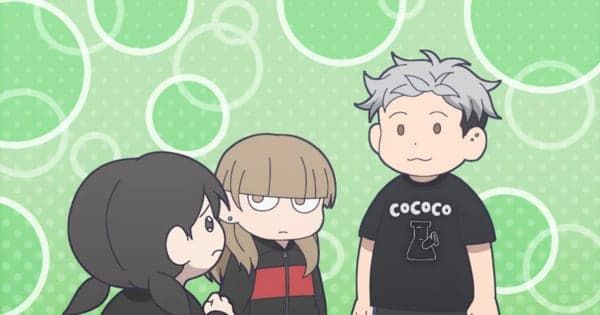
Sylvia, you and I have spoken at length about smoking in anime and how the habit can be a vehicle for social connection that's explored in works like Smoking Behind the Supermarket with You. Having this familiarity with the series, our audience can imagine how surprised I was when the anime adaptation of Smoking Behind the Supermarket with You received a rare early premiere on Crunchyroll! That's right, if you're reading this, you can watch Smoking Behind the Supermarket right now...so long as you're cool with watching it in three-part, mini-episode "installments."
Why would the decision-makers behind this anime make this choice? How does this release fit into the broader history of anime stunt releases?? How does this format affect the anime version of the cult hit??? We'll attempt to answer these questions and more in today's This Week in Anime installment! (in between contract-mandated smoking, bathroom, and snack breaks, ofc.)
Sylvia
This has nothing to do with the subject at hand, but while we're shaking our fists at the powers that be, here's a live dispatch from my desktop computer as I try to make Windows 11 work on the 16 GB of RAM I bought ten years ago. This is what I put up with to bring TWIA to all of you.
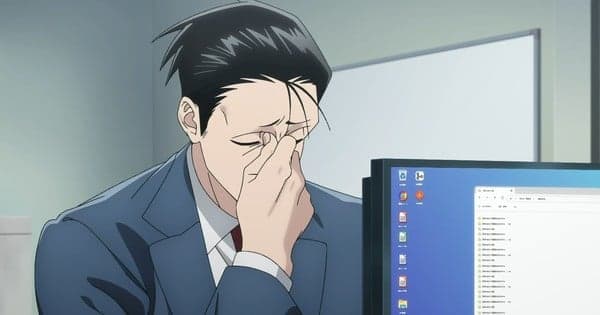
More relevantly, I suppose Sasaki's face in the second screenshot mirrors my attitude toward this "surprise" episode dump. Like, we've known for a while that Supermarket's anime would have some limited early availability in June, but the specifics of this current situation strike me as a concatenation of bizarre choices—some discernible, some eldritch.
Listen, if we want to do a "The TWIA Crew Installs Linux" as a future column topic, I am SO DOWN to do that the next time there's a slow news week! I finally made the jump to Firefox for all of my personal computing a few months back and have been so much happier now that my daily exposure to AI tool promotion has plummeted following the change.
While I know we're opening this column with a couple of tangents, this column is about the weird release format of a slice-of-life anime about burnt-out, working adults. The only people reading this are other 30+ year-old nerds, so we're gonna talk about stuff that 30+ year-old nerds care about!
This release fully feels like a decision that one of Sasaki's clients would have come to on their own, with him subsequently failing to talk them out of it and then having to make some version of this idea work in practice. If it sounds like I'm bringing my own experiences working in PR with a clientele of largely Japanese companies into this conversation, it's because I am! At least once a month, I have to try to make an activation or press release explicitly intended for a Japanese domestic audience work abroad, and I'm picking up similar vibes from this surprise development.
I am not as intimately familiar with those struggles, but I have technically been "in" the industry for almost a decade at this point, so I've heard many a tale of such intercontinental woes. And I get it. I'd be maybe a tad overprotective of my intellectual property if I had to deal with foreign markets regularly. Especially the American one. We have a long history of less-than-stellar treatment of anime licenses. But on the other hand, Japan consumes anime differently than we do, and production companies don't always put in the work to understand other markets. Look no further than all the clunky light novel title localizations. Even "Smoking Behind the Supermarket with You" is awkward and unwieldy. It needs a poet's touch.
Can we talk about how a different localization of the series' name, Behind the Supermarket, Smoking with You, shows up in the title card for each episode!??
That localization isn't "better," but it's weird how friction points keep showing up around this title! Plenty of series have quirks in their localization or fan translations that are more popular than an official release, but I can't remember the last time a series so overtly drew attention to a localization choice.
At least the official one isn't a one-to-one transposition of the Japanese grammar, but yeah, it's still an awkward half-measure. And that's kinda what this release feels like. It's literally half of the series, split into halves. Which I could potentially understand if the episodes were staggered—one to two released every week. Maybe you advertise their shorter lengths as a "smoke break." I don't know. I have a negative experience in marketing. But I feel like this tack attenuates the momentum of an adaptation that I was looking forward to quite a bit! It's not easy for me to knock back half a season's worth of anime at a time. I have a full-time job, and that's on top of being a TWIA girly. My anime docket is limited.
As fellow ANN contributor Kalai Chik notes in her review of this early premiere, all of these mini-episodes were made available immediately to premium subscribers of the Japanese streaming platform ABEMA, with free users getting a staggered release of these mini-episodes. In the context of a subscriber benefit, this release model makes a bit more sense, but feels needlessly frustrating without it.
I too am a working adult, and a core part of Smoking Behind the Supermarket's premise is that we working adults don't even have the energy after a long day to piece together that a woman will wear different clothes and have a different affect in different settings! This kind of release model is more frustrating than anything else, with my first thought when I heard about it being, "if they're going to split episodes into three parts, they should just put it on YouTube and lean into the nostalgia." If you don't go all in with this kind of stunt, it falls flat and will work against a project.
Devil's advocate: this unconventional strategy is, at the very least, generating buzz. I mean, you and I are talking about it. No such thing as bad press, and all that jazz. But I don't think Supermarket needed a gimmick to make a name for itself. I say this with all the love in the world: this is a series written to appeal to 37-year-olds. That alone makes it stand out. It has an aura of maturity that I believe would have found its audience.
I recognize, though, that I'm far from the modal anime consumer. I have a work-related revulsion to all-at-once release strategies. But Netflix and the like have probably inured a far greater number of people who like to binge. They might love this.
Agreed! Outside of this format, the only complaint I have about this Supermarket Smoking is that I don't believe for a second that tall drink of water Sasaki and absolute baddie Yamada would both be single over the course of their months-long casual courtship. I cannot suspend my disbelief enough to envision a world where someone hasn't tried to lock either of them down by now!
Though speaking of Netflix, this unique release format is evocative of the Steel Ball Run premiere, which dropped a 40-some-minute premiere episode a few months back. Though, as Chris and I explored in another previous TWIA, this premiere felt more appropriate considering how different the pacing of Steel Ball Run's opening moments are compared to the rest of the work, with controversy only arising after-the-fact due to there not being immediate confirmation on when Steel Ball Run would continue.
That struck me as a failure of communication more than anything. Even a basic roadmap at the onset would have prevented most of the "drama" that ensued. Although we can't divorce the Steel Ball Run situation from Stone Ocean's, which was itself a departure from the JoJo's anime model we had come to expect. Some of that was a practical decision to accommodate a struggling production, but I'm sure a not insignificant factor was Netflix's internal culture that used to emphasize the binge model a lot more fervently. There has since been a grander shift back towards staggered episodes (thank goodness). But I think insular company culture continues to result in the kind of weird decision-making we see in situations like Supermarket's.
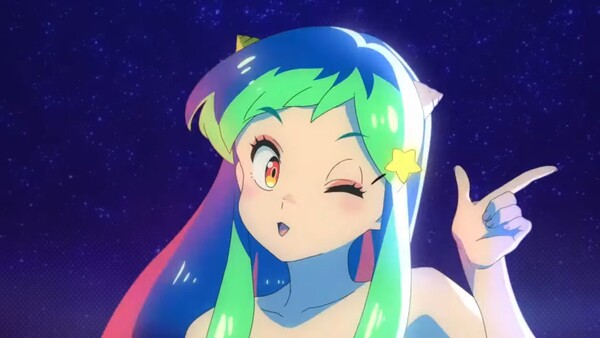
I've long held onto the belief that Stone Ocean's production issues (such as they are) stem more from David Productions simultaneously working on the absolutely gorgeous Urusei Yatsura reboot and therefore splitting talent between the two high-profile productions, but your point still stands.
The loss of JoJo Fridays with Stone Ocean's release was, and I know this sounds hyperbolic, but bear with me, a loss of culture. Anime fans built their schedules around the weekly release of new episodes of Stardust Crusaders, Diamond is Unbreakable, and Golden Wind; and would turn each new episode release into a mini-cultural moment on various social media platforms. Companies pour ridiculous amounts of money and man-hours into artificially creating this cultural cache, and the fact that Netflix blew up this free promotion is a marketing blunder on par with Elon Musk changing the name of Twitter to "X" after the platform successfully entered the branded term "Tweet" into the public lexicon.
Certainly, the headline for the past decade or so has been the often willful stupidity of our ruling class: politicians, CEOs, cultural taste-makers, and so on. If I see something baffling, I rarely feel inclined to give it the benefit of the doubt. Mismanagement is too often the name of the game. But that doesn't mean I think all anime promotional gimmicks are artistically bankrupt. We just did a column on Haruhi, and it made plenty of orthogonal decisions (the out-of-order airing of season 1, the surprise season 2 drop, Endless Eight) that I argue enhanced the experience of the series.
Absolutely! Shows taking big swings in their releases are only a problem if they miss, and I can think of as many anime that are home runs in this regard. Looking back, it's absolutely nuts that the anime adaptation of Trigun creator Yasuhiro Nightow's Blood Blockade Battlefront would have a first season that's almost entirely anime-exclusive storylines, but it works super well, and that show is a delight!
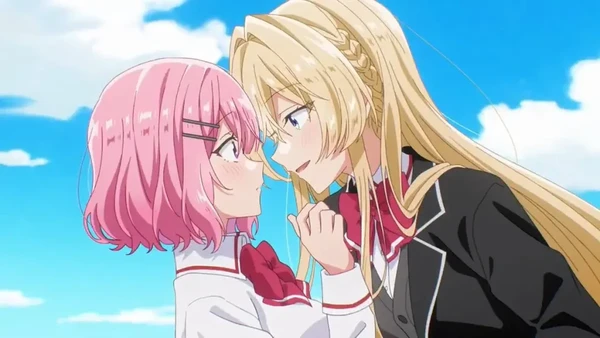
And, of course, it's worth mentioning that There's No Freaking Way I'll Be Your Lover! Unless...'s YouTube release played a huge role in turning it into the biggest yuri release of last year, where it almost assuredly would have gotten lost in the seasonal RomCom deluge if it had released on a more traditional platform.
These kinds of stunts can be additive and elevate an anime to a broader audience, but they need to be synergistic with the source material to make sense for the audience that they're trying to reach.
REMOW will sometimes upload season-length supercuts of its series for limited periods, too, so that feels like a savvy nod towards the binge-happy crowd. I also wonder how much of that is fueled by a desire to undermine Crunchyroll's effective monopoly on the anime streaming market. As you said, it worked well with a somewhat niche title like There's No Freaking Way. However, Akane-banashi is anything but niche in its appeal—it's a high-profile adaptation of a hugely popular Jump title. Yet that too has made its home on YouTube.
With how obfuscated licensing agreements have been between US-based streamers and anime rights owners, and the dirty secret that loads of anime productions aren't very profitable until merch sales start coming in; I can see how the math works out such that right's owners would go for broke on niche titles or trust that big titles are going to be a hit no matter what and post both to YouTube for free. If the goal is getting as much exposure as possible and then converting a portion of that viewership into Blu-ray and figure sales, YouTube is a better means to that end than any other platform.
Yeah, that makes sense to me. It's not gonna work in every situation, but I wouldn't be surprised if we continue to see more weirdness or further streaming balkanization. Unless the entire industry pops first, which is always an option as well! But speaking of YouTube, another kind of marketing/promotional gimmick that I don't mind is the misleading trailer. Train to the End of the World's first PV, for example, is technically accurate to the series, but the tone of it is hilariously wrong. And in retrospect, that adds to the show's anarchic appeal.
Zenshu similarly played coy when promoting itself, with its early trailers conveniently omitting any indication that there was an isekai element or metatextual narrative in play.
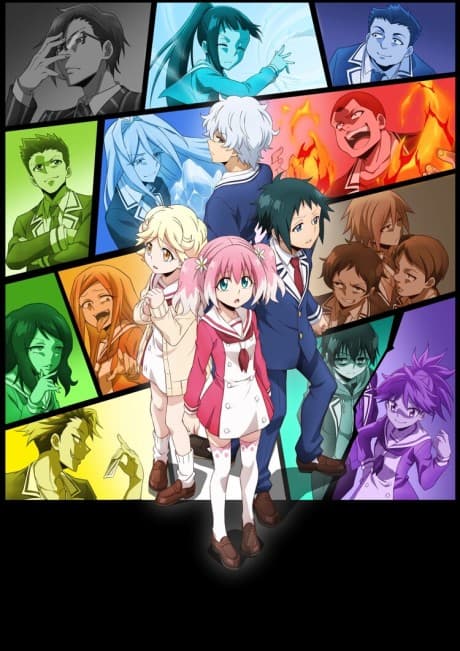
Who among us doesn't love a good bait-and-switch!?? My go-to example for this is Talentless Nana, which in both the trailers and the majority of the first episode, seemed like it was going to be a discount My Hero Academia, only to reveal that it's actually a super-powered, subterfuge-filled death game!
To this day, I'm not sure if Talentless Nana is, like, "Good," but I enjoy the first season and respect its commitment to the bit!
I tend to enjoy these rugpulls and other acts of misdirection because they're signs of a playful production that is thinking critically about its actions and its audience. This School-Live! teaser is a work of art, fully cognizant of the "correct" genre signifiers and all about how the actual show sidesteps them.
If we're going down this rabbit hole, we should probably shout out Puella Magi Madoka Magica. For as ubiquitous as it is now as the "edgelord magical girl" anime, I remember folks back in the day being absolutely FLOORED by its dark turn, with only the smallest hints of unease and foreshadowing teeing them into the franchise's actual tone and plot.
While you wouldn't be wrong to construe these trailers as gimmicks that lose their potency as soon as the show airs, they still constitute a significant factor that affects how the show will be received. Building up audience expectations to knock them down is a recipe for shock, and things that shock you are more likely to stick in your brain. And the same could be construed for the other marketing/promotional stunts we've covered—bits of ephemera that stand out in our memories.
And maybe that's why this Supermarket Smoking release stunt feels so misaligned. Years from now, I'm not going to remember the show for this gimmick, as it doesn't feel like it's feeding into the show's actual strong points. Instead, I'll remember its charming localization, honest depiction of the struggles tied to putting a good chunk of your self-worth into your career, and how it explores how much better even small moments with a like-minded person can make your day better.
There's a lot to like here, but the show feels almost tailor-made to be an anime I watch while lounging on the couch at the end of the day when I'm too tired to go to bed, and this release format is almost antithetical to that experience.
I will grumble about it until the industry pulls a similarly silly stunt (so probably a week tops), but it's not enough to sour me on the adaptation. The manga is a cozy favorite of mine, and what I've seen of the anime so far seems to get it. And by "it" I mean (cartoon) smoking being hot and Tayama being Gender as heck.
God, do I aspire to be as cool and hot as Tayama, or any of the confident, capable, and inspiring women I worked with during my time in retail and hospitality gigs!
And it is a testament to the appeal and execution of Supermarket Smoking that its charm can still shine through even when it's presented in a frustrating format. Cannot wait until I can watch it in 20-some-minute installments like god (and more importantly, the show's production team) intended!
 @RiderStrike
 @BWProwl
 @LucasDeRuyter
 @vestenet