Red River Omnibus 2-5 Manga Review
 Synopsis:
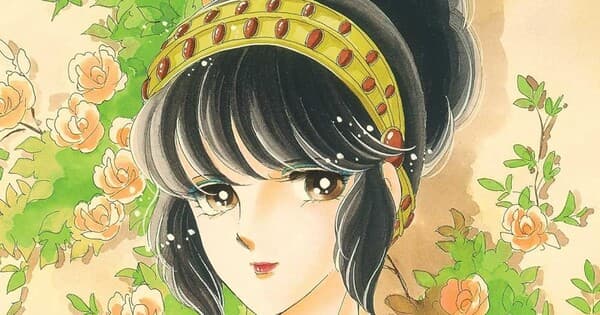
As Yuri tries to acclimate to the Hittite Empire and avoid the treacherous intentions of Queen Nakia, she grows closer to Kail, both in a romantic and a political sense. Things only get more fraught when the Mitanni nation begins causing trouble by hosting a woman who claims to be Yuri! And no sooner is that resolved than tensions begin to rise with Egypt – especially after an offer from its queen to marry a Hittite prince goes horribly awry. Caught between warring powers, Yuri has no choice but to rise to the occasion…even if it means she might never go home to Japan.
Red River is translated by Yuko Sawada and lettered by Susan Daigle-Leach.
As Yuri tries to acclimate to the Hittite Empire and avoid the treacherous intentions of Queen Nakia, she grows closer to Kail, both in a romantic and a political sense. Things only get more fraught when the Mitanni nation begins causing trouble by hosting a woman who claims to be Yuri! And no sooner is that resolved than tensions begin to rise with Egypt – especially after an offer from its queen to marry a Hittite prince goes horribly awry. Caught between warring powers, Yuri has no choice but to rise to the occasion…even if it means she might never go home to Japan.
Red River is translated by Yuko Sawada and lettered by Susan Daigle-Leach.
Historical fiction doesn't always owe history fidelity, but Chie Shinohara absolutely gives it more than its due in Red River. Although she fudges history a bit – the inspiration for Yuri was likely the wife of one of Kail's successors, a woman named Puduhepa – and changes a few names (Nakia's historical name is Malnigal), other pieces are firmly rooted in what we know about the distant past. Mursili II was the ruler of the Hittite Empire from roughly 1330–1295 B.C.E., there was a terrible plague in 1330 that killed his father, Suppiluliuma, and his stepmother did do some pretty awful things. While some dates and events have been fudged, for the most part, Shinohara does a faithful job of sticking as close as she can to the historical record, making alterations to make her time-travel story work. While that's generally a good thing, it also means that some events, like what happens to Prince Zannanza, are immutable.
That historical fidelity also means that there are elements of this story that modern readers are likely to find upsetting or distasteful, something compounded by the fact that this is shoujo manga from the 1990s, and they did not mess around. If you've read works by other creators published in Sho-Comi or sister magazine Cheese! during that decade, you'll know what I'm talking about: there is much more nonconsensual sexual contact than we typically see in shoujo manga today. (Mayu Shinjo is the usual example, but Mashin Osakabe's another one.) The combination of the way women were treated in the distant past and different romance standards in the more recent past means that this series comes with a hefty warning for noncon and dubcon – Yuri is frequently assaulted by the men she meets, including her romantic interest, Kail. While some are under the influence of Nakia's dark sorcery, others simply “can't help themselves.” Kail, in particular, is guilty of this; although he generally stops before he goes too far, he absolutely disregards Yuri's wishes and comfort level on multiple occasions. It isn't until volume fourteen (in the fourth omnibus) that things truly become consensual, and as late as volume twelve (omnibus three), Kail very nearly rapes her.
Part of Yuri's allure for the characters in the story is that she's so unlike most of the women in the ancient world. Yuri won't be anyone's plaything or trophy, something she makes clear to all of the men who would have her be so. She's hailed as the coming of the goddess Ishtar because of her strength and unwillingness to back down, because in Yuri's world, women are people with unquestioned free will. Where women like antagonist Nakia use trickery and magic, Yuri just picks up her sword, hops on her horse, and goes. She's not into soft power or coy power, and that causes people to equate her with the powerful goddess of war. She also hails from a much more global era, and she's not willing to look down on people because they're poor or from a different place. While the alacrity with which she masters the sword and horseback riding beggars belief, it's really just shorthand for how she appears to the people she encounters: impossibly strong and capable, despite her status and gender.
That is not to suggest that this is a “not like other girls” story; any appearance Yuri gives of that is because she's traveled back in time. Yuri is, instead, a very well-realized character. Her journey from kidnap victim to gal meshedi (commander-in-chief) takes her nearly all of these volumes. Yuri doesn't want to be in the Hittite empire when she arrives; she's a victim of Nakia's scheming. Over time, she changes to a survivor before taking ownership of her choices, but it's absolutely a process. She's a fifteen-year-old girl when she arrives; she's seventeen by volume eighteen, and she does a lot of growing up over those two years. She never stops missing her parents and sisters back in Japan, but she learns to make decisions based on what's going on around her and her changing outlook. It's no exaggeration to say that we watch Yuri grow up over these volumes, and it's really well done. Most importantly, she makes her choices for herself. Yes, she considers others as part of the process, but at the end of the day, what she decides is what Yuri Suzuki wants, not what Kail Mursili or anyone else wants.
These volumes cover a lot of ground, both emotionally and historically. Most events place us squarely around 1300 B.C.E., and historic wars that the Hittites participated in around that time are a large part of the plot. There are a lot of deaths (although none quite so grim as poor Tito in the first omnibus), and Yuri becomes a soldier and does her part in that. That said, most of the danger she faces is sexual in nature, which again fits the time period. (If you want to know more about women's lives in this time, I highly recommend the book Penelope's Bones by Emily Hauser.) Shinohara mentions in her author's notes that she traveled extensively in the Middle East for research, and it shows; there may be fewer breast-baring outfits than were actually worn, and I'm pretty sure Yuri wouldn't have been wearing underwear, but the buildings, weaponry, and bits and pieces of daily life are instantly recognizable as belonging to this place and time. Oddly, you can tell when Shinohara had her assistants draw the extras, because while the backgrounds are all of a style, faces not drawn by her are very obvious, being in a completely different style.
Whether you think time travel counts as isekai or not, it's hard to deny that Red River is an excellent story about a girl thrown into another world. Attributing some of Puduhepa's actions to Yuri simply grounds the character in history more by having her participate in actual events, and the combination of history with fantasy works impressively well. If you missed this when Viz first released it, don't wait for the anime adaptation. Red River is a work of epic fiction, shoujo manga style, and it's still worth reading thirty years after its original publication.