My Stepmother and Stepsisters Aren't Wicked Volumes 1-7 Manga Review
 Synopsis:
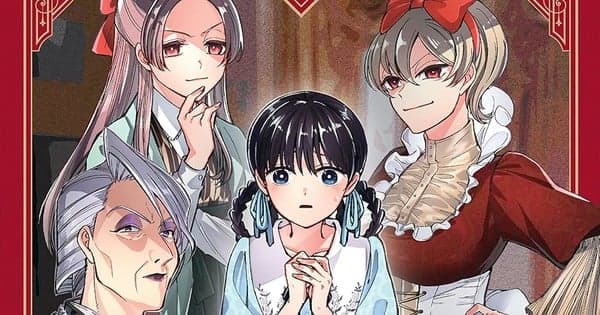
Miya is the illegitimate daughter of the great and powerful Kounokura family, living in poverty with her ill mother. When her mother dies, Miya is shocked and concerned to be taken in by the main family. She's certain that her new stepmother and stepsisters will bully her fiercely, because after all that's how these stories always go. There's no way they'll be loving and kind to her, right?...right?
My Stepmother and Stepsisters Aren't Wicked is translated by Angela Liu and lettered by Viet Phuong Vu with an adaptation by David Lumsdon.
Miya is the illegitimate daughter of the great and powerful Kounokura family, living in poverty with her ill mother. When her mother dies, Miya is shocked and concerned to be taken in by the main family. She's certain that her new stepmother and stepsisters will bully her fiercely, because after all that's how these stories always go. There's no way they'll be loving and kind to her, right?...right?
My Stepmother and Stepsisters Aren't Wicked is translated by Angela Liu and lettered by Viet Phuong Vu with an adaptation by David Lumsdon.
It's a story that's been around for millennia: a girl is thrust into a terrible situation after her mother's death, when her father remarries and her new stepmother and stepsisters resent her for the crime of merely existing. Sometimes the father is present, sometimes not, but that never means anything for the poor girl, who is often given a new, unflattering name based on the fact that she's made to sleep by the fire and work her fingers to the bone. I am, of course, talking about the story known as Cinderella, tale type ATU510a, one of the most widespread fairy tales of all world folklore. And whether she's called Rhodopis (Egypt), Cendrillon (France), Conkiajgharuna (Georgia), or Pepelyouga (Serbia), her story is read of the triumph of good over adversity. And it's precisely this story that Miya Nakamura expects to be thrown into when, after the death of her mother, her father's legitimate family decides to take her in.
As you can no doubt guess from the title of the series, Miya's in for a surprise. The Kounokura mère et filles were apparently delighted to learn of Miya's existence as an illegitimate child of their husband/father, and they're eager to help her now that her mother has passed. Where Miya expects that she's essentially been sold off by her maternal grandmother as free labor for her father's legal family, what's actually happened is that she's being rescued from a life of poverty and drudgery. The Kounokura women want nothing more than to give Miya the best life possible and they are not shy about letting her know it.
These seven volumes all operate on basically the same framework: Miya is sure that her background is going to be looked down upon or otherwise get her into trouble, her stepmother and sisters all come to the rescue, and everything proceeds smoothly and happily to the next adventure. To say it's nice and sweet might be an understatement, because this is the most aggressively charming series I've read recently, or possibly ever. Over the course of the first volume, we can see Miya putting on weight and growing stronger, something that her new family absolutely loves for her. In each book, they go out of their way to make sure that Miya knows she's wanted and loved, and while there is a real sameness to each volume – the really do all follow this same formula – the reassurances do change depending on what Miya's concerns are.
That Miya's worries evolve the longer she's a member of the Kounokura household is a strength of the series. At first it's simply whether or not she's welcome and deserves the kindnesses lavished upon her in the form of good food, new clothes, and an education. Later it's whether she belongs at the fancy girls' school stepmother Teru enrolls her in, and in volume seven, it's whether it's okay for her to be so happy when her mother is dead and if she's being disloyal – or forgetting her mother and past. This last is something that Teru specifically is always attuned to. She wants to make it clear that Miya is allowed to acknowledge her mother, to mourn her, and to be the daughter of both mothers without guilt. Teru has no interest in replacing Miya's mom, but she does love her and wants to be a safe person for her to confide in, love, and trust. Before Miya changes her last name from Nakamura to Kounokura, Teru makes it clear that this is not a betrayal, and if Miya would rather not change her name, that's perfectly fine. While sisters Arisa and Marika can be overexcited at times, there are no rules for Miya as far as family goes: she gets to make her own decisions and she will be loved and supported no matter what.
This underpinning helps to ground what is otherwise a fairly silly story. Creator Otsuji relies on the juxtaposition of Teru's frankly terrifying ojou-sama face and her warm heart, and while that's fun at first, the fact that all of the jokes are basically the same does get old fairly quickly. This isn't a series I'd recommend binge reading, because the similarities between volumes become very obvious and take a lot of the charm out of the story. It's not intentional, and taken separately, each volume is charming. But too close together, they become a sugary blur, a too-obvious reworking of the Cinderella story without enough variety to make it stick.
Otsuji's art is another draw. Although Miya's perpetually wide-eyed look makes her look like she's run into a window, the art is nicely expressive and has a lot of good details. The setting is either the late Meiji or early Taisho period, and the clothes, vehicles, and furniture all reflect that, with antique cars being a particular highlight. The translation reads well and makes the most of the repetitive elements in the story, giving them an air of fairy tale timelessness, although that works better with some plots (the tea party) than others (the school sports festival). My Stepmother and Stepsisters Aren't Wicked is a frothy confection of a series, and consuming it a little at a time will help to allow its sweetness to come through.