The primary goal of any final act is resolution. This means paying off build-up, releasing the long-term tension built-up in each and every arc of the story. Most commonly the longer form tension that this act focuses on are those of the character arcs, as a character’s story spans beyond any central plot points and extends throughout the entirety of their screen time. It is clear that, besides presenting the final and ultimate climax in Eldia’s war for survival, the final season’s second most important job is fulfilling character arcs for those scouts that we, as the audience, have grown fond of throughout the previous 59 episodes. In both of these respects, I contend that Attack on Titan’s final season delivers in spades.
Before getting into the meat of the story, I’ll cover the basics. The animation is fantastic, I found the cgi almost never harmed my immersion save for one particular frame with the scouts. The fights are some of the most exciting, in large part thanks to the newly established stakes, but also because Eren just goes fucking ham. The pacing is superb, the audience is given time to breathe between the more intense sequences as the show shifts to the equally gripping political narrative. Overall the season takes my favorite aspects from both halves of season 3, and combines them to create a much more satisfying whole. Now, with that out of the way, let’s talk narrative.
The central theme of the final season is metamorphosis. Nothing is as it was, nor will it ever be again. As proof of the show’s dedication to change, the very premise of the series has drastically morphed from small-scale survival to global warfare. Admittedly this is a hugely risky move for any series to pull. With the big reveal at the end of season 3, I was certain that the Attack on Titan I knew and loved was dead, and I was partially right. I suspect this is why this season is so polarizing, because it is fundamentally not the same show, it has transformed into something more mature and more complicated, but also much more beautiful. Besides, not everything has changed. The themes of hate, of man’s overpowering drive to survive, and of the psychological toll of war (be it against titans or men) are all still present. They have simply been taken to their logical extremes. Hating faceless titans is easy, hating children trapped in internment camps is much more difficult. The desire to survive despite all odds is natural, but what happens when your survival is dependent on the destruction of another? The losses the scouts suffered in Eldia’s crusade to retake the walls were devastating, but the core cadet cast came out fine. The first arc of season 4, boom, Sasha’s gone. It is painfully abrupt, and yet despite the instantaneous nature of the act, the consequences of her death ring out for the rest of the season, defining the moral qualms the series aims to address. These transitions, contextualized by the previous seasons, are what make season 4 the gem that it is. It is in the change that we are able to observe aot’s full potential.
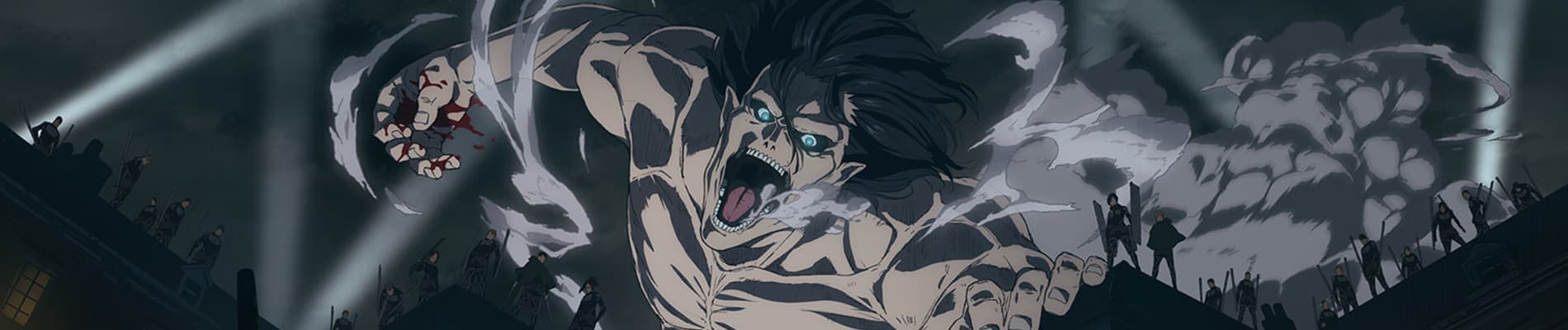
So, if we’re gonna talk about what’s changed, we have to talk about Eren. I have generally been fairly lukewarm on Eren as a character. I think aot’s greater cast made up for what Eren lacked. With the final season, however, Eren’s fundamental role in the narrative has changed, and as a result he has become one of my favorite characters, period. In previous seasons Eren was a passive force. He had shifter powers, but he was not directing the narrative. Rather, the story was pushed forward by the plans of others, which were dependent on Eren to fulfill. Eldia needs his titan abilities to defend humanity in the walls, and the warriors need him so they can use the coordinate. However, in both scenarios he is simply a tool, either for Marley or for Eldia. No longer. Eren has rejected his role as an instrument of destruction. Now, he orchestrates destruction. His escape to Marley marks his first move as an independent actor. Now his actions drive others, as the scout corp is forced to follow him, feeding into his plan to heighten tension with Marley. He has realized that everyone depends on him, and now is actively using this power to push forward his own agenda. This shift in character is the logical conclusion of Eren’s hatred. In the beginning of the show he vows to destroy titans to free humanity within the walls. This is a simple objective, made complicated by the now highly political situation Eldia finds itself in. Now the plans of his superiors are not pushing his goal forward, but hindering it, as they attempt to plan out some path to peace with Marley. Eren becomes disillusioned and acts, moving forward, for once without regard for his comrades or superiors. This, of course, directly reflects Reiner who we see through flashback to have forced his fellow warriors to attack the walls, even when they suspected they would fail, even after losing one of their number. Reiner took this path of independence and violence in his youth, and is now a shell of his former self, a likely predictor of Eren’s future. However, for the time being, seeing Eren not only triumph, but dominate the people who have subjugated him and his people feels incredible. Admittedly, he is committing literal war crimes, but there is a very real, intense catharsis to see Eren take the role of the monster. As many have pointed out, this season’s key art with Eren in titan form peering down at Marley directly parallels the original art of the colossal titan staring down from over the walls. Eren is no longer fighting for survival, he is fighting for self-actualization, and it feels great to see him finally climb to such a position, realizing his full potential and desires. There are legitimate justifications to his actions, but I suspect much of it ties back to a deep-seated desire to force the suffering he had to endure upon those who he perceives to have wronged him. In all, Eren’s rampage in Liberio is by far the best revenge porn I have ever had the pleasure of consuming.
One caveat to this assessment of Eren is Zeke’s plan. Based purely on what Zeke and Yelena have claimed, as well as a single line of consent from Eren, it would appear that Eren is working towards the “noble” goal of euthanizing Eldia. However, I HIGHLY doubt Eren will actually go through with it. It is my suspicion that he will instead use Zeke to begin the rumbling. At least this is only what would make sense for his character. He values the people of Eldia, his original defining drive was to ensure the people within the walls would not only survive, but spread beyond the walls and form a greater community. This flies straight in the face of Zeke’s plan. Eren's compliance could potentially be explained by his metamorphosis, but is less likely than Eren being the one controlling Zeke, rather than the other way around. This is not to mention that the show has made a point of having Eren bring up this plan of his own accord essentially zero times, suggesting he has a plan of his own. And lastly, as I said before, this season, Eren is defined by his independence, and the betrayal of the plans he has so long been forced into would be the logical and satisfying conclusion of that arc. So, this is my take on Eren, but we will have to see how the second part furthers his character.
Back to the central theme, Eren is not the only character who has evolved. My personal favorite of the cast, Levi, has reached the natural conclusion of his dedication. Levi has been defined for the entire runtime of the show by his profound aptitude, which is only the result of a life of intense training, dedication, and a little genetic predisposition. However, Levi has also been defined for his respect for his comrades. While it may not outwardly seem it, Levi bears great compassion for his squad, and endeavors to make them the best at what they do in the hopes it will keep them alive. However, now Levi’s dedication to the craft of titan slaying and protecting Eldia is forcibly weighed against his compassion for his squad, as Zeke transforms them all into Titans to cover his escape. Levi’s dedication wins out, and he slays his own companions in order to recapture Zeke, his age old nemesis. His spite for Zeke, combined with his passion for Eldia overwhelm him, and so Levi evolves. Another example: Mikasa reaches the natural conclusion of her subservience to Eren, which is cognitive dissonance. Her desire to covet Eren is challenged by his actions and changed personality. This is compounded by the knowledge that she is predisposed to protect him, by virtue of her very genetics. Together, these issues shatter Mikasa’s very concept of self, climaxing in her stopping Armin from hitting Eren in the table scene. In previous seasons it could be argued she was a weak character due to her one-dimensional drive to save Eren, but now it is both justified and a point of dramatic conflict for her character, driving the story even further. Outside of characters, even some concepts of the show have morphed with the changing world and narrative. The yeagerists often employ Erwin’s rallying cry “Shinzou wo Sasageyo” to call for Eldia’s charge into global warfare. This is a drastic perversion of the original meaning of the call, and it serves to illustrate Eldia’s newer generation’s desire for war and misunderstanding of their history. Originally this call was meant to inspire self-sacrifice in the name of the greater good. Erwin urged his troops to run towards their deaths for the preservation of, what he thought was, all of humanity. Now it is a cry for a defensive, self-centered attack on all of humanity outside of Eldia. Erwin may or may not have agreed with Zeke's plan, but it is clear that a majority of the people who have used the cry are under the assumption that Zeke intends to use the rumbling to destroy Marley. While the original body of people the rumbling would defend is the same, the central concept of saving all humanity is entirely lost on the yeagerists, as is the self-sacrifice.
Of course, in order for change to be meaningful, it must be juxtaposed on tradition, and AoT is fully aware of this fact. The new generation and cadet cast are meant to embody change, with Eren their figurehead. Meanwhile, the old generation and higher ups represent tradition, and their figurehead is Hange. For most of the show, Hange is portrayed as the most aspirational and intelligent of the old guard. She is a scientist constantly thirsting for knowledge, aspiring to understand what is beyond the walls. Now, she is free of the walls, and has full command of the scouts…. And she doesn’t want it anymore. She never could have imagined the political intricacies, the moral dilemmas, and the grief inherent in this newly discovered world, and her roots in the walls prevent her from being able to effectively deal with it. She even goes as far as to decry that Erwin’s biggest mistake was putting her in charge. This sentiment of confusion and shock with the new environment they are presented with can be seen throughout all of the officials in Eldia, and the yeagerists take advantage of it. They take that momentary hesitation and use it to take over. The beauty in this is that the show doesn’t really take a side here. The yeagerists and the new generation want to protect themselves from an entity that threatens their destruction, which is entirely morally valid. Meanwhile the traditional government needs time to understand the new world, and wants to take a slower, peaceful approach, which, while admittedly mildly idealistic, is still a smart and cautious way to go about things. The audience is left to choose sides and interpret the conflict on their own terms, which is something rarely allowed in anime. This is the heart of interesting conflict.
Finally, let’s talk Gabby. As stated in the previous paragraph, AoT’s final season is, in part, defined by the clash between the old and the new. And while each side has a character that perfectly encapsulates them, no other character better captures the overall conflict than Gabby. Now, let me get this out of the way, I HATE Gabby. In my eyes, she is an inexcusably terrible person (at least in the beginning), but I am able to recognize that I feel this way BECAUSE she is also a masterfully written character. Her main purpose in the story is to reflect Eren’s youth as a misinformed, hateful, deeply passionate shounen protagonist. In fact, she’s basically just a better written version of season 1 Eren. However, what makes her unique is her environment. Eren grew up in the simpler times of the walls, and by the time global war has been put on the table, Eren has grown too accustomed to his ways, his beliefs solidified. Gabby, on the other hand, has been born into this conflict from the outside, and is growing side by side with the brewing global war. Her immediate reaction to Eldia is the same as Eren’s to the titans, but the circumstances are entirely different. Her arc is defined by the author hitting her over the head again and again in an attempt to convince her that Eldians are people and that they don't need to repent for the sins of their ancestors. First she kills Sasha and sees the scout’s grief, then she discovers Zeke’s betrayal, then she lives with the orphans, and is forced to see the kindness Eldian’s are capable of, and finally, her inner conflict climaxes with Sasha’s family forgiving her, and the scouts protecting her, creating unbearable dissonance between her beliefs and her reality. She is moving away from Eren’s path of revenge, that the show emphasizes is only a path to misery and ruin. She is the hope for the series, or at least she will be eventually. With the last episode, it may seem as though she has turned back to Marley, but her experiences within the walls have not been erased, and she will not be the same come next season, she will have evolved. We will have to wait and see.
In all, Attack on Titan’s final season is far and away the best yet, and the most narratively satisfying anime I have seen in some time. I could write for pages about all the little bits and pieces that stood out to me, but I figure it is more valuable to focus in on the biggest factors in this particular review. Although, I will mention that another point of interest is how inheriting the memories from becoming a titan shifter changes characters, but I think that will be explored more in the next season.
Final Score: 9.9 (Near perfect, but not quite to the level of Ping Pong)
64 out of 71 users liked this review