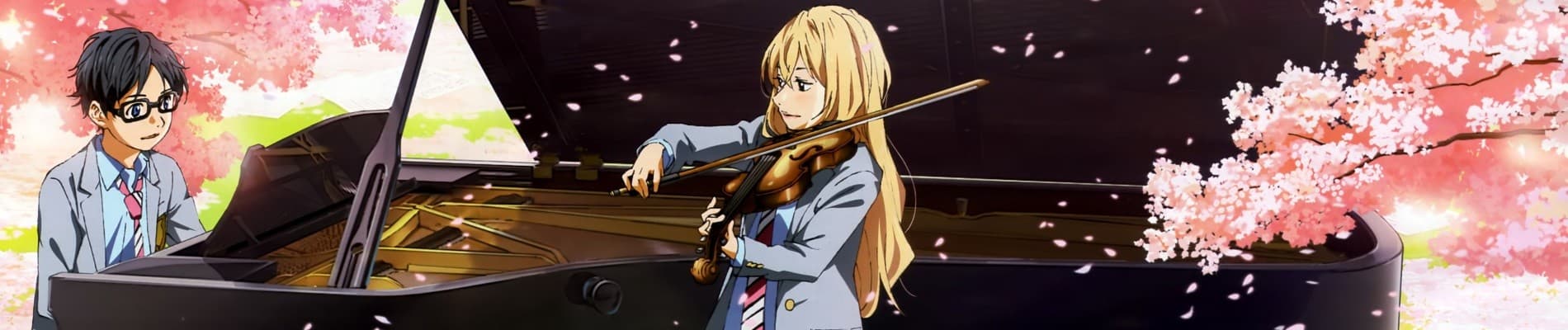

A soft piano resonates in the place ... Sitting in front of him is a boy with his eyes closed, concentrating on not missing the next note, on feeling the melody and, just as he did in the past with his mother, now Kousei plays on all to get the melody to her, to Kaori, the girl who lied to him to change her life into… Shigatsu wa Kimi no Uso.
The story of Shigatsu puts us in the footsteps of Arima Kousei, a young student with a magnificent talent for the piano who, however, has not been able to hear any notes since the death of his mother (and coach) years ago. And even worse because after this event Kousei not only lost his ability but also his motivation, being alone and trapped in a colorless and totally monotonous life from which his friends Tsubaki and Watari cannot help him out ... But everything will change. when our protagonist meets Kaori Miyazono, a violinist who is the opposite of Kousei: cheerful, positive and above all passionate about music. And it is she who will be in charge of bringing Kousei out of his lethargy called life, forcing him to return to music and, through many moments, some happy and others sad,
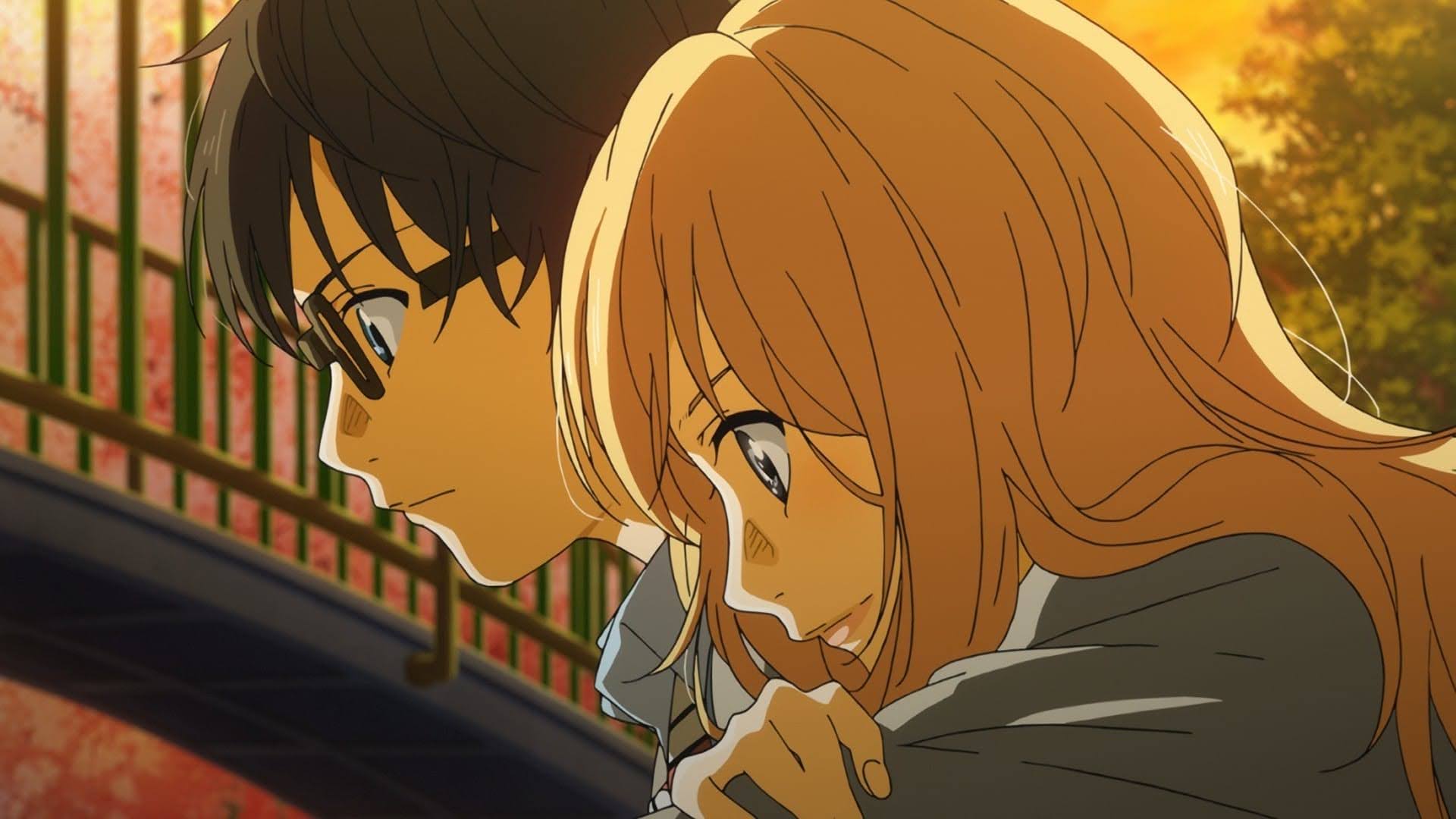
However, Shigatsu wa Kimi no Uso is also sustained at a narrative level thanks to the relationship that is built between its 2 protagonists, being that despite being counterpoints to each other, they have music in common. And this development is enhanced by a simple but very effective idea: Kaori's lie.. And it is that despite being a simple resource and that the affection between the two is quite palpable during the series, it also allows us to stay away from honeyed romantic situations or support based on the "love of one for the other", having instead a relationship of affection, companionship and silent understanding that is transmitted through their presentations. And again, this takes the series away from something empty and presents it as the passion that 2 people share for music. This will change of course in the final moments but the previous development will have enough weight to enhance the overwhelming final without falling into the cliché ... As the saying goes, not all stories can have a happy ending, but not for that. they cease to be significant, to mark our lives.

But not everything is rosy and Shigatsu can sin (not much really) in the development of his characters, sometimes rushing or disappearing someone as the series progresses. This does not ruin the viewing, much less the emotional impact of the story (I personally love this series) but it can give fuel for those who do not like it. It is also true that he can abuse the dramatic peaks in pursuit of sentimentality but again, whoever likes those kinds of moments will be more than pleased with the work.
Moving on to technical work, Shigatsu stands out thanks to the work of Yukiki Aikeiwho gives us designs quite attached to the original work, respecting the style and features of each character but adding specific touches to the faces and enhancing the fluidity of movements represented in the manga. And this is vitally important if we think that Shigatsu is a history of musicians, with which the sequences where they play are quite usual and in all of them the level is maintained and a good synchronization is made between the movement and the music. But this is not all and although not always present, the bright color palette is the perfect complement for stage work, having places like the park, school, auditorium or hospital, all with a good work of light and shadow. and with enough detail to enter the atmosphere of the series.
However, the best obviously comes from talking about the sound aspect, courtesy of Masaru Yokoyama . And is that Shigatsu not only handles specific themes of the series, but also presents a very good selection of classical themes (most of Chopin and Debussy) highlighting "Ballade No. 1 in G minor, Op. 23" , "Étude Op. 10 No. 4 " and " Étude Op. 25 No. 11 (Winter Wind) " by Chopin and the famous " Clair de Lune " performed by Debussy. But if you don't like openings so much, no problem because we also find songs like "Rondo Capricciosa" by Saint Saens or the cute "Twinkle, twinkle, little star"so it is very likely that you identify with one of the many themes of the series. And it is that also (and returning to animation) each one has the time and moments necessary to shine. And moving on to the main pieces, we have the OP "Hikaru Nara" by Goose House and "Nanairo Symphony" performed by Coala Mode , the first being that famous opening with the Steinway piano and the black cat in the background. 2 quite rhythmic and energetic pieces that manage to introduce us well to each episode but without overloading it with melancholy or sadness. The EDs on the other hand are "Kirameki" played by Wacci and "Orange"and even when I prefer the first, I recognize that the liveliness and rhythm of the second are the best closure to the story. Anyway, despite not being (for the most part) original pieces, the virtue of the series lies in the good selection it made ...
Shigatsu wa Kimi no Uso is so many things at the same time that it is difficult for me to pigeonhole it into just one: it is a story of friendship, of loss, a well-posed story of what it means to need and support someone and above all, it is a story of love, love for what we are most passionate about in the world ,how it is that we sacrifice for the sake of success and how that same passion can drive us to fulfillment, to find our place and above all to want to move forward. All supported by a narrative that is built little by little through failures and fears rather than victories, with characters who do not sin to rush or pretend and with a beautiful and delicate technical work full of color;Shigatsu wa Kimi no Uso is a beautiful portrait of the love of music ... A beautiful lie of what it is to live to the fullest ...
