Perfect World
a review by ladyfreyja
a review by ladyfreyja
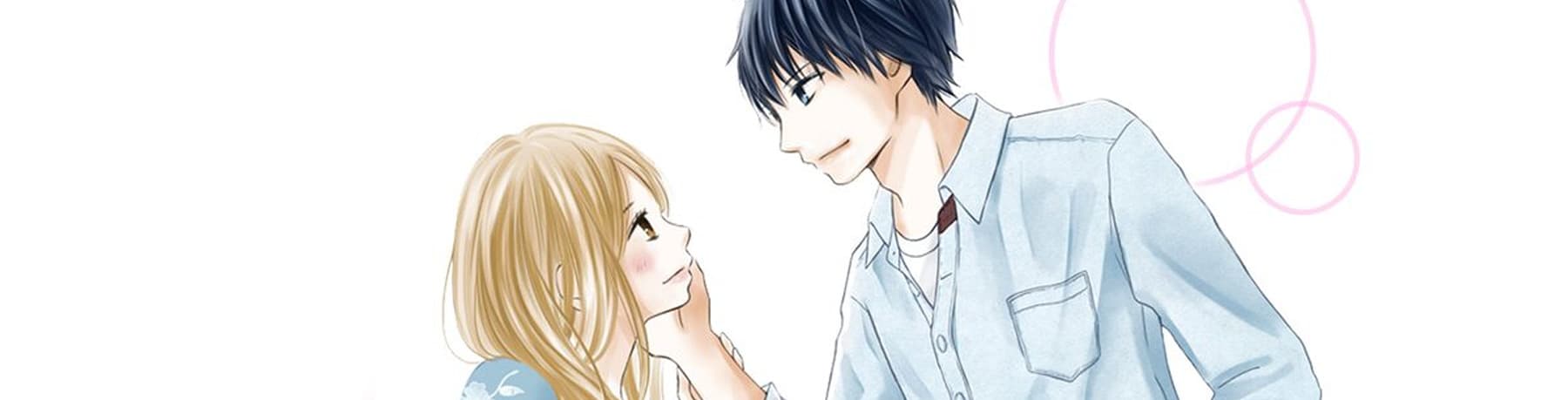
Perfect World (パーフェクトワールド ) is a romance and societal drama manga by Rie Aruga, serialized between 2014 and 2021 inside the adult shōjo magazine Kiss by Kōdansha, and published in 12 tankōbon volumes. The manga tells the love story between an able woman and a disabled man.
The manga met a huge success in Japan; it won the 43rd Kōdansha Manga Awards for its shōjo segment and it got adapted into live-action twice, with a movie in 2018 and in TV series in 2019. It's a big success, considering the fact that Aruga is basically a rookie.

For this review, I have read the French edition, published by Akata.
#Context
-------------
Manga about disabilities is a rather recent trend inside shōjo manga and ladies comics; the topic was only sporadically approached before the important success of Keiko Tobe's Hikari to tomo ni… (光とともに...), published between 2000 and 2009 inside the Akita Shoten's magazine For Mrs., which started the trend. Following this new trend, Kiss' editorial staff wanted to publish a manga about mobility impairment, one of the most visible form of handicap. They somehow asked Rie Aruga to work on this new manga.

As a child Aruga wanted to become mangaka but ended up to become an office lady in an import-export company. One day she started to read Nodame Cantabile and decided to try to fulfill her childhood dream by becoming a mangaka. She won a contest for Kiss and finally started in 2011 with the oneshot Tentai Kansoku (天体観測), a romance in an college astronomy club. She kept publishing oneshots until 2013 where she adapted Tentai Kansoku into a series called Oruto no kumo kara (オールトの雲から). But the series wasn't popular enough and was stopped after only 6 chapters; the series will not even be published in tankōbon format.
This is directly after this more-or-less failure that Kiss' editorial staff asked Aruga to draw a manga about disability, they still considered that she had some potential. At first, Perfect World was conceived as a oneshot. It was well-received and Aruga was then allowed to continue the story after the events of the oneshot (which thus became the first chapter of the series).
#The manga
------------
The story is about Tsugumi Kawana, a young interior designer, who is reunited with her crush from high-school, Itsuki Ayukawa, who became an accomplished young architect. But she is shocked to discover that he is now disabled, after he suffered an accident damaging his spinal cord, and that he must use a wheelchair for moving. The shock passed she learns about his new life, and finally fall in love with him again; this is the end of the first chapter and ex-oneshot. This story is very touching, even if it feels a little packed like most oneshots.

Then the story continues in the following chapters, and it is roughly divided into four arcs of about three volumes each with a tipping point between them. They are tackling various topics, like the health issues of Itsuki, the overwork and stress of Tsugumi, family rejection, natural disasters et cætera, with of course, your usual love-square, since this is fundamentally a shōjo romance manga.
This is the first important point about this manga: if it definitely contains a lot of educational content, this is not an educational manga in itself but is a romance manga. It avoids unnatural explanations and forced dialogues, there is no schematics and the medical jargon stay very low. I have read Hikari to tomo ni… recently, and the contrast between the two works in that regard is very notable. Depending of the reader, this approach of the topic might be a negative or a positive point; in my case, I would say it is a positive one.

Consequently, despite its length, the story stay focused on the issues encountered by the main couple and do not digress much, notably when it comes to the handicap; there is other disabled people in the secondary casting, we understand that their problems are different, but they are never approached with much details.
Now, Aruga is a rookie, and it shows when it comes to story-telling. In the first half of the manga the advancement of the plot feels somewhat forced and too convenient, always following the same schema: the two protagonists meet a problem, can't deal with it by themselves, encounter some other characters who have almost exactly the same issue, and thank to that, they manage to overcome their situation.
In the second part of the manga, the story basically follows the same structure, but at least the artificial feeling disappears, the flow of the events feel more natural. But then the pacing become a little more disjointed, with some important but seamless leaps in time, which feel a little disconcerting. Still, despite those two issues, overall, the manga is very enjoyable, giving a good place to melodrama and a nice character growth.

When it comes to the style of the manga, the art is clean and nice, with a typical character design for shōjo manga from this period. The page composition is also very typical, with a lot of empty backgrounds, open panels, internal monologues, and decorative and emotional elements. Overall I feel that, as the manga progress, the pages contain less but larger panels, which helps at portraying emotions.
The main issue that I have with the composition is how some speech bubbles are still placed on the very edge of the internal part. As it is Aruga's first manga to be collected in tankōbon format, it is not a surprising issue, but it is still inconvenient, especially when it still appears in the 12th and last volume.

#Conclusion
------------------
In the end, we have a romance manga build around a societal topic. I think it keeps a good balance between melodrama, romanticism while handling decently its topic. The characters face important challenges without failing too much into miserabilism or optimism. This balance is not an easy goal, and I think that if the manga managed such a success, it is because it founds it.
All in all, the manga is very pleasant to read even if not exceptional, and when you consider that it is the first proper series from Rie Aruga, it is nice to see her growing as an author during seven years of publication.
29 out of 29 users liked this review
