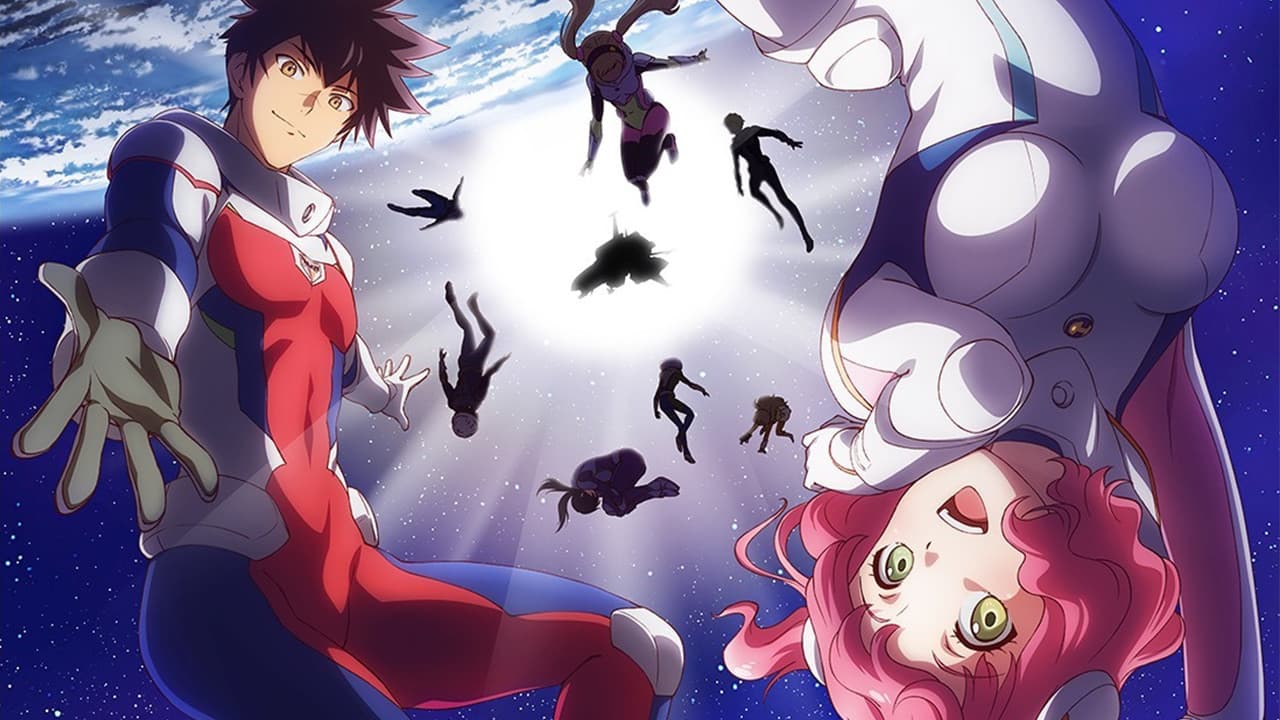

There’s a fairly well-known quote that’s been floating around the internet for a couple years now about how recent generations have been “born too late to explore the earth, born too soon to explore the galaxy.” Even though the phrase has been played around with and basically turned into a meme, I think it touches on a fairly universal truth – people want to explore and experience things they’ve never seen before. While a good portion of recent science-fiction is rather dark, brooding and introspective with a focus on “gritty realism”, for myself and many others the sense of wonder and exploration remains the primary appeal of the genre. The vast majority of people born in the 20th and 21st century will only be able to experience that “exploration” through media, and Astra Lost in Space is a very good example of what that should look like. Quick, light-hearted, fairly wholesome and most importantly fun, to me this is a show that nails the fundamental aspects of what makes a good sci-fi adventure story.
Astra is set in a future where interplanetary travel is commonplace, to the point where high school students are going to other planets for school trips – literally where the story starts. A group of randomly selected students depart to an alien planet for what is essentially the equivalent of a weekend backpacking trip, but almost as soon as they land they find themselves wormholed into the cold depths of space. After securing themselves on a derelict ship, they realize they’re months away from home with little food, little water, and no way to communicate. Luckily the group’s composition is basically ideal for making the trek back: Kanata the athlete is a natural leader who dreams of being an explorer, Zack is a tech wizard and pilot, Quittere is able to provide medical experience, and Charce is a biologist, while Aries, Luca, Ulgar, Funicia and Yun-Hua are able to pick up the slack in various other ways. This means that, while for all intents and purposes the students are stranded, the situation is far from hopeless. They’re hit with more bad news though, when it becomes apparent that a member of the group is trying to kill everyone and prevent them from returning; between being stranded light-years from home and grappling with a hidden murderer, there’s a lot to deal with.

Despite being concerning, the “secret traitor” plot thread ends up playing second fiddle to the primary goal of returning home. Since the group doesn’t have nearly enough food or water, however, they’re forced to explore alien worlds on the way back in order to survive. While this element of exploration is one of my favorite aspects of the story, in large part that’s because of what it chooses to leave out of the limelight. Some sci-fi stories with survival themes, such as The Martian, focus on the minutiae of how the characters actually survive in space; in contrast, Astra introduces plot devices early on that trivialize the collection of edible food, water and fuel. I think that many may find this “cheap”, but I feel like it gives the story time to focus on much more dramatic and traditional sci-fi threats, often based around alien fauna. From pterodactyl-esque creatures to deadly plantlife, these dangerous worlds create fantastical situations that are then used to drive the characters together.

There’s another famous saying (this time in latin) that even appears as a plaque in the show, “per aspera ad astra” or “through hardship to the stars”. Despite having the skillset and tools to survive and manage the “bigger picture” issues, this journey is not exactly a cakewalk for the group. Bizarre and entirely alien events are often very nearly fatal, and it’s in these moments of hardship that the characters get a chance to shine – after all, nothing brings people together quicker than needing to restore power to your ship that’s entering a planet’s atmosphere (preferably before you splatter onto the ground). Individually each character is given a few key moments of personal growth, often coming about because of an issue that’s plaguing them. Many of these issues stem from a problematic family life and a lack of support at home, and while this means that the group members are often used to fixing their own problems, for the first time in their lives they realize they don’t need to struggle alone; going through life and death situations with others finally gives them the support network needed to help work through what they’re dealing with. Although it's a little corny, the group not only bands together to survive but also to help with personal insecurities and issues, ensuring no one person is shouldering too much of any burden. This does shift the focus of Astra away from individuals and onto the group as a whole, but it works really well. As the story progresses the audience gets to see the team grow closer together, initially just going from total strangers to wary allies, but eventually becoming an inseparable bunch of friends that border on family.

Astra does have a lot going for it, but there’s a fairly major thing that bugs me – the “secret traitor” plot thread and what it grows into. At first it’s fine, providing an undercurrent of tension that helps to move the story along. It encourages the viewer to pay attention to every little detail like they’re watching Sherlock Holmes, while also contextualizing a lot of the early tension between characters – after all, who can totally let their guard down when they know someone might be trying to kill them? The issue is that everything surrounding who the traitor is and what their motivations are feels contrived. In order for the story to remain relatively cohesive, things that the viewer couldn’t possibly know about, or even guess at, need to be brought to light and introduced constantly. I honestly just think it’s rushed: the new plot details don’t stand up to the slightest bit of scrutiny, and it seems like the plot thread is just a way for the characters to reach their pre-determined ending. So while in the lead up to the reveal Astra does a remarkable job of concealing who the traitor is, when the reveal does finally happen I couldn’t bring myself to care.

That’s also saying nothing of the tonal shift that Astra undergoes. As mentioned earlier, the show is for the most part fairly wholesome and straightforward; at the beginning the goal is essentially get from point a to point b, and the groups’ chemistry is very endearing. As more details about the conspiracy emerge, however, the story just feels darker and a little muddied. The cast of characters that have been at the center of everything feel sidelined, and even insignificant, just a small piece of a much bigger picture that gets dropped on the viewers lap. That’s a direct result of introducing a grand conspiracy significant enough to impact all of humanity, and while it’s not enough to ruin the show for me, I will say it does hamper it.

In spite of those issues, I can’t help but like Astra Lost in Space. To me, science-fiction is a genre more about highlighting what humanity dreams we’re capable of, as opposed to focusing on how we’re going to be murdering each other in the future. Astra doesn’t use its setting to explore the ethics of artificial intelligence, use the vastness of space to try and make some kind of nihilistic statement about the true nature of man, or anything like that. It’s really not profound at all. But it’s pretty fun, with a charming cast of characters. More importantly, Astra does something that I think is paramount for sci-fi stories, which is create a universe that the viewer wants to be a part of. A good sci-fi story should make me envious that it’s not the universe that I’m living in, and even with the constant danger and conspiracies, Astra manages to accomplish that.