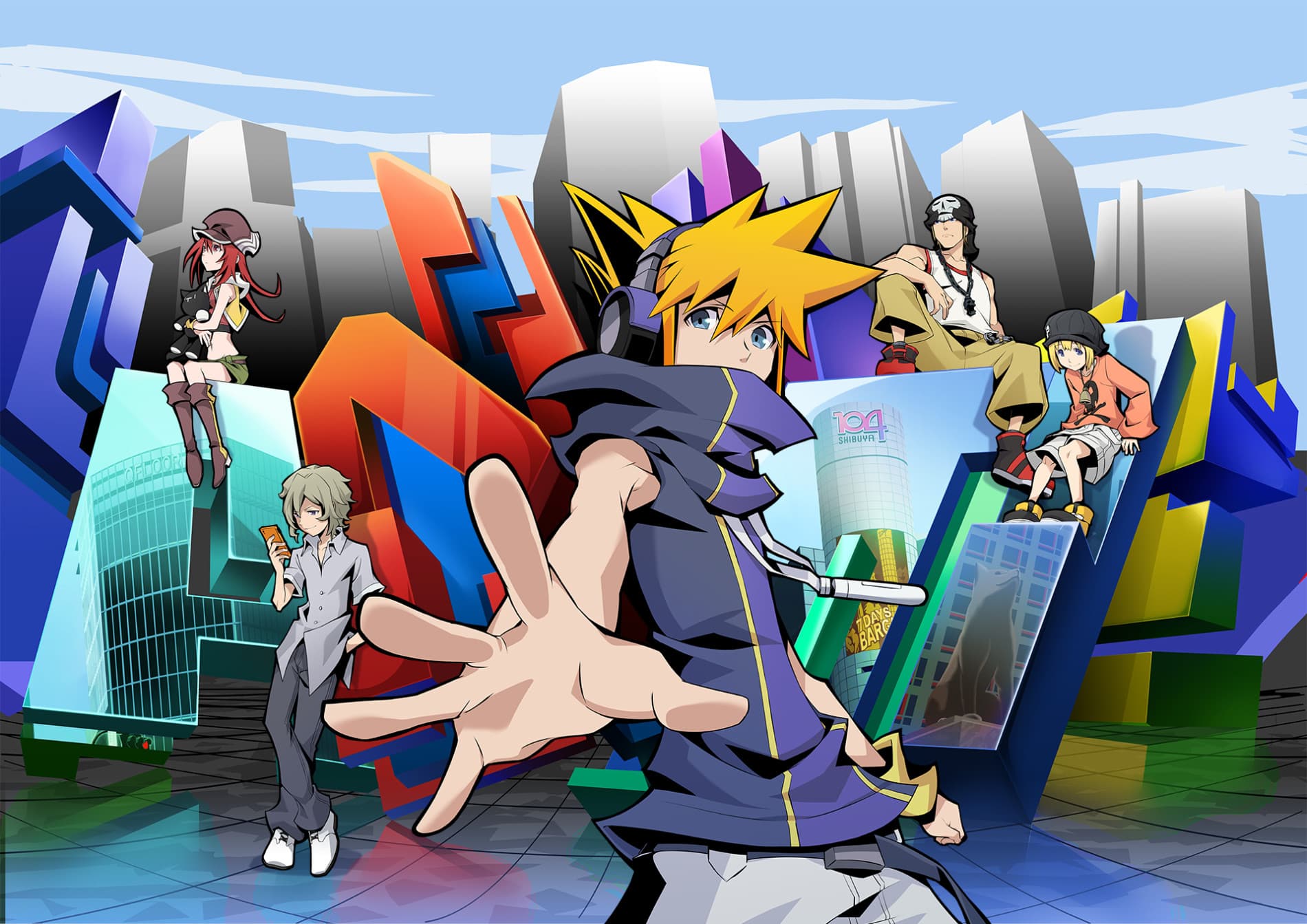
As a longtime fan of the game, having played every iteration of The World Ends With You (the original DS, the mobile, and the switch ver.) I was really excited to see the show get the love it deserved and see the animation of it. But ever since the first episode, I have been let down episode after episode that eventually I was finding major differences and questioning why the studio and the writing staff choose to make the changes. This serves more as a critical analysis of The World Ends With You -The Animation- rather than a traditional should you watch. I will be talking about the story in terms of weeks just to have some consistency and organization as if I talk about every day then this will be very long.

As a proper note at the beginning, I am not trying to be pretentious, elitist, or gatekeeping the experience of TWEWY from the animation, but I am here to express my opinions of one of my favorite games that I have played and why I have been left disappointed by the animation. I do not wish to take away or demean anyone from the experience they gained from this animation. I have friends who haven't played the game and their first interaction of the franchise is through the animation. This critical analysis is purely to assess the changes made to the animation and how the differences have altered the overall authentic experience that the animation has brought.
I think on the animation department it is actually pretty good. The blend between 3D CGI and 2D animation are pretty much seamless, outside of pretty bad CGI from time to time, but overall, visually the animation does a very good job of replicating the feel and style of Tetsuya Nomura's character designs, locale design. and noise design. The battles were mainly in 3D, but in order to cut corner's a little, it might have been a necessary evil to use 3D than 2D. Since 2D animations require massive amount of time and planning to make the fight scenes, though I wished that the team dedicated more of their staff to work on this, since it sometimes shows where the 3D CGI can be a detriment. The studios' other works have really nice CGI, like the Doraemon movies or the Shin Chan movies. This is difference in quality might not be fair comparing movie budget with TV budget, but it still would have been nice to see some hand drawn 2D fights.
The protagonist, Neku Sakuraba, is extremely antisocial and deliberately chooses to shut out people for being too loud. Neku is very to-himself and only cares about himself, not wishing to make any friends or connections. Week 1's partner is with Misaki Shiki, a girl that is very lovely and very social. This contrast between Neku and Shiki is very important in the very first week of the game as Neku slowly opens up to Shiki as they are both desperate to survive the reaper's game. At first, Neku was very ignorant of Shiki and flat out ignores her at the beginning as he thought she was being too obvious and slow. To punish Neku’s ignorance, Neku was tricked by Uzuki to kill Shiki to win the game, just before he was about to do so, Hanekoma steps in. He sheds some light about the repear’s game. Hanekoma emphasizes the importance of having trust in Neku’s partner and its key to survival. As a reward he hands him the Fusion Pin, which is a powerful pin that can be utilized when the partners are in sync to unleash a devastating attack. In day 2, the two meet Beat and Rhyme as they both all figure the mission out and without each team, they would not have finished the day. But eventually, Rhyme gets baited out and "erased" and acts as a reminder for Neku for why they do not need friends and they cause nothing but pain to him. Rhyme erasure perpetuated and enforced Neku’s solitude and confinement, and further adds the complexity and emphasis to the eventual growth of Neku further down the line. In contrast, Shiki on the outside portrays herself as positive and straightforward, but in day 5, Neku finds out that she was hiding her jealousy when exposed by Higashizawa. In day 6, Shiki was unable to portray her straightforwardness, and instead see the leadership that Neku had take over to complete the day. Shiki was able to confront her emotions by hearing the truth from Eri and is complimented with Neku being supportive of her and her ability to seam, and ultimately to have another chance at life. And with day 7 to defeat the game master and claim their victory for the week.
In week 1 of the animation, studio Shin-Ei and Domerica handle Neku very loosely and from the beginning, Neku does not have his antisocial tendencies, and is rather very welcoming of Shiki, Rhyme and Beat from the beginning. This “loss of character” is one of the most important aspects of that is prevalent throughout for almost every character, maybe outside of Beat. Perhaps it might have been the 12-episode time restraint, the character development for everyone especially Neku and Shiki have been heavily cut down to the point that one might question that they might have known each other from the very beginning. This has a very big consequence in later scenes where Neku mourns for losing Shiki as his entry fee for week 2, but it feels rather weak and has no emphasis or build up that the games had that makes Neku’s growth and his relationship between other characters feel real. The rushed pacing of the show has no room for Neku to sit and think about what is happening like in the games, especially for a character that thinks a lot to himself. Shiki being Neku's first partner serves a very big role for Neku's motivation later but seeing Neku’s progression does not have the weight that the game Neku carries. There are other changes that the animation takes, such as pins that Neku should not have at the very beginning, the Hachiko puzzle in day 2 being gone, the technician being a reaper in day 3 as well as the pin that 777 gives Neku being a wall key pin rather than a limited time pin. Higashizawa does not have much of an impact on the story like in the game, and the show lets Shiki find the personal conflict herself rather than being exposed by him. I feel like this approach left Shiki in a very awkward place. Seeing Shiki’s entry fee be exposed by the game master makes the reapers more threatening and have a firm grasp on the players as they survive the week. But the animation lets Shiki find her own conflict and exposes herself to Neku rather than being forced by it by Higashizawa. I just could not help but think that the animation team was just hitting the main points of the story, but without the plot points that make the impact of those main points memorable and impactful.

Week 2 introduces Joshua, as a quirky and condescending person towards Neku. This is another contrast that the game puts the players in. As the player was getting comfortable with Shiki, Joshua serves as the next partner for Neku. Joshua throughout week 2 is a very mysterious person. Neku never was able to get a read on Joshua as he hides most of personality behind his condescending smirk as well as knowing more about the reaper’s game than a normal player should. Neku is very suspicious of Joshua because of this as well as Neku getting flash backs about his death at the graffiti mural at Udagawa which Joshua secretly eggs Neku on about, which serves as a bigger motivation for Neku as he wants to find out what happened when he died as well as who did it. Minamimoto being game master also triggers his memory, but is unable to figure out what as a headache occurs when trying to figure it out. As the players are wondering if Minamimoto is connected to Neku as Minamimoto is sporadic and uncertain if he is talking to either Neku or Joshua which makes it ambiguous for the player. Later in the week, this is further played with as Neku’s memories is constantly returning with Minamimoto and Joshua being at the scene where Neku died and eventually at the end of the week, Neku’s death is rounded out by being because of Minamimoto. Another change is Beat, he is now a reaper in order to save rhyme. He comes after Neku to bully him as his anger towards Rhyme’s death has no output. Beat now seems cold to Neku and does not seem to budge about being a reaper and only seeks to cause havoc for Neku. Though Beat does stutter a bit when Neku gives back Rhyme’s pendant to Beat when he dropped it one time. Week 2 rounds out with the fight with Minamimoto and although Neku never fully trusted Joshua, but he was his partner so he did trust him as much as he could. Ultimately being able to defeat Minamimoto by taking the final blow of Minamimoto’s meteor. Joshua in the end was very influential to Neku as Neku was able to open up to other people than just Shiki and the interwoven motivations of all the characters is what perpetuated Neku to push on to live another week.
Week 2 of the animation is handled more or less the same, but similar to week 1, there are many aspects that build up with Joshua and Neku are cut for the sake of time. Joshua takes more of a forward approach to Neku and even flat-out taunts Neku to scan him and reveal Neku’s death to him. This forward approach, in my opinion, is a contradictory approach to portray Joshua’s character in week 2. Since at the end of the game, Joshua is eventually revealed to be the composer of the entire Shibuya underground. Up to the very end, the air of mystery for Joshua, that was present in the game, seems to be missing or part of the charm of Joshua’s character and his actions in week 2 just does not seem to be there. Though the Shibuya River aspect that Joshua was going for is there, but the relationship with Neku as well as Minamimoto just come as flat and unimpactful. The show really pushed the viewers to be suspicious of Joshua rather than playing between Joshua and Minamimoto. Taboo noise were way more abundant and a little underwhelming since Neku and Joshua were able to defeat them with their “sync” powers. In the game, yes the player is supposed to attack the taboo noise in tandem with the partner to deal actual damage, but since the show always showed Neku and his partner “focusing” it really did not feel like the Neku and Joshua fighting together to figure out the mechanics to defeat the taboo noise. I will bring this up here for brevity, but the “focusing”/”sync” mechanic that the show was going for I think was a complete disaster. They were trying to imitate the fusion pin mechanic in the game, but the show really liked using this mechanic to show that Neku and his partner was ”in-sync” and working together to overcome the fight. I really wished they just implemented the fusion moves while fighting rather them focusing and doing it. The flow of combat was very repetitive for that reason. Combat did feel same-y for the majority of the fights in the show. Speaking of same-y, the pin selection was also very limited in the show. Neku really likes pyro pins and ice riser pins since those were by far the most used pin types. When there are tons of other types of pins such as telekinesis pins, force round pins, debuffer pins, slasher pins, healing pins, or even noise pins. There is a lot of pin types and I wanted to see more variety than just pyro and ice risers.

Week 3 is the climax week for Neku since it is his last chance at the game and with Beat, the ex-reaper, by his side to conquer the week as well as finding the truth about Shibuya’s underground. Week 3 is all about finding Konishi, the new game master. Konishi takes Rhyme as Beat’s entry fee and turns her into a pin as the goal of week 3 is to find Konishi in a grand game of hide and seek, but Konishi does not move a single spot. While Neku and Beat try to find Konishi, week 3 is about seeing the individual stories that people have and accepting those rather than turning everything to uniform. The red skull badges seen in week 1 play a role since the entirety of Shibuya is under emergency call. Meaning that the whole underground is out to take out Neku and Beat. Amidst that, Neku learns more about the other reapers, especially Kariya and Uzuki. They have been antagonizing Neku since the very beginning, but in week 3, Neku sees them more eye to eye as the two fought as well as seeing Shibuya in a distressed state. Kariya is everything good that Shibuya has. The laidback attitude of people watching as well as seeing the individual stories that everyone has while also respecting his own. He doesn’t strive to be a top-ranking reaper, but rather likes to roam around and with Uzuki, he feels at ease being an officer reaper. As the red skull pins begin to turn everyone into uniform zombies, Neku and Beat make their way into Shibuya River on the 7th day. Konishi then reveals herself from Beat’s shadow. The fight with Konishi is about symbolizing Neku’s ambition to keep Shibuya as Shibuya rather than transform it into a singular clump. Within the white battle, the heavy use of light and shadow were utilized to symbolize the union of both the good and the bad part about Shibuya as well as Neku. Neku being the prime example of the transformation that Shibuya has seen. Along with Beat and Rhyme, the three of them defeat Konishi and head further into Shibuya River. Kitaniji awaits in Dead God’s Pad, a bar and a hub for the higher-up reapers to reside in. While fighting Kitaniji, a possessed Shiki comes and attacks Neku and Beat, but eventually the spell is broken by destroying the red skull pin that Shiki had on since week 1. Beat and Shiki fall unconscious, but Neku chooses to continue by himself to fight the composer. Along the way, there were murals of CAT’s graffiti, Neku looks back on the 3 weeks he spent on the underground. Neku looks back on the people he met, the people he sees die, the challenges he faced, and the amount that he changed. Once Neku heads into the final room, the Room of Reckoning, there was Kitaniji again. He gives Neku the insight of Shibuya’s “new” look and why he has been so adamant of doing so, as he attempts to erase Neku. Beat and Shiki make their way into the room and the final fight begins. As the first phase of the fight is beat, Joshua appears from nowhere and says that Kitaniji’s timer is almost up, But Kitaniji is not done as he throws a binding to Joshua and fuses with Joshua and binding Beat and Shiki, leaving Neku to fight all alone. But Neku is not there alone, Neku is there with his friends to fight for the future of Shibuya and a more selfish reason, to live another day with his new friends. Once the fight ends, Kitaniji and Joshua reveal their 1 month game: Kitaniji to change Shibuya or Joshua to erase it while Joshua was to pick a single proxy to fight for him, being Neku. After Neku learning about the truth to the reaper’s game and Joshua being the composer, he is enraged. Mad because of being used for Joshua’s own benefits and his experiences up to this point have been nothing more than a whim on Joshua’s end. Neku was simply there. Joshua makes an agreement. They have a shoot off. If Neku wins, Shibuya is saved if Joshua win, Shibuya is erased. They have the standoff, but Neku just cannot seem to pull the trigger. He does not want to shoot his friend, and in the end, he does not and ultimately letting Joshua shoot him. Neku wakes up on the Shibuya crossing, but this time with people watching, and shouting “what the hell!”

The animation’s week 3 is the same for the most part, but the animation breaks its own logic for no reason. The main one being Konishi. Despite her playing the hide and seek game, she is often seen to be moving back and worth in the shadows in different places rather than just in Beat’s shadow. This is a sign that the animation team does not take into account Konishi’s logic as well as her personality. She will never break her own rules, especially with her nickname being Iron Maiden. The fact that the final day of the animation is day 6 rather than day 7 completely throws me off. Why couldn't the animation team just split a day in half to fit day 7? Rhyme was also mismanaged in the animation. In the game, Rhyme was turned into a pin, but the animation simply let Konishi absorb Rhyme into her. This change makes the fight with Konishi a bit wonky since at the very end of their fight, Konishi takes away all of Neku's pins in the white room. Rhyme was the only pin that Neku could use to finish off Konishi further solidifying the bond that Neku has with the people he interacted with. But unlike that, the animation kind of rips Rhyme out of nowhere and does a final blow to her. This hurts the fight yet again by ruining its logic a bit with Konishi saying "how can you use noise!" when this could have been avoided if Rhyme was a pin to begin with. Another aspect that was taken away in week 3 from the games in the animation is the relationship and fight with Kariya. Leading up to the fight, he scatters puzzle boxes and the players have to figure out the puzzle. This aspect about Kariya is completely stripped away for a generic fight with him and Uzuki. The final battle with Kitaniji is almost as empty as Kariya’s fight. Not only does the Dead God’s Pad fight not there, Kitaniji takes a beating then transforms into his final form, not with Joshua, but with Taboo noise. What is the point of doing that without Joshua when he could’ve been there and the transformation would not have been so janky? And ultimately Joshua has become subjected to this scrutiny as well. Joshua’s reveal of being composer was after the fight in a separate room to imitate the Room of the Judged with CAT’s graffiti. This very much takes away from the purpose of having Room the Reckoning being the final room as well as Joshua’s big reveal. The reason why this scene falls flat is due to Joshua appearing after the Kitaniji fight rather than along with Neku in the final fight. This contrast heavily hurts the animation’s presentation and delivery of the final scene of show and portrays Joshua as cold, uncaring, and ruthless. Whereas in the game Joshua was there for Neku till the very end (despite him being the composer and literally bringing Neku in the game) and most likely have been changing his mind throughout week 2, thus the big reveal having much more impact and more meaningful in the end.
I was really anticipating a one-to-one rendition of the game, but my seeds out doubt started with the 13-episode season and the first episode. From the first episode, I knew that I was not getting the same experience that I experienced from the game. Some of the subtle changes I did like. For example, having more screen time with Nao and Sota or the exclusion of the minigames, such as Tin Pin or Reaper Creeper. But the number of changes that were outright unnecessary and could have sticked to the original was more prevalent than the minor changes that the show did. The animation team had the entire game as a reference point (and not that long of a game either), but from what I saw, it just seemed like the animation team tried to remember the game from their memories rather than try to actively use the game to make the show as one-to-one as possible. Perhaps the animation team’s goal wasn’t an one-to-one, but even then, the things that were changed did not amount to much or ruined the point of the entire build up of Neku’s adventure throughout the underground of Shibuya.
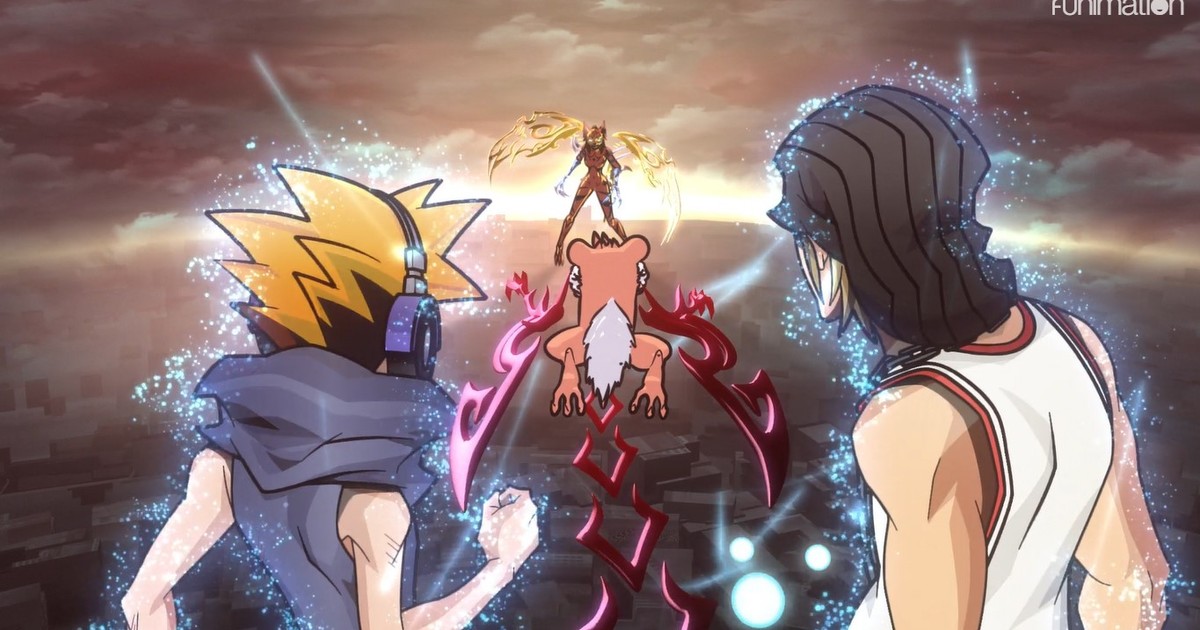
In conclusion, I heavily recommend playing the game since it is the raw experience of The World Ends With You, and I cannot recommend the animation to someone new. As much as I did enjoy the parts that the animation did do right, there were equal amount of things that bothered me, so the score just ends up being 50/100. If you have seen the animation and did like it, then I cannot recommend the game enough as it is a timeless classic that preserves early 2000 Japan as well as having a comparison of the animation with the actual source material. I recommend the mobile version since it is the cheapest (about 15 dollars), but the switch version is there as well (50 dollars, but I would wait for a sale). And yes, I will be playing NEO, I really liked the demo.
If you read all the way to end, thank you. I know there is quite a lot to read, but I wanted to get my opinion out there. If there is any criticism about this review, please send them my way and I will find ways to change the wording or phrase it differently. I wrote this myself and edited it myself, but I do not have anyone that I know that played the games through and through and watched the show, so please let me know.
30 out of 30 users liked this review
