
 There's only a handful of non-compilation Gundam movies. Of them, 1998's Char's Counterattack is the most notable. It serves as a turning point for the Universal Century, the original and most prevalent Gundam universe. Char's Counterattack is the finale for the original Mobile Suit Gundam trilogy of shows. In a way, it's also a sendoff to Tomino's run of directing UC Gundam works. Gundam F91 and Victory Gundam were both plagued with production troubles and Tomino isn't proud of either of them. Love it or hate it, you have to admit there's a weight, a finality to Char's Counterattack that makes it more important, both in-and-out of the universe, than many other Gundam entries.
youtube([https://www.youtube.com/watch?v=B9LQhyBYSeg)
Char's Counterattack is probably the most well-received Gundam movie in addition to being the most notable, but that isn't saying much. In the Gundam circles I find myself in, Char's Counterattack isn't terribly well-liked. It might be important context to know that I personally enjoyed Char's Counterattack a great deal. It's not my favorite Gundam entry, but I had a lot of fun with it. It was a nice send-off to the characters of Amuro and Char. It's really cool seeing Amuro's evolution from a reluctant pilot into a fearless hero who saves humanity, not losing his ideals amidst the horrors of the various wars. While I have my gripes with his character, Char is a good foil to Amuro in this regard, being a hero who regressed back to being the villain he was originally introduced as. Despite Amuro and Char both perishing in battle, there's an optimism in the ending that really hadn't existed in any Tomino show prior. The suit designs are great and my RG Sazabi is one of my favorite gunpla. The main theme is fittingly mystical, yet bombastic. And, of course, the animation is top-notch for the time, creating one of my favorite fights in anime.
That said, it's certainly not perfect — I can't go up to bat for something without knowing the curve of the ball. The core of Char's Counterattack's shortcoming is its ambition. At 2 hours, CCA isn't a short movie, but it's still much too short for what it sets out to achieve. We start in the middle of a conflict we haven't been introduced to. CCA takes place 5 years after its direct predecessor ZZ, and nothing in that show adequately sets up the movie. In addition, Char does a 180 that leaves me feeling unsatisfied, since we aren't really shown how he gets to this point. Oh, sure, there are things proposed by fans, but the movie itself drops the ball. While I do enjoy Char's Counterattack overall and believe parts of it exemplify what I love about Gundam, I have to acknowledge that it also exemplifies everything wrong with a Gundam movie. While Gundam Narrative isn't as exciting or ambitious, in its lack of ambition, it ends up being a more solid movie even if I enjoy it less than Counterattack.

Why do I bring Char's Counterattack, you may or may not be wondering? Well, besides both of them being Gundam movies, it’s important to think about Char's Counterattack when watching this because Hathaway is a direct sequel to it. The events of Gundam Unicorn aren't referenced despite taking place in between Char's Counterattack and Hathaway. I'll defer judgment of this until the trilogy is concluded, but this is important to know because it'll temper and transform your expectations.
This disconnect between Hathaway and the series that directly precedes it in the timeline is mainly due to production. From 1987 through 1988, Tomino wrote a light novel titled Mobile Suit Gundam: High-Streamer. Sunrise decided to adapt the novel into a movie. Upon the movie being greenlit, Tomino changed a few key points from the novel for his script. Sunrise would reject this script and Tomino would release it in 1988 as the novel Mobile Suit Gundam: Char's Counterattack - Beltorchika's Children. The source of this movie, Hathaway's Flash, was a series of three novels written by Tomino from 1989 to 1990 as a sequel to Beltorchika's Children. There are differences between Beltorchika's Children and the theatrical Char's Counterattack that slightly complicated Hathaway's Flash in terms of canon. Additionally, Sunrise seemed more interested in creating F91 and Victory than trying to adapt Tomino's sequel to his dubiously canon, rejected script. I had already known the ending of Hathaway's Flash, as plot points were casually tossed around the fandom. The novel was over twenty years old and no one actually thought it would get an adaption. Mind you, I only got into Gundam during 2016, so this wasn't that long ago. With all this in mind, it was exciting and surreal to discover that this series that had largely amounted to a Gundam trivia point was now getting a film adaption, was finally being invited into canon. And it's interesting to see another animated UC Tomino work, after all these years, even if he's not in the director's chair.
Hathaway's Flash is being adapted into a trilogy. The first movie of this trilogy Mobile Suit Gundam: Hathaway is largely a setup movie — a first act more than anything. However, its status as a setup film makes it the best Gundam movie to date. Hathaway doesn't cram too much in its short runtime, instead, using it artfully to introduce viewers into the setting in order to use it in the future. Hathaway seems to learn from its predecessor's mistakes by effectively setting up events. In taking it slow, this trilogy has the potential to be one of the best stories Gundam has to offer.
The year is UC 105. Twelve years have passed since Char's Rebellion and seven years have passed since the Laplace's Box incident. Corruption and brutality courtesy of the Earth Federation has reached a fever pitch, leading to widespread unrest. This unrest has led to the formation of an anti-Federation terrorist cell, Mafty, led by a man going by the name Mafty Navue Erin. Mafty hijacks a plane filled with various Federation leaders with the intention of executing them. The hijacking is thwarted by Hathaway Noa, the son of the famous captain, Bright Noa. While the man calling himself Mafty had been killed in the confrontation, it’s suspected that this isn't the actual Mafty. Hathaway finds himself entangled with both Colonel Kenneth Sleg and a woman named Gigi, both of whom suspect the young man of being more than meets the eye…

The first thing you'll notice about this movie is that it's abso-fucking-lutely gorgeous. The art direction of the film has a nice, subtle quality that I enjoy. It's like an evolution of Unicorn's style and makes the entire film feel more grounded. But where Gundam: Hathaway is truly sublime is in its animation. This is, full stop, the best animation I've seen in the franchise. Every scattered beam, every explosion, every fire is absolutely mesmerizing and beautiful. While watching with a friend, I'd audibly shout and gawk because it's that good. The "War is Hell" angle risks being undermined by just how crisp and beautiful it looks here. Ultimately, I think Hathaway pulls off the horror pretty well thanks to its fight design. One of the fights of Hathaway takes place in a city and it feels extremely weighty. You can feel the immense size of mobile suits as they fight. Practically every action is destructive, creating collateral damage. It makes for a very breathtaking, yet chilling sight. If nothing else, I'd suggest checking out Hathaway for the most stunning mobile suit combat to date. The music is also quite good — as a whole, the production values of Hathaway are absolutely top-notch.
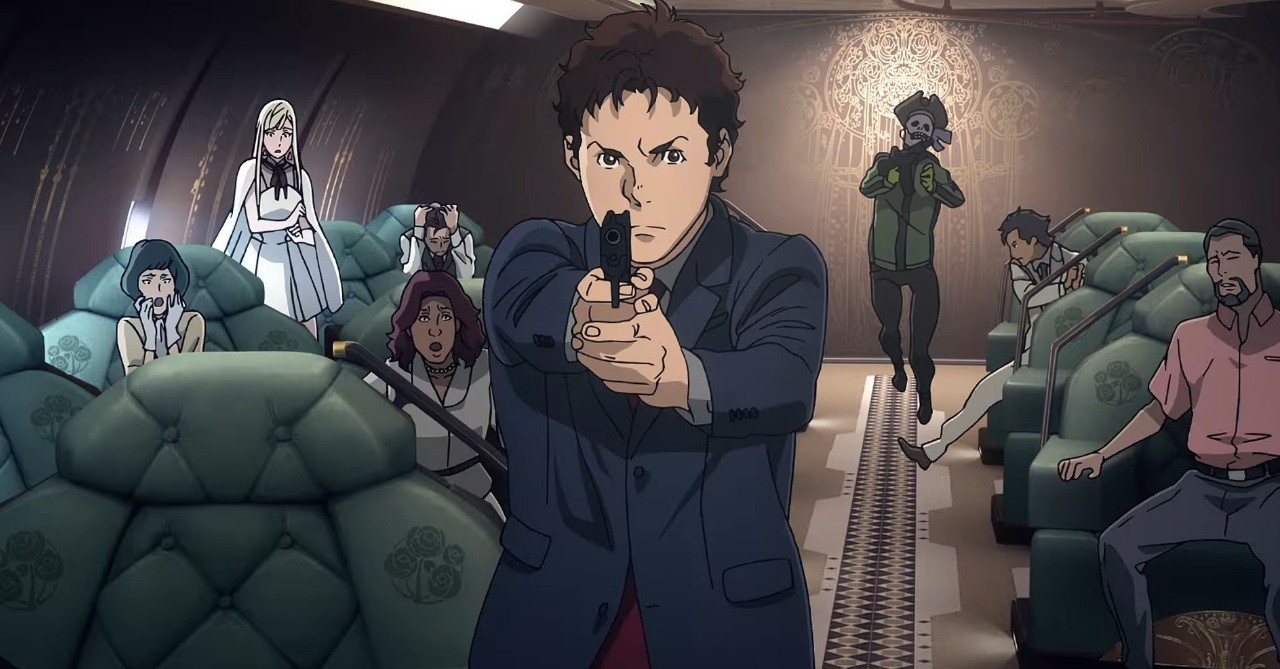
The movie has a distinct James Bond feel going on, which I enjoyed because it's always fun to see Gundam trying a new style. The movie begins with Hathaway averting a plane hijacking and then segues into a Bond-esque vocal opening song. If that didn't seal the deal for you, right before the opening, in the English dub Hathaway introduces himself as "Noa, Hathaway Noa." There's a subtlety to the voice direction, an air of political intrigue to the story that lends to the idea that this is a pastiche of a political thriller. Centering this spy movie feel is Hathaway himself who has a suave demeanor. If the animation doesn't hook you, then maybe the unique direction will.
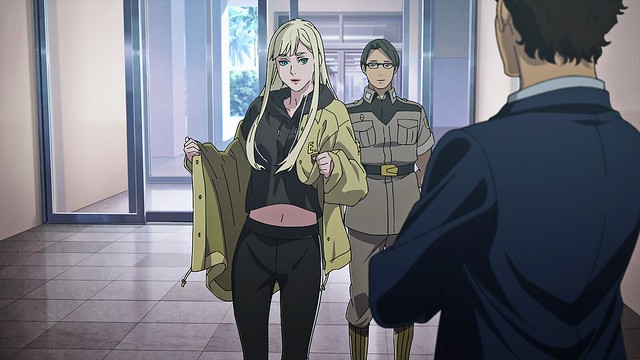
The characters are a bit of an interesting case. In Hathaway, there are really only three characters of immense note — Kenneth, Gigi, and Hathaway himself. Therefore, your enjoyment of the characters of this movie boils down to your thoughts toward a select few. Kenneth is a character that I loved to hate — he's an intelligent schemer that engages in a great cat-and-mouse game with Hathaway, but his suaveness and intelligence are tempered by the fact that he's an absolute, womanizing scumbag. It's cool that his negative traits are organically shown more and more throughout the movie — from hitting on Gigi culminating to torturing a prisoner. He's really a great symbol of the Earth Federation's frightening power and corruption circa UC 105. Gigi is a very fun, mysterious, and alluring character. She has this quality that draws me in and I can't wait to see more of her. I've heard her dismissed as a "quintessential Tomino female character." If that's true, maybe I'm his intended audience because I absolutely adore Gigi. Then there's Hathaway whom I'm not really sure what I make of. I like the fact that he's different from your standard Gundam main character fare. He's calm and collected whilst not dipping into the catatonically stoic levels like Mikazuki or Heero. There's a jadedness, a cynicism to Hathaway that sets him apart from his predecessors, yet a youthful naivete that causes him to use that jadedness to fuel ill-thought extremism, similar to Char Aznable during the events of Char's Counterattack. He's a man stuck with the mind of a boy in the past. While this is compelling, his motivations are less so. It seems like a lot of what fuels him are his feelings for Quess, who died twelve years prior when he was thirteen. He seems to have picked up the worst of Char's personality. Granted, I could just be misreading him — in general, I'd like to see more of what makes him tick, as that was lacking in this movie. That said, Hathaway has a great conversation with a cab driver in which he’s forced to reckon with the fact that his lofty ideas for the future might not help the common man in the present. This is only the first movie, and there are seeds of development, so I'll defer judgment of Hathaway. I remain optimistic that he'll grow into a character I'll love soon enough.

Then there's the story. I think this is a good segue into the film's weak points because, as much as I enjoy it, I can see where people take issue with it. As I said before, Hathaway provides context for the world, the social and political climate that our protagonist finds himself trying to change. Given the increasing ridiculousness of new types in the UC, I enjoy how lowkey they are here. There's an air of mysteriousness to them — from Amuro's voice, to Gigi and Hathaway’s connection. It’ll be exciting when things ramp up in intensity later. And I think that's a good way to approach this movie — the setup to future payoff. I can understand why some wouldn't enjoy this, however. This movie doesn't really stand up on its own and you really have to go in with the knowledge that this is just the small part of a bigger whole to properly appreciate it. The movie isn't designed to stand on its own, and as I said before, without that burden, it’s able to "breathe" a lot more than its predecessor.
That said, the movie certainly does have a bit of a structural problem. I think there's something to be said about the fact that many had no idea this was the first of a trilogy. This really feels like something that should be more apparent. The movie also ends pretty abruptly. I get that this is just the first section of a larger story, but the individual sections should either be self-contained or directly lead to the next, and this doesn't really do either. There are some decent hooks, but they're kind of just thrown in the middle of the movie. Gundam Hathaway doesn't need a cliffhanger ending, but I think it would've served it well to have something that really intrigues the viewer at the end before the credits roll, making it seem like they need to watch the next filmt. As is, you can really take-or-leave Hathaway, which is a damn shame because I just know the next movie will make this one better in hindsight.

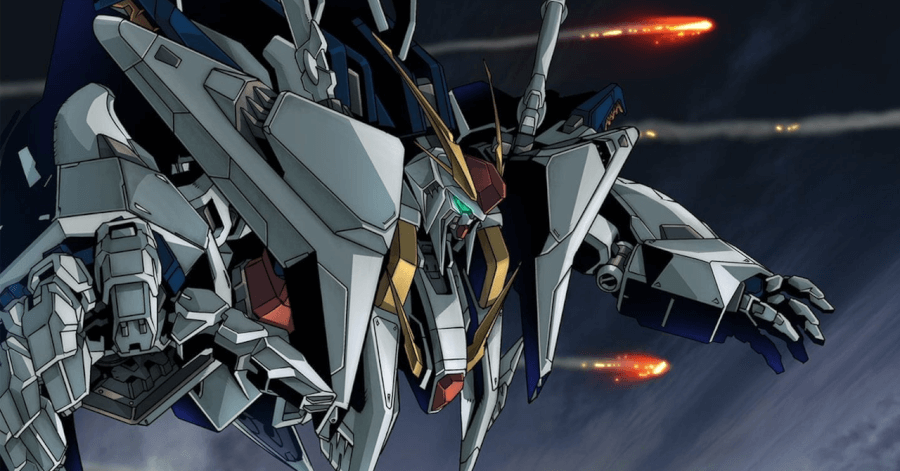
The Gundam design is really the only thing I out-and-out dislike about this movie. I absolutely love the Earth Federation's mobile suits, but the Gundams, the Xi and Penelope, look like over-designed, extremely angular ugly messes. I do not like them at all and I joked to my friend that they only look as intimidating as they do in the film because they're cloaked in shadow. The Gundams sport basically the same designs they had when they appeared in the Hathaway's Flash novels (the Xi is now more white, eschewing the blue sections of the original designs. This actually makes it worse as the angles blend into each other more). I really wish they updated the designs to make them look less busy, because any time I get a good look at them, I can't help but think how stupid they look. The things are so constricted by their ridiculous bulks that they can barely move! The newly-revealed Gundam Eclipse does what these two Gundams were going for so, so much better.
At the end of the day, there really isn't much to Gundam Hathaway, but its bareness is what makes it excel where other Gundam movies failed, as its a story that's been crafted to work with its format instead of shoving a square peg into a circular hole. Making things better, what we do have is both absolutely beautiful and intriguing. Hathaway isn't perfect, but for the beginning of a new story, it's pretty darn great. This trilogy has the potential to be among the best that the Gundam franchise has to offer. Oh sure, it could end up bad, but I'm not judging this movie based on an as-of-yet unreleased second and third film. I'm judging the film in and of itself, and right now, the future looks bright.

