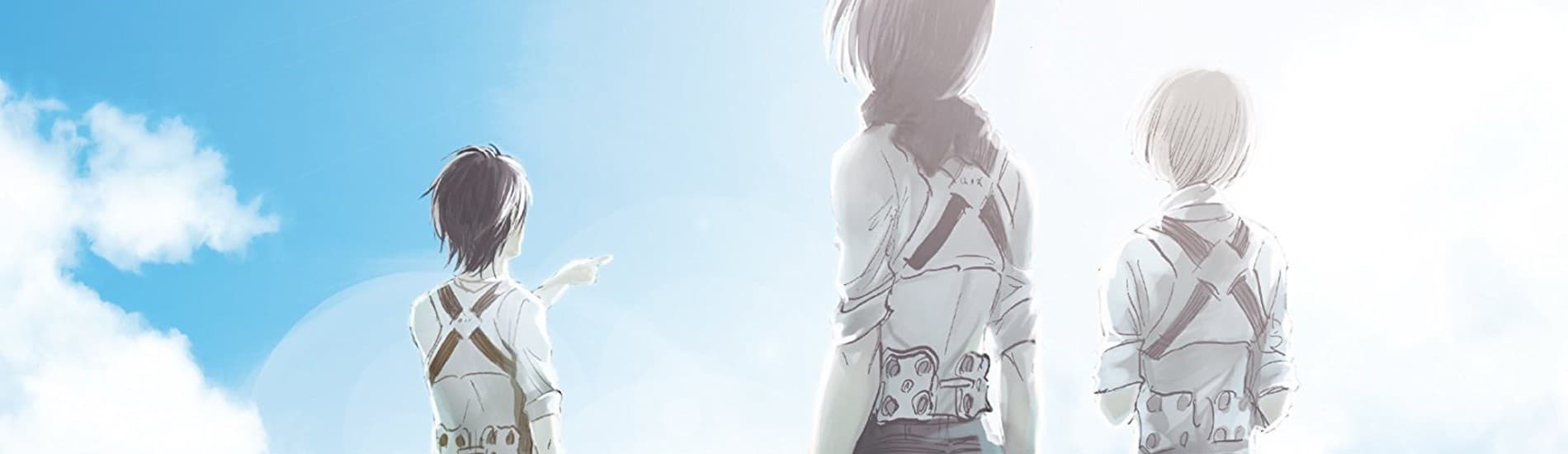
Attack on Titan
a review by Astra700
a review by Astra700
__The Perfection of Attack on Titan
__
Just a side note, this was copy pasted from my post on Quora, this was not plagarized. Here is the post- link My Quora profile can be found in my bio, so there's that. Other than that, this is not a thematic analysis. Here is my analysis of the themes in case you want it link THIS WILL CONTAIN MANGA SPOILERS SO CONSIDER YOURSELF WARNED Regardless, let's start with the review.
__Section 1: Protagonist
__
__Premise 1. 1: Complexity and Intrigue
__
If someone were to ask me about my favourite aspect of Eren it has to be his complexity. From every anime/manga I have consumed, Eren has to be the most complex character I have read (Obviously doesn’t say much I have read like 16 animanga). He is multi-layered and this complexity of his was executed flawlessly. His character has enough information so it makes sense, but at the same time has lacks some for the readers to freely intepret Eren’s character in different ways.
Internal conflict is what makes his character so intriguing, and because it isn’t outright stated whether he values his friends or his freedom more, different theories and intepretation of his character emerged. Eren’s character constantly develops, and Isayama adds new information of his internal state on and on until the rumbling chapters where his true motivations were sort of clear.
In Marley, we do know that he wants to ‘destroy his enemies’ but we don’t know what exactly he classifies as an enemy. And in War for Paradis, we see him purposefully pushing away his friends, saying he ‘hates Mikasa’. We are hit with the question of what exactly made him change this way. And in the paths chapter, most of it is cleared out. The enemies classify as not the warriors, not Marley but the entire outside world. He pushed away his friends to protect them. AND then we see the rumbling chapters, primarily 131 where we see his internal conflict of freedom, and how genocide is truly affecting him- he did put on a cold heart face before it afterall. 139 gives a conclusion to Eren’s character, particularly his struggle with the idea of destiny. But even then, Attack on Titan still manages to intrigue us with the “I don’t know” scene, which can be intepreted in many ways. Personally, I think my intepretation is very different from the majority- but that just reinforces my point.
This vagueness surrounding Eren can spark very interesting discussions, and it’s just fun to analyze his character because of this vagueness. Eren’s multi-layeredness and internal conflict of freedom vs friends is really well done, and primarily the reason I love him so much.
__Premise 1.2: Development
__
Development is also a rather strong aspect of Eren because he didn’t necessarily change, even though it may seem like it at first glance. Obviously it’s not complex and it’s easily understandable if you pay a little attention to his dialogue and actions throughout the manga, nonetheless it’s a very well done part of him.
Eren’s circumstances constantly change throughout the manga, and he tries to cope with the changed circumstances. But within all that, he maintained his hunger for freedom. His conception of freedom never changed until Chapter 139, or chronologically right after the freedom moment. I explain this in detail in my answer about the themes. Anyway, his development is so intriguing because he really never changed. It’s interesting to see how he deals with the changing circumstances while maintaining his desire for freedom.
What he had done to acheieve freedom and protect his friends pained him. Hurting his friends, tramping over every last one outside the walls, overall it’s just really interesting to see the path Isayma took with him. He had always been himself, I have no doubt in my mind he’d be as sympathetic to Reiner back when he was 15- if he knew about what Reiner suffered with. He was always sympathetic, he was just ignorant.
__Premise 1.3: Tragic
__
Eren’s story has to be one of the most tragic and emotional story ever, in animanga.
The fact that he never would’ve found the free paradise he sought for was always destined to happen. As I already said, the freedom he wished for- it didn’t exist. The idea of freedom he owned was something out of a fairy tale. He wished for a freedom for which he became a devil. And just like every other devil in the series, at the end of his life he realized like every other devil in the series that the ‘freedom’ they wished for never was.
Erwin? Forever he struggled and sacrificed his comrades for the basement. The only thing that struggle brought was suffering and pain. And at the end of his life, he was finally free from that moral dillema, and sacrificed himself to make sure his comrades’ devoted heart to a world without the walls wasn’t in vain. Zeke died appreciating the beautiful world. He would’ve stolen the rights of the future children to appreciate the beautiful world, and he finally realizes that life is not all pain. True freedom lies in appreciating the little moments. And Eren, realized at the end of his life that all this struggle was in complete vain- he was always free because he was born into this world. He had a name, Eren Jaeger, and he was always free to appreciate the beautiful world that surrounded him. All this sacrifice led to the beautiful world being destroyed, completely trampled. He finally realized his error.
That’s what makes Eren so emotional. He fought on for so long, struggled on for so long- because he wanted the freedom he deserved, and so that his friends could live happy and long lives. But two times- in the ocean and in the ending, all the struggle he done was kind of worthless. At least to him. Adding that along with the overall tragic nature of Eren made me love him so much.
Section 2: Antagonists
Premise 2.1: Dynamics and Parrallels
This is rather well known so I wouldn’t delve deep into it, but yeah. Reiner and Zeke’s dynamic with Eren is really well done- the parallels while being quite simple was executed pretty well. Reiner being the same as Eren, and Zeke being completely opposite of what Eren stands for. First I’d like to talk about the dynamic I consider superior of the two, Reiner-Eren dynamic.
The big advantage the Reiner-Eren dynamic has over the Zeke-Eren dynamic is that it has been built up since the beginning of the manga. The betrayal was one of the strongest moments pre-timeskip, and still holding that position post-timeskip. Reiner was the cause of Eren’s mother’s death (not really, but child Eren thought so). The declaration of war scene was masterful, and their fight in Shiganshina (Chapter 117) was written well too. In fact, Reiner would’ve been the perfect candidate for 139 apart from Armin- because it would’ve sparked interesting conversation primarily relating to Eren killing his own mother. This would’ve also created some parallels, with Reiner ‘judging’ Eren just like Eren did back in Declaration of War.
And obviously the Zeke-Eren dynamic is also fantastic. What’s fascinating about them is how much they differ. Zeke’s a nihilist, and his primary dialogue and actions revolve around the concept of “Only if I was never born into this world”. He became a devil because he wanted to save the yet to be born future generation from the cruelty of the world. And Eren is completely opposite, who struggled forward and became a devil because he was born into this world. And the character who amplifies this dynamic is both of their fathers, Grisha Jaeger.
Aside from being a fantastic character he is so amazing because how he affects the story and characters inside the story. Grisha was a loving father to Eren and raised him freely, yet it was Eren who forced Grisha into commiting henious crimes. Eren himself was the reason he had such a fucked up past- and all of it because he wanted to become free. And Zeke was manipulated by Grisha, but at the end he was the one who sympathised with him. And he followed Grisha’s want to stop Eren.
And their respective conclusion is also a great conclusion to their dynamic. Both of them, polar opposite to each other died- completely the same. Both of them accepted that the world, it isn’t all cruel. It isn’t perfect either. Neither does complete hell OR the perfect Paradise exists, both of them understood this at the end of their lives. They are free, to enjoy this beautiful yet cruel world because they were born in this place. They must endure the curel portion and strive forward clinging onto the beauty of this world. Just like what Zeke said, the world is so beautiful, only if he had realized it sooner.~~~~~~
Premise 2.2: Minor Antagonists
Just a small note before I begin this section- Zeke is my third favourite, and Reiner is my fourth favourite antagonist in anime/manga. The only one eclipsing them are Johan Liebert and Meruem. Both are S tier characters but I don’t wish to analyse them so I don’t want to talk about their characters.
So the minor antagonists of Attack on Titan are characters like Kenny, Annie, Bertholdt etc. I don’t know if Gabi counts as an antagonist- she probably does not. Regardless, I think the minor characters are very well realized considering how limited screentime they got. Kenny’s dialogue on everyone being a slave to something not only is REALLY important for the themes and the characters, but also a great character moment and dialogue. Annie’s backstory was good and she was a decent character overall. Nothing bad to say about her. And about Bertholdt, Isayama utilized his screentime perfectly making him a fairly good character. A great character, in fact. for having so limited screentime.
Section 3: Cast
Premise 3.1: Side Characters
For side characters, well I’d be including every characters apart from the protagonist, the major antagonists, Armin and Mikasa.
Attack on Titan, surprisingly, has the best cast I have read in anime/manga. And that is surprising considering Attack on Titan is largely a plot driven manga. The characters are obviously a focal point but they aren’t as big of a focal point as in series’ like Vagabond, REAL or Vinland- or for less extreme examples, shows like Hunter x Hunter. And that obviously has to do with how well Isayama can construct his characters.
Erwin, for example- is a genuinely perfect character. He has just the perfect amount of depth, contributes to the story as much as he should, has a perfect conclusion- all of that with not a huge amount of screentime. Isayama crafted this nuanced character, whom I consider to be even better than characters like Pain or Light Yagami, with just a considerable amount of screentime in him. And that’s not all.
Grisha Jaeger and Levi Ackerman are fantastic characters, and I really mean it. They are nuanced characters with a considerable amount of depth. Grisha contributes a lot to the story, with not only being the key for the basement reveal he also contributes a ton to the Zeke-Eren dynamic as I already mentioned, and he also contributes to Eren’s character alongside that. Again, not talking about his complexity but it’s kind of mind boggling that Isayama crafted such a good character in just under 10 chapters.
And obviously, there’s Levi. There is nothing much to talk about him. Great character, probably the most iconic character in Attack on Titan. Not only is it enjoyable to watch him, his depth is underrated in my opinion. Easily the 6th best character in Attack on Titan, he is somewhat interchangable with Grisha Jaeger.
Jean is probably the most sensible guy in AOT. His inner-conflict between a happy and comforting life and making worth of the devoted, burnt heart is well done. It contributes to the overall theming of the story. His morality is probably like any other person, had they went through the same situation as Jean. Jean is relatable, with a decent amount of complexity within him. A good character, I must say. And then there’s Gabi, who had a pretty emotional culmination to her character while being the heart of the “Children of the Forest” theme. Not only is she well written, she also contributes to the themes a whole lot and is perfectly utilized for the most part.
And there is no way I am not talking about Eren Kruger. Under just 15 minutes Isayama was able to craft a character that could capture the complete essence of one of the series’ major themes- the vulnerability of “truth”. There exists no truth in the world of Attack on Titan, history is completely upto the person. There is no objective truth in this world, it is completely nonsenical. And it’s well represented by Kruger’s life. He saw the horrors of the world after his parents were burnt alive by the Marleyan government- he was completely powerless. And this anger of wanting to have power, be free, not fearing anybody who can take away his freedom is what resided in is what fuelled him. But in order to do that, he just killed his own people- acheiving nothing on his own. He spent time with Marleyans, and he probably understood them just like Eren understood Reiner. And at the end of hsi life, the only thing left in him were his sins. But they were enough- because humanity will keep on moving forward for freedom to make the devoted hearts of the previous generation worthwhile.
I can go in even more detail but I don’t want to drag this any longer. But my point being, Isayama was able to craft up such a wonderful character in just under 15 minutes. 1 chapter, in the manga. Just insane tbh. And then there are some other minor characters like Kenny, Bertholdt, Annie, Historia etc. who are also very well written. Isayama crafted up so many good characters in only 139 chapters, which is just a proof of his genius.
Premise 3.2: The Major Characters
Already talked about the prortagonist and the antagonists so I would not delve into it here but I would like to talk about two other major characters- Mikasa and Armin.
Mikasa and Armin embody the main theme of Attack on Titan, even moreso than Eren the protagonist himself. Obviously I think Eren had a much better written representation of the themes, but Mikasa and Armin are the actual representation of the themes. If it’s confusing, basically Eren covers the themes in a “negative” way, where the author shows a character going against a theme of the story which results in tragedy/failure for that certain character. This is shown in the rumbling arc, particularly chapter 131 and 139. But Armin and Mikasa represent the themes in a “positive” way, for what they actually are.
Armin is hope personafied. He is my seventh favourite character in all of Attack on Titan and there’s a good reason why. Armin while not the most complex of characters represents the theme of hope in Attack on Titan, and hope is one of the most major aspects in the entirety of the show. And he does it in a very solid way. His dynamic and parallels with Eren, his philosophy, his motivations for seeing the ocean, his internal conflict for being a murderer etc. are done very well. Armin represents what humanity should be given their capabilities. Armin is a saviour for humanity because of his will to move forward for freedom, but he realizes that fighting humanity for freedom is meaningless because conflict is never going to stop. But what they can do is try. Fight against the devil that exists inside all of us, instead of fighting other people. The world will never stop being cruel but just maybe we can create a world where life thrives, where there are close to zero Ymirs, Zekes etc. Armin knows you can’t carry the burden all by yourself, so you have to trust that the future generation will realize your will and fight for the same cause as you did- for the future generation to find paradise.
Mikasa represents beauty in a cruel world. She found salvation within Eren, Eren provided her with the much needed beauty in her life. But alongside that, Eren being Eren, left the mark of cruelty as well. Brutally murdering the kidnappers, more brutally than he needed to be. Mikasa’s character is all about accepting the cruel world, while simultaneously cherishing its beauty. She goes through denial that Eren was much worse of a person than she remembered, and then she finally accepts Eren as who he is. Cherishign the beautiful memories, the freedom Eren gave her but at the same time stopping Eren from stealing away the freedom of the rest. The scarf was born from blood, yet it is truly beautiful. Cherishing the beautiful moments of life is also a major theme in AOT, and Mikasa represents it very well.
Section 4: Plot
Section 4.1: Foreshadowing and Plot twists
I can’t sing enough praise for Attack on Titan in this regard. It’s genuinely the peak of plot in any fictional story I have read (Again, mind you, not much) and it is NOT close. I haven’t seen any plot twist anywhere near as good as the basement reveal, and mind you this is including other masteful plot twists from AOT itself.
The basement reveal was just… I still don’t realize how Isayama pulled it off. It may have been sheer luck or Isayama may just be that good. It’s completely recontextualizing the entire story in the most radical way possible yet it not only makes perfect sense- it looks completely natural. Isayama did it while crafting a top 5 character (Grisha), another great character (Kruger) while making the perfect set up for the real battle to begin. The picture also bearing insane symbolism enhancing the themes of the story. It doesn’t feel like an infodump because Isayama keeps us interested with crafting the goat Grisha. There is no way a plot twist can top the basement reveal. And- that is not all.
The second ones that come to mind are Eren manipulating Grisha, and the betrayal. Not bearing as much of foreshadowing (Not that I am aware of), yet it manages to be amazing. The plot twist wasn’t only extremely (Not using the word lightly) surprising- it enhanced both Eren and Grisha’s character, particularly Eren’s. Isayama was able to turn the rather insignificant moment of Eren kissing Historia’s hand to an important plot line. REALLY important regarding Eren’s character which increased his complexity. Also making sense of what Kruger said of Mikasa and Armin, it contradicts nothing of the story. The betrayal obviously was intense, and an amazing plot twist with a large amount of foreshadowing.
Then there are other magnificent plot twists, to mention a few- Dina being the smiling titan, the wine being zeke’s spinal fluid, the curse of ymir, Eren’s betrayal to Zeke, Grisha being the one who killed the Reiss family. Then there are also other plot twists which are as good as what I mentioned above. Easily the manga with the best plot.
Premise 4.2: Intensity and Lore
Attack on Titan is a rather fast-paced manga so there is no doubt that it’s intense. It establishes a very well done legwork for the climax of the series to be intense. The only time it fails to become intense is in “The Battle of the Heavens and the Earth”- but regardless.
Return to Shiganshina is likely the most intense arc I have read. The stakes were high, and Isayama established them perfectly. If they are not able to reclaim Shiganshina, humanity loses. Eren can’t get his freedom, and everything that happened yet will go in vain. But at the same time- the only way they can win is by sacrificing. Erwin’s dream and the scouts who just celebrated yesterday, and on the other side, Armin and his dream of the ocean. They have to be sacrificed for a chance for a win against the titans. It’s either humanity or themselves. And obviously considering the themes of the story, they picked the latter.
Nonetheless the intensity was all time high even after a victory for humanity- who is going to be turned into a titan, Erwin or Armin? They are characters we both care about deeply but there can only be one. Midnight Sun was extremely intense and a great episode. Other than that, Shiganshina was hype. Levi vs Beast Titan was probably the most hyped fight ever in AOT, apart from maybe Eren vs Reiner in Shiganshina (WfP). And mentioning the War for Paradis arc, it was also intense throughout with probably the most satisfying culmination of Eren’s declaration of Rumbling.
The lore and world building of Attack on Titan is rich. The Paradis-Marleyan conflict plays out very naturally and that is very surprising because it radically recontexualizes the story. None of the infodump felt unnatural, and that’s what I call a good infodump. Nothing special, just good.
Section 5: Emotions
I wouldn’t say Attack on Titan has a moment where I can say it’s a contender for the saddest moment in anime. But it’s still probably the saddest manga I have read and that’s because it is tragic throughout.
Here’s the thing with Attack on Titan- you genuinely can not blame anyone for anything. All of the main cast is equally guilty, and equally innocent. They were put to this position since birth- and all of them hope for a better world. Their childhood has already been ruined and that’s not reversable- but just maybe if the children of the future generation don’t wander around in the forest as long as they had, then just maybe they would have peace in mind.
Bertholdt points this out perfectly.
Yeah… you are precious comrades to me. But I also intend to kill you. None of you have done anything wrong, you are not devils either. But you all still have to die, that’s just how it is.
That’s right… nobody’s in the wrong. There’s nothing we can do. Because the world is just that cruel.
There is no “bad guy” in Attack on Titan (No matter how cliche this sounds). The bad guy in Attack on Titan is the world. The world is just that cruel. The 2000 years of history and conflict, just resulted in nobody knowing what they are doing or why they are doing it. There’s no truth, there’s nothing to believe- it’s just madness. And our main cast realizes it. That’s why it’s so tragic to see the characters in Attack on Titan.
They are suffering but they didn’t do anything wrong. They try to fight back and commit horrible atrocitices but we can’t exaclty blame them because they really had no choice. While yes, what Eren did was pretty messed up but at the end of the day he didn’t want to do it exactly. Obviously while we resent Eren’s actions, at the same time his cirucumstances are so great that it becomes understandable. If I had to talk about my opinion of Eren’s actions it has to be what Jean said. Eren’s actions are understandable. And Eren’s actions are going to protect them in the long term… but there’s just no way he can accept genocide. And that’s the same with me. His actions are understandable and to some extent, relatable. And that’s true for a lot of the characters in the series- Reiner, Bertholdt, Zeke etc.
The characters are suffering something they do not deserve, their rights are taken away from them. And to acheieve those rights, they have to commit horrible things but at the same time- their morality opposes it. They might have to sever bonds with their precious comrades solely because of their situations. This tragedy is partly what made me love Attack on Titan.
__Conclusions:
__
This marks the end of this post. This was a brief overview on why I love Attack on Titan so much, and what’s really that good about it. Attack on Titan is a series that I adore for its stellar writing, spectacular character work and immense emotional impact. But above all, Attack on Titan is genuinely perfect.
Attack on Titan top 1 is a “great opinion” (I don’t really like saying this but I don’t know an alternative), because it’s genuinely perfect in every regard. Literally. I can’t find any flaws with it whatsoever- it’s not even like some major aspect of it is “just good”. No, all of them are amazing. It has spectacular themes, an 11/10 protagonist, amazing antagonists, the greatest cast and the strongest plot that I have read in Anime/Manga.
Isayama crafted this perfect manga that made me feel, a lot. Attack on Titan was the manga that got me into reading more fictional stories, which helped me find stories other than Attack on Titan that I adore with all my heart. Isayama introduced me to the wonderful world of fiction with this wonderful story. Hence, with all my heart- Thank you Isayama.
90.5 out of 99 users liked this review
