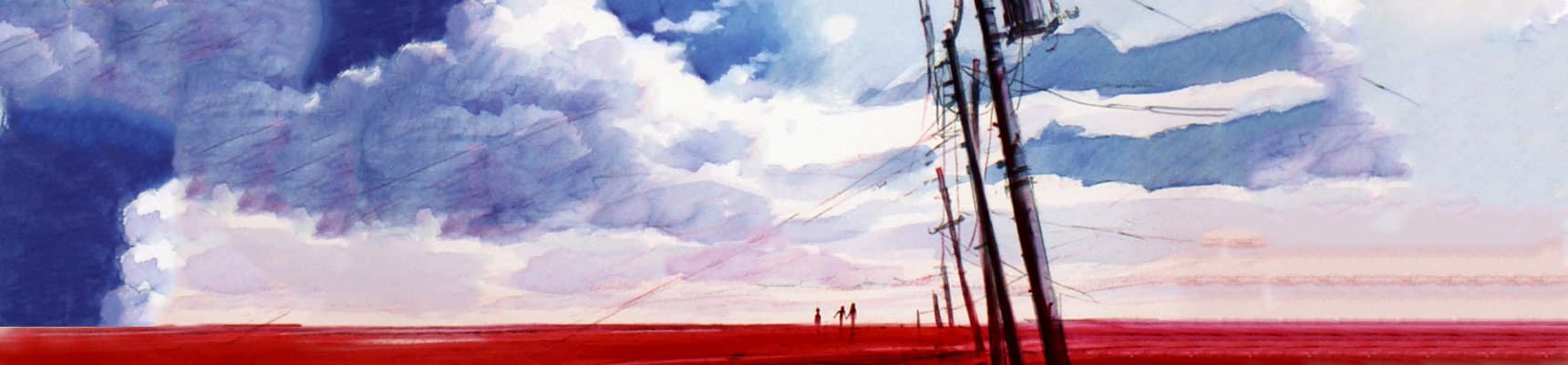

This review contains major spoilers for Evangelion: 1.0+3.0 Thrice Upon a Time

In early 2017, I watched the 1995 mecha classic,Neon Genesis Evangelion. While I don't think it's a perfect show, Neon Genesis Evangelion quickly established itself as one of my favorite anime. Eager for more Evangelion, in 2020, I decided to watch the Rebuild movies. The first film of the Rebuild tetralogy, Evangelion: 1.0 You Are (Not) Alone was largely a retread of the first few episodes of the television show now with a fresh coat of paint. It really didn't bring anything new to the table, but it largely didn't need to. At a time where I was increasingly aware of what I didn't like about Evangelion, revisiting those initial episodes reaffirmed everything I loved about it. Its sequel, Evangelion: 2.0 You Can (Not) Advance, was where the Rebuild continuity came as its own as something distinct from the original television show. With unique strengths, it seemed like the Rebuilds was shaping up to tell a story that was more positive than its predecessor's and I was here for it. While the plot Evangelion: 3.0 You Can (Not) Redo was the most distinct at that point, it seemed woefully derivative in terms of tone and message. It was confusing, dour, and mean-spirited, seeming to mock viewers who enjoyed 2.0's positivity. While I ended up not liking 3.0 overall, I remained cautiously optimistic that the then-unreleased fourth and final Rebuild film could turn things around. A big part of my dislike towards 3.0 came from its similarity to End of Evangelion. When I initially watched End of Evangelion, I was a bit put-off by it, but I told myself that this was the point and gave the movie a high score. The more time passed, the more I realized that I didn't like End of Evangelion as much as I had led myself to believe. I decided to rewatch End of Evangelion to make sense of my feelings and in one of my most comprehensive reviews to date, I did. There, I realized that I didn’t like End of Evangelion at all. My opinion would only continue to sour, as the TV ending, the ending I prefer, is largely ignored in favor of End of Evangelion, meaning that, for 24 years, it served as the final word on the series. Thrice Upon a Time was originally supposed to release last year, but it saw several delays and after each, my hype grew.
This all goes to show that I had a lot of expectations going into Evangelion: 3.0+1.0 Thrice Upon a Time. It was like the weight of the world was on its shoulders — it had to live up to its wait, live up to not only concluding the Rebuilds on a high note, but the Evangelion series as a whole. Expectations usually bite me in the ass when it comes to enjoying an anime, so it's only natural to assume that this movie would fall flat.
But it didn't.
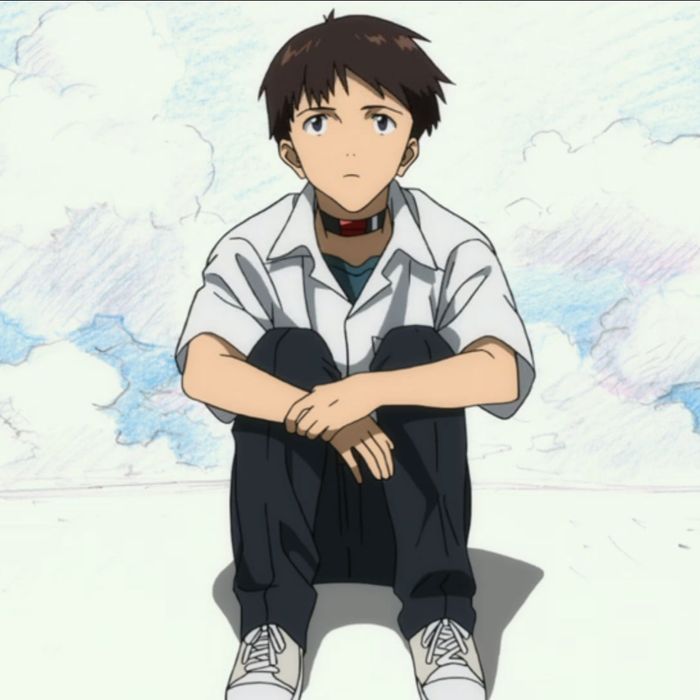

Against all odds, I enjoyed Thrice Upon a Time. Thrice Upon a Time is the definitive ending of the Evangelion series, putting a satisfying pin on character arcs that were started 26 years ago. The movie contextualizes and enhances all that came before. I find myself not only more appreciative of the Rebuilds, but of End of Evangelion, too. Sure, I still might not particularly like it, but because it’s longer has the last word on the series, its existence no longer feels like it's threatening my enjoyment of Evangelion. Since there's a new, happier ending in Thrice Upon a Time, the dour tone of End of Evangelion doesn't leave me feeling so sour. Who knows, maybe I'll be able to watch it again in the future, since I'll be able to chase its bitterness with Thrice Upon a Time's sweetness.
All that said, even if I think Thrice Upon a Time is a nigh-perfect end to the series, it's far from a perfect movie in-and-of-itself, with plenty of flaws that I'll get into. At the end of the day, while Thrice Upon a Time isn’t amazing, it does amazing things.

Evangelion 3.0+1.0: Thrice Upon a Time picks up right where You Can (Not) Redo left off, with Asuka, Rei-Q, and a despondent Shinji traveling through the crimson ruins of Tokyo-3. The three are eventually picked up by an adult Kensuke who takes them to a settlement comprising of survivors of the Near Third Impact. Some of these survivors are familiar faces such as the aforementioned Kensuke as well as Touji and Hikari, who are now married with and parents of an infant. Shinji, Asuka, and Rei-Q settle into their individual routines: Shinji continues to suffer from PTSD due to the events of the You Can (Not) Redo, Asuka aloofly watches over the village, and Rei-Q slowly begins to develop the sense of self that was denied from her. Meanwhile, Mari and Wille engage in a skirmish in the ruins of Paris against a group of NERV's Evangelions, eventually subduing them and restoring Paris to its former glory. With Paris' resources available, WILLE uses them to arm their Evangelions for the final confrontation with Gendo Ikari's NERV. Will they be able to prevent him from enacting Instrumentality?
Yes.
The answer is yes.
Though if you want the precise how and why, you might need to trawl EvaGeeks, the wiki, and any discussion threads you can get your mitts on. Call this movie an angle between 90° and 179° because it is obtuse.
The plot is easily the weakest aspect of the film. Thrice Upon a Time certainly has other problems, but I'd argue that they can be looked past. Since it's such a central aspect of the movie, the plot, unfortunately, has no such luck.

It's a bit telling that, when writing the synopsis, I couldn't for the life of me tell you why The Battle of Paris was significant until I looked it up on EvaGeeks. Thrice Upon a Time continues some of the bad habits of 3.0, namely firing rapid-fire technobabble at you with no context nor time to digest it. Do the terms overlap, Black Lillith, anti-universe, Book of Life, Evangelion Imaginary, Spear of Gaius, Maria of Iscariot, pseudo-lillin, signal suspension plug, or L Density mean anything to you? No? Well, that's too bad, Thrice Upon a Time will chug ahead, anyway! I hate to say it, but I kind of just had to let the main plot wash over me, since I had no chance of actually following it. Maybe I'll have better luck upon a rewatch after delving into the aforementioned material, but I really shouldn't need a guide to understand a movie. The aid of a wiki should be supplementary, not complimentary.
And I should state I could still follow the film, somewhat, just in a much more broad manner than I'd have liked. No matter how much the characters tried to drown me in technobabble, I could still parse a simplistic goal throughout the movie. One of these goals might be "WILLE needs to destroy Evangelion Unit 13 before it activates" or "Shinji has to go to a different dimension to stop Gendo from enacting his plan." As it so happens, you don't need to understand that much to say "GO, GOOD GUYS, GO!" but it definitely makes for a more shallow viewing experience.
What the movie lacks in a cohesive plot it makes up for in production values. It feels like Anno has used each Evangelion movie to rectify the fact that the original Neon Genesis Evangelion infamously ran out of money at the end of its run. This feels particularly true for Thrice Upon a Time which features some truly stunning visuals. Just a few that come to mind are a giant Shinji laying down as he stares at Kaworu’s, piano, crimson hands reaching up at the night sky, and the shot of a crimson Eiffel tower from below. The photorealistic CGI giant Rei head is another standout visual. It's the thing of nightmares, taking a plunge straight into the uncanny valley. Seeing it smile sent chills down my spine. The Giant Naked Rei from End of Evangelion can eat its heart out.

For all its problems, the absolutely balls-on-the-wall insane plot facilitates some pretty cool fight scenes. The Battle of Paris, Asuka and Mari fighting against the horde of Evangelion Mark 0.7s, and the battle between Evangelion Unit 1 and 13 are all very engaging. The fights definitely aren't for everyone; you have to appreciate spectacle, style over substance. While this could understandably be a letdown for some, I really found myself immersed in the spectacle. Even if there's not as much strategy involved, seeing Unit 2 and Unit 2 gun down a swarm of enemies, watching said enemies burst into a spiral of rainbow crosses, then watching Unit 2 and 8 defeat the remaining horde with a corkscrew team attack is fun as hell. The battle between Unit 1 and 13 is extremely imaginative, with the two mechas battling in what appear to be tokusatsu sets of various locales from the series. As the units clash, it appears like they're going through different "takes." It might not be a complex fight, but it more than makes up for it in its uniqueness and symbolism.
Then there's the music, good God, there's the music. Wonderfully composed by series veteran Shiro Sagisu, Thrice Upon a Time's OST is packed. Sagisu makes the most of the film's two-and-a-half-hour runtime, treating viewers to over 50 tracks, including several insert tracks. I've always loved the music of Evangelion, so trust me when I say that Shiro Sagisu has outdone himself here with an amazing range of certified  angers. Some notable tracks include the obligatory Decisive Battle arrangments, Euro Nerv, EM10A alterne, and EM20 =wunder operation= (hey, just because something's obligatory doesn't mean it can't be a op ); the delightfully, unexpectedly funky and triumphant gekitotsu! gouten tai daimakan; the hauntingly beautiful what if?; the similarly beautiful Voyager - Gravestone Without Date; and Joy to the World which harkens back to Neon Genesis Evangelion's Hallelujah scene.
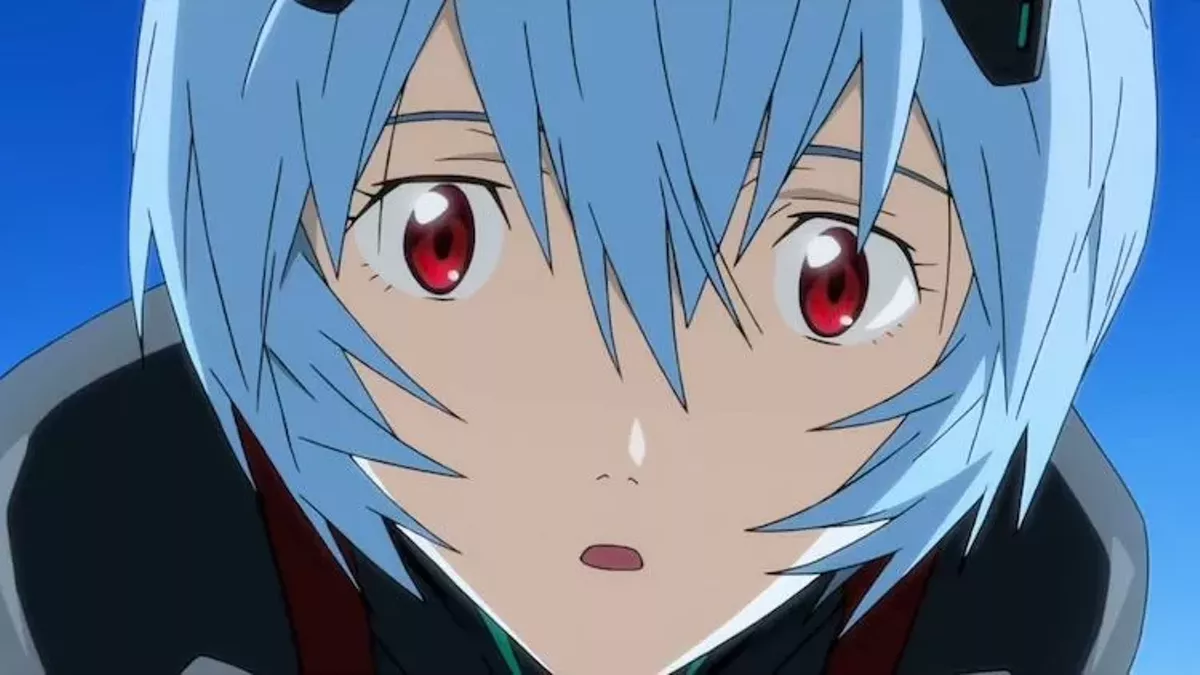
The most unexpected track for me was Hand of Fate. I was pleasantly surprised to hear this R&B track which makes for a sad and lovely character theme for Rei-Q as she begins discovering herself while in the village.
But of course, these all pale in comparison to this movie's main theme — One Last Kiss by Hikaru Utada. One Last Kiss was featured heavily in this movie's promotional materials and plays during the final scene and credits. It is essentially what Komm, süsser Tod is for End of Evangelion. Both songs are emblematic of movies they hail from, with Komm, süsser Tod being a depressing song wrapped in a pretty bow about wishing to kill oneself in response to the belief that they're worthless, while One Last Kiss is a bittersweet (with emphasis on the "sweet") song about cherishing the memories of the one you love despite the possibility of you parting. Both in-universe and metatextually, the song fits really well and helps the ending stick with me. Both Komm, süsser Tod and One Last Kiss are earworms of the highest order, but while listening to Komm, süsser Tod leaves me feeling drained, One Last Kiss fills me with pleasant memories and hope toward the future. Utada's vocals moor the song — Utada's timbre keeps the song from feeling overly poppy and ingenuine, similarly to Anno's own quirks and sensibilities as a director keeping this movie from feeling like a fix-fic. On a more personal level, Utada is the perfect singer for this theme. Their work on the Kingdom Hearts series, (particularly the long-awaited Kingdom Hearts III) not only leads me to associate their songs with childhood, but growing up, as well.

One area where I don't think Thrice Upon a Time's stellar production values are put to good use is in its fanservice. In the Next Episode previews, Misato always promises the viewers that there will be more fanservice and, she certainly made good on her word come Thrice Upon a Time, which boasts a metric fuckton of it. While I certainly think fanservice can work in certain contexts, it doesn't here. First, you have the problem of Anime Camera Angles wherein a shot will be weirdly framed in order to titillate rather than to convey important information or create a cool image. A notable example is the scene when Sakura's crying. It's a bit hard to take seriously since there's a portion of the scene where her ass takes up most of the screen. Then there's Mari "Girl-With-Big-Boobs" Makinami Illustrious who is almost always accompanied with copious amounts of jiggle that I suspect is less because they were that committed to showing the physics of breasts and more because they knew it could titillate viewers. Then we move on to more insidious examples of fanservice, notably Asuka who seems allergic to clothes for a good portion of the film as she prances around in panties and an open jacket, her breasts just barely not visible. There's a particularly uncomfortable scene where she's trying to sleep at night. Instead of depicting her restlessness by focusing on her face or body in general, we're treated to a close-up shot of her legs and panty-covered crotch instead. It doesn't help that Anno pulled a "she's-really-a-three-thousand-year-old-dragon," by making Asuka chronologically 28 years old but not really alleviating creepiness at all because she still has the body of a 14 year old. It all just feels so unnecessary and makes parts of the movie feel supremely weird. It's telling that the most beautifully animated scene of all of Evangelion is of an aged-up Asuka on a beach, her plugsuit having begun to rip. While one can make the argument that it's because she grew in an instant, it still feels like it was done just for the sake of fanservice, and that's a shame because it undercuts a pretty beautiful scene.

I'm not the only one to criticize this film's plot and fanservice, but I do seem to be one of the few who's willing to acknowledge an unpleasant truth — these things aren't new to the Rebuilds. Neon Genesis Evangelion's plot is infamously hard to parse. If it wasn't, EvaGeeks wouldn't be so ingrained as a part of the fandom. End of Evangelion is quite esoteric and you most likely won't understand it upon your initial viewing. I really don't get how people can be that angry about this movie being confusing if they're Evangelion fans. It comes with the territory at this point. In regards to the fanservice, Asuka is displayed acting similarly in the original show, yet people tend to brush it off by saying "well, Anno's making a point about fanservice." The fact of the matter is that some of this film's biggest problems were always a part of the franchise.
In some ways, Thrice Upon a Time stands for everything wrong with Evangelion.
But the good ultimately drowns out the bad and I'm left with a film that ultimately symbolizes everything I love about Evangelion.

Like the television show, even if Thrice Upon a Time can be supremely confusing, it's Pepsi Crystal-clear where it matters: its characters. It’s largely thanks to this that Thrice Upon a Time is as satisfying as it is.
In my previous Rebuild reviews, I praised sections of the films that I referred to as "downtime:" scenes characterized by a release of tension and a focus on more mundane activities as opposed to the action scenes that feature higher stakes.2.0's "downtime" is what made the film's climax so satisfying (the rise before the fall, if you will), while 3.0's "downtime" is the best part of the movie. The "downtime" of Thrice Upon a Time takes place in the settlement and comprises a decent percentage of the runtime. It's a lot less "fluffy" than the equivalent section of 2.0. It's a lot more somber, more introspective; it can get downright uncomfortable at times. As this section of downtime focuses on Shinji, Rei, and Asuka all at once, it makes for a very compelling and efficient character study. This section is the best the Rebuilds have to offer in terms of character depth, approaching the reflection we see in the original television show. Here, we see Rei-Q begin to accept herself as an individual, we see Shinji realize that he can be loved despite all that's happened, we see the depth of Asuka's isolation and how she tries to downplay it, and we see humanity's resilience and love in the face of disaster. It's all very great stuff.
Then Rei dies.

By the end of the section, you know it's coming, but it's still a punch in the gut to actually see. I was so upset that I had to pause the movie and get some fresh air, walking up and down my street at 2:00 in the morning to clear my head before starting the movie again. I've said that a mark of good art is being able to invoke a visceral emotion and make the viewer feel something whether it's good or bad. I stand by that and I commend Anno for being able to make me grieve the death of a fictional character. It still ends sup being a bit ridiculous when it's the fourth time in canon that Rei has died. I thought it was kind of pointless the first time it happened in the Rebuilds and it felt especially so now. I'm just not sure what viewers are supposed to get out of this that they couldn't have before. At the very least, I found it much more impactful than Rei's initial death in the Rebuilds, which felt like a cheap, mean-spirited fakeout, more than anything.
But then, in terms of character, it's all up from here.

We see character growth and resolutions that feel very earned. Everything feels like a love letter to the series and those who popularized it through their love and support. As a result, Thrice Upon a Time stands in stark contrast to the bleakness of End of Evangelion. One of the first things you'll notice is Shinji playing a much more active role. While he does spend the first section of the film in a depressive state similar to the one he found himself in during End of Evangelion, he gets better comparatively soon, spending much less of this movie morose. This allows him to rise to the occasion and play an active role in this film's resolution, allowing him to be the hero that he was always capable of being. It's such a treat to see a confident Shinji. In a development 26 years in the making, we're treated to Shinji and Gendo actually talk through their problems. With a cast that's been terminally closed-off as Evangelion's has, it's brilliant and heartwarming.

The maternal relationships of this movie are also much more satisfying than they were in End of Evangelion. Here, Misato and Shinji get to end their relationship on a loving, high-note. Instead of a bloody, paedophilic kiss, they part with a hug. In EoE, Misato dies asking if she did the right thing, but here, she goes knowing she's done all she can in following her heart. Here, Yui doesn't just say goodbye to Shinji, but showcases her love by using Unit 1 to sacrifice herself instead of Shinji.
While it's fanservice-y, there's something undeniably great about seeing Asuka finally be able to grow up and it's touching that Asuka and Shinji get to be on the iconic “final beach” without the latter strangling the former.

We see Shinji helping his friends work through their insecurities before he rids the world of Evangelions and angels, ushering a new era of peace, a new beginning a Neon Genesis. While the ending is largely open-ended, I'd like to once more reiterate that it's clear where it counts. Thrice Upon a Time tells us that the madness is over. In the final scene, we see an adult Shinji, Asuka, Mari, Rei, and Kaworu at a train station. Free of his DSS choker and with One Last Kiss playing in the background, Shinji and Mari run up the stairs of the station holding hands. The shot pans out to reveal a live-action city. The message is clear — with Evangelion over, it's time to experience the joys of the world beyond, the real world.

And yeah, you read that right — the person who gets to close out this saga with Shinji isn't Rei, Asuka, Kaworu, nor Asuka. It's Mari. Mari, who has been treated as a joke by fans from inception, seeing her as nothing more than a cheap cash grab. Mari, who by the series’ end still doesn't have much of a character and whose backstory is hinted at, at best. The fact that she's given so much importance and is the closest thing to a canon romantic partner should logically make me mad. Au contraire; I find the shit hilarious. I guess part of it is because I always liked Mari. And part of it is that it's just so delightfully odd, at the end of the day.

I could talk about how Shinji getting with Mari makes the most sense, as one isn't entitled to a relationship with someone just because of prior history. Spontaneity can lead to long and happy relationships. I could talk about it symbolizing the fact that it's okay to go beyond your comfort zone and pursue someone you originally may have written off as "shallow." But ultimately, I don't need to.
Because that's the beauty of the ending — it's extremely open-ended. While Mari getting with Shinji is implied, it's not outright stated and there's room for really any interpretation you want. Do you want Shinji to get together with Asuka? Shinji with Rei? Shinji with Kaworu? Rei with Kaworu? Rei with Asuka? Mari with Asuka? Do you want a polyamorous cuddle puddle? Do you wish for none of them being paired up because you believe that giving them romantic relationships is saying that they need to be partnered in order to be happy? If you want it, you can have it. The possibilities are endless and the ending is rife for fanfiction. All I really care about is that these characters who have been suffering for so long finally get to have a happy ending.
I'd like to illustrate a point. These are pictures of the pilots in casual wear — together and seemingly not having to worry about the threat of the angels.


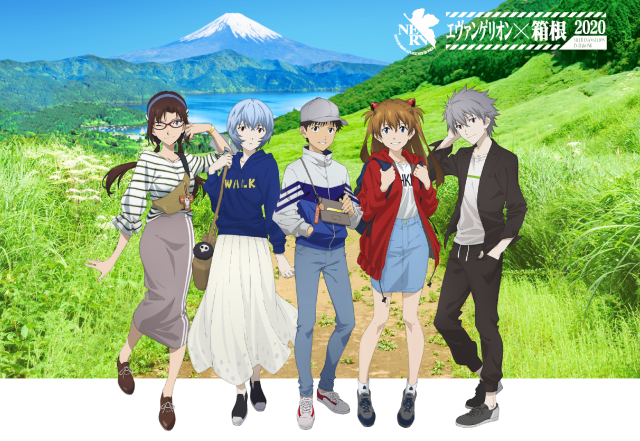


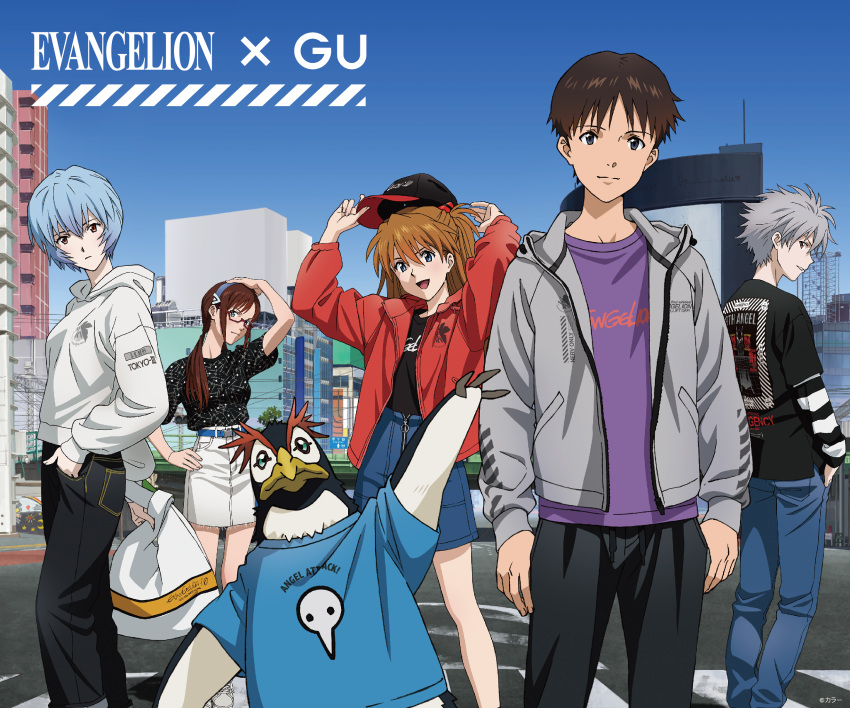
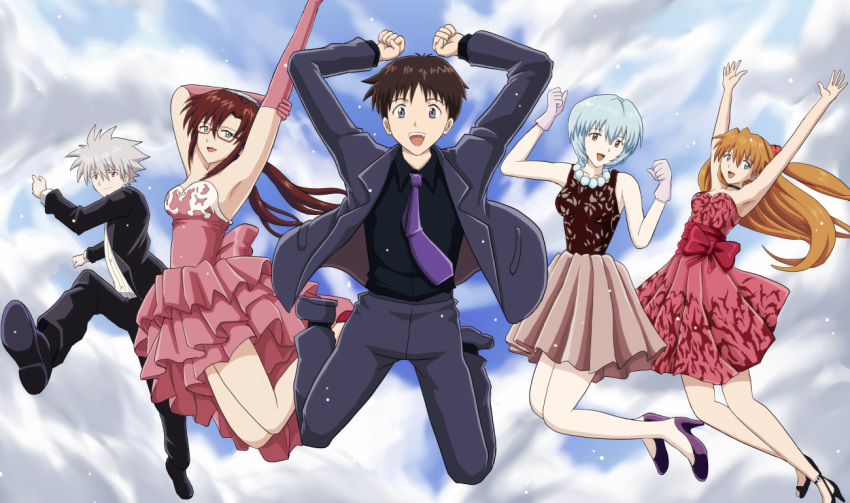 This was my wildest fantasy, my most unrealistic hope for these characters. Against all odds, my wish came true and I had the goofiest smile on my face when I saw it.
The biggest caveat to this is the film loses almost all of its punch if you just watch the Rebuild movies. The Rebuilds were apparently designed to be satisfying for both old and new fans and it's largely failed in terms of the latter. At the end of the day, you really have to watch the original series and End of Evangelion to appreciate the Rebuilds. While, sure, the Rebuild continuity does have its own beginning, middle, and end, and it’s relatively self-contained, you lose a lot of buildup that makes Thrice Upon a Time as satisfying as it is. The visual callbacks to the previous endings, Shinji talking to Gendo, and the happy ending all work, but lose their impact without the connection to what came prior. Thrice Upon a Time isn't anywhere near the best movie I've seen, but because of all it means for Evangelion, it's become one of my favorites. It has solidified and immortalized my love for this franchise.
Hideaki Anno has gone on record to say that, while this will be the last Evangelion installment he works on, he's leaving the door open for others to contribute to Evangelion, ala the long-running Gundam franchise. As much as it pains me to say it, I think this will be where I get off this ride, too. If you have tastes similar to mine, this probably is as perfect as an ending for Evangelion as we're going to get. Since the Gundam comparison has already been introduced, this feels like the Turn A Gundam of Evangelion — an entry positioned at the end of a long timeline that closes a series characterized by pain and suffering with a surprising amount of uplift. Both Turn A and Thrice Upon a Time form dualities with bleaker counterparts in their respective series — Mobile Suit Zeta Gundam in Gundam's case and End of Evangelion in Evangelion's case. In both, they showcase the best of what the series has to offer whether in terms of hope or despair. Thus, even if you disagree with me that this is the best possible ending for Evangelion, you'd probably agree that End of Evangelion was a great ending for the series. Either way, it's hard to imagine what returning to this universe can add. I should clarify that this is where I hope to get off this ride. Knowing me, if they jangle some new Evangelion keys in front of me, I probably will go for it, but I'm almost certain that it won't be nearly as satisfying as Thrice Upon a Time. The final word of Evangelion is positive, with all the Children finally able to have a happy ending. This feels like a perfect place to put a pin on Evangelion and be able to walk away with a smile.
So, with that, I say
Good morning
Good night
Thank you
Goodbye, all of EVANGELION


38 out of 44 users liked this review
