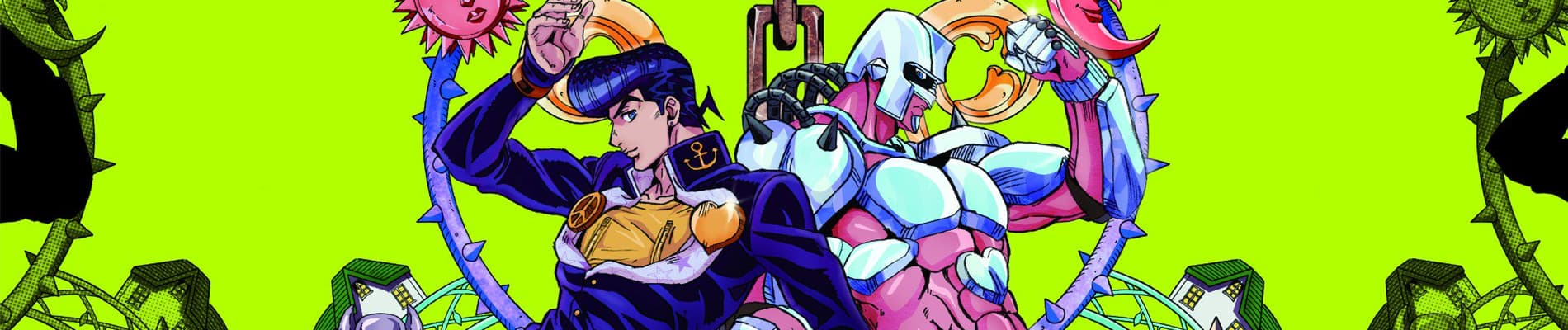
This review contains spoilers for Diamond is Unbreakable
More JoJo's Bizarre Adventure reviews? Gu-rei-to.


 Hello and welcome back to my review series on JoJo's Bizarre Adventure! Last time, I dove into Battle in Egypt the conclusion of the third part of this bizarre series, Stardust Crusaders.
As I said before, *Battle in Egypt*is far from perfect, yet I’m able to look past its faults because, Stardust Crusaders is a very fun, exciting installment in a very fun, exciting series.
In my Stardust Crusaders review, I stated that Part 3 is the most iconic JoJo part, the part that tends to be associated with the franchise the most. I'd go so to say that Stardust Crusaders is the most popular part insofar as it is the most well-known. This isn't to say that Stardust Crusaders is considered the best or most beloved part; in fact, as I've begun to delve into this franchise, I've come to discover that Stardust Crusaders is somewhat divisive. To be fair, it's somewhat divisive in the way that nearly every entry in a long-running franchise can be, but it's certainly not the universally lauded part I assumed it to be. If you're looking for the JoJo Bizarre's Adventure part that has grabbed the heart and mind of practically all who watch it (at least in the West), you'll be led to today's entry, Diamond is Unbreakable.

While I was aware of a meme or two from Diamond is Unbreakable, I didn't know the larger conversation surrounding it. I soon realized that people regarded this entry very, very highly, to the point where a decent number of people recommend committing the cardinal sin of skipping parts just to get to it sooner. While it doesn't have nearly as much of a loud presence as Stardust the Crusaders out-of-the-fandom, in-fandom, it's widely considered the best animated JoJo part. This is exemplified by comparing and contrasting the reviews of both parts on Anilist, with the reviews of Stardust Crusaders being more mixed while those of Diamond is Unbreakable are more glowing.
I approached Diamond is Unbreakable with caution. Even as someone who generally likes what they watch, I had doubts about how Diamond is Unbreakable would shake out for me. After all, even acknowledging its faults I loved Stardust Crusaders and from what I could tell, the parts I loved about it would be downplayed. Naturally, as a fan, this filled me with trepidation. That said, I wasn't too worried. I hadn't watched a JoJo show I hadn't liked. Perhaps I'd like the show well enough, just not as much as Stardust Crusaders.
This wouldn't be the case.
Having finished Diamond is Unbreakable I can confidently say that I like it more than Stardust Crusaders. I might not like it much more, but it’s undeniable that Diamond is Unbreakable improved upon the formula that Stardust Crusaders established. It ironed out the wrinkles, featuring better characterization, a more vibrant setting, a dynamic structure, and more imaginative Stand fights. Araki has outdone himself once again and delivered a bizarre adventure better than the last.
He’s also delivered a bizarre adventure that's quite different from what's come before. Coming from Phantom Blood, Battle Tendency, and especially Stardust Crusaders, one of the first things you'll notice about Diamond is Unbreakable is its character design. Gone are the days of the burly, absolutely built, Fist of the North Star-esque main characters JoJo had been known for at this point. The proportions are more reasonable, the frames lither. Characters can still be shredded, but they're no longer bodybuilder-esque, 6'+ goliaths of men. Standing at 5'11", main character Josuke Higashikata is my height. This might not seem like much, but it goes a long way in making the cast of JoJo not feel as larger than life as they once did (physically, of course, whether they're 5'11" or 11'5", they'll have supernatural abilities the rest of us can only dream of having). This change in design philosophy extends to returning characters as well. While Jotaro retains his height, many have noted that he looks younger than he did in Part 4 despite being eleven years older. I imagine this character design change could be a bit hard for some JoJo fans to swallow. After all, the style of Parts 1-3 seems to establish JoJo's Bizarre Adventure as a series about "manly men doing manly things." Sure, it largely looks ridiculous (just look at the shoulders of the Stardust Crusaders) but you could argue that this is the point: being ridiculous and larger than life to the point of light parody. From that, one may argue that taking away some of this ridiculousness is thus taking away some of what makes the series work.
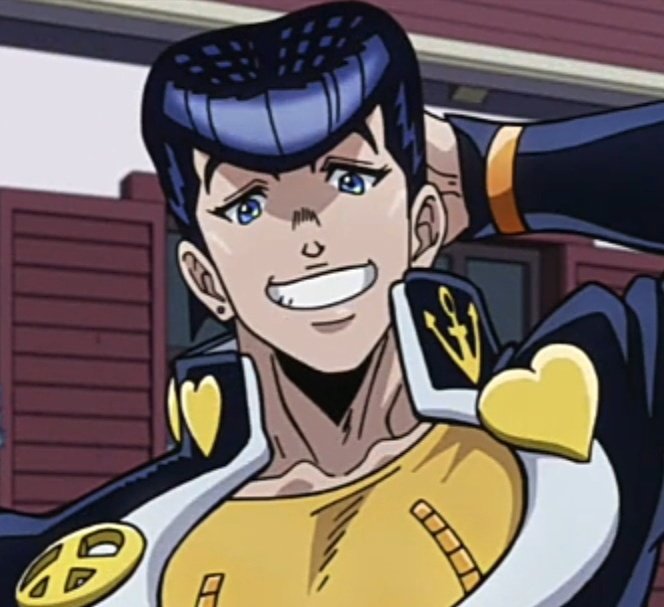
A lot of my acceptance of this shift boils down to simply preferring this more subdued style. Yes, the previous style was funny and cool, but when it comes to characters, I tend not to go for the guys with bulging muscles, so I find myself more naturally drawn to the designs of Part 4 over Part 3. JoJo doesn't need these huge characters to be bizarre, and in some ways, it actually enhances the bizarreness of the show. I also like the character design change because it brings something different to the table — so far, each Part has maintained its own identity, and keeping the old design might have led to stagnation. Most importantly, I believe that Araki shifting his style somewhat changes the types of characters he focuses on. Koichi is one of my favorite JoJo characters and it’s hard for me to imagine him being much more than a sidekick if he debuted in the previous parts. I can't help but feel the art style plays a role in this. And how can you dislike the character design when it gives us Moe Josuke!? Can you find Jonathan, Joseph, or Jotaro ever looking this cute? I think not!




(A “brief” aside on the art shift in the manga)
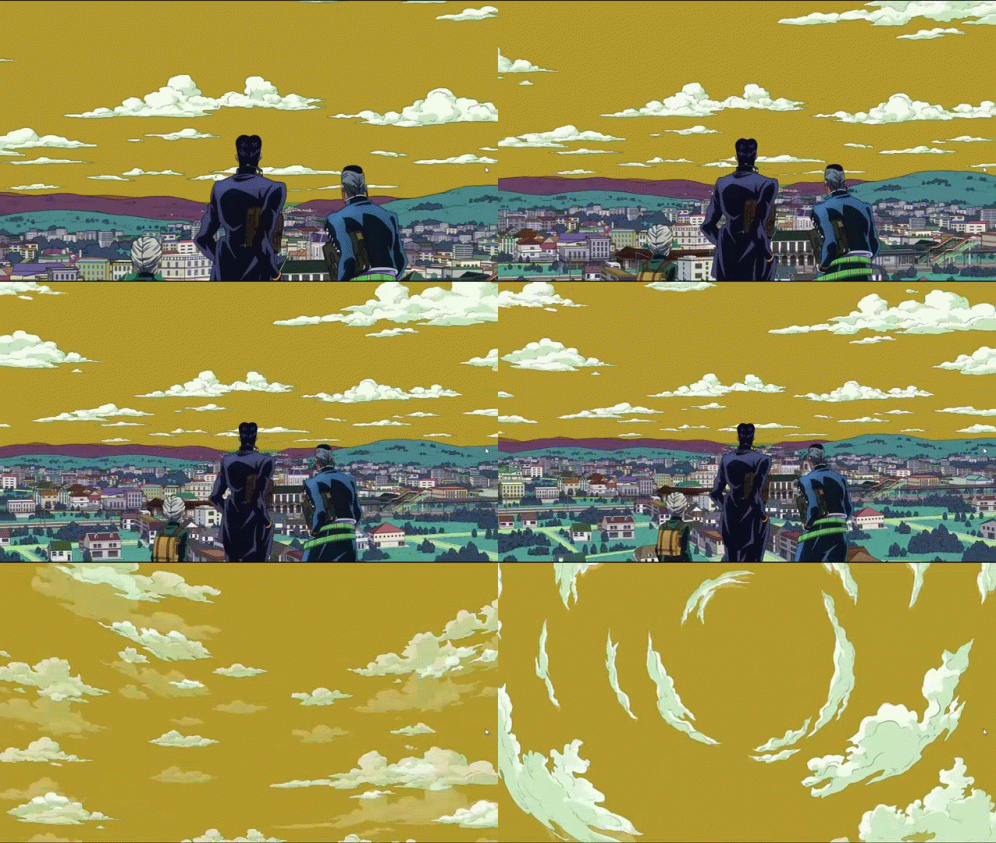

Even if the character designs look more realistic, you'll quickly realize that another, vital aspect of the art direction is committed to being bizarre — the color scheme. During the day, the sky of Morioh is a brownish-yellow color while during twilight hours, it’s a deep teal with golden clouds. The grass is always a bit more green than blue, the trees are often purple, and the streets tend to be green. Diamond is Unbreakable's color scheme gives it an absurd, Seussian quality. We get the sense that anything can happen in the town, that there are no rules. This simple decision really solidifies Morioh’s identity. The striking color shifts that made the series so absurd are now a constant fixture of the design. It was to the point where I believed the color shifts were phased out. Thankfully, they're still here and they're still awesome, but just less "loud," for a lack of a better word. They don’t draw as much attention to themselves. They're still well-done, but they're a lot less telegraphed, more subdued. The anime still is committed to being like a comic book put to motion, continuing to use cut-ins and text for onomatopoeia. The visuals in general are still amazing. The creepy Killer Queen is a standout, particularly anytime it’s cloaked in Shadows. Its final ability, Bites the Dust, also provides some killer animation.
The next major difference comes via the setting. Before we get into that, however, we must delve into the story.
The year is 1999 and a 29-year-old Jotaro Kujo, now working on his Ph.D. for Marine Biology, goes to Morioh to clear up an inheritance snarl in the Joestar family. The subject of said issue is Morioh resident, the pompadour-sporting, happy-go-lucky, friendly neighborhood delinquent, Josuke Higashikata, the illegitimate son of Joseph Joestar. Besides finding Josuke, Jotaro has come to Morioh to secure an arrow capable of giving its victims Stands. Like his father and elder nephew before him, Josuke himself has a Stand, but doesn't wish to get involved with the hunt for the arrow. That changes when things get personal, with the threat of Stands beginning to threaten his friends and family. Josuke, Jotaro, and their increasing band of allies do battle with the colorful cast Stand of users operating in Morioh, soon finding themselves facing a serial killer user who has been making Morioh his personal playground for the better part of 15 years…
Phantom Blood took place across England. Battle Tendency takes place in America, Mexico, and across Western Europe. Finally, Stardust Crusaders is a globe trotter, going from Japan all the way to Egypt. Diamond is Unbreakable is the first part since Phantom Blood that takes place in a single country. It sets itself apart, however, by being hyperfocused on a single town via Morioh (or Duwang, if you're so inclined). The importance of Morioh is immediately established as we begin with the iconic Morioh-cho radio jingle
##mori
###mori
####mori
#####mori
Everything that takes place happens in Morioh and it's undeniable that this takes away from the "adventure" aspect. Since I praised Stardust Crusaders for its adventure aspect, I expected that I wouldn't like this characteristic of Diamond is Unbreakable. And on paper, I shouldn't. Diamond is Unbreakable is a lot less grandiose, less epic. Indeed, as the main antagonist, Yoshikage Kira has few "machinations" to speak of and doesn't operate outside of Morioh, Diamond is Unbreakable feels a lot less important as well. But in a strange way, Part 4 is a bit better for it.Diamond is Unbreakable feels more approachable and personable than everything that's come before. You really get a feeling for this setting in a way that you couldn't before. As a fictional location, Araki was able to make it his own. The city feels quite lived-in and real, particularly thanks to its landmarks. Since Morioh is based on Araki's hometown of Sendai, a lot of love went into creating the town. There's a strange, fuzzy feeling I get when watching Diamond is Unbreakable, a sense of nostalgia. It feels like it could maybe be home, or maybe I just want it to be home despite the madness contained within it. Overall, Diamond is Unbreakable is quite light and optimistic, which is very welcome, given how depressing some of the previous JoJos could be. This isn't to say that there isn't still tension. Diamond is Unbreakable's opening scene starts with a shot of one of Kira's victims, keying us in immediately that something sinister lurks beneath the surface of this idyllic town.
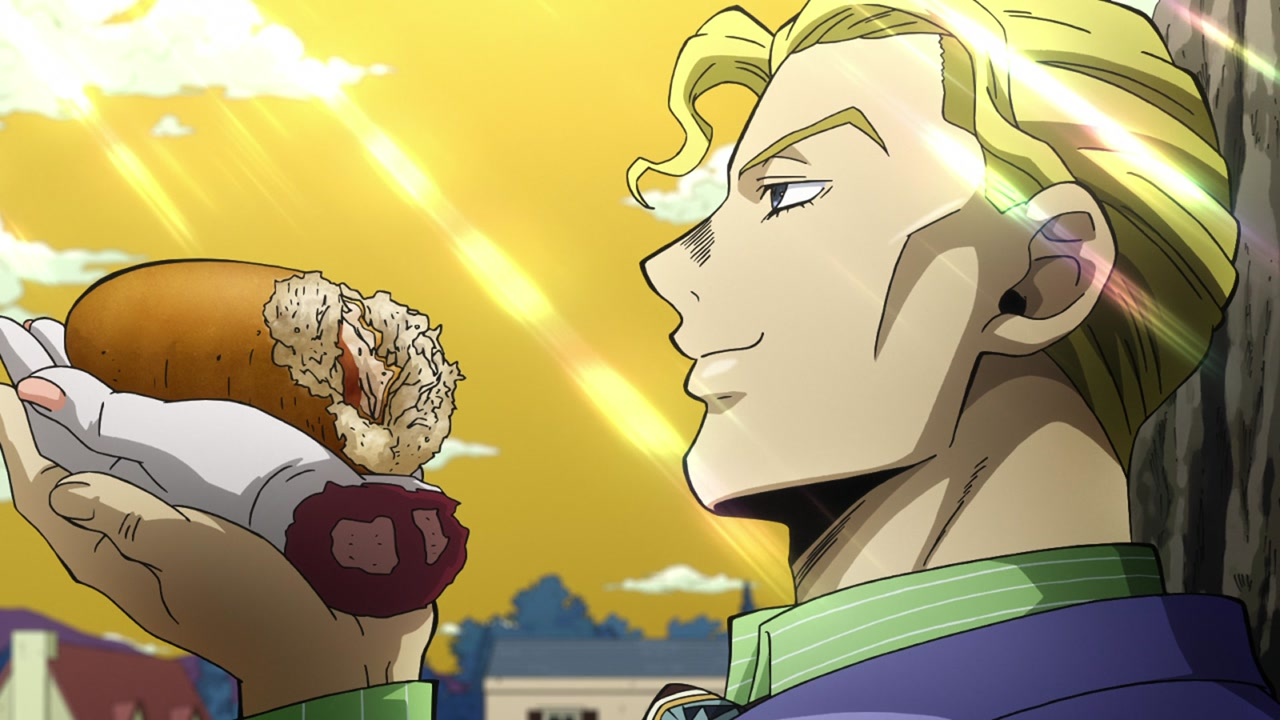
Araki has stated that as a child, Sendai started feeling less like home because he was afraid of the strangers that started living there as it became more developed. This manifests in the fact that Morioh finds itself infested with dangerous Stand users. Not to mention, there are two serial killers hiding in the city. Diamond is Unbreakable can still be as bloody as the parts that preceded it. At the end of the day, though, a good number of the Stand users end up being decent people at heart which I find beautiful given their inclusion essentially symbolizes a childhood fear of the unknown.
The change in setting also has tangible effects on the part's structure. I Stand by the enemy Stand format employed in Stardust Crusaders working well there, but I have to admit that Diamond is Unbreakable's structure works better. There's less room for burnout, for one. As the enemy Stand-users don't constantly hunt down our heroes, the show feels more dynamic and organic. Again, I love Stardust Crusaders, but especially in the face of Diamond is Unbreakable, it feels serial to the point of woodenness. It’s exciting, but after a while, this is somewhat in spite of its format. Every Stand user isn't out to kill our heroes (in fact, I'm pretty sure murderous Stand users are in the minority), with some even being outright benevolent. When our main villain does show up, it's a nice change of pace and the show becomes a compelling game of cat and mouse. It's a minor thing, but I really like how many episodes lead into the next, making them feel more connected. While the story feels more "lowkey" than the ones that came before, I don't think you can quite call this slice-of-life. While our ineffectual delinquents, do go to school, it's a rare backdrop and it's never really focused on.

As I said, few Stand users are out to kill our heroes. This makes for more interesting conflicts — on the whole, Stand Powers have had an amazing glow-up. Out-and-out slugfests are seldom seen here and the powers themselves are either more interesting or used in creative ways. Stand out examples are Shigechi using a swarm of tiny stands in various ways, Aya who uses her Stand to work as a beautician, and Chef Tonio who benevolently uses his Stand to make food that violently heals ailments. The difference can be seen most prominently by comparing the two Joestar groups. The stand powers of Jotaro, Polnareff, Iggy, Avdol, Kakyoin, and Joseph are almost all less interesting than the powers of Josuke, Jotaro, Koichi, and Okuyasu. Josuke's Crazy Diamond, like Star Platinum, utilizes rapid-fire fisticuffs (complete with a "dora" kiai that's obviously similar to Star Platinum's "ora"), but in addition, he also has the ability to heal anything he so touches, which goes a long way in making him much more interesting. It facilitates very creative uses of the ability like so:

Even more interestingly, Jotaro and Star Platinum themselves are much more interesting here due to Jotaro retaining use of The World, thus making it as much of his toolkit as his rapid punches. It also helps that he's used sparingly, making him feel less annoying here and highlighting his insane skill compared to the rest of the Stand users. Thus, when he is used, he entertainingly steals the show almost every time.
More than the setting, the biggest improvement that Diamond is Unbreakable has over its predecessor is in its characterization. In Morioh, I found a setting that I really enjoyed coming back to and a big part of this is because of all the smiling (or sinisterly smirking) faces that I knew would be greeting me. Again, I want to stress that I loved the characters of Stardust Crusaders — the group dynamic was and remains great. With that in mind, the fact that I find these characters better really says something. For one, they're rounder and fuller than their predecessors. I said in my Stardust Crusaders review that the eponymous group really worked as a unit and I couldn't see them being that compelling on their own. This isn't the case for the group featured in Diamond is Unbreakable, each of whom having more depth than the Joestar group of old. Even someone like Okuyasu who, on the surface, doesn't seem much more than your stock dense character seems like he could do well on his own if given the chance (more on that later). Hell, Rohan does have a solo outing in the OVA, Thus Spoke Kishibe Rohan. Josuke makes for a more emotive, compelling protagonist than Jotaro who, at times, felt more like a force of nature than a character. Again, Jotaro himself ends up being much better in the transition — him being a force of nature works more when the focus isn't constantly on him. He absolutely nails the role of a mentor/uncle. The Fate Which Still Remains and The Stardust Man Appears encapsulate this quieter role perfectly, but of course, Jotaro's glorious proper theme still appears.
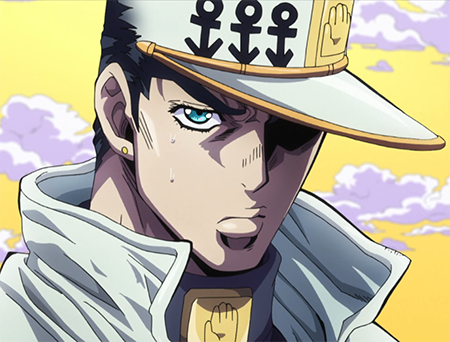
It's a testament to Araki's characterization that I don't completely hate Joseph Joestar despite the fact that this entry reveals his infidelity. One of the easiest ways to make me completely hate a character is by having them be unfaithful. I'm still not sure I can call Joseph my favorite Joestar anymore, but I'm surprised that I'm still somewhat receptive to him. ~~Though make no mistake, I'm still fucking salty that Araki made Joseph into a scumbag.~~
The spotlight is also shared more here, with no one character of the cast feeling like they overshadow the rest in the same way Jotaro (or to a lesser extent, Polnareff) did. It certainly helps that there are fewer main characters to get the spotlight in the first place.
The antagonists are still colorful and they end up being more memorable here. Multi-parter episodes happen a lot more often, making them stick with you more. When there are single episodes, the antagonist will often reappear later as a friend (the sole exception that I can think of being Janken Boy). It is a town, after all, and this makes it feel more like an actual place.

Then, of course, there's main antagonist, Yoshikage Kira who absolutely steals the show. I found him to be a better villain than DIO. DIO certainly is the more bombastic, fun villain, the guy you love to hate, but Kira is menacing in a way that DIO nor the Pillar Men never were. There's a quiet creepiness to him, an unstableness that feels all too real. It's that phrase again: larger than life. Kira is an unnervingly methodic and calculating serial killer — he's designed himself to never stick out and thanks to that, he comes across as just an ordinary guy. By the time you notice the dread that surrounds him, by the time you notice his terrifying Stand, it's almost certainly too late. I absolutely loved Kira and his twistedness.

It's thanks to Kira that Diamond is Unbreakable culminates in a final arc that works a lot better than "DIO's World." I think "DIO's World" might be more enjoyable for me due to the hype, but I appreciate that the "Bites the Dust" and "Crazy Diamond is Unbreakable" arcs are a lot more cohesive. "Bites the Dust" has nearly all the suspense of "DIO's World" but the seemingly invincible Stand power is able to be stopped thanks to an inherent weakness in the Stand and the user, which was one of my biggest complaints with "DIO's World." After Bites the Dust is neutralized, we get into the fight properly and I can track how Josuke beats Kira a lot better and it doesn't feel like Araki is throwing him a bone in order to get to the conclusion he wants — the victory feels more earned. Kira is finally defeated for good thanks to a delightfully, explicitly collaborative effort between everyone. Across the board, this is an improvement over the last final battle and if not for the bombastic quality DIO brings, I'd easily like it more than DIO vs. Jotaro.
And, of course, Diamond is Unbreakable is still a hoot: "Shigechi's Harvest," "Let's Go Eat Some Italian Food," and the conclusion of "Highway Star" are particularly of note.

As much as I enjoyed Diamond is Unbreakable, I have to acknowledge that it certainly has its problems. They're not glaring problems, by any means, but problems, nonetheless.
While Diamond is Unbreakable does a better job of managing its characters than Stardust Crusaders, it still fumbles a bit. There are a number of Koichi-focused episodes (to the point where call you could make the argument that he gets as much focus as Josuke) but absolutely none involving Okuyasu. In general, Okuyasu ends up feeling almost like a sidekick to Josuke, similarly to Avdol feeling like a sidekick of Joseph. In Diamond is Unbreakable, Araki still has the problem of not knowing how to deal with protagonists he deems too powerful — it happened with Avdol and it's happened again with Okuyasu It's fine when he's handicapped due to him being dimwitted, but I take issue when he's often just left out of the party entirely, like Avdol often was. There are other characters that I would have liked to see more of. Less is more is definitely the play with Jotaro, but characters such as Tomoko and Joseph definitely felt underutilized.
Probably my biggest problem with Diamond is Unbreakable comes in the arc wherein Kira's father uses the Stand arrows to create Stand users who will come after our heroes. Ring a bell? If you said it sounds like a budget Stardust Crusaders, then pat yourself on the back because it is a budget Stardust Crusaders! The format that mostly works for Stardust Crusaders absolutely doesn't here. The plot feels a lot more wooden and obligatory. During this section of the anime, Diamond is Unbreakable becomes something it's not and it's worse off for it. We do get some good arcs within this one, but the greater arc during this time felt like artificial padding, moving away from the strengths of the setting.

Yet these issues barely detract from my enjoyment of Diamond is Unbreakable. The show was a treat from start to finish, with something I loved in each episode. It's telling that I've recently finished it and I'm already rewatching scenes.While it does a lot to change the JoJo formula, the changes ultimately make for a more approachable JoJo fair than we're used to. Yet the show still feels like it's a part of the series I've come to love. I couldn't keep myself from watching the episodes as fast as I could. Diamond is Unbreakable might not quite be a 10, but I'm comfortable in calling it a favorite.
Assuming Golden Wind doesn't knock it off its throne, of course.

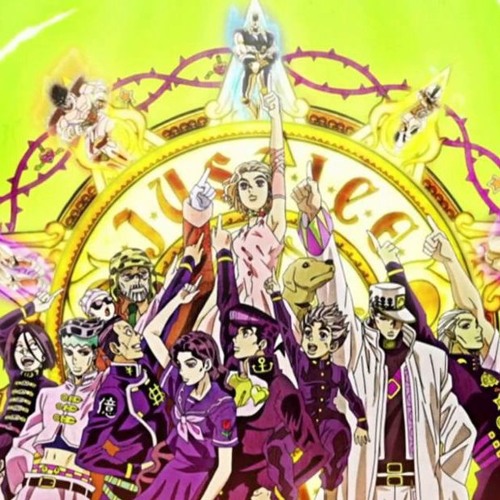
What a beautiful Duwang!
chew
There must be no page as pretty as this review.
This reads like a picnic.
74.5 out of 77 users liked this review
