Sunny
a review by MattSweatshirT
a review by MattSweatshirT

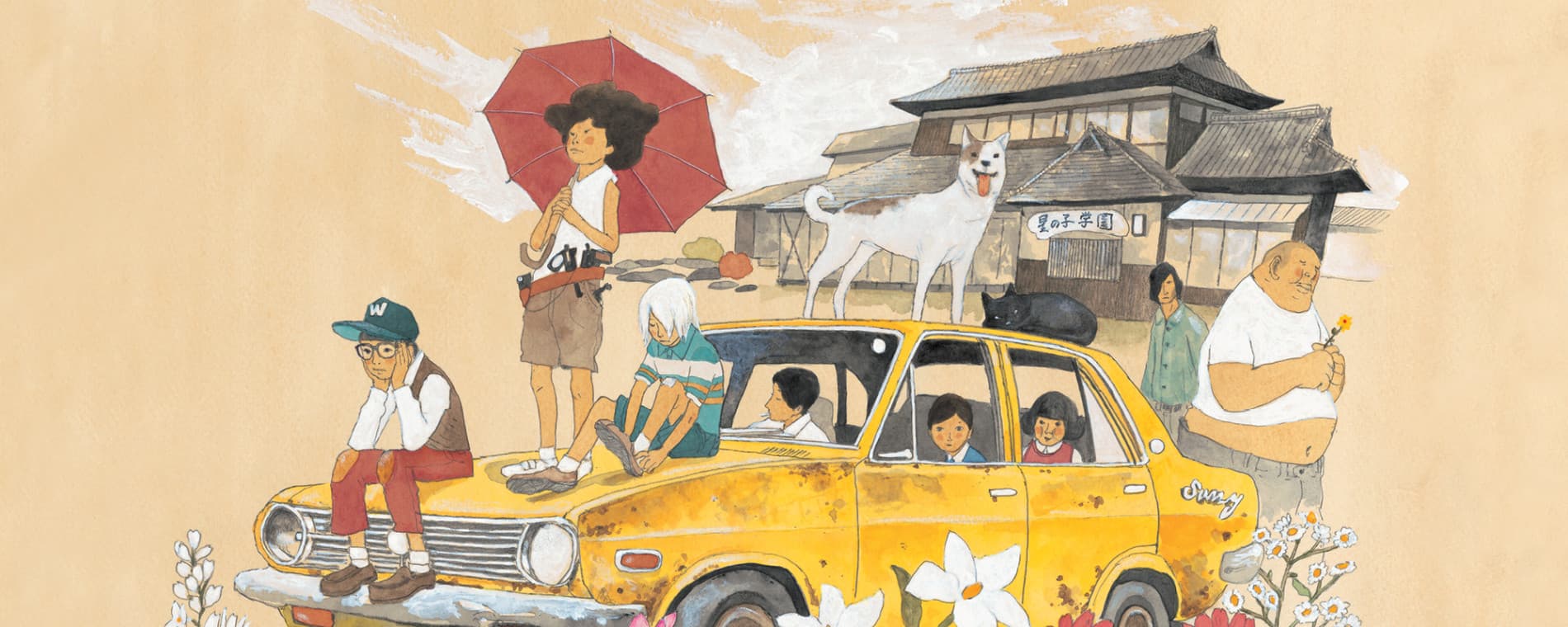
Sunny, like many of Matsumoto’s works, strikes a balance between an endearing comedy and a pervasively somber character drama. It is probably the most concentrated of his works in combining these two aspects, and it uses them to aid each other the most effectively. Ping pong is more thematically concerned, exploring the idea of coming of age from a variety of perspectives. Tekkonkinkreet is focused more on the setting it takes place in, exploring the ecosystems of treasure town and its effect on the people living within it. Sunny’s sole focus is the characters themselves, and their stories. It takes an extensive look into the worlds of each of the children living at the Star Kids Home. It crafts many incredibly realistic characters who have been made who they are due to their tragic family circumstances. It is particularly concerned with illustrating the impressionability of children and the dynamics of their interactions with adults and each other. Matsumoto takes a hard stance on the side of the kids, relentlessly critiquing the actions and inactions of the adults around them.

“Haruo makes trouble, but he’s not a bad kid.” This line captures the conclusion of Haruo’s character arc in the series. Haruo bullies other kids, he acts out at every adult he comes across, he steals, but he isn’t doing these things because he has some intrinsic impulse to do bad things—he has been shaped by his environment. He was lied to by his mother and left at the Star Kids Home where he was bullied endlessly, forcing him to become tough. We get a small but extremely telling glimpse at how his mother is when he gets to visit her. She acts cold and uncaring, asking him to call her by her name rather than “mom”, revealing a part of her that wishes he didn’t exist and she didn’t have to be his mother. At times she acts as if she cares, doing things like buying a ton of nivea cream for him because she knows he likes it—but we can tell these actions are coming from a place of herself not wanting to feel bad, instead of a place of actual empathy. If she had real empathy for Haruo she would understand the reason he likes the nivea cream is because it reminds him of her and in the same way she is hardly in his life, he only has a small amount of the cream that he savors. Having an abundance of the cream is not a substitute for almost never being able to see his own mother. She tells Haruo at one point that she won’t listen to him when he’s yelling at her, but she doesn’t really listen anyway, and she fails to understand why he feels the need to yell. Haruo does bad things because of how he is made to feel. He is also a kid just like any other. He plays in the Sunny car all of the time, imagining tons of childish situations. He’s obsessed with Kenji’s glasses because he thinks they look cool. The way he idolizes Makio as an elder brother figure is captured perfectly. He has a childish, naive idea about all kinds of things—like “being spoiled”, which he deems a bad thing and therefore thinks he should be incredibly harsh and mean to the new kid Sei. His naive understanding of this idea is so spot on for something a kid would hear about and internalize from an adult at some point in their life, which would then contribute to shaping how they see the world around them.


The statement “Haruo makes trouble, but he’s not a bad kid” can be extended to all of the kids in the Star Kids Home in a variety of ways. They are all victims of circumstance.
Megumu is around Haruo’s age, but she is much more mature. She doesn’t have any parents as they died when she was very young. So, the Star Kids Home is the only home she has. Early on we get a glimpse into some of Megumu’s insecurities when Haruo comes across her at a bank looking down into the river where there’s a dead cat. She wants to give the cat a funeral. She then asks Haruo if it’ll be like this when she dies. Alone in a river with no one who cares enough to find her because she’s an orphan. Megumu has a unique relationship with the other kids and the Star Kids Home because she doesn’t have parents anymore. She reveals a selfish thought she has that she doesn’t want any of the other kids to go back to their parents because she wants them to stay with her, and she thinks that makes her a bad person. She has the maturity to identify that selfishness within her, but she retains a childishness in her inability to accept it and her naive prescription that it makes her a bad person, because she doesn’t know any better. Later in the story, Megumu’s aunt and uncle come to visit her, who she has never met before. She interacts with these relatives of hers with a childish resistance. She feels awkward having them buy her food and take her to the movies, because she doesn’t feel as though they are her family. Throughout the day she spends with them she fights their kindness and refuses to accept them as the well-meaning people they are, because in her mind she is an orphan, and this isn’t how orphans are treated. However, when they realize she forgot her umbrella, go all the way back to the theatre, and awkwardly inconvenience people already watching another movie all to get her umbrella back, she is finally able to see their sincerity and accept them. She doesn’t want them to go through so much trouble for her, they aren’t her parents, but they do anyway, and it makes her burst into tears. At the end of the series, when she is about to move in with them, she says to Kiko that she has decided to love them.


Sei is a character with a less layered but particularly poignant arc. He is the stereotypical smart kid with glasses and everything. However, he is fairly well characterized for this role. Everything down to the vocabulary and phrasing of what he says come together to create an exceedingly believable and fleshed out character, such as how he remarks about how he likes to “observe” clouds sometimes. This depth of characterization is present for essentially every character in the series. Sei’s character arc begins with his insistence that he isn’t going to stay at the star kids home for long and his mom is going to come get him soon. At a certain point, this insistence of his stops being something he truly believes and becomes a front—a mask he hides behind to both hide his grief about the situation and hide his plan going forward. We get hints of his plan as early as chapter 1, where we see him sitting in the sunny imagining the route back to his father’s workplace and mothers house. Sei, as the intelligent and careful kid he is, extensively plans how he is going to get back to his parents on his own. This smart, mature planning for something so naive and childish encapsulates Sei’s character perfectly. On the outside he appears to be far more mature than any of the other kids, and he makes the adults think so as well. But ultimately, he is still a kid who misses his parents, keeping that pain all to himself and acting out because of that pain in a childish display which leads to him wrecking Mr. Adachi’s car.
Junsuke doesn’t have too significant of a character arc or exploration for him in general, but he is probably my second favorite character in the series. He has a lot of quirks and details about him that bring his character together and he is simply hilarious, he’s the kind of kid you can’t help but love. The opening panel of the series is a colored page of Junsuke playing his harmonica, no doubt horribly, with snot dripping out of his nose, and without a care in the world. His carrying around of an umbrella which he refers to as his home as well as his obsession with shiny things are incredibly endearing details that also provide deeper implications for his character. His and Shosuke’s collecting of clovers because they believe it will help their mother who is in the hospital as well as his connection to the mall because of the time he had to spend in them waiting for his mother and uncle round out his character beyond just comedic relief while still being in my opinion one of the funniest characters in anime and manga.

Sections like the one below feel like Matsumoto reaching across the pages and speaking directly to the audience about this issue--within them, an implicit call to do better.

Matsumoto‘s art-style is something not everyone will enjoy. In a technical sense it is a bit ugly and even amateurish at times. However, it has a distinctive charm that I believe adds a lot to his series. It helps deliver the comedy a lot of the time with the characters’ different facial expressions and motion throughout the panels. It is also able to create a particular emotional depth and subtlety as well through those expressions and the paneling in general.


The impressionability of children is a delicate and complex thing that Sunny sets out to explore thoroughly. Putting the reader in kids’ shoes allows us to see the intricacies of how they interact with each other as well as with adults. You can see the reasoning behind each and every of their actions and the way they phrase things. This along with the incredibly endearing personalities of the kids creates an emotional attachment to their journeys. The series shows us how certain kinds of behavior from adults regarding kids are not okay. Adults have the responsibility to be emotionally mature and empathetic to their effect on the kids around them. When we see other kids’ parents not even refer to Haruo as a kid, but as a “problem”, it’s infuriating. This is the kind of thing that causes him to act out. Even an adult like Mr. Adachi, who is a great guy and takes care of the kids very well, is subtly criticized throughout the series. When reflecting on Haruo’s past and the way he acts with Makio, he swears that he will take care of and be there for him no matter what. Makio then questions Adachi on this, asking if that statement from him is coming purely from a place of care, or if it’s coming from selfishness as well. By the end of the series, without a word about it said, Adachi moves past his selfishness and sends Haruo to the orphanage in the city, where he would fit in and be taken care of better.
Matsumoto stresses how we ought to be more empathetic towards those with problems and those cast out by society—we aren’t problem-free ourselves. Kids in particular are owed a certain amount of respect and empathy in the way we interact with them, as it can shape their lives going forward.
52 out of 52 users liked this review
