Sonny Boy
a review by RiPHopscotch
a review by RiPHopscotch
When Sonny Boy first got announced I was genuinely excited. In my experience original productions are a little more willing to take risks when compared to adaptations of popular manga series, and I think there are also some benefits to flow and pacing when stories are written in the context of “I have 20 minutes for 12 weeks to tell a story”, as opposed to “I have 20 pages every week to keep readers engaged”. I also really love a well-done coming of age story, and after taking a glance at the character designs and school uniforms, I thought Sonny Boy would likely fit this bill. So, it’s a little disappointing that despite this being something I thought I would really love… I didn’t. I would actually say I disliked the show. Its themes are muddled and nebulous, the story is deliberately unapproachable with characters that manage to mix being weird and uninteresting, and the production is a mixed bag, with some elements of it being great but others bordering on pretentious. To be fair there is a niche that appreciates these elements, which is why Sonny Boy has received some very vocal praise. But they don’t appeal to me, and I think many will feel the same way.
Sonny Boy’s story kicks off with a class of high school students “drifting” together into an alternate dimension, with some receiving useful powers, some receiving useless powers, and others receiving nothing. The entirety of the first episode is just a group of stressed out, on edge, dangerous teens trapped in their school that’s traversing a pitch-black void, and it’s genuinely fantastic. Established social norms vanished along with the real world, making way for hastily improvised replacements which in turn give the characters something to clash against. It’s compact, focused, interesting, and it works on its own – it’s everything the rest of the series isn’t.

I say that because immediately after episode one the cast is dropped onto a desolate tropical island and the focus rapidly disintegrates. The strength of episode one was that the confusion the audience felt made sense; the students had no idea where they were or what was happening, and no real plans. It was chaotic, but the chaos reflected the situation the characters found themselves in, and their motivations were still discernable. Once they reach the island the goal of the group is to figure out how to return home, at least ostensibly, but what is shown doesn’t reflect this. More alternate realities are discovered, which are visually engaging on a surface level but meaningless otherwise, the show spends a bizarre amount of time focusing on how the society is running, and many characters stop being rational (and by extension interesting), instead being revealed or re-introduced to be whatever the story needs them to be at a given time. This continues until episode seven, at which point the story goes completely off the rails and loses all semblance of cohesion, and I lose all semblance of interest.

The thing is, disconnected stories have been told in compelling ways before. The example of this that lives foremost in my mind is Girls’ Last Tour, which is essentially a series of self-contained events, each with their own little moral. The audience knows the characters are on a journey, but where exactly they’re headed isn’t important, and is never presented as such. This kind of structure that opts to tell several stories in lieu of a single, larger one is called episodic storytelling, and it’s a time-tested way of doing things. Sonny Boy’s issue is that, at best, it’s pseudo-episodic. An equal amount of importance is placed on showing seemingly disparate things and exploring the overarching plot thread of “get home”, leading to a disjointed story that doesn’t manage to do either particularly well. This approach doesn’t just lead to an unsatisfying story with weak characters, but it also damages what is intended to be the most important part of the show.
To be blunt, Sonny Boy is very good at presenting an absolutely vapid metaphor or idea and twisting it, making it confusing to the point where it can be interpreted as something insightful and deep. There is no clearer example of this than episode four, the “Monkey Baseball” episode. As one might be able to guess, this episode revolves around monkeys playing baseball, specifically one monkey, Blue. Blue is a great player, and he has a confrontation with an umpire who makes the correct call, refusing to change it in the face of Blue’s abuse. Eventually Blue’s stubbornness and the umpire’s sense of duty lead to the umpire’s death at the hands of an angry mob. This monkey baseball story is a metaphor to compare two side characters, one of whom became blessed with an incredible power during the reality shift and let it get to his head, and the other who did not gain powers but still refuses to change his worldview or morals to adapt to the students’ new reality. The thing is, the meaning of this relatively simple metaphor is obfuscated to a ridiculous degree for no real reason, and it’s not even particularly interesting. Honestly, it doesn’t even challenge the audience; it could have posited an idea like “Hey, maybe the umpire pointlessly adhering to the rules to the point of his own death is too far”, but instead blind, unwavering devotion with no nuance is portrayed as admirable. This sequence also totally interrupts the flow of the plot between episodes three and five, and, to cap off all of the sub-par aspects of this, all of this effort was done for the benefit of just two side-characters, both of whom will lose every ounce of plot relevance they had just a few episodes down the line.

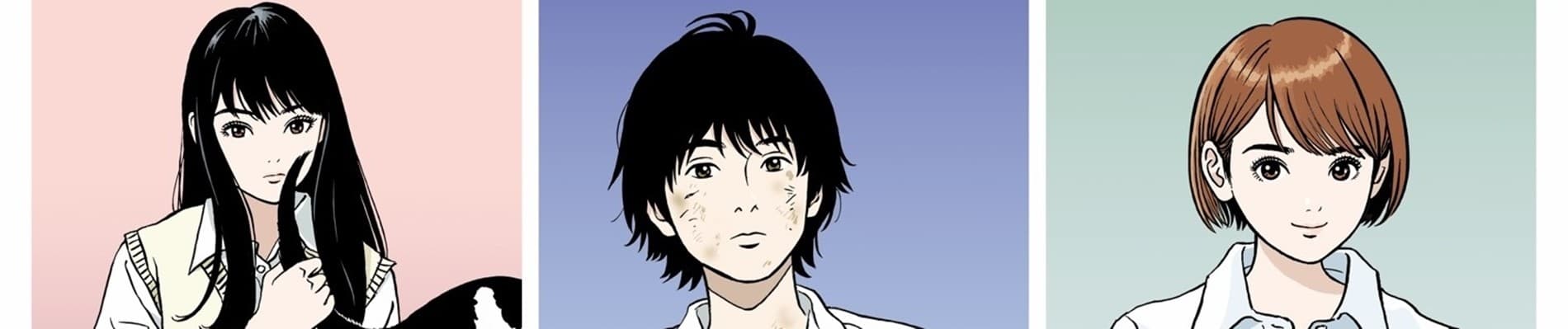
It's not just those characters that are lacking, however, it’s the characters in general that are a major issue. Episode seven marks a shift in the story for a lot of reasons, with one of the most apparent being that many side characters just sort of… vanish. When almost the entirety of the supporting cast has no relevance in over half the show the main cast needs to step up, however the main cast of Sonny Boy is wholly incapable of doing so. Nagara, the lead character, is listless and borderline depressing to watch, and Nozomi, his companion from day one, doesn’t really do anything for a rational reason. Throughout the show it seems like she knows a lot more than she’s letting on solely because her actions need some justification, which was more irritating than anything else. There are two characters in the show that I came around on, however, Mizuho and Rajdhani. While my appreciation for the latter is honestly just because as the obligatory “boy genius” he’s fun to watch, the former is genuinely interesting. Mizuho initially exudes "antisocial cat lady" energy, which can be hard to justify in a character, but as the show goes on it’s shown how her worldview was formed, and how that in turn informs her decision-making. She’s not a bad person whatsoever and is legitimately misunderstood by her classmates, and the best thing Nagara does in the show is befriend her. Of every character, her story was by far the most fleshed out, and she did an admirable job of somewhat grounding everything, managing to provide the audience a character they can understand and root for throughout the entirety of the show.

Unlike my opinion of Mizuho, I’m a little torn on the visual production of Sonny Boy. On the one hand the character designs are flawed, failing a very basic “litmus test” commonly used: being able to tell characters apart based on their silhouette. This is actually an issue at times, as when there are far out shots it can be genuinely hard to tell which character is which. With that being said, the character designs do convey a good deal of information about the characters and reinforce their personalities, which is what character designs should be doing (even if the personalities are lackluster). The visual direction is also hit or miss, as the style is certainly unique and helps to keep the viewer engaged, but frequently shots convey so much information that it’s overwhelming. I think that when rewatches of a show or breakdowns done by third parties are essentially required in order to catch every plot relevant detail – not just easter egg details or bits of foreshadowing – it’s a sign that the frame is being overcrowded and there is too much for the viewer to process. I will say, however, that the background art is undeniably superb. It’s gorgeous and looks almost right, but stands out against the characters juuust enough to support the notion that this really is another universe, and the situational use of blank space as a background is something I really love for this show in particular.

Like the background art’s use of blank space, there are also quite a few moments in Sonny Boy where there is nothing but silence. When it comes to the sound design, however, I worry that this trick was somewhat overused. This is an especially noticeable issue in the early episodes, where the soundtrack is at its weakest. Deciding to lean so heavily on silence with such an underpowered OST is definitely risky, and I think it would have been an unequivocal failure if not for the ambient sounds. This aspect of the sound design is incredible, absolutely nailing everything whether that’s the sound of waves crashing on the beach or rain coming down on an umbrella, the murmurs of an idle crowd or the chirps of tropical birds. Even though it seems like a minor thing, the ambient sounds really help to drive home how close the various alternate realities are to our world, regardless of what we’re seeing on screen.
Despite what I think, many people praise Sonny Boy’s OST for its use of silence in particular. Everything about this show is polarizing. There are plenty who adore the show as a whole and plenty who despise it; there are individual aspects and episodes that I love and others than I loathe. I don’t think that’s unusual at all for productions like this, and, based on behind the scenes or extra interviews with some of the creators, it’s clear that a lot of the risks taken were taken because artists wanted to try something new. Taking risks and trying to push the envelope are both admirable, but there’s a quote from Michael Jordan that’s applicable here: “Get the fundamentals down and the level of everything you do will rise”. Making the best icing in the world doesn’t matter if the actual cake isn’t good, and at the end of the day there are just some really glaring issues with the final product, issues that arose because fundamental aspects of storytelling and character writing were tossed to the side – that’s the kind of decision making that really limits how broad the appeal of something can be. Maybe my early expectations and pre-conceptions about the show simply put it at too big of a disadvantage to overcome, but I don’t think there is an alternate world where I view this as more than an inconsistent mess.

32.5 out of 50 users liked this review
