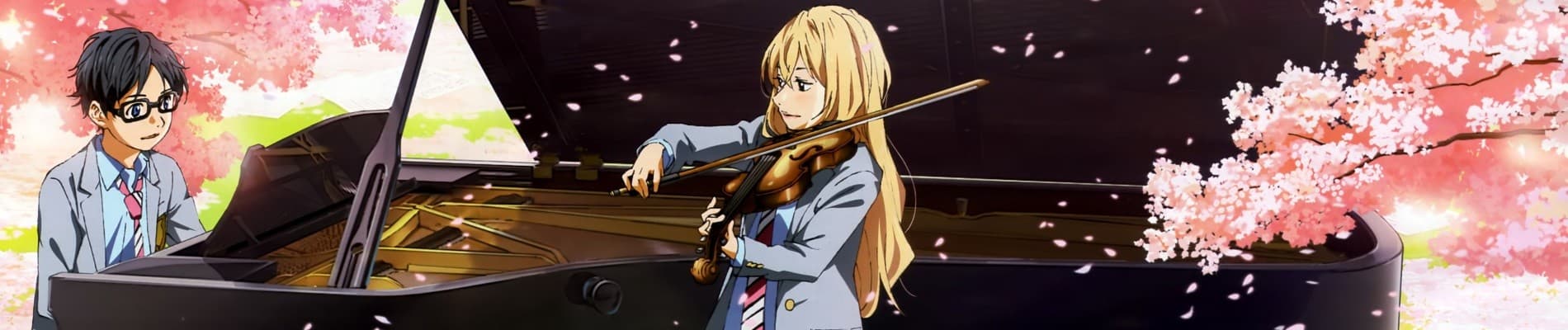
Your Lie In April is just beautiful, the art style, characters, writing, everything.
Some of the things in this show are so well done it makes me want to write on and on about my love for it, but I'll choose not to ramble on too much here.
Characters:
The characters in Your Lie in April grab your attention fiercely and make sure you’ll never forget them. Arima, Kaori, Tsubaki, Watari, and Nagi are so easily recognizable and relatable that they work very well as the show's core. Instead of having all the characters' lives be closely interlinked, we see them on their own time, going through their lives and expressing their desires without the presence of the rest of the supporting cast (besides Arima and Kaori, of course). This serves the purpose of trimming a lot of fat from the show because as it stands, the interactions themselves are very limited in suspense. It's why many of them feature a lot of comedy, when the melodrama runs high or a scene draws on for too long, there's often a quick gag that serves to add a bit of spice to the moment. The author knew that having the characters interact multiple times per episode would quickly run stale. I mean, there are only so many ways Tsubaki can physically assault Arima. I’m not saying they’re badly written, only that they become more interesting when left to their own thoughts. Because of this, during pivotal moments in the story where the characters are often forced together or into conflict, those moments stick out all the more as truly special when they’re played completely straight. Even while they’re acting on their own, most of Kimi No Uso’s characters present compelling and relatable stories that play around the central plot of Arima’s journey of personal growth. While the majority of the runtime is dedicated to his plotline, the supporting cast adds extra depth and meaning to his growth.
Animation:
Kimi, no Uso’s animation is unique among many other shows because of its character design which is much more detailed than similar anime. And while I’d call the designs themselves beautiful to look at, the animation never reaches jaw-dropping levels at any point. Instead Kimi no Uso uses limited animation extremely well. Across the 24 episodes, there are many scenes of static or lacking animation. In the comedic scenes especially the characters switch into a much less detailed animation style which helps the gags work better than they would have if the same art style were used. But it is because of this de-emphasis on animation in some scenes that Kimi no Uso’s artists were able to put more effort into areas where I think they really shined. While the animation may be lacking at times, all of the backgrounds are drawn in such beautiful detail that I can’t help but be sucked into each of the settings. The animators make up for lacking quality where it matters most. I was impressed by how well the movement was done during the musical performances. Their small bodily movements and how their fingers touched the keys had a lot of effort put into it. That along with the special effects like Arima’s “I can’t hear the notes” performances combine to make each musical piece seem like a larger-than-life showcase of artistic talent, both from the characters and the animators. Combining this with the pivotal character changes that accompany them makes for captivating scenes that I want to rewatch over and over again.
Plot:
Kimi No Uso’s plot centers around Kousei Arima, a genius musician who gave up the piano after his mother's death and who can no longer hear the notes of the piano. He and many of his other friends grow and change during a pivotal spot in their lives: middle school graduation. Kimi No Uso’s plot is centered around its characters and how they grow along with the overarching storyline. The plot happens when the characters make changes, so most of Kimi no Uso’s characters are very dynamic (Watari excluded, which is why there is so little screen time for him}. Given what I’ve said about the characters already, leaning onto them makes for a fantastic story. While I said that they spend much of their screen time without interacting with other characters, we see how many of their actions indirectly change each other's lives. When Kousei undergoes character changes, it's not just him we’re focused on, we get to see how it affects Kaori, Watari, and Tsubaki, making for engaging drama that is dense enough that it stays engaging for 24 episodes.
Enjoyment:
Admittedly, I’m a big fan of stories involving characters chasing distant dreams, so Kousei’s character arc was a huge point of interest for me. Most of Kaori’s arc never grabbed me very much, but that was only because I was spoiled for how that would end up. The part that DID grab came at the final episode and is something that will always stick in my mind and solidifies this show as truly something different from anything else I’ve watched. That moment was Kaori’s letter to Kousei. This letter does so many things that I love, it perfectly explains Kaori’s wild personality and her backstory which had been brushed off for the longest time without context. It completes her character and makes her even more likable, which adds to the impact her death has on the audience. It’s the perfect cap-off to Kaori’s and Arima’s relationship, somehow managing to create a satisfying conclusion to a story that was always destined to be incomplete. And what I think is the most significant, is it gives Kimi no Uso rewatch value. Not just rewatch it after you forget most of the plot points, like, as soon as you finished the series. I wanted to watch it all over again, each episode just noticing all the details and interactions and how they fit into the new context that we’ve been given. That’s a feeling I’ve never experienced before, and man do I love it.
Overall Kimi No Uso won’t rank as a top ten anime for me because of its lack of a huge draw that separates it from other high-level anime, (or maybe I just missed the main draw due to me getting spoiled for the ending). What sets Kimi No Uso apart from most shows is the clear effort that has been put into each of the working parts, its animation is efficient, the art is stunning when it needs to be, and the plot has a good base with plenty of turns to keep engagement high. All of this is centered around characters that truly define the show as something that can stand out among 99% of other anime. I’d watch this show over and over again and still find things to love about it.
38.5 out of 40 users liked this review