# 
【COULD CONTAIN SPOILERS!】
 ▶
▶
(if you want you can read the review while listening to this one above!)

"It's not fair, why do fireflies die so early?" Setsuko, Grave of the Fireflies
__History is important... that's why we study it, however, sometimes some things are left out, things that maybe are important to remember...
__
____
【REVIEW PREMISE】
This review is not really meant to be a full review, but rather a reflection, what I think about the film and the message I believe it was meant to convey.
______
REVIEW IN ENGLISH
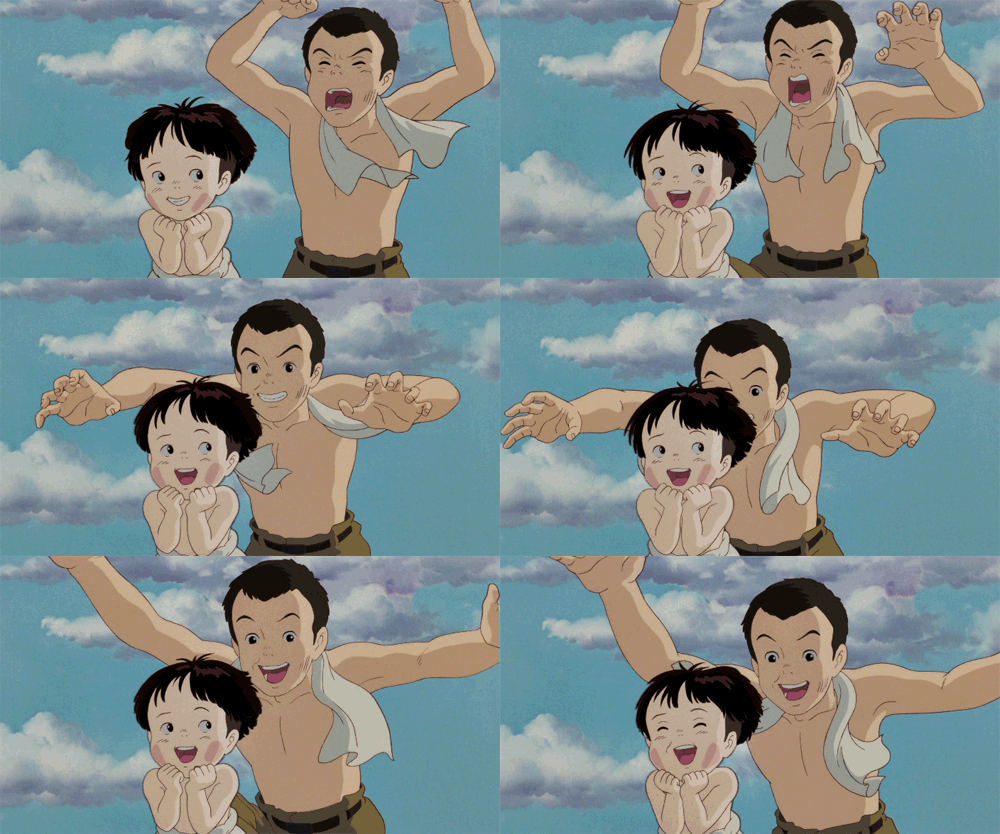
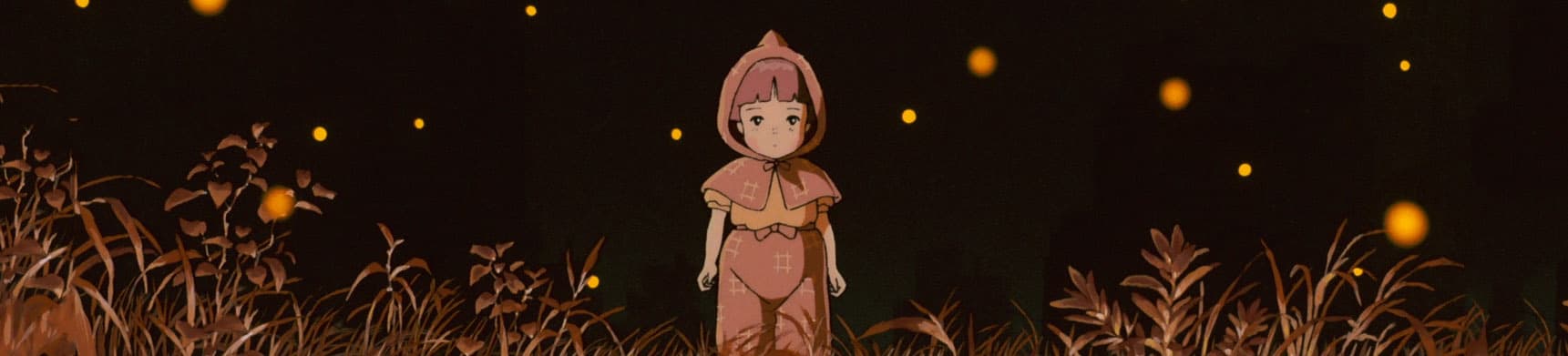
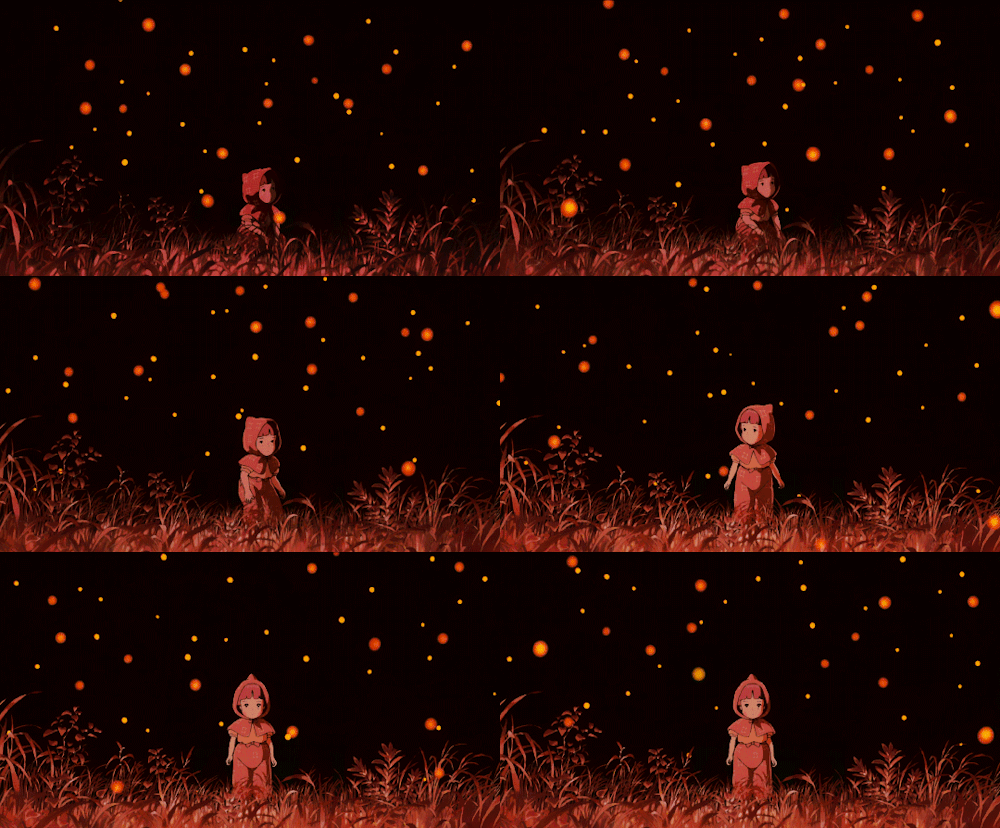
During my first viewing of the film I was generally unconvinced. I could not say precisely why, but it had probably failed to capture me as this second view did. Being able to enjoy the film again, I was able not only to enter much more into the two little main characters, being able to understand with much more sincerity some of the choices that are made throughout the film, but also to understand a macro meaning, which goes directly to the very title of the film: "Grave of the Fireflies." A meaning built into the film that is simply as fascinating as it is disturbing and true. "History is told by the winners," never was a truer statement and more pertinent to the topic at hand. In fact, the film is about the war or, to be more correct, about what America did towards the Japanese PEOPLE, and I want to emphasize and mark the word "people" in blood. This is because, without a shadow of a doubt, Japan together with its imperial fleet did not exactly do good things, however, this film is not about the imperial fleet, it is about the people, the citizens like so many, those whose only fault was to live on the land of a country having the imperial fleet as its army. Even after Japan had lost any kind of defense and attack with the total destruction of the imperial fleet by the Americans, they still wanted to continue, raging on a Japan that was now unarmed and certainly not having a good time. This is what Takahata wants to communicate, or rather wants us to remember. A world history, American and Japanese, that even at the time, but today more than ever, we tend to forget or pretend that the whole thing did not happen. And this is where Takahata's genius breaks through more than ever, bringing in the theme of "fireflies." He wants to bring to mind how in those moments the Japanese were like helpless "fireflies," who have such feeble and short lives, and are so small before the world. This is evident several times in the film and at different layers of interpretation. First of all, and perhaps the simplest and most straightforward one in the film, is the grave that the little girl around 3/4 of the way through the film creates for the fireflies, something that reminds the protagonist of that horrible mass grave, which I hesitate to call a grave, of the corpses caused by the air strikes, among which was his mother. The lives of the defenseless Japanese who were attacked by the Americans are only comparable to those of the "fireflies," as is shown in the film where the two graves are put on the same plane, on the same level. "It's not fair, why do fireflies die so early?" the little girl says throughout the scene in question and while also remembering her dead mother. But that is not all there. Takahata by "fireflies" goes on to refer, of course, to the main characters themselves as well, succeeding in this way in elevating to the maximum power the very intrinsic meaning mentioned earlier. In fact, in all the scenes where the ghosts of the children appear, they are put on the same level as the fireflies; they are almost the same thing. Both those poor brothers and those fireflies had a feeble and short life. This is what the film is about. This is what Takahata wanted to do, and he has succeeded great. He wants to do nothing more than remind us of the horrors caused by the Americans and how they deeply affected and changed a nation, and also how in reality even such an intelligent and strong human being can be placed on the same level as the fireflies.
____
REVIEW IN ITALIAN

Durante la mia prima visione del film ero rimasto generalmente dubbioso. Non saprei dire con precisione il motivo, ma probabilmente non era riuscito a catturarmi come invece questa seconda visione ha fatto. Potendo gustarmi di nuovo il film, sono riuscito non solo a entrare molto di più nei due piccoli protagonisti, riuscendo a capire con molta più sincerità alcune delle scelte che vengono prese nel corso del film, bensì anche a comprendere un macro significato, che va direttamente a collegarsi al titolo stesso del film: "una tomba per le lucciole". Un significato intrinseco nel film, che è semplicemente tanto affascinante quanto inquietante e vero. "La storia è raccontata dai vincenti", mai affermazione fu più vera e attinente al tema in questione. Difatti il film racconta della guerra o, per essere più corretti, di ciò che l'America ha fatto nei confronti del POPOLO giapponese, e voglio sottolineare e marcare a sangue la parola "popolo". Questo perché, senza ombra di dubbio il Giappone insieme alla sua flotta imperiale non ha esattamente fatto del bene, però questo film non parla della flotta imperiale, bensì del popolo, dei cittadini come tanti, di quelli la cui unica colpa era quella di vivere sul suolo di un paese avente come esercito la flotta imperiale. Anche dopo che il Giappone aveva perso qualsiasi tipo di difesa e attacco con la totale distruzione della flotta imperiale da parte degli Americani, gli stessi hanno voluto continuare, infierendo su un Giappone ormai senza armi e che sicuramente non se la stava passando bene. Questo è quello che Takahata vuole trasmettere, o meglio che vuole farci ricordare. Una storia mondiale, americana e giapponese, che già all'epoca, ma oggi più che mai, si tende a dimenticare o a fare finta che il tutto non sia successo. Ed è qui che il genio di Takahata irrompe più che mai, portando il tema delle "lucciole". Egli vuole far ricordare come in quei momenti i giapponesi erano come delle indifese "lucciole", che hanno una vita così flebile e breve, e sono così piccoli dinnanzi al mondo. Il tutto è presente più volte nel film e a diversi strati di interpretazione. Primo di tutti, e forse quello più semplice e diretto del film, la tomba che la bambina verso i 3/4 del film crea per le lucciole, cosa che ricorda al protagonista quell'orribile fossa comune, che fatico a chiamare tomba, dei cadaveri causati dagli attacchi aerei, tra cui vi era anche la madre. La vita dei giapponesi indifesi e attaccati dagli americani non è che paragonabile a quella delle "lucciole", come viene mostrato nel film dove le due tombe sono messe sullo stesso piano, allo stesso livello. "Non è giusto, perché le lucciole muoiono così presto?", dice la bambina durante tutta la scena in questione e mentre ricorda anche la madre morta. Ma non è tutto qui. Takahata con "lucciole" va a riferirsi, ovviamente, anche ai protagonisti stessi, riuscendo così ad elevare alla massima potenza proprio il significato intrinseco detto poc'anzi. Difatti in tutte le scene dove compaiono i fantasmi dei bambini, essi vengono messi allo stesso piano delle lucciole, quasi sono la stessa cosa. Sia quei poveri fratelli che quelle lucciole hanno avuto una vita flebile e breve. Questo è il film. Questo è quello che Takahata ha voluto fare e ci è riuscito alla grande. Egli non vuole far altro che ricordare gli orrori causati dagli Americani e di come hanno colpito e modificato nel profondo un popolo, e anche quanto in realtà persino un essere umano tanto intelligente e forte, può essere posto allo stesso livello delle lucciole.
____
If you disagree or didn't like the review, please contact me to talk about it, I am always open to changes.
____
Rated: