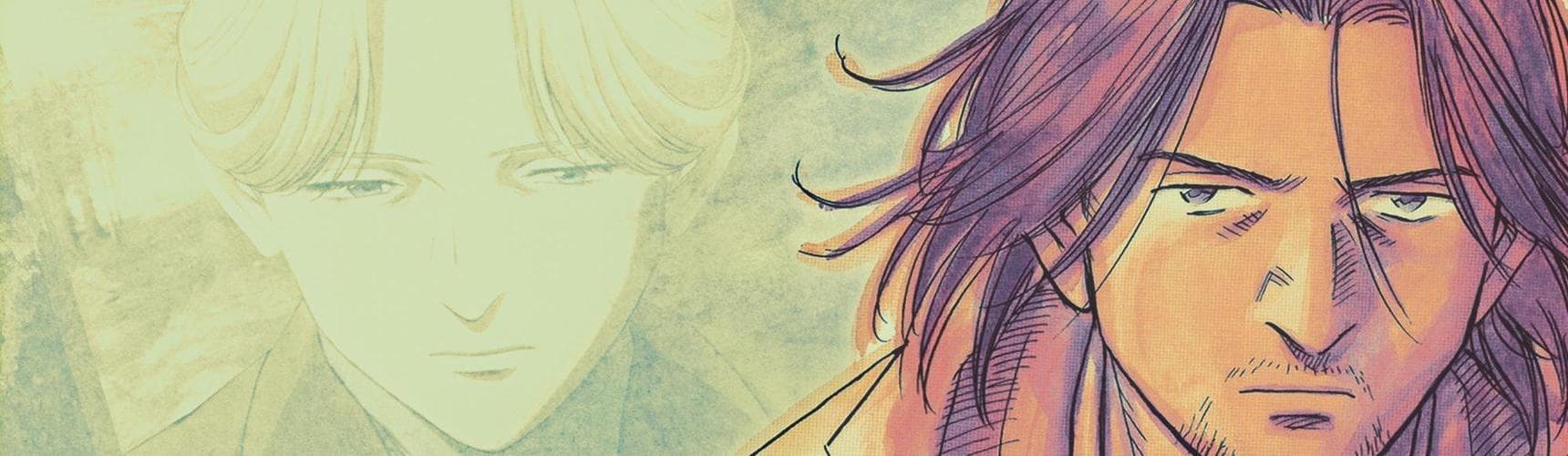
Monster
a review by EthanKendall
a review by EthanKendall
Introduction
Monster is a unique and special series. It is highly regarded as one of the best pieces of fiction ever created, with its reputation largely contributed to its incredible cast of characters, enveloping mystery and fascinating story, and I agree. The cast are detailed and strong constructs. The mystery has you hooked from the moment that Johan returns 9 years later from the original surgery until the very last panel of the series. The story is told incredibly, and how the many different perspectives and separate character’s all tie into one another is handled in an incredible fashion.
However, while these factors are handled incredibly, I believe what truly makes Monster by far and away the best piece of crime fiction is Urasawa’s talent as a writer. His storytelling, characters and mystery are incredible and relatively perfect on their own. However, his masterful use of Johan’s identity and character and his clever subvergence of the genre is what really makes Monster such a unique piece of literature and fiction, and ends by leaving one of the most profound effects on a reader that I have ever seen. But let us break down each segment and analyse what makes each one of them so stand out.
Urasawa’s art
A small factor in the larger scale of things, but certainly one worth mentioning. His art is superb. His character designs are tidy, his backgrounds are some of my personal favourites, his ability to capture so many different cultures is incredible and the coloured panels/cover arts,oil paint pages are brilliant. For one of the only times in animanga, I felt genuinely frightened. No matter how many times I look at Johans gaze, the sense of malice,animosity and evil never wears off, and Johan’s overall unsettling nature is perfectly portrayed through the art. In fairness, buying the whole series physically may have heightened my enjoyment of the art, however there is no doubt that Urasawa is an incredible mangaka and that his art certainly does not disappoint.
How Urasawa subverts the crime genre
“ The criminal must always be in the wrong”
“ The detective must always be right and catch the criminal”
These are two of the Golden rules of the crime and detective genre that were first established in the early 1900s by Ronald Knoxx with the help of some of the genre's most influential figures such as Agatha Christie and Dorothy Sayers. These rules, with the other 8 that now make what have become known as the “10 commandments of crime and detective literature'' have been ever present within the genre and can be seen to influence most of the crime genre’s most highly regarded series such as your staples of the genre like Sherlock Holmes and Hercule Poirot. While the style of crime fiction has changed over time, crossed forms of media and evolved, it is undeniable that they don't still have an influence on today's crime fiction. The trope of an omniscient protagonist is still popular, there is almost always a sidekick in some regard and the criminal is almost always caught by the protagonist by the end, and most notably the two I highlighted at the beginning,“ The criminal must always be in the wrong” and “ The detective must always be right and catch the criminal” are still staples of the genre. These are clear to see within the genre’s finest and most recognisable series. However, after a century passing since they’re original creation (although clearly present in crime texts before the 1920’s) and it can now be seen that these rules are more restricting than enabling, and I believe this is one of the reasons why Monster is such a brilliant series. Urasawa subverts the genre by outright disregarding and opposing these core themes of the genre and is by far and away what makes the series such a unique, enveloping and interesting read, especially in how he directly attacks two of the genre's key patterns:
“ The criminal must always be in the wrong”
“ The detective must always be in the right and catch the criminal”
And it is in his masterful subvergence of these two particular rules that make the 162 chapters so unpredictable and create such a magnificent reading experience. We never know if Johan is going to be caught It’s debatable whether we could really count him as being caught by Tenma or not. To what extent is Tenma in the right? He breaks the law repeatedly, he drags many innocent bystanders into Johan’s plan which ends with their death, and most notably plans to carry out premeditated murder. Tenma is fundamentally the hero of the story, but does how far he went to the dark side skew our perception of Tenma? To what extent is Johan in the wrong? His actions were clearly sinister, but how much can that be blamed on Johan as an individual rather than the circumstances that made source of evil that he represented? These rules don't just simply make the story predictable and formulaic, but also limits its characters. A reader should have to scrutinise each character and form their own opinion on each one, just as you would in real life. You have to judge a person's character by more than preconceived opinions and stereotypes, so why not in literature as well? Urasawa delivers not just a more unpredictable mystery, but a more human, relatable and interesting cast of characters through his subversion of the genre, and in turn produces one of the best stories told within fiction, let alone within the crime genre.
However, more on this later.
The cast, story and mystery, and how they masterfully intertwine
Before I get into what I consider the main factor in what makes Monster such a stand out from its competitors, let us analyse what should be more simple matters for an animanga, yet Urasawa covers each character, plotline and mystery with such depth and substance that even that becomes quite the task. First and foremost, the cast. No animanga can succeed without a good cast of characters, and Urasawa does not disappoint. Monster offers a wide and differing cast of characters, all with various backgrounds, personalities and themes in which they represent. However, while they differ in many ways, they all share in being such high quality constructs. The best way I can sum up how high quality this cast is, is that I would argue that the 5 next most significant characters after our protagonist and antagonist (Tenma and Johan) in Monster could quite easily be the protags and antags in other series and be 9/10 leads. Every character is treated with the same amount of attention to detail and substance as the main character, Tenma, and this in turn produces one of the most well rounded, complete and well written casts in animanga without really any debate, and debatably fiction.
Tenma’s fall from grace and his development as he tries to convict himself to become the ultimate avenger, despite conflicting with his personal beliefs and outlooks creates one of the most fascinating development arcs that I’ve witnessed a protagonist take in animanga. While he helps strangers every step of his journey, he also bears a duty to commit a sinister act, and this confliction between his ideals and his self inflicted mission is what keeps the series constantly entertaining and interesting, because while you’re firm in your belief if Tenma’s innocence and good nature, you can’t ever be sure that he’s not finally going to pull that trigger. It's a tense character arc and a fascinating development to watch take place, and is one of animanga's best protagonists.
Johan is by far and away one of, if not the stand out antagonist of animanga as a media. He is quite simply a phenomenal antagonist. We piece together our perception of Johan throughout the series piece by piece with the cast as they find a new clue or snippet of the overall package that is the mysterious entity of Johan, keeping him interesting throughout. His seemingly charming and welcoming face, almost always accompanied with his signature gaze, contrasted to the horrors in which we know him to be capable of, produce one the most unsettling and genuinely terrifying antagonists in the animanga. He acts as the main figure and centre of the overarching mystery of the manga, and ties most of the separate plot points together. To be honest, I want to get well and truly into why Johan is such an incredible antagonist in a later section, but I thought it to be insensitive to talk about the cast without at least referencing such a fantastically written character, but again, more on that later.
Nina’s identity crisis takes her on a similar journey mirroring Tenma’s at multiple points as they both try to spare the other of taking the responsibility for Johan’s crimes. Her role in progressing the story is important, she offers good substance to Johan, the plot twist she offers in the last 15 chapters was fascinating. She’s an enjoyable female lead and watching her progression as she comes closer to both reuniting with Johan / her remembering her own past and identity is enveloping. The tragic nature of her backstory and how Johan and her past continuously takes away her chance of a normal everyday life garners sympathy from the readers. She forms fun and entertaining character interactions with characters such as Dieter and many others and keeps a light hearted and fun edge to a dark and tense series. She highlights the evil of Johan and is a key figure in how he became the embodiment of evil that we come to now.
Inspector Lunge is a literal example of Urasawa subverting the genre, and a showcase of his incredible writing. Lunge is a detective who quite literally embodies the profile of detectives in which you see in almost every other detective and crime piece of fiction based upon the 10 commandments of crime writing and the most household of names such as Sherlock and Poirot. He is quite literally a detective who views things from an “Objective” standpoint, equipped with a “Mind palace”, who is portrayed to be never wrong for the most of the story, and someone who is able to deduce an entire crime accurately with the tiniest of details, directly adhering to the standard golden rules and 10 commandments of crime writing. He almost mocks Sherlock with how similar his character traits are. However, there is a major difference between the both in the fact that Lunge is shown to be wrong, He conceded he was incorrect in his pursuit of Tenma, highlighting how the crime texts of past and present which are supposed to convey realism are to steeped in the fantastical ideas such as an omniscient and perfect detective, a notion that is of course not possible. This just further removes the series from the general landscape of the genre. Also, his development over the series is incredibly well done. He remains firm in his beliefs and conduct as he tries to be this objective figure, however he has to slowly learn the humility to concede that he was wrong and humanises the character who at one point was debatably the furthest away from being a human, as shown in his complete disregard for his family, friends and humanity as long as it furthers his profession.
Wolfgang Grimmer doesn’t just have an incredible name, he’s also one of the most interesting and entertaining characters in the series. He has some great character interactions, is an incredibly empathetic character and I doubt no one can go the final 12 chapters without feeling something towards him. A personal favourite of mine. His backstory is tragic, the way his seemingly separate story is so abruptly and ,in retrospect, clearly an integral member of the cast in the end game. Watching him regain his humanity and emotion, and him slowly develop back to a normal man towards the end concluded his incredible character arc and gave substance to an already incredibly enjoyable character and personality.
Eva is the embodiment of greed throughout, and portrayed as a self serving and pretentious character who was hard to enjoy. However, she presents perhaps the most surprising character development of the lot. Although not to the same quality as the others, it was nice to see her slow and steady development towards a more open individual, someone who wouldn’t allow outside influence based on how she thought of herself. Also, her small arc with Martin was extremely impactful on our interpretation of Eva, and highlighted how she wasn’t as helplessly self important as she was beyond saving. A character whose growth is more instantaneous than the rest and not given as much time, but still a very good character.
Dieter and Reichwein are more representations of the domestic life and everyday life in which Tenma and Nina were leaving behind in their pursuit of Johan than well written characters. However, they offer some enjoyable moments, have good chemistry with NIna in particular and aren’t characters I believe anyone would particularly enjoy but not enjoy either.
Another element that I loved with the cast is the duo formula. In the large cast of all differing personalities, morals and backgrounds, each and every character had a duo, someone who they could relate to and form a connection to, even the most unlikely of duos such as Grimmer and Lunge. Reinforced the human and social aspect of the characters, even the ones who were supposedly inept at feeling emotion. This conveyed hope that none were too far gone out of reach, and kept what seemed inevitable conclusions from feeling so certain, retaining the tension and unpredictability of the series., while also keeping the cast that bit more sympathetic and realistic / relatable to the reader.
One of Urasawa's strongest elements was how well he told his story and mystery, and how well interwoven they were with almost the whole cast’s separate character arcs and backstories. For example, how they are all in some way affected by Johan’s search for identity, the horrible experiments held at 511 or the rose mansion experiments. To think it's possible to have the ability to tie together so many different plot lines and character arcs and have them all connect to the central mystery of Johans past and identity is beyond me. Urasawa produces one of the best stories in fiction, accompanied with one of the most enveloping mysteries I have witnessed, which are both in turn supported and directly tied into so many well written, enjoyable, charming and incredible characters. The story telling in this is immense, and debatably the best in fiction, let alone in animanga. Urasawa’s talent to write a diverse, large, fantastically written cast of characters, an immense story and an enveloping mystery is unmatched.
However, my favourite thing about the cast, and the series as a whole, is how they are all used for one key purpose other than to solve the mystery of Johan, which is to leave the reader with two morally questioning, final questions.
__WHO WAS THE MONSTER?
How Urasawa’s subvergence of the genre not only leaves a lasting and unique impression on the audience, but has them reflect upon themselves. What is evil?__
“ The criminal must always be in the wrong”
“ The detective must always be right and catch the criminal”
I return to the two of the staple rules in crime literature. While these two staples of crime media are good guidelines to follow, they can also be seen to be limiting. On the surface level, Johan can be seen as the monster while Tenma is the hero and plays the role of detective, good vs evil, and by the end it is Tenma who triumphs in their game of cat and mouse, and Johan is caught. To this extent, it could be argued that Monster follows these simple rules to the letter and doesn’t really do anything evolutionary, and rather is just a very high quality, but formulaic series.
And to that, I say you are flat out wrong. There is no doubt who is the lead antagonist and the criminal who is evidently in the wrong, and that’s obviously Johan. Without getting too far into detailed spoiler territory, there is no doubt that the acts he commits are sinister and heinous crimes. There is no doubt that his thought process is wrong and misguided. Johan is the literal embodiment and characterisation of evil. However, this is an example of Urasawa's incredible writing.
TO WHAT EXTENT DO YOU THINK JOHAN IS THE STAND OUT “MONSTER” OF THE SERIES?
This is my personal favourite part of the whole series and a true testament to how well Urasawa can write and in my opinion the main takeaway from the series. How far do you think that Johan can be held accountable for his actions, and how far do you believe him to be the singular “Monster” that the title refers to. Johan is a product of extreme psychological trauma. He was the product of a secret government scheme to dull his emotions and sense of humanity. He was both mentally and physically tortured at 511. He was stripped away from his parents and had to watch his ____ taken from him. To what extent is his crimes the fault of the government who exposed him to such horrible conditions? To what extent is it the fault of Bonaparta’s ideology that encouraged these child experiments?
Well, if these questions are too hard to answer, how about a more quantitative approach. Maybe you think of Johan as the monster because of the number of crimes he committed. Well, surely that wouldn't work, as we meet multiple mass murderers and criminal underworld bosses such as the baby who would have a much larger quantity of crimes and death toll than Johan (Although this is relatively hearsay as the amount of murders Johan directly led to is speculative at best). At that point, if we’re bringing the act of breaking the law into play, Can’t the entire cast be brought into the equation? Our hero in shining armour who goes around helping the victims of Johan or the government, Tenma, is an escaped fugitive, buys illegal weapons, plans premeditated murder, breaks out of jail and has shot people with the aim to kill? Unless the person he tried to kill was a “bad guy” and therefore his life was worth less than Tenma’s and worth killing?
Almost the whole cast helps the escaped fugitive, which is of course a crime.
Lunge isn’t exactly clean. He goes around all guns blazing in the final chapters, is seen to shoot and kill people, and interferes with police procedures outside of his jurisdiction.
Then there's people like Nina and Grimmer who are seen to attempt to kill or brutally murder people unconsciously, so where do you draw the line with that? The reason I love this series so much is that they’re so many varying interpretations of characters and the overall story. Everyone can have their own opinions on characters, and likewise the characters can affect each different reader differently. It's up to everyone's own personal sense of justice, opinions on what makes an individual evil, beliefs and morals to judge who is the individual, singular most monstrous entity in the series, and not only do I love that, but it perfectly highlights how Urasawa is able to provoke a response from the reader, and present thought provoking themes, highlighting his genius as a writer.
In my personal opinion, I do believe that “Johan” is the monster. After all, he is the root of all the evil within the main cast and it is presented that with Johan’s death, the cycle of hatred would end. However, rather than him as a character, I believe what he represents is the most monstrous entity within the series.
THE ENDING: IF JOHAN IS THE MONSTER, THEN WHO IS JOHAN?
The ending chapter, “162: The real monster” perfectly summarises my interpretation of who Johan truly is. The final scene of the series is where a comatose Johan lies in a hospital bed, with Tenma finally knowing the name of Johan, his identity. However, before sharing his name with Johan, Tenma envisions a johan springing up and cutting him out, before Tenma snaps out of his daydream and leaves, saying one final goodbye to Johan. The final panel shows the bed in which Johan was in, empty. There are many popular theories online with this ending, one inferring that Johan was never real at all, although I don't find that entirely practical. Two, Johan leaves to find his name, just like the monster in the story, destroying person by person until he is alone in the world. It was his mission to find his real name, and he would be the one to learn it, and so the cycle of hate continues. Three, Johan dies and is unable to be saved.
Again, like the role of “who is the monster”, the ending is open book. It’s up to each reader to formulate their own opinion on how this story ends.
-Does Johan die?
-Does he continue his rampage?
-Is Johan a motiveless killer who can only find joy in causing havoc?
-Was he even real to begin with?
Again, it depends on your view of Johan, but for me, the answer is that it doesn’t really matter.
Rather, I don't think that the outcome of “Johan” is really all that important. I don’t think that “the real monster” the chapter title refers to is Johan, or atleast what we think of as Johan. Narratively wise I think that the events we saw play out happened ,and that Johan was a real person. However, in the end it doesn’t matter who Johan was, because it could have been anyone. The “real monster” wasn’t the Johan we know, as seen as he had disappeared in the final panel, but rather what he was. The “real monster” wasn’t Johan as an individual, but what he represented and was. The person known as Johan, “The real monster”, was a product of the worst that society has to offer. A corrupt government scheme, fueled by conflict, social segregation, and war.
“Johan” could have been any of the children from 511.
“Johan” could have been Nina if that one choice was flipped.
It's not the individuals known as “Johan” who are the real monster, but the name and role as “Johan” Itself. Its not the outcasts themselves who were forced to take up the mantle as “Johan”, but the real monster is the REASON people are outcast, abused, tortured and dehumanised to the point they have to become that wondering monster, consuming, destroying just for a sense of identity.
I think the story in which Urasawa is trying to portray is a cautionary tale. The society that we live in today isn’t perfect. Far from it. Every day you can turn on the news, go on social media or read a newspaper and learn of a new war, a new conflict, a new corruption. Yet, when one finishes, another one will begin. The society we live in is flawed, it's corrupt, it's not fair, it's unbalanced. And just as we’ve seen in the series, Conflict gives rise to more conflict. As long as the cycle of hatred in which the world has found itself in for centuries, only more conflict will be born. And, again, as we’ve seen in the series, conflict will always give rise to another outcast, an unfortunate person perhaps, but nonetheless another person looking for their identity, another person looking for their humanity back, another vengeful spirit…Another “Johan”.
How do you stop this cycle of hate? Well, Urasawa is one hell of a good writer, but not a miracle worker, and just like a lot in this piece of literature, it’s open ended. That's for us to work out as readers, to come up with our own opinions on how to make the world a better place.
But one thing is for sure. Complacency won't get us anywhere, and when you turn that final page and stare at the double spread of pure black, you stare headfirst into the abyss, straight into the evil of the world, and see the words “Monster, Finished” and you turn the cover and close that book, it is now your turn to take action. Urasawa has warned us. However, if we decide to not do anything after finishing his tale, then perhaps we’re as bad as the men killing people out there. We’re the ones allowing wars to rage. We’re the ones who allow another “Johan” to rise. We’re just as guilty as all the “Monsters” in the world. Perhaps the real monsters in the world are the people that sit idly by as conflict ravages the world.
And if that's the case, then perhaps the “real monster” is us.
Closing thoughts.
_____
Well, that got pretty deep towards the end. But stepping back from all the philosophical questioning, the morality of us as readers and a never ending cycle of hatred and conflict that we’re debatably complacent in, Monster is an incredible series. It has one of the most complete and well rounded casts in animanga. It has one of the greatest mysteries in the media. Johan is one of the best written characters in fiction who represents so much complex and moral debate that it will take me multiple readings to fully grasp the true nature of the one known as “Johan”. Some beautiful art and at the helm an incredibly talented mangaka who is one of the best writers in fiction. At its core, Monster is a piece of crime literature, a genre that has been defined and restricted by the same formulaic nature for over a century. However, Monster takes that one brave step and breaks away from the norm. Rather, it looks back on the genre and sticks up its middle finger. Not only does Monster set the standard for care and attention to detail in animanga, but in all of crime fiction. The concept that all protagonists must be “in the right” and all antagonists must be “in the wrong” is outdated. The world is more nuanced than that. There are so many things that can turn a person into the “villain”, the “Johan”. There are always more sides to a story than a simple “they’re inherently bad''. Ironically, in all of crime fiction, the story called “Monster” portrays the most human story in the genre, something that could never have been accomplished without not just Asawara’s masterful subvergence of the crime genre as a whole, but his incredible talent as a literary author. Quite simply, Monster is a 10/10 piece of crime fiction, the best in its genre, produced by a 10/10 mangaka.
85 out of 89 users liked this review
