The Heike Story
a review by GreenRevue
a review by GreenRevue
Those final few minutes are perhaps some of the most powerful moments in media I have ever seen. I was sobbing. Praying for life and the loss of it. A powerful mediation on grief and suffering. Strings coming together to allow passage into heaven. A unified perspective. Despite everything, we are all heading to the same place, and life is fleeting. The chills I got when Aoi Yuuki spoke the line was like nothing else. Tragedy happens. People die. Life is impermanent. All we can do is know that good things do still happen, and pray for those who are gone and suffering.
The Buddha's temple bells toll the message, that all existence is impermanent.
▶ VideoHeike Story is definitely a bit of a mess of a show, a show that adapts too much in too short of a runtime. A flawed masterpiece. However, somehow it still felt cohesive and the general points are easy to follow even if the finer historical details are lost, and fleetingness is a key theme after all. However, Heike Story has its priorities completely right in my eyes. A focus on smaller slice of life moments, the life and people between the historical moments. Despite the scope of such a work, Yamada, Yoshida and team care about the individuals. This won't work for a lot of people, even some Yamada fans, the middle section didn't even work for me some of the time, but it is incredible and unique.
Yamada said that she wanted this historical epic to be lyrical and poetic as opposed to epic, and I think she achieved that brilliantly. This is NOT a historical epic. It is a story of the people in the history. A story of empathy and living.
Battles are not long and painful, but instead they become horrifying short and dreamlike nightmares of raw pain, imagery and sound. Like flashes of suffering and tragedy that remain in the minds of the characters.
Moreover, historical dates and moments occur and are shown, but they are just fast paced and engaging strings that connect to the real people who inhabited them and their careful portrayal as the focus. You feel the impact and effects of events on the characters, rather than experiencing them yourself. It's unconventional but beautiful. Yamada is a method director after all, the show is interested in the headspace of the characters.
The pacing is still not ideal, some of the emotional moments could have done with more time. But when the show hits it does not hold back in the slightest. I also have a feeling binging it will mitigate a lot of the issues with pacing compared to a weekly watch, even if the history will still feel abridged. A rewatch is needed on my part.
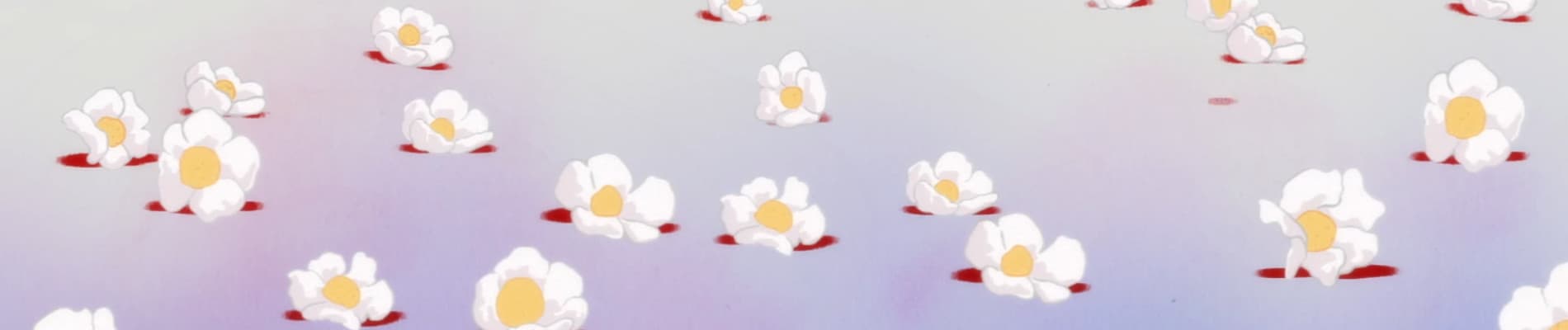
As with Yamada's previous work this is a visual and auditory masterclass in every sense with many great artists working on it, from Tomotaka Kubo on Art Direction, to Ushio on music, Satoshi Hashimoto on Colour Design and great storyboard artists such as China. Small moments and motions are frequently highlighted, sensory, delicate yet raw, with powerful uses of colour and light, and extraordinary framing. Ushio's manipulative yet honest and beautiful scoring, while controversial, works (mostly) wonders for me. Metaphorical and abstract imagery work their magic as well. Also, the art design overall is gorgeous and unique here and fits the historical setting perfectly.
So how about the comedy and tonal shifts? They are not tonal shifts, they are life carrying on, the fleetingness of everything, an attempt to cope. Lingering tragedy.
I join in the prayer, for all those gone, for all those suffering, for all those living. A small act, but a meaningful one.
26.5 out of 28 users liked this review
