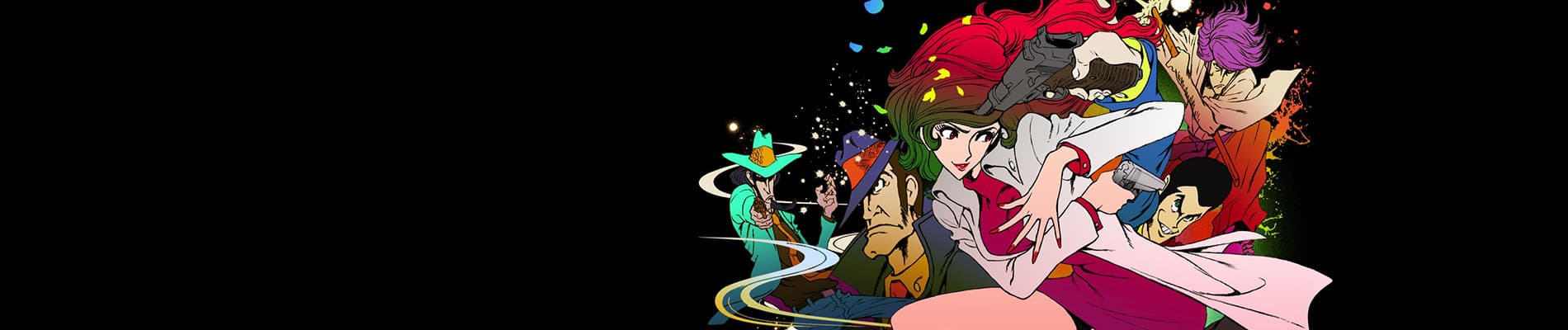
A gritty and subversive work, The Woman Called Fujiko Mine has a great sense of adrenaline and character, and something important to say. It starts with more episodic explorations; a darker yet still whimsical tone and entertainment value, before building towards its unequivocally masterful ending, perhaps one of the best and most striking I've ever seen. I will mention the finale at the end of the review in a spoiler section. Just know that I think it is amazing, which you will hopefully agree with if you watch the show (which you should, though of course MANY trigger warnings for this one).
Sayo Yamamoto is a director with a precise sense of rhythm and fantastic aesthetic sensibilities, including an eye for colour and texture. This is not just striking in and of itself but incredibly encapsulating of the tone that the show wants to convey. Be it discomfort or whimsy or something else. This skill is apparent in this show as a whole, with it's gothic-esque art direction, colour pops, and charismatic Koike character designs, but also in all her genius OPs and EDs such as for the game Persona 5 or her debut TV anime Michiko and Hatchin, among others. The OP for this show is absolutely seminal too, an extremely impactful spoken word opening that is both direct and brilliantly subversive, even reflected in storyboards and some dialogue later in the show. It has Sayo Yamamoto's obvious unmatched skill for stylised OPs, and exceptionally moody instrumentals, yet the genius of the dialogue cannot be understated. One of the best OPs there ever was in my eyes.
Mari Okada, someone sometimes accused of melodrama and a lack of subtlety (including by me in something like Anohana), is on script, providing a necessary directness and heightened dramatism to all its thematic and plot drive. Her approach can very much work, especially as melodrama is certainly able to be honest in the right hands.
The show crafts nuanced and charismatic characters. It is able to respect Fujiko, even revere her in ways, yet also can do this while still not condoning every action she takes. It embraces flaws and is always sympathetic, yet careful in how.
Despite many trigger warnings and arguably several problematic elements (Episode 6, the ED, Oscar's character arc), it is viewed as a feminist masterpiece by people. Even the potentially problematic elements are not cut and dry. For one the show always feels sympathetic to Oscar even while very clearly showing has awful actions as exactly that. It also leaves sections open to analysis. This all makes sense considering Okada's biography. It has potential ideas of a traumatic past, a clearly toxic masculine father figure, and is based in an opressive time, and I have seen people adore and break down his character writing, so I am on its side I think. Secondly, the ED feels like it almost definitely is made to be uncomfortable, especially considering plot developments, but you could argue against the necessity of its inclusion, especially if it goes over the heads of those it seems to be trying to call out, those disgusting enough to enjoy what it includes in that way. EP6 (absolutely visually outstanding, Shouko Nakamura it too powerful) arguably feels like it doesn't directly criticise certain character actions enough, and almost risks condoning them, but this too is a matter of perspective and asks us to consider how much we see Fujiko as a good person.
Fujiko Mine is a story that rejects things and accepts things, crafting a darker tone yet not throwing away the charisma its stories can offer. A show that builds to an outrageously good ending that changes yet solidifies everything. Watch it.
Spoiler for the ending below.
11.5 out of 12 users liked this review
