Story:
6/10
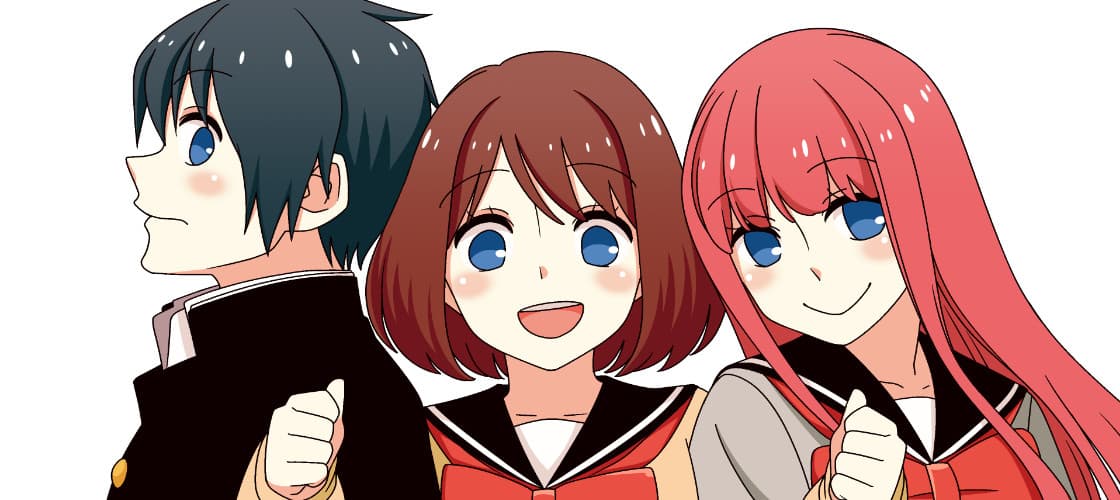
“Tsuredure Children” is the type of story where the creator goes, “What happens when I make a story with only tropes and cliches, and nothing else?”. Think of every trope (& cliché) you know of in a romantic setting this manga has it; Highschool (should I really mention this?), childhood friend(s), awkward couples, insecure couples, senpai-kowhai, pushy boyfriend, thirsty girlfriend, foreign girlfriend, otakus, age gap, tsundere, yandere, kuudere, wingmen and the newest addition, rapper (spare me if I missed many). Unless you are on a voyage of the most UNIQUE story you’ve ever seen, you would read this manga. The only gimmick of the story is it full of gimmicks and that’s kinda charm but what makes this a little better is, when all non-couple characters meet each other. It gives a feeling that the world is actually there, constantly moving and alive.
Characters: 5/10
Since everyone is defined by tropes you’ll only remember them by that and they’ll stay completely honest with that. Like “Oh, these are the childhood friends 1-2, and those are the president-delinquent”, and not like, “Oh, these are Kana-Chiaki and those are Akagi-Ryuoko”. That’s kinda the point of the story so it shouldn’t really be a problem but it is because;
- There are nearly 50 characters. FIFTY, for a romance manga. All of them (& their stories) aren’t exactly related except for the fact they’re in highschool, and since each follow its own plot (& trope) and doesn’t get intertwined much, it’s really hard to keep track of them. And what makes this even harder is;
- (Proceed to the next section).
Art: 5/10
Surprise Manga Quiz. Are the 4 characters in this panel quadruplets or not?
 Answer: No! Then why do they look nearly the same?!
Now I don’t want to say the art itself is bad, the designs and drawing style are as cute as the characters themselves but there are 2 main issues.
1. This was one of the only cases when I wanted a color version of the manga because I would really want some colored hair to distinguish the characters but since it’s more of a financial thing than an artistic thing (probably), I’m not mad about this but it’s still an issue because you won’t have this problem if you’ve watched the Anime adaptation. Another thing is:
2. Format. The above panel is actually a panel inside a panel, in half a page, that’s how small it is. The only distinguishing factor between the characters, especially the male ones, is the small difference in their puny facial features, then what’s the point if it’s so small to tell them apart?
Enjoyment: 8/10
Many would think that being completely formulaic would somehow make something uninteresting and unenjoyable, but this manga proves them wrong. One can bash this as much as they want but it’s really the tropes and clichés that make us feel connected to an otherwise completely unrealistic world. Whether a multi-millionaire or a slumdog, a poet or an illiterate, one should ultimately utter the same thing when one expresses their undeniable feelings to their other half, “I SHUSHI YOU” (ask Patty what ‘Sushi’ means). So just enjoy this cliched story about tropey characters because, at the end of the day, it’s the tropes and cliches that we relate to. If it wasn’t for the technical flaws and other hiccoughs regarding some character writing, this would have been the best at what it tried to do, and I wouldn't have to feel a bit disappointed for giving a below-average score.
Conclusion: Recommended
“Tsuredure Children” is, in a sense, a safe manga. You go in knowing exactly what wished for, and you come out getting exactly what you wanted. That’s all.
(Also watch the Anime).