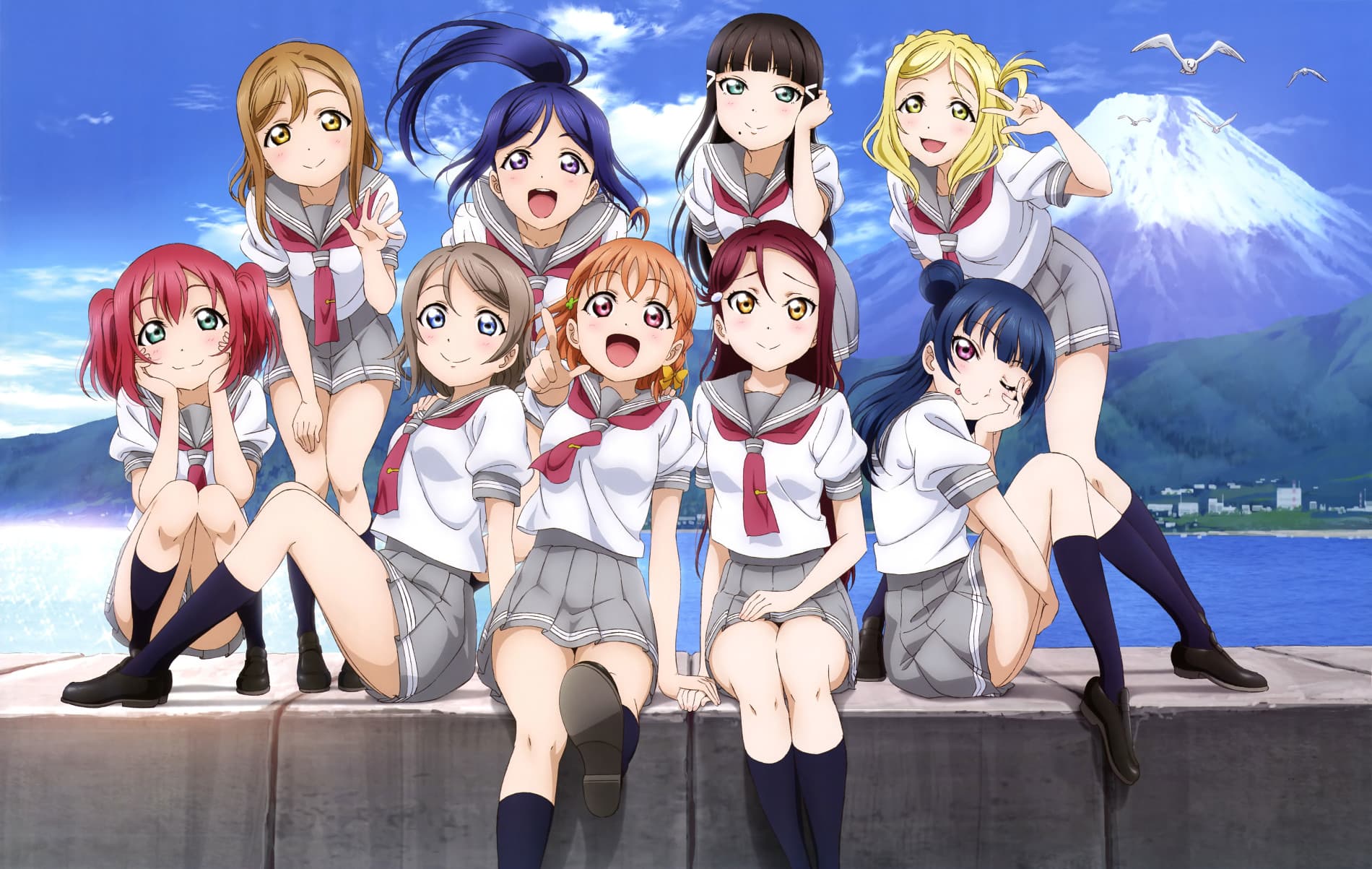

“Let’s shine with everything we got”
NOTICE: This review encompasses my thoughts solely on the two seasons of the Love Live! Sunshine anime and has no mention of the movie. This review has two purposes: a breakdown+exploration of the themes of Love Live! Sunshine and as a review proper. This may be considered long for most readers, as such feel free to read at your own pace. If it’s too challenging, you may jump to SECTION 2 as it holds the critical thoughts.
INTRODUCTION
Following the high of School Idol Project, I jumped straight into its successor Love Live! Sunshine. I prepared myself for the same, if not even greater emotional investment compared to the original. After all, people appear to hold this season in incredibly high regard.
Imagine. Watching a show that’s supposed to be even better than one that immediately jumped into my top three anime of all time. I was coming in with extremely high expectations. The songs, dance choreography, story, and characters had to challenge the behemoth that is its predecessor. One that casts its shadow over the entire season.
Yet, as if to stay true to its name, Love Live! Sunshine shone, as its own experience with its own unique merits, morals, and flaws. Moving on from the dream that was School Idol Project, we are now beset by the beautiful reality of Love Live! Sunshine and the miracles created by girls who tried their very best.
Love Live! Sunshine teaches us how to struggle, make the most of everyday, and open ourselves in hopes of producing a miracle.
SECTION 1: BREAKDOWN
PART 1: LOVE LIVE FORMULA
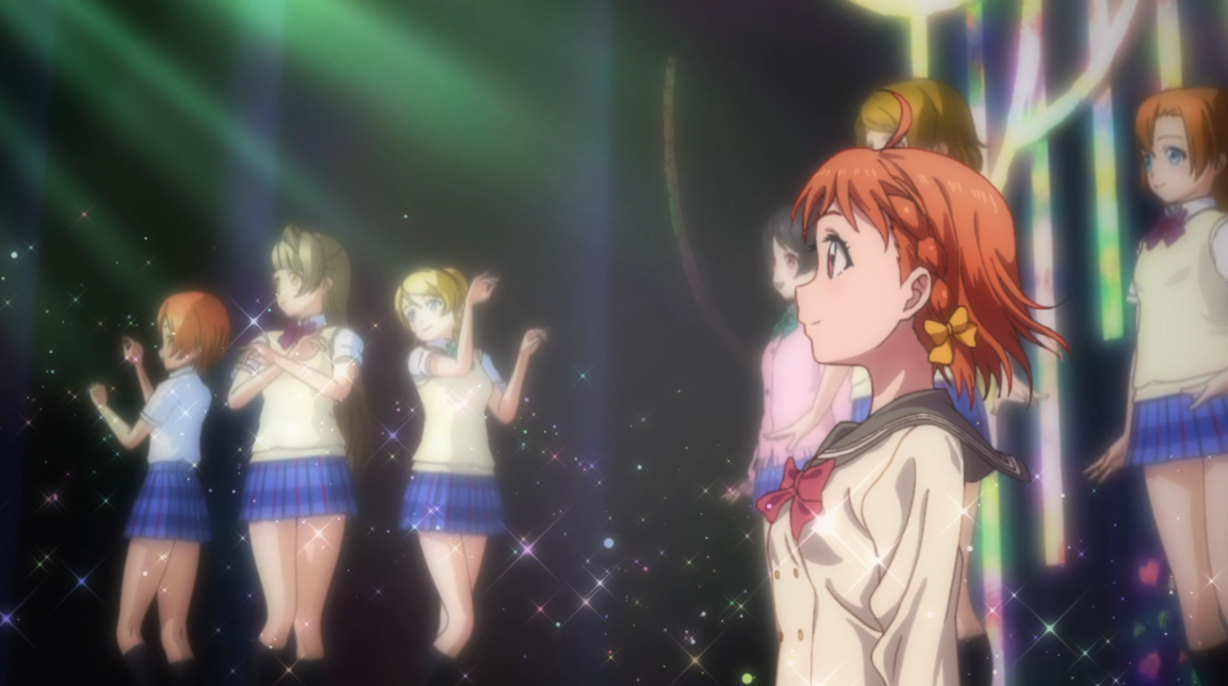
Cementing a Love Love! formula, Sunshine decides to repeat certain beats and narrative structure from School Idol Project. This is mainly in the form of homage and enforcing its existence as a spiritual successor as the execution between both series highly differs.
The beats mentioned are the titular Love Live! tournament and the promotion of a closing school, structured with an introductory arc to gain members and eventual full-focus towards the overarching tasks.
However, due to the proactivity of its main characters and the late reveal of Uranohoshi’s closure, the show is functionally different from School Idol Project. So, rather than saving the school being the primary, motivating factor and objective, we are able to spend the first season fully focused on breathing life into characters and developing the world of Sunshine.
And, that works wonders for the series. Season one is a character study that introduces a major theme in "shining," or being your true, honest, individual self and accepting the wants and conflicts that come with it. The second, while staying true to that ideal, indulges further into the plot. Yet, it’s still completely character driven with a tone unlike School Idol Project. There’s a contemplative deepness to the show that constantly plays with your heart. These girls grow, some in the subtlest ways, and it will surely impact you.
PART 2: LOVE LIVE!
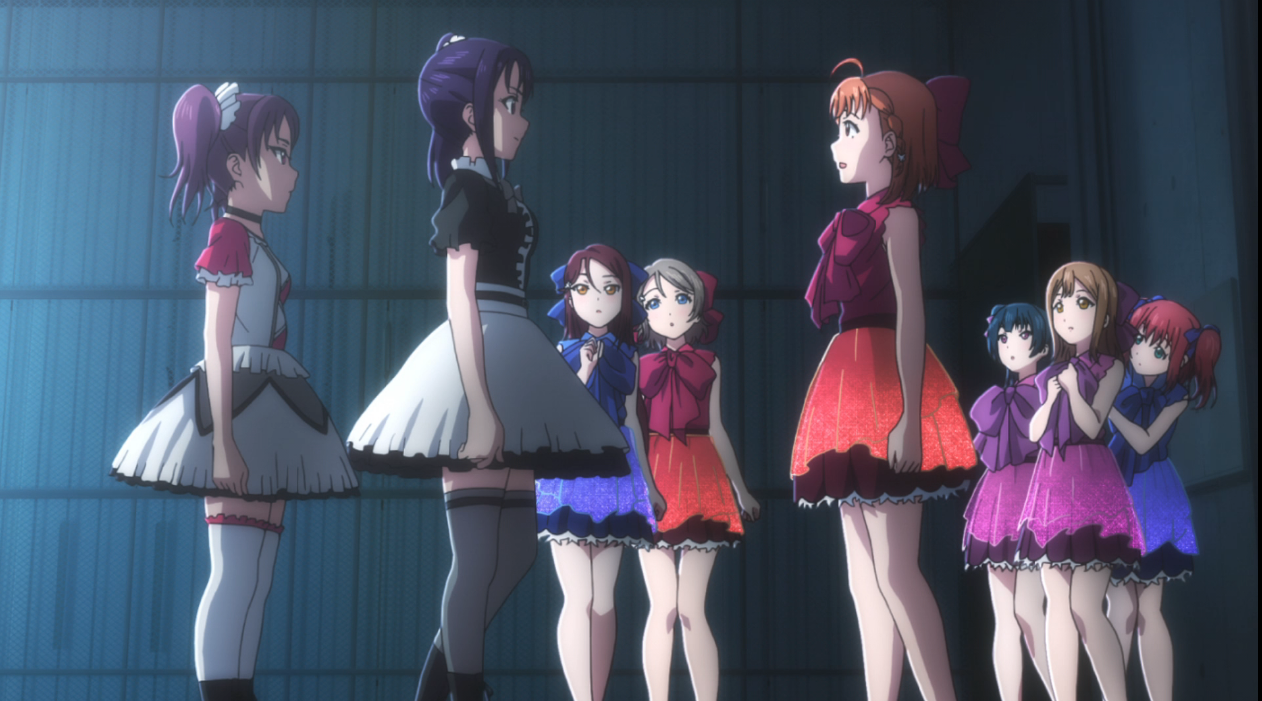
The Love Live! Tournament has completely evolved from its predecessor. Now, a more serious and legitimate entity, it involves higher difficulty and stakes. Immediately demonstrated is the iconic 0. In their first Tokyo showing, Aquors received an astonishing number of 0 votes.
Another aspect is that the Love Live! is the initial goal rather than a means to an end, placing a unique focus on it. It provides the girls with a distinct proactivity and competitiveness, which extends to the show’s rivals in Saint Snow who are an embodiment of the tournament itself before they evolved into standalone characters.
The importance of this segment is to demonstrate a shift in the world of Love Live! Being a school idol isn’t a casual feat. It’s something that requires pure dedication and hard work. Being able to win it requires the completion of a miracle– one of the overarching themes of the series.
PART 3: UCHIURA

As a massive departure from the original, instead of the big city and the usually crowded Akiba, Sunshine takes place in the more subdued, serene, seaside town of Uchiura. There’s not much to do there and entertainment is far and difficult to travel to. At first glance, it’s a town with nothing.
A closer look reveals the tight-knit, endlessly supportive community who makes the seemingly dull town shine. Their festivals, culture, and school are alive and optimistic. The background art and design do wonders for the town. It’s gorgeous in every shot, sun up to sun down and visually impactful with its messaging. Simply seeing the afternoon sun bathe the sea should be enough for you to understand.
The setting is as integral as the cast itself. Without its subtle vibrancy, we would be blind to how the world itself can shine. Uchiura is a place determined to make the most of the little it has, and as it does so it serves a role of inspiration and feels as dynamic as any other character in the show. The city is a place that is outwardly basked in lights and “shining.” But, Uchiura is a place that knows to show its best self and find ways to enjoy life. Such that, its seas is a place doven into for introspection, and its mountains climbed for communion. It offers what the girls need as long as they search for it. It shines when you’re really, truly looking.
Just like Aquors, beyond its outward normal appearance, is a unique and shining character.
PART 4: AQUORS

As stated, Love Live! Sunshine is a character study more than anything else, and the plot serves more to accentuate them and facilitate interactions and growth as the girls are actively driving it.
Each character demonstrates facets of wanting to “shine,” an idea I hope to express as I go through the characters and eventually explain.
Before that though, is understanding what Aquors is. Before the characters, is the idea of Aquors.
Aquors exists in two iterations, both inextricably linked to Uchiura and Uranohoshi Girls School. The original consisting of the seniors attempted to save the school years prior, and the second created by the ambitious Chika began with the dream of Love Live and eventually took up its original burden.
Aquors is read “aqua,” or water. It is Uchiura: the oceanside town is the only place where this idol group could have been born. This ocean-blue identity is something that constantly rears its head, both metaphorically and narratively. Uranohoshi students are constantly cheering for and supporting Aquors: they’re the heart of the group. The blue comes up in an inherited metaphor from its predecessor to be discussed later.
Onto the actual Aquors members. They all have a unique individual arc, with some intersectionality between others (which proves conductive for both parties and introduces layers to the personal themes of the series).
PART 4.5: CHARACTERS, OR WHAT IT MEANS TO SHINE
For this section, I will divide the characters into three sub-groups depending on their year, as each trio while occasionally overlapping with others have a distinct message to say as part of the grand theme of “shining.”
“To enjoy life.”
CHIKA TAKAMI
“I want to turn the zero into a one”
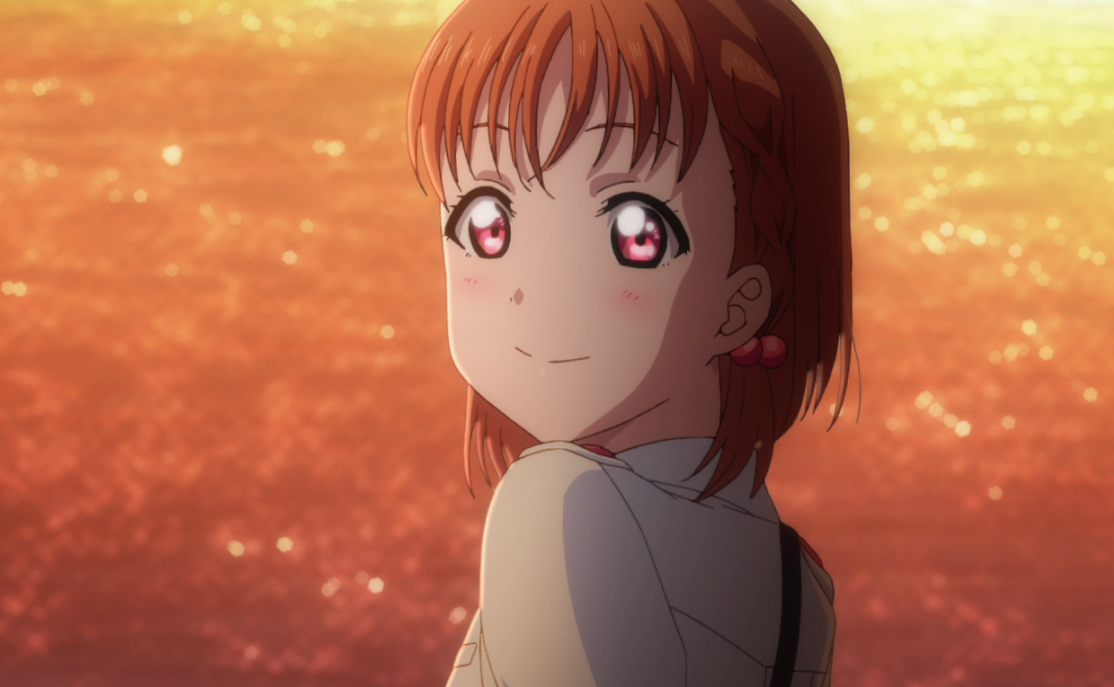
The normal monster. Chika is a difficult character for viewers: her character arc is the subtlest of the girls, so she appears static and borderline annoying (presumably some misinterpret her optimism). Comparatively, Chika is the anti-Honoka. Honoka being a “selfish,” trusted leader who is the final word for μ's and Chika being an unconfident, flawed leader who relies on Aqours for motivation equally.
Chika was someone who never stood out. She had no special interests or talents, completely unlike her best friend. Yet, one day, she miraculously came across Love Live! promotions and became enamored with the school idol group μ's. Her admiration with μ's is central to how she grows as a character.
It occupies a lot of her dialogue. Her suggestions were usually related to μ's. She was trying to be just like them. That was the goal she motivated herself toward: the first time she ever really tried. After all, she was one of many inspired by their swan song. On this journey Chika encountered many miracles: the first being the talented transfer student Riko and the second was the success of her first concert. Completely insistent on Riko joining the group, she may have come off as bothersome. But, she reveals a nature of understanding and empathy when they talk and when she adopts others into the group. She understands that Riko will eventually need to resolve her issues, she teaches Hanamaru that all that matters is if you have the desire and will to do something, and she accepts Yohane for her true self.
All the while, she sought her own shine. Each piece of advice she gives is reflected towards herself as she learns what it’s like to truly be passionate. She experiences failure over and over again, experiences frustration, and experiences what it’s like to try her hardest.
She wants to turn a 0 into a 1, and that into something much greater. She wants to see her efforts bear fruit and she wants to see herself grow. She’s an unconfident character trying to break through her own self-perception and become someone for herself. But, she learns to forge her own path through it all.
It’s endlessly relatable. Everyone has a passion or dream that they can fully commit themselves to. Everyone stumbles, struggles, fails and eventually succeeds. Everyone has to learn to move on from failure. Everyone has to know that they’re special.
YOU WATANABE
“Aye aye! Full Speed Ahead!”
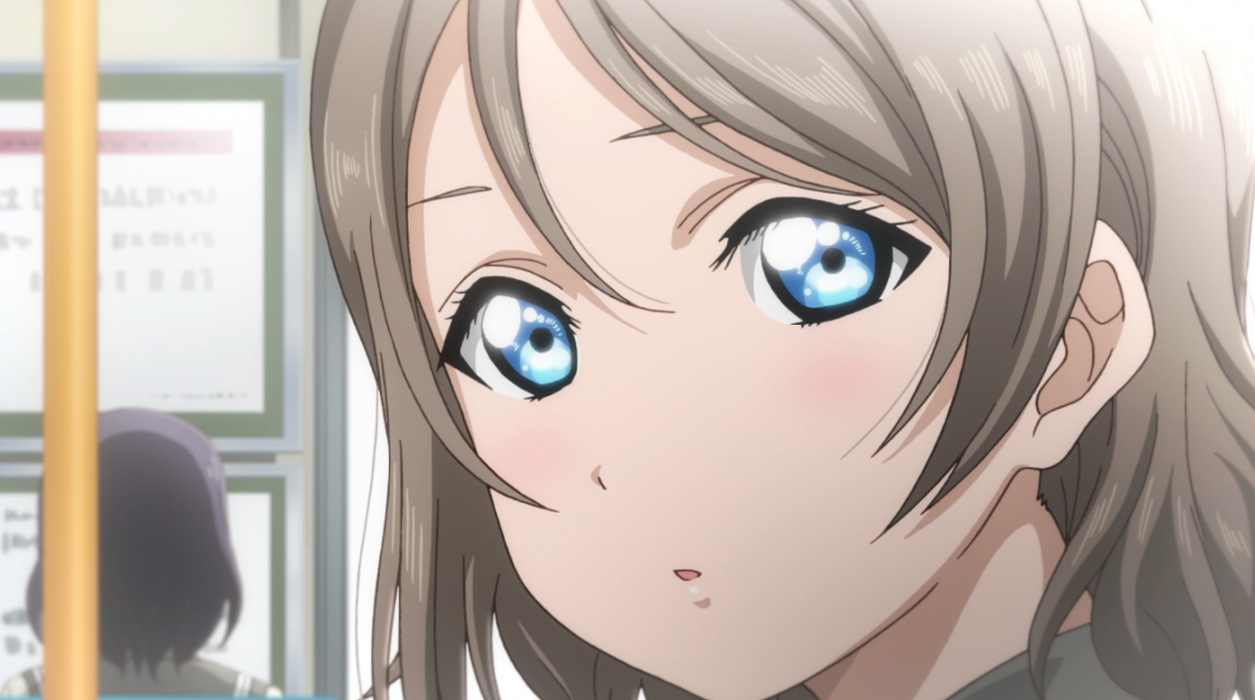
You is my favorite member of Aquors. I personally think she’s adorable, with her energy and uniform fascination. You is Chika’s best friend, who’s always supportive of the girl’s endeavors and one of Chika’s biggest motivators. Her relationship with the girl is an integral aspect of her character. That’s why the episode where she’s the main focus puts a lens on that very relationship.
You had always wanted to do something with Chika, and the school idol club was finally her opportunity to do so. Yet, Chika quickly became enamored with the transfer student who later members even believe started the group with her. You felt like she was being replaced, that Chika had found someone better. Her role was being taken away. She was losing the place where she shined.
You’s struggle is communication. You can’t face her jealousy and open up about it. She quickly dismisses herself and efforts, believing someone else was a better fit than her. The episode produces an interesting dynamic: You personally feels she’s being replaced, while literally replacing someone for their routine. You re-evaluates her self-worth.
Her arc concludes with her understanding that she’s irreplaceable, and that Chika had always wanted the same thing You wanted.
We, as people, aren’t as replaceable as we think. We need to communicate our feelings and hold faith in where we belong. You shines in the place she helped to make for herself, and no one can take that from her.
RIKO SAKURACHI
“I want to prove that I made the right choice.”
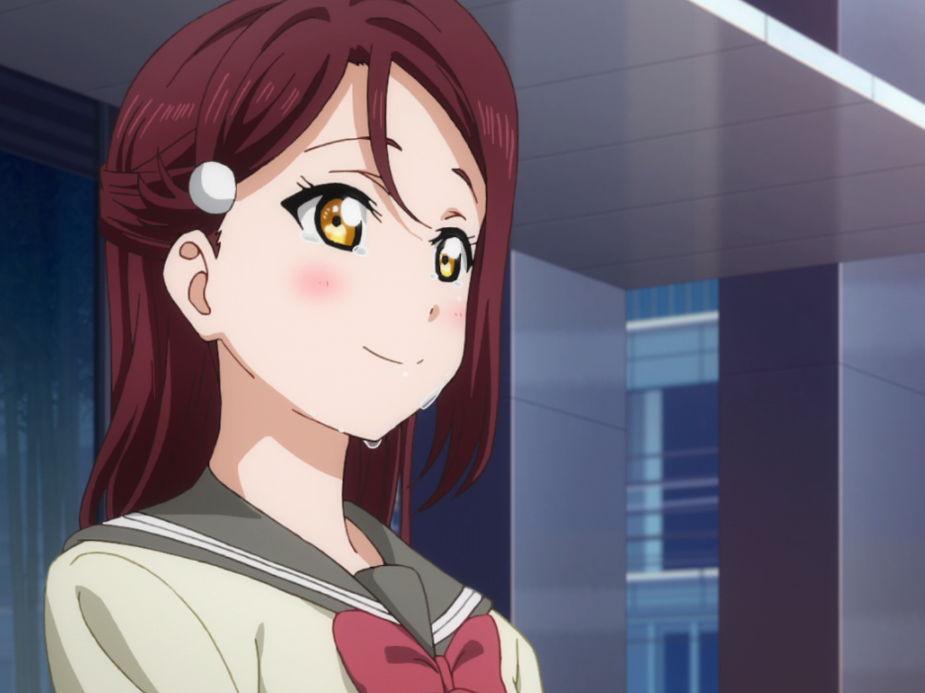
Riko is a miracle. She transferred in at the perfect time to be one of the earliest members of Aquors and their composer. She moved from Tokyo– from Otonokizaka High School, a place where dreams came true–and from the piano. She lost her passion and confidence in herself, freezing up at a major event. She moved to the small neighborhood of Uchiura and escaped it all. The first time we see her, Riko tries to listen to the song of the ocean.
The song of the ocean is a very particular term, one that came up again during Chika’s arc. Seeing as I’ve already introduced the connection between Uchiura and Aquors, it should be obvious as to what it means. This song is the heart of both the town and the idol group she grew so fond of. It’s the song that tells us that even the most average girl can come to shine.
Eventually, she joined Aquors as their composer just when the group realized they needed one. She joins until she can rekindle her passion for piano. Doing so she grows as she encounters each new attitude and persona that enters the group: she finds a place where people are constantly pushing each other forward and growing past failure. She’s an integral part of that unit and a part of their complete miracle.
But she still has to do something for herself. She misses the qualifiers in order to participate in a piano tournament. She has to face her individual struggles head-on. And, she’s so much stronger for it. She sees her life be validated through her efforts both individual and with the group. And both Chika and her underclassman Yohane show her that her choices were all worth it and that the miracle–the coincidence that brought them all together–was a result of their feelings respectively.
Riko is a character for those at an impasse in life. She also has some of the best interactions out of those in the cast. She’s the literal manifestation of the show’s theme of miracles, as I’ve heavily suggested. Her introduction and eventual development of a “faith” in those miracles show her deep roots within the theme. And, she’s an exemplary example of it and of a great character who naturally develops.
“Walk our own path”
YOSHIKO “YOHANE” TSUSHIMA
“I’ll grow wings one day and return to the sky!”
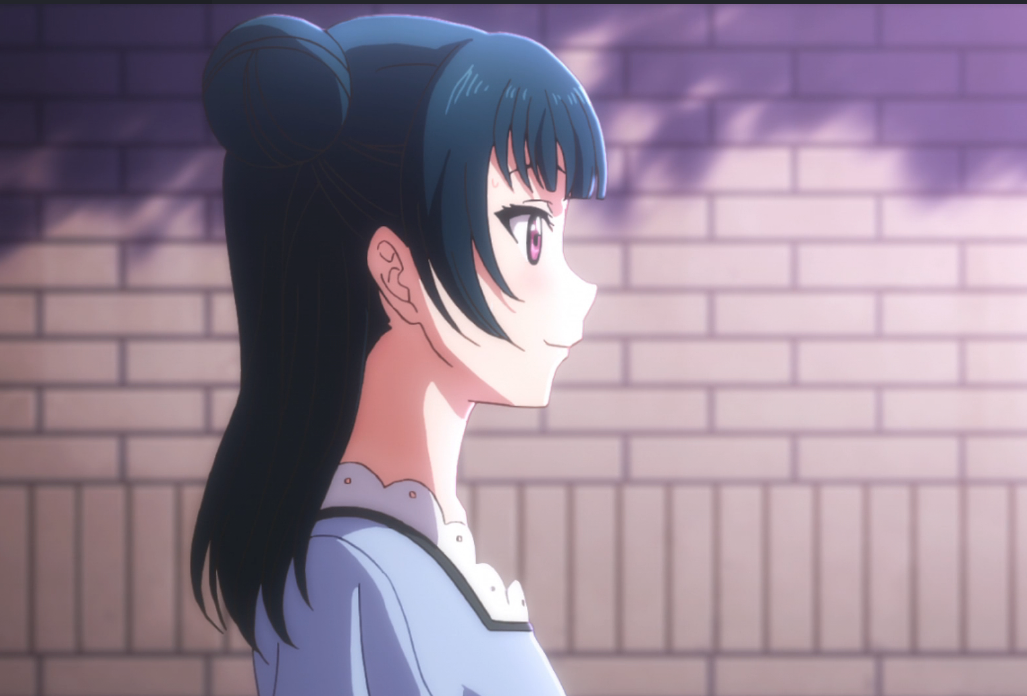
Yohane is great. Even beyond being this group’s resident gremlin, Yohane is a great fucking character. More than anything, Yohane wants to be someone else. She wants to be a fallen angel–to believe that she’s someone special and can truly stand out on her own.
When the girls first meet Yohane, she refuses. Yohane hid away the parts that make up her identity: shoving her cosplay wings, fortune telling tools, and even chosen name to the side. She forcibly became the normal girl Yoshiko. Yohane hid her best self.
That is until she found a group of people that readily accepted her. To shine meant to be her best self–the self she loved and shouldn’t hold back.
Through her interactions with Riko, we learn more about the nature of Yohane. Yohane knows there’s no such thing as fallen angels or magic. But, she wants to believe. Yohane wants to believe her bad luck and struggles mean something: that she’s special. She recontextualized her misgivings. And doing so helped both Riko and us recontextualize miracles.
A coincidence doesn’t exist. Everyone’s lives and feelings bring them together somehow. That’s the true magic and force. Living life is the miracle.
Yohane is easily within the top three for Sunshine’s cast. She’s quirky, funny, and adorable– stealing the show whenever she’s on screen. She’s just like me fr… Well, like everyone. She’s one of the more prominent examples of shining. One of the earliest meanings of doing so was “to show your favorite self,” after all.
HANAMARU KUNIKIDA
“It’s the future, zura!”
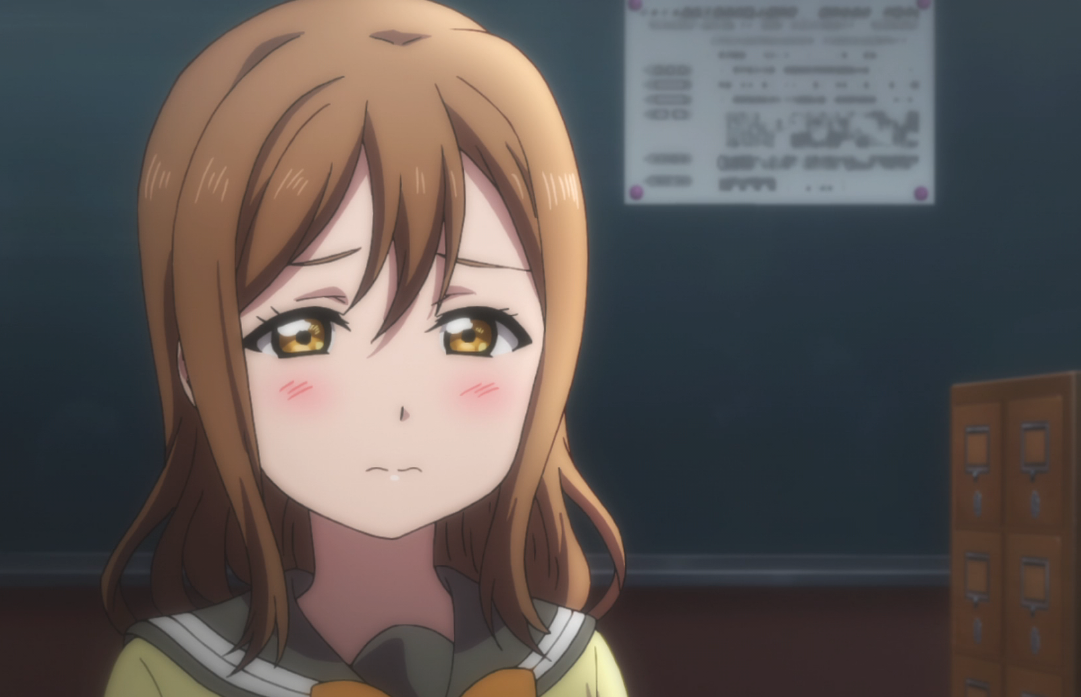
Hanamaru is cute.
Jokes aside, Hanamaru is a surprisingly static character. She primarily serves as support beyond her introduction. However, her introduction tackled an issue with her own self-image. Hanamaru believed that she wasn’t fit to be a school idol. Having isolated herself due to her dialect and awkwardness, Hanamaru embraced loneliness and shut away her own desires, escaping reality through books until she found someone to share in loneliness with.
But with the encouragement of that same someone, she took the open hand of Aquors that taught her to do what she wants even if she believed she couldn’t.
Hanamura, along with Yohane and the soon-to-be discussed Ruby, are emblematic of people being controlled by their inhibitions and self-image. Yet, just like her, we too shouldn’t let ourselves be helped back by the festering question of whether I can or can’t. All that matters is that you strive to break free from that shell and do what you truly want.
RUBY KUROSAWA
“I’ll do my Rubesty!”
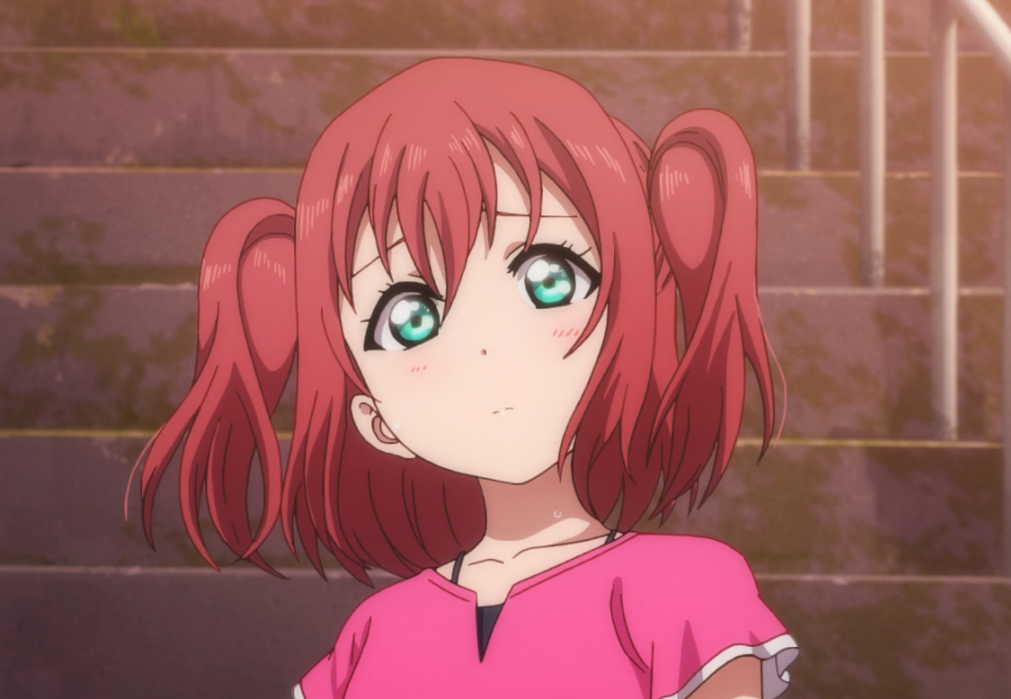
Ruby gets a surprising amount of focus in the show, even having a two-episode arc in the second season. She, too, was held back by her own personal failings– her shyness– despite truly wanting to be an idol more than anything else. But, the deeper aspect of her character is how she is defined by her relationships. She’s a character who’s quick to connect with others; examples being Hanamaru and Leah.
Her most important relationship was that with her sister–the person who held her back. Her mutual love for idols grew to be denied by the person she cherished the most. Compounded with her natural shyness was the fear and anxiety of loving something her sister forbade. And that’s why the first part of her character arc is doing what she wanted even if she wasn’t the right fit or if others were blocking her path.
Her second arc marks the growth of an individual–what it meant to walk your own path. With Leah, she wants to show that she can shine even without her sister. That Dia can graduate without any worries because Ruby knows what she wants and is a person capable of achieving it without overlying on someone.
Ruby is the encapsulation of the first years’ aspect of shining. While I wouldn’t say she’s my favorite Aquors member, she shows some of the most personal growth while staying true to the theme. Like Hanamura, she broke through her self-image issues and did what she wanted. Like Yohane, she took the path of her own individual self and continues to carve it going forward.
“Take whatever came our way”
DIA KUROSAWA
"You don't have to worry about it. I just..."
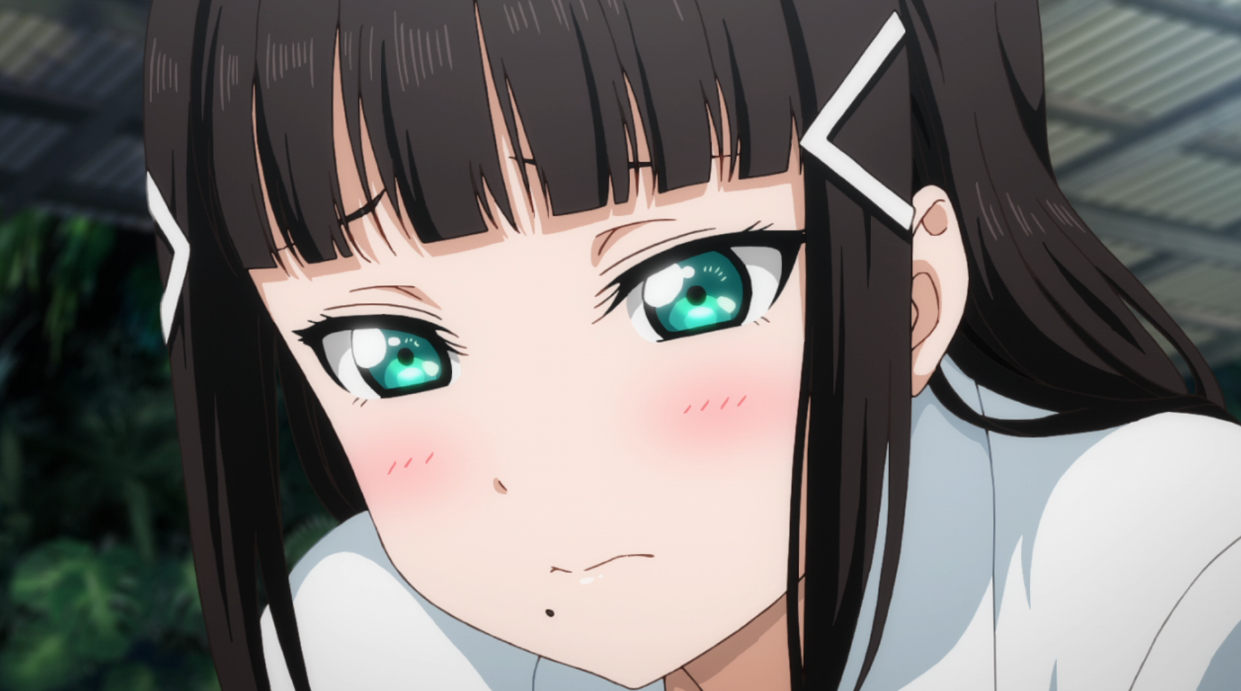
Dia is hilarious. Following in the steps of the overly serious Eri as the resident student council president, we have the dramatic, haughty, and vocal Dia Kurosawa. She starts off as a clearly antagonistic force, rejecting the idea of the School Idol club and denying her shared passion with Ruby. It’s even immediately made apparent that she has a love for school idols and her sister..
Dia does it all to protect the girls, which is one of her major recurring traits. She helps to form the original Aquors to protect the school, she hides Kanan’s secret to protect her friends, and she stands in the way of the reborn Aquors to protect them from the frustrations of failure. Under her facade is a girl who treasures the feelings of others.
Dia’s focus episode, following episodes where she stole the show and brought the girls closer, has her wanting to be more familiar with her new friends. She’s fully taking in the new life that came her way, and wants to cherish this second chance.
Dia is a character who reflects and bounces off others excellently. She’s someone who wants to do everything in her power to protect others, even if it means casting aside what she loves or hurting them in the process. When failure came her way, she reacted poorly and strained what she had. But, taking this new chance, she made sure to push everyone forward in the best ways she could.
MARI OHARA AND KANAN MATSURA
“I’m not giving up! I’m going to get it back!”
“I feel like this is going to really bring it all together.”
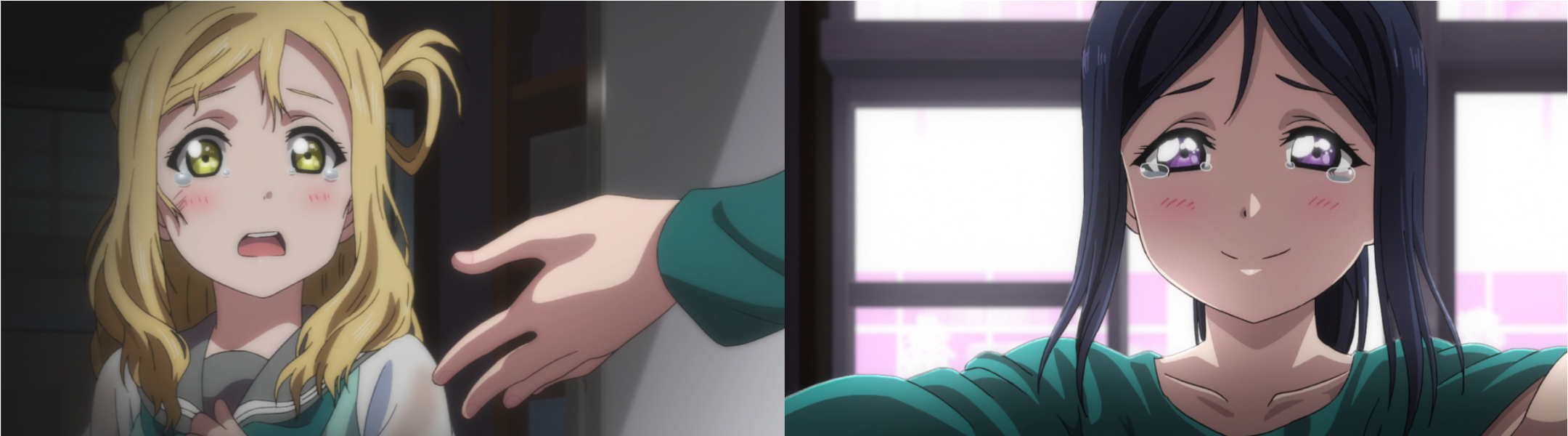
I feel like it’s best to discuss these characters as a pair, since they’re so united in their dynamic. One that creates some of the show’s strongest character moments. Yes, they do have their merits individually, but to understand one you must discuss the other. Especially since, these two are going to lead us directly into what it means to shine.
Mari Ohara shines. Immediately when you look at her, she’s bright yellow, energetic, and has her own unique vocal quirks. Yet, she works behind the scenes. It’s an ironic position: being such a distinct character, but never standing in center stage. She’s someone who shines, but doesn’t allow herself to do so. Even so, she’s someone actively encouraging the new Aquors’ growth.
Kanan Matsura doesn’t immediately stand out to the viewers. Despite that, she’s one of the earliest characters offered to join the new Aquors, but declines. She’s always avoiding the narrative and the possibility of being a school idol. Kanan stays disconnected from the school entirely, completely unlike Mari.
An unfortunate incident and disagreement led to them breaking up the original Aquors, straining the whole group’s relationship. Mari actively wants to bring them all together, while Kanan continues to avoid it all and deny her. Kanan’s motivations run way deeper than one could originally expect. She pushes Mari away in order to give her the opportunity to shine while Mari wants to be with her.
It all leads to an extraordinary climax and the completion of Aquors. Kanan and Mari rekindle their friendship and move past, well the past, and grow stronger because of it. They took what came their way–the trials, tribulations, and heartaches–and finally shone again.
PART 4.5.1: SHINING
“We have to run freely, right?”
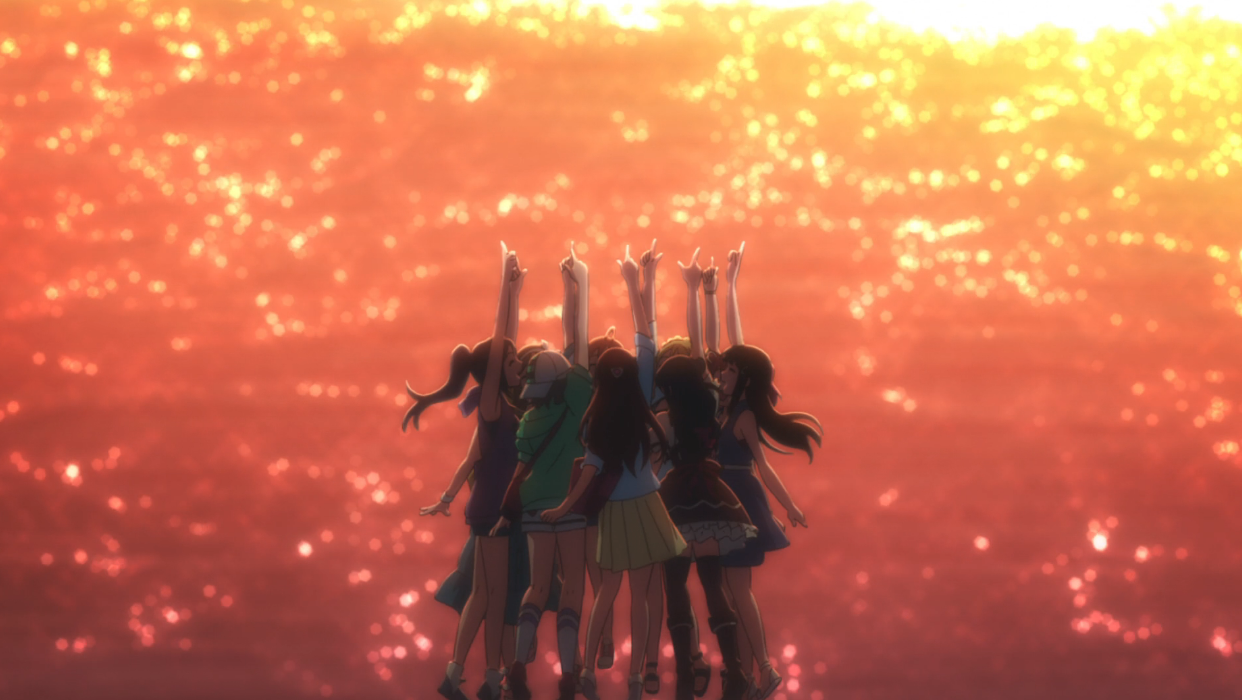
Shining. What I consider the thematic core of the season, even more so than miracles. Hopefully, you were able to connect the dots, as I’ve discussed the characters.
Because to shine is to be yourself, to take your own path, to stay true to your feelings, and to enjoy life with everything you have. It’s how we can stand out in this world, despite our apparent blandness or preconceptions. Shining dashes away our shadows of doubt.
Like Chika, we learn the toils and joys of finally pursuing a passion without ever giving up. Like You, we decide and create our place in the world where we can shine. Like Rika, we can find love in shining, stick to our decisions, listen to our hearts, and finally achieve something in the fields we love. Like Yohane, we can choose to be our favorite selves and interpret the world in a way that makes us shine. Like Hanamura, we can go forward and do things solely for the reason we want to. Like Ruby, we can reach towards our dreams and become an independent person. Like Dia, we can protect what we love and find that love in something new. Like Mari, we can fight and fight and claw at the barriers that prevent us from shining in the place we love. Like Kanan, we can move forward with others and shine.
The first years tell us to shine as our own selves. The third years tell us to move forward and create places to shine. The second years tell us that to shine is to enjoy life.
Everything can shine, even in a world that makes it seem impossible to do so. So what if Uchiura seems like a basic, nowhere town compared to Tokyo? We know at its heart it is a gorgeous, lively, shining community who will do anything for one of its own. So what if the girls are just plain normal girls compared to all the other idols? We know that each of them has the capacity to and will shine. So what if Love Live! Sunshine has to follow up a massive giant as its predecessor? We know that just like every other single part of it, that it can do anything and SHINE!
So what if I think something about myself? I can shine too…
PART 5: FAILURE

Before fully contextualizing miracles and connecting it completely with the cast, there’s an important factor to discuss: failures.
Aquors fails surprisingly often. Their 0 being the premier example: one that haunted them and eventually grew to be their biggest motivator.
Yet, Aquors is a group almost established on failures. The original three failed in their endeavors and broke apart because of it. Its rebirth was made when someone scarred by failure joined the group. Its members all met some personal failing which held them back from flourishing as school idols.
Aquors failed to save the school, completely unlike μ's.
It’s a grounding principle of the narrative, and helps to develop the show’s unique tone and world. And, it also moves the viewers.
Failure builds both the theme of miracles, yes, and it endears us to the characters. Sunshine has a human cast: one ridden with anxieties, interpersonal struggles, and failings. Beyond their appearances, lies such powerful characters who motivate themselves beyond it all.
PART 6: MIRACLES
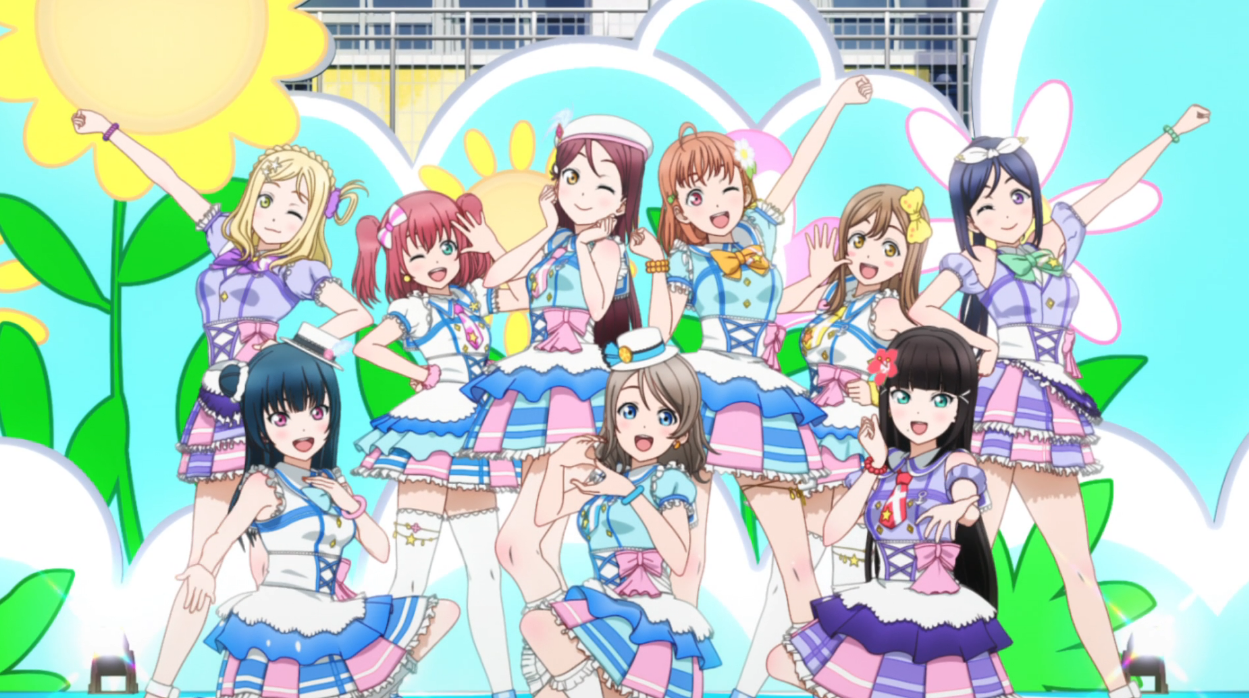
Miracles are completely man-made. These girls, Aquors, through their hard work and with the cooperation of those around them created miracles. Yet by shining, the girls can force their dreams to come true. And even us as viewers, can make miracles in spite of our failures. We can shine and do anything.
SECTION 2: REVIEW
This is the segment where I talk very generally, despite gushing how so many parts came together for a brilliant moral. And that’s where we’ll start.
PART 7: NARRATIVE

Boasting an overall stronger narrative, Love Live! Sunshine surpasses its predecessor. It’s full of heartfelt drama, amazing comedy, and the aforementioned brilliant morals. It’s impossible to go through the show without at least tearing up. It all weaves itself strategically to provide the best tone and experience imaginable. Everyone has time in the spotlight, even though the overall narrative is tense and focused. Being able to accomplish both speaks to the excellence of the show’s writing.
For example, the build-up and passing of the school’s closure is an excellent arc as we see the girl’s struggle and ultimately fail. And while doing so, the individual episodes that build it provide great character focus and highlights.
Utilizing its later time following the School Idol Project as I’ve identified in PART 2, the show is able to maintain that aforementioned tone and use its extensive characters and character work to deliver an excellent story.
You can’t get bored watching, and you definitely can’t come out with nothing. It’s a passionate story about living life to its fullest, after all. It has to hit you no matter who you are. The variety of relatable stories told along with the skill in which they are told are at the core of this season.
Yet it pales in comparison to the characters.
PART 8: CHARACTERS
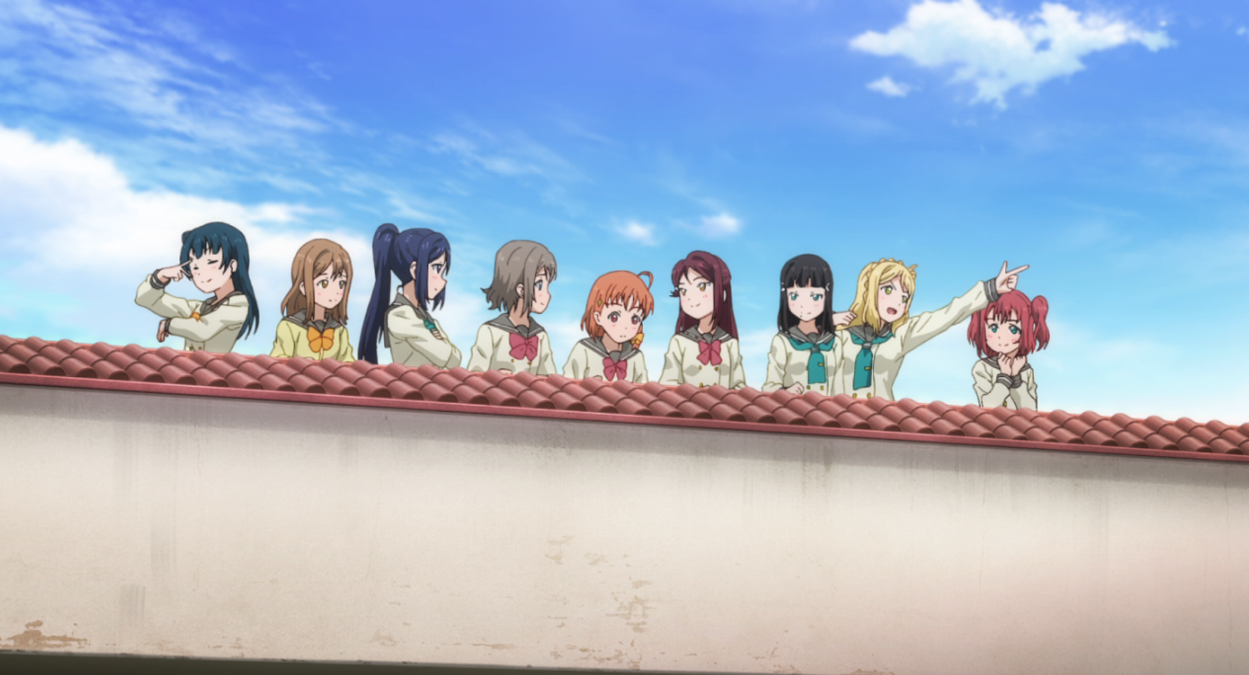
I’ve discussed the characters to death in previous parts, and how they demonstrate the show’s theme. Although, despite electing to demonstrate their depth through action more than explicitly stating it, I will use this part more for the qualitative aspect of their characters. Because, yes, the characters are deep and yes they are thematically fitting. That’s why I should also say they are all incredibly well-written.
Aquors as a whole stand strong as individual characters and when those characters intersect they are amazing. It’d be more fitting to say that they shine even stronger together than they do alone. Each character’s arc is well-written, natural, and relatable. As well as the arcs are well-integrated into the overall narrative.
Remember, I labeled the show as a character-study more than anything else. The characters run and motivate the show, which is a concept I love. I prefer proactive characters who initiate the plot more than anything else.
The only failing in the characters aspect is character interactions. When the characters intersect, it leads to some amazing episodes. Eg. Rika and Yohane. This is where I see School Idol Project as its superior: every character had a dynamic with another. It’s an obvious flaw when the show even addresses that some of the characters need to improve their dynamics in SEASON 2. Aqours can feel like two-to-three different groups at times which is a shame because I’m sure that everyone works well together, because when they are given the opportunity it generates some of the liveliest episodes.
PART 9: SONGS
Rather than describing it as sound and visual design, I’ve chosen to call this part songs as there’s no need for me to dive into the stellar performances of the voice cast and the literal sound design.
Visually, the show is a massive step up overall from School Idol Project with sleeker, better character and background designs and amazing 3D models. Sometimes it’s even impossible to tell the two apart, and other times you want to see the 3D as much as possible because it looks freaking amazing.
Not only that, I find most of the songs incredibly enjoyable musically. I don’t have the expertise to really go into why, but I can assure you they’re all awesome. The lyrics in complement to them, just make an experience. Some of these songs will genuinely hit you.
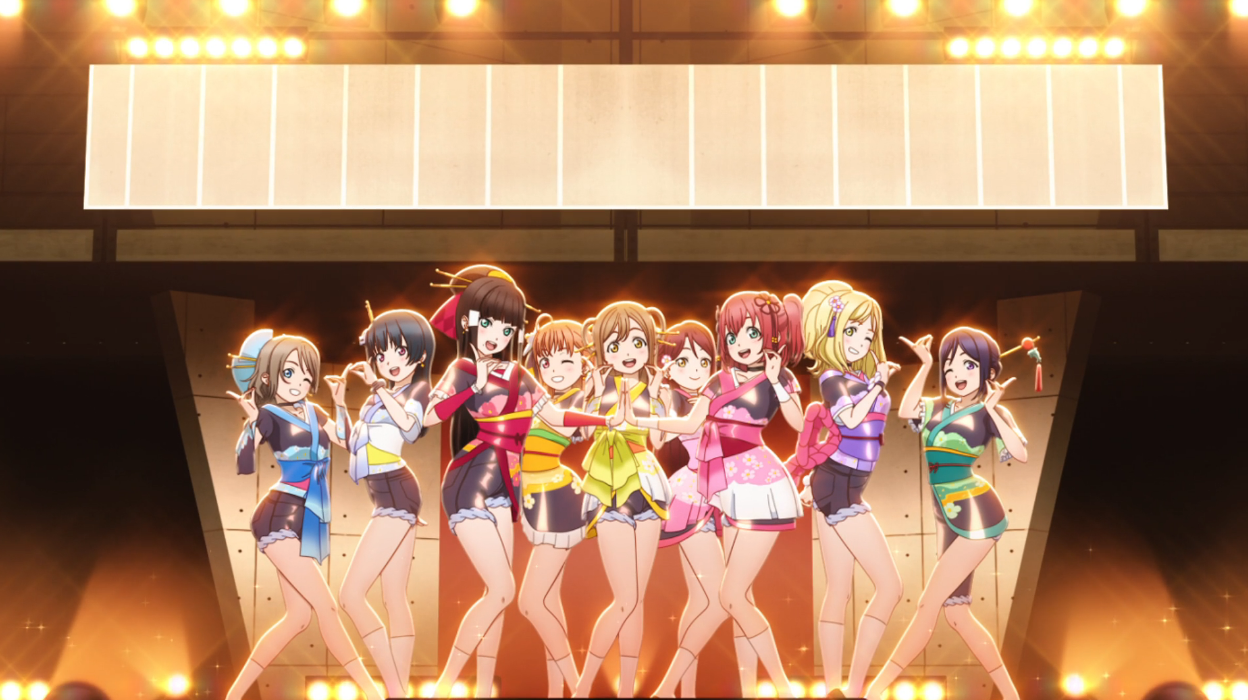
One performance in particular that I can’t stop watching is “MY Mai☆TONIGHT”. The camera work and choreography have complete control over your focus and weave your eyes through a gorgeous scene that’s a mixture of traditional Japanese music and modern pop. It’s stunning. Their hands, facial expressions, and even sweat are used to draw your eyes for perfect transitions over an insanely catchy song.
PART 10: MY THOUGHTS

If you’ve read the entire essay, it should be obvious that I thought a lot about Sunshine. It has so many components building its theme, and even beyond that it’s practically perfect. It was all so perfectly concentrated into providing the best experience possible. Its peaks are immaculate, and its lows are nonexistent. I really enjoyed watching the show and I’m sad to see it go (and be followed up by its mediocre movie).
And, well. I want to shine too. I want to find my place in the world. I want to find people who’ll help me push myself. I want to find something that I can wholeheartedly commit myself to. I want to make the impossible possible with nothing else but hard work and my feelings. Sunshine makes me feel like I can.
I’ve never stood out or committed myself to anything before, but in these characters I see fragments of myself. When a show can perfectly encapsulate the human experience, it has transcended itself.
___CONCLUSION_ __
Watch Love Live! Sunshine.
P.S.
I went 5,000 words without mentioning the feather kekw