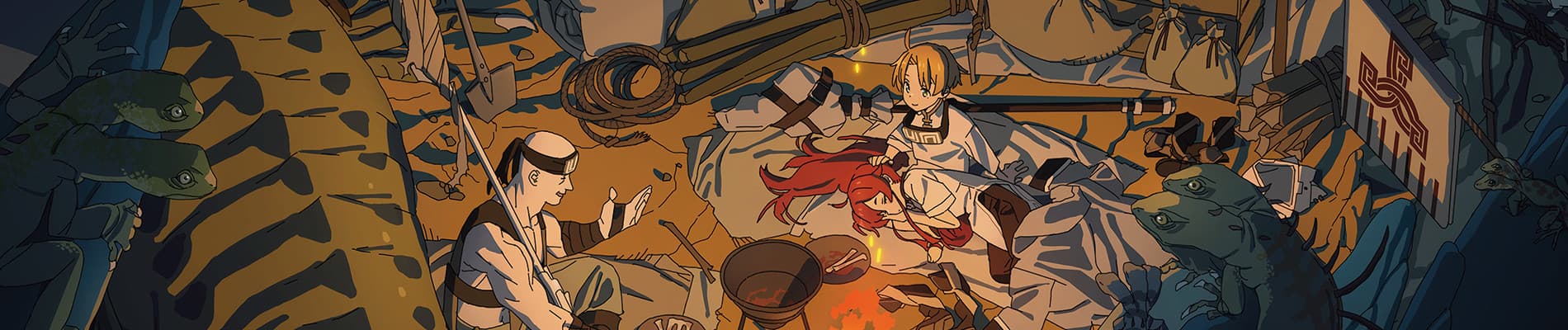
>“It’s no good to overestimate me. Victory is something that you grasp by always being modest, you know.” – Rudeus Greyrat
Mushoku Tensei takes the most overused setup in anime—a shut-in dies and wakes up in a fantasy world—and actually treats it like a serious, lifelong project instead of a cheat code. Rudeus Greyrat doesn’t get reincarnated as a blank slate hero; he drags every bit of his old cowardice, lust, and regret into this new life and has to wrestle with it step by step. The show is less about “what if I were overpowered in another world?” and more about “what if I tried, really tried, not to waste my second chance the way I wasted my first?
What makes it stand out is how slow and messy that growth looks. From the beginning, Rudeus is uncomfortable to watch: a 34-year-old former NEET in a child’s body, ogling people, making gross jokes, and pushing boundaries he shouldn’t. The story doesn’t excuse that; it sits with it. You see him get called out, hurt people, and then actually feel the consequences—losing trust, losing relationships, being forced to face the fact that wanting to change and acting differently are not the same thing. Over time, bit by bit, the desperate part of him that wants to be better starts winning more of those internal fights.
The characters around him sell that change as much as he does. Roxy drags him out of the house and into the world, Eris batters his ego and forces him to grow a spine, and his family and companions react to his mistakes in ways that feel grounded instead of conveniently forgiving. You get the sense that everyone has their own life off-screen — their own fears, traumas, and reasons for being the way they are — which makes the world feel much bigger than just “Rudeus and his harem.” First impressions aren’t reliable here; people you initially write off as awful, stupid, or shallow often reveal deeper layers once the story gives them room.
It also helps that the production is way above what you expect from a light novel isekai. The animation doesn’t just flex in big fight scenes; it shows up in the small stuff. The way a sword is gripped, how a character’s weight shifts on sand, the color of fire changing with its heat, the way wind and magic move through a scene — all those details make the world feel lived-in rather than generic fantasy wallpaper. Even the choice to often skip a traditional opening and instead roll the credits over travel or quiet moments does a lot to pull you into whatever place Rudeus is in at that point in his life.
Thematically, Mushoku Tensei isn’t about a clean redemption arc where Rudeus “earns forgiveness” and becomes a saint. It’s more about learning to live with yourself while still pushing to be different from the person you used to be. Regret is baked into everything: his fear of wasting this second life, his panic when he repeats old patterns, and his realization that effort actually matters more than fantasies about who he could be someday. The show asks a quiet but hard question: if someone genuinely works to change over years, not just episodes, how long do you hold their past against them?
That doesn’t mean everyone will vibe with it. Some viewers will bounce off immediately because Rudeus’ early behavior is rough to sit through, and that reaction is completely fair. Others might want the story to punish him more cleanly or resolve his issues faster, instead of letting them bleed in and out of his life like real habits do. But if you can handle a protagonist who starts from a genuinely ugly place and slowly claws his way upward, there’s a lot here that hits harder than most isekai ever aim for.
For me, Mushoku Tensei works because it treats “second chance” as something you have to earn every day, not a free reset. It’s beautiful to look at, uncomfortable in ways that feel intentional, and honest about how tiring real growth is. Rudeus doesn’t become someone flawless — he becomes someone who, for the first time in his life, is actually trying.