Princess Arete
a review by GreenRevue
a review by GreenRevue

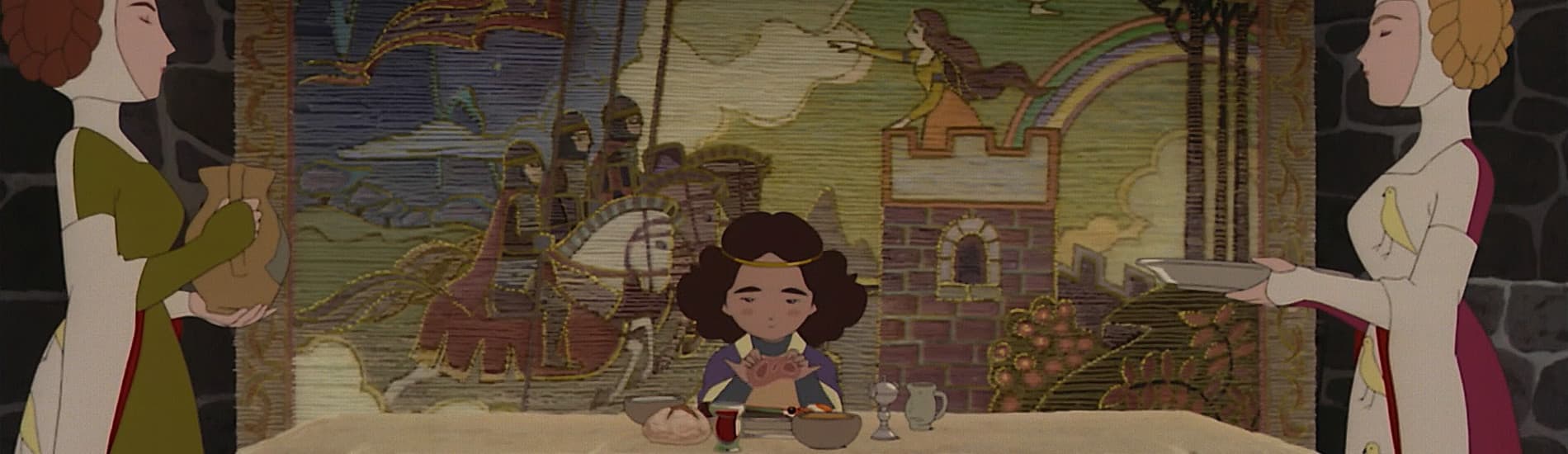
Miyazaki ghibli often goes into lively and emotive fairy tales, more explicitly filled with imagination and wonder (even in The Wind Rises), while Arete intentionally strips away those elements, and slows the pace down. Arete is in ways about fairy tales, but it isn't one itself per se, at least not in the traditional sense, or the expected Ghibli sense.
Arete is pegged as a deconstruction of fairy tales, but I see it as more a construction of a world and mindset that leads to them. I don't feel it necessarily subverts fairy tale tropes like people say, but that's because I don't really view it as a fairy tale. Arete is ultimately about the real, tangible magic that makes the fake magic of fairy tales. Instead of showing us fantasy wonder, it shows us mundane wonder, and when fantasy wonder is shown, it's grounded and portrayed by character reactions to it rather than being the focus itself.
It is the film's answer to its own proposed question on the meaning of life, suggesting that there is purpose and creativity to human hands and minds, and beauty in both the process and results. Arete explores the world at the end to experience that. The film of course doesn't shy away from negative factors, negatives to humanities. There is a brilliant scene where Arete watches the town from above, which makes that clear. She finds wonder in the lives of others and the mysteries of their internal and external worlds, but bad things are still there: bullying, a man chained. Arete's conversations with her suitors are very smart in that regard too.
The middle and last acts also further these ideas. The wizard only creates frogs, lacking creativity and passion. Moreover, the Wizard notes he is only copying the magic of others, not creating his own. He sees himself as useless. He is a copier, not an artist. True magic to him and Arete is to create with your own hands and minds. Arete scares the Wizard Boax in that sense, as she has true agency, and represents his failures. While she is creative and passionate, he copies the magic of others, and can't even make his own food. True art is yours.
Similarly, Arete doesn't escape her trance until she crafts her own story from her own memories, as Ample tells her to. Beforehand her art had simply been to pass the time, and staring at a fake window and fake view. She overcomes her block through finding meaning in herself and in her time that she had previously just been passing and wasting.
She shows Boax that this is true magic, by making him recall in his memories when he was happiest. That is real magic, she says. The human mind, and experiences with others. His memories of being with his family by the beach then appear throughout the film's credits. Art and creation are valued, but so are experiences with others. These are what matter.
Ultimately, Arete doesn't show us fantastical wonder in the traditional, expected sense, but instead asks us to craft our own wonder with our hands and imaginations, and appreciate the wonders inherent to others. It's a grounded story of humanity and art. A piece of art about art and purpose and humanity.
The film proposes a beautiful idea, that making stuff is a beautiful thing, not just due to the results, but due to the process. It proposes that while magic is awe inspiring in fiction, the mundane can be too with the right perspective, and that fictional magic can be even more magical when you remember it was conjured by minds and hands that lack it. It's a feminist narrative too, and the book resonated with Japanese women, seeing a girl make her own way in life.
True magic is life experienced with others, and the skills and passions possible when we use our own abilities. True magic comes not from fantasy and spells, but from memories of and experiences with others, and from the creations that spring from our minds and our hands. The process of creating is beautiful, as are the results, which themselves can include the fantasy fairy tale stories that awe others. Arete is not a traditional fairy tale, but it's a film that kind of loves fairy tales itself, the people that make them, and just humanity as a whole. This story gains even more power when you know all of the many difficulties Sunao Katabuchi went through to get to this point and make this film what it is.
26.5 out of 27 users liked this review
