SPOILERS: For the entire Kimagure Orange Road Series. This also serves as a review of the entire series.
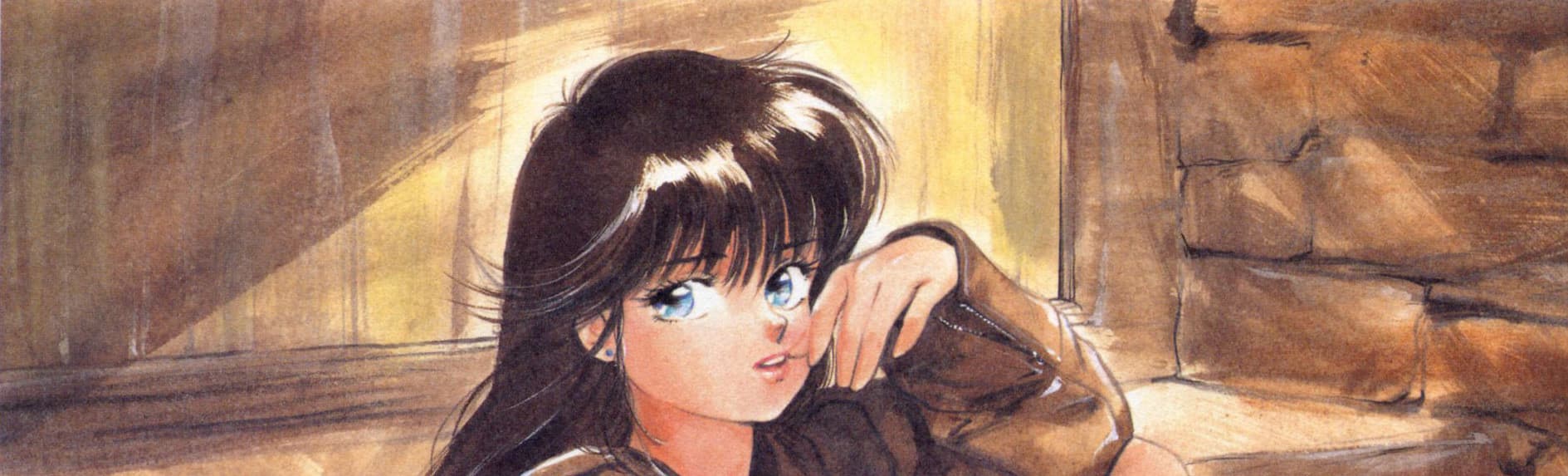
Kimagure Orange Road: Summer’s Beginning concludes the Kimagure Orange Road series and wraps up the adventures of Kyosuke Kasuga, the iconic Madoka Ayukawa, and Hikaru Hiyama. I think the movie is essential to watch to see how the main trio’s personalities and characterizations grow from the main series and the previous movie; seeing them shift from immature teens to more stable young adults. My interest in Kimagure Orange Road stemmed from the character of Madoka Ayukawa, who prior to the arrival of Madoka Kaname from Puella Magi Madoka Magica, was the Madoka of the anime world. Madoka is always cited as having foundations in the modern-day tsundere trope, not exactly fitting the definition of a tsundere as we know it today, but being a proto-tsundere of sorts. She’s a skilled girl with the reputation of a delinquent but cares deeply for her friends and is whimsical in her treatment of Kyosuke; one minute she’s kind and sweet and the next she’s ignoring him and being cold. The ‘Kimagure’ in the title refers to her as being capricious or whimsical.
Kimagure Orange Road is also known for setting the precedent for ‘love triangles’ in anime. Kyosuke serves as the somewhat dense and indecisive protagonist who loves one girl (Madoka) but can’t turn down the other girl who’s interested in him (Hikaru). Madoka is the cool beauty and Hikaru is the cheerful younger girl who’s deeply in love with Kyosuke and always wants to be around him. The show undoubtedly helped set the foundation for anime romcoms with wacky antics, simple misunderstandings that get blown out of proportion, and the ‘will they or won’t they?’ question that gets you interested in coming back for the next episode. The addition of Kyosuke having psychic powers almost makes it feel like a gender-swapped Sabrina the Witch at times. As a binge-watcher, however, the show can be infuriating to get through at certain points, especially when they ramp up certain traits of characters to the extreme. Kyosuke not being able to speak his mind, Hikaru not being able to handle the most simple rejection, Madoka being overly fickle in how she treats Kyosuke, and down to the side characters as well.
In fact, I think the show's biggest flaw comes from characterization and it's only cemented by the fact that it takes 2 movies to solve it. While watching the show, it feels like you’re stuck in this limbo of no one developing. Kyosuke doesn’t grow a backbone until the first movie, I Want to Return to That Day. It takes Hikaru getting viciously rejected to understand she needs to give Kyosuke personal space, and Madoka takes a step back from solving Kyosuke’s issues while also beginning to understand she needs to prioritize her own happiness over hurting Hikaru, her best childhood friend. The side characters suffer even more: Manami and Kurumi get less relevance as the series goes on to just barely appearing in the movies, Komatsu and Hatta are pervy side characters that don’t even feel like Kyosuke’s real friends, and Yusaku never learns to get over Hikaru and doesn’t get to appear in the movies. The only interesting side characters are Kazuya, Kyosuke’s bratty but confident kid cousin with mind-switching psychic powers, and Akane, his cousin who crushes on Madoka and has the ability to make people see her as a different person. They are very underused and should’ve been the ones to round out the main supporting cast instead of Komatsu and Hatta. Kyosuke may have his irritating flaws as a main character, but in a way, it feels like he really has no one in his corner. He’s constantly getting pushed to accept Hikaru in order to not rock the boat amongst the group (except Yusaku who wants Hikaru for himself), so with a lack of supportive friends it's no wonder he struggles to handle Hikaru.
So the movies come as much-needed relief for the story and characters to grow, but the biggest question is: Was it worth the wait following the television show? I’d say the pay-off was worth it-to an extent of course. It was incredibly satisfying to see Kyosuke turn down Hikaru and make it official with Madoka, but it was even more satisfying to see Hikaru move on to become a professional dancer, showing that the rejection was necessary for her to move forward in life. Kyosuke and Madoka’s relationship feels unstrained now, with them having the freedom to do what they please without having to worry about hurting Hikaru or the bugging of the Kasuga twins, Komatsu, and Hatta. The way Hikaru has to part ways with Madoka and Kyosuke also feels incredibly realistic and Summer’s Beginning does highlight that it was time they needed to spend a part to grow as people before reuniting as friends. The biggest cons of the series as a whole though is the slough that is the show and having to sit through 48 episodes of limbo, many episodes of which aren’t even that interesting or simply just infuriating to watch. While it made the pay-off for both movies greater as it's necessary to the viewing experience and understanding why it’s so important for Kyosuke to finally speak up about how he really feels, it really puts into perspective that static characterization hurt the show in the long run. There are little to no important character arcs outside of Madoka shedding her reputation as the local bad girl.
That isn’t to say the show has no value at all and should be skipped. For those fans wanting a more in-depth look into romcoms and love triangles in anime, Kimagure Orange Road is a massive influence on how the genre is shaped today and you can see the basis for many common tropes in each episode, similar to Rumiko Takahashi works like Urusei Yatsura and Ranma ½. And as stated above, Madoka Ayukawa helped define the idea of tsunderes in anime and is what I’d say, the backbone of this series. She’s by far the most interesting character it has to offer, with her backstory in the final episodes of the television show being critical in understanding her personality. Her characterization of wanting to maintain her friendship with Hikaru, a girl who’s so close to her they could be sisters, and wanting to be with Kyosuke but knowing it’d hurt Hikaru definitely makes her incredibly sympathetic. You watch this show for Madoka, to see her be incredibly talented, cool, and understand who she is as a person, but then you stay to see Kyosuke stand up for himself and finally turn down Hikaru. As for other factors, the animation is incredibly charming and rarely off-model (except for Kurumi’s simpleton face) and all the openings for the show are catchy and amazing. The third opening is quite revolutionary for its time as it has a long continuous take and constant rotating. One of the earliest uses of time loops is also used in this series in its Christmas episode and the show features many uses of time travel, with the finale movie being centered around Kyosuke being sent to the future while in a coma.
As a whole, the series holds a significant impact on modern-day anime culture, as well as vaporwave and future funk culture for having a clean 80s anime aesthetic. If you’re interested in seeing where many tropes come from, this show is one you should watch. But that doesn’t erase its flaws; while the movies have incredible pay-offs and its satisfying to see how the main trio grow into young adults, the show is something you should anticipate being an annoying, repetitive ride, especially if you want to binge it or are already familiar with modern romcom anime, so you’ve most likely seen more advanced takes built on the tropes based in this series. So for historic value and for having a fulfilling conclusion, Kimagure Orange Road as a series gets a passing score, but I can’t give it anything higher due to characterization flaws, an odd choice of supporting cast, interesting characters being underused, and the agonizing pay-off to get to the movies.
4 out of 4 users liked this review
