####Whether you're bored or enticed with Ergo Proxy, I think both parties can agree that the cryptic design of Ergo Proxy is one of the singular components of the show that tends to define what people make of its philosophical kaleidoscopic experience. Ergo Proxy is reminiscent of other contemplative arthousey animated works, but it also never feels like it completely strays the line into their territory as it tries to balance between that and an agenda to making a compelling TV Anime show.
Narrative Density and Interpretation: ####There are benefits to a denser narrative as it can be sometimes more incentive for somebody to pay attention to details, but I do get the sense that the show was created as an off-the-cuff elaborate puzzle that takes out more than a couple pieces of the puzzle, probably because they were never there to begin with, which then gives the show this allegorical space for interpretation via the watchers in a sort of post-modernism perspective of not following a strict canvas of understanding where what matters to the creators is the audience interpretation this to me is going to be a big thing wether you love the show or you don't.
Philosophical Ideas and Character Dynamics: ####The show has some "cool" cyberpunk philosophical ideas that it incorporates a bit into the story, at least in the beginning with the Cogito Virus that infects Auto Reivs giving them self-awareness of their existence and emotions, and it adds this drama of how we treat these self-aware personalities that have switched from being purely robotic servants but at the same time illustrated in the character of Pino the transition isn't a complete 180-degree flip. It does feel like these ideas are haphazard at times though and never really congeal. I think Dai Sato is great at writing human characters in situations which is highlighted by his work on Cowboy Bebop as well as Stand Alone Complex and you can see these great character moments in a lot of the mundanity of Ergo Proxy that you would call filler.
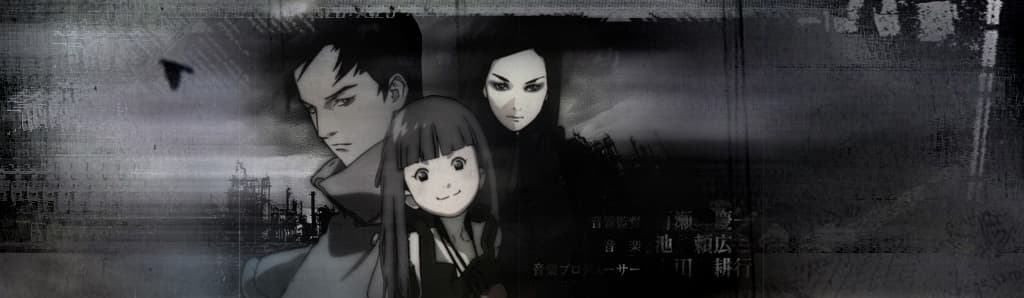
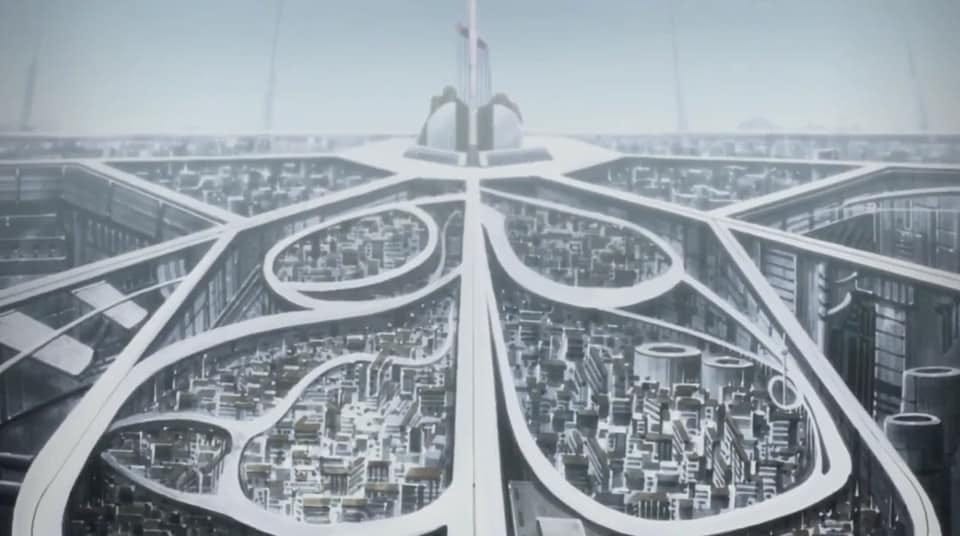
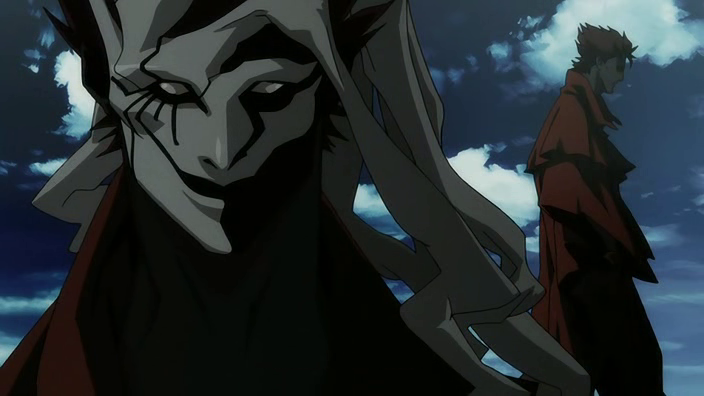
Shift in Narrative and World Building: ####Re-L works for the intelligence bureau so it sets up why she would be naturally curious about the Proxy and the Cogito Virus as she works in an agency that is about collecting and analyzing information. It's set up that she's the daughter of the regent making her a bit of an upper-class citizen which gives her a sort of life of privilege but also monotony as the Domed City of Romdeau is a stagnant system where the status quo of anything leads to little change. This makes it somewhat reasonable for the intrigue that is the proxies to fuel her investigation. However, the show leaps away from the slow burn mystery to a “Proxy of the Week,” and not enough time is left in the series to actually flesh out the world-building and lore so it’s all dumbed like concrete down your throat in a quiz game which is unremarkable and shoehorned writing due to how these answers are revealed with so little intrigue contrasting to how they were set up in the first place leading to an overall soured perception on my part.
Themes and Creator-Created Dynamics: ####My issue with Ergo Proxy is that many of its themes or ideas don't always feel congealed. It felt like the creator had a bunch of general cyberpunk ideas on a dartboard that he chose arbitrarily. However, the way I interpret the show is that normal humans left Earth, leaving behind proxies who governed over clone humans, while autoreivs serviced humans in their daily lives. The proxies acted as intermediaries, maintaining little bubble cities while their creators were absent. The problem arises when the proxies grow weary of this stagnant existence, feeling abandoned by their creators, and consequently, they abandon their creations. I would argue it's about Creator-Created Dynamics and how when robbed of higher authority figures or possible godly figures there's a rippling chain effect that leads to existential questioning and even possible personal identity like the Auto Reivs which leads to us recontextualizing whether the relationship between humans and Auto Reiv now is ethical something Real doesn't do angering her own Auto Reiv. The show's pretentiousness is debatable. While I acknowledge flaws in writing, such as abrupt injections of backstory, I'm uncertain if it's pretentious or simply superficial. The dense dialogue, though reminiscent of deeper narratives like Ghost in the Shell 2 Innocence, can sometimes feel like an intellectual showcase rather than integrated storytelling. I find the biggest problem might just be the lack of subtlety on top of it trying to be this post-modernist piece of work that will inherently add on to this sense of pretentiousness. Dai Sato is dead in the world of Ergo Proxy, the literal author is actually dead, and the rulers of Romdeau are all named after post-modernist philosophers Lacan, Husserl, and Berkeley. So in the philosophy of Ergo Proxy, if you interpret the work as surface level and shallow then that's the meaning of the work for you.