
La siguiente reseña está en Español e Inglés (traducida con el apoyo de DeepL)
La versión leída es la traducción al español por Reboot y Hueso
Los capítulos son pequeñas anécdotas sobre la vida cotidiana de Alpha en su pequeño café en Yokohama, teniendo, de vez en cuándo, de invitado a alguno de los otros personajes secundarios: Los niños que a veces la visitan, un explorador que cada tanto regresa al pueblo, una amigable mensajera o la eterna pasajera de un extraño avión. Nada extraño a excepción de lo que no es normal, y es que Alpha es una robot, y toda la línea costera de Yokohama ha sido consumida (y lo sigue siendo) por la subida del mar.
La historia ocurre años después de un evento catastrófico, Hitoshi, el autor, nunca brinda la información suficiente sobre qué ocurrió exactamente, podemos suponer un aumento del nivel del océano por un derretimiento en los polos aunque tampoco respondería la razón detrás de los robots, porque su interés no es estructurar el atractivo de su mundo sobre una caracterización post desastre, al contrario, quiere que nos quedemos por lo nostálgicamente familiar de sus paisajes.
La nostalgia, ese es el otro punto clave en el desarrollo de Yokohama. La mayoría de sus capítulos son cortos, con unas cuántas líneas de diálogo, no están construidos teniendo el presente como acción sino el presente como pasado, la acción convertida en recuerdo.

Alpha no es una robot por casualidad, hay dos factores que son importantes para el establecimiento de la nostalgia, comenzando por el más evidente, su no envejecimiento. Pese a que toda la historia dura relativamente pocos capítulos, si pasa bastante tiempo durantes los mismos, vemos a sus personajes crecer, niños convertirse en adultos y adultos dejándonos naturalmente en el transcurso. Todo desde Alpha quien no cambia físicamente, sirviendo de constante contraste y recordatorio del inevitable paso del tiempo; de ahí el inconveniente sobre entonces cómo notaremos un cambio en la protagonista, más es solventado con la ayuda de un clásico tópico, el robot siendo cada vez más humano.
Ella no comienza siendo una típica robot sin sentimientos, desde el inicio es altamente expresiva casi ni haciendo hincapié a su naturaleza artificial aparte de su problema con diferentes comidas, y de todas formas, cambia. En el transcurso de la historia adquiere valor para intentar cosas nuevas, aprender y explorar, su apreciación como robot en temas aparentemente muy humanos, música o arte, brinda pequeñas y sinceras observaciones.
O el desarrollo en un gusto por la fotografía ¿Acaso hay mejor muestra sobre la singularidad del momento? Un registro en imagen con el que puede conectarse y revivir, en sus sentidos, ese corto instante; para dar espacio a que sucedan esos momentos tenemos los largos paneles dedicados a ser observación de paisajes, atardeceres, pueblos hundidos o extrañas formaciones, la fugaz belleza del momento.

A destacar como aún en el contexto relativamente futurista hay una marcada presencia del folclore clásico japonés, pasado y futuro se encuentran para apoyar a las temáticas e ideas principales sin nunca ser protagonistas en sí mismas, dejárselo a sus paisajes enmarcados en ambos tiempos, en su dualidad.
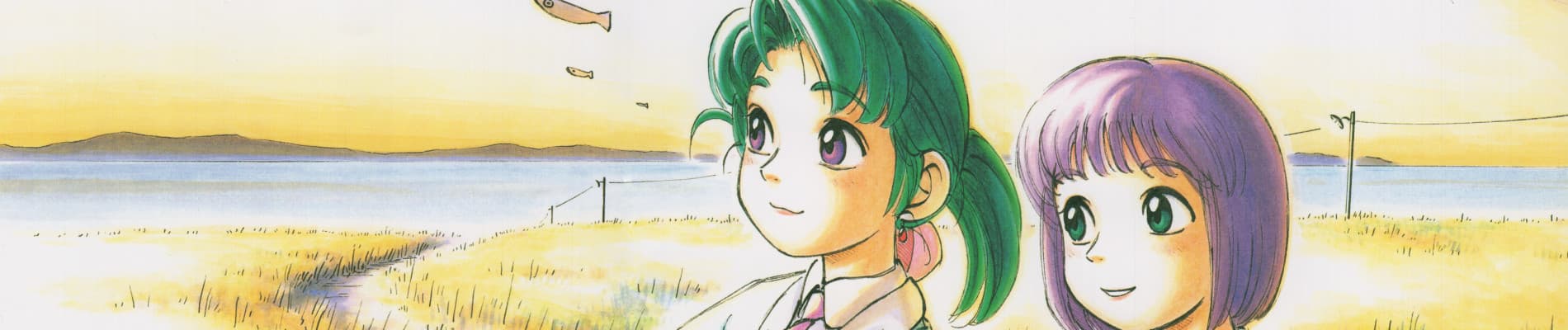
Es irónico como hay un marcado esfuerzo en conseguir esa normalidad, y por supuesto, no podía conseguirse sin estar visualmente caracterizada. El dibujo por Hitoshi Ashinano es de pocos trazos o fuerza, en cambio es suavidad y precisión para conseguir lo que parece simple o sencillo más que requiere de dedicación y experiencia. No cualquiera puede conseguir la construcción de paisajes tan cercanos a nuestra realidad y que parecen a una línea de convertirse en el escenario de un sueño, de un recuerdo.
Su trazo a lo largo de la historia fue mejorando significativamente, permitiendo que nos genere todavía más evocación conforme seguimos leyendo. Es una lectura esencialmente contemplativa y de ahí que pueda comprender cómo no podría ser para cualquiera. Será dedicada a quienes estén dispuestos a entrar en su propuesta de encuentros y despedidas, de pequeñas conversaciones acompañadas de un café, o en el silencio de ver en compañía la caída de estrellas.
En permitirse que la vida no es una cadencia de grandes momentos, sino de pequeños recuerdos.
English
The chapters are short anecdotes about Alpha's daily life in her small cafe in Yokohama, having, from time to time, one of the other secondary characters as a guest: The children who sometimes visit her, an explorer who every now and then returns to town, a friendly messenger or the eternal passenger of a strange airplane. Nothing strange except that Alpha is a robot, and the entire coastline of Yokohama has been (and still is) consumed by the rising sea.
The story takes place years after a catastrophic event, Hitoshi, the author, never gives enough information about what exactly happened, we can assume a rise of the ocean level due to a melting of the poles, although he wouldn’t answer the reason behind the robots either, because his interest isn’t to structure the appeal of his world on a post-disaster characterization, on the contrary, he wants us to stay for the nostalgically familiar of his landscapes.
Nostalgia, that’s the other key point in the development of Yokohama. Most of his chapters are short, with a few lines of dialogue, they aren’t built with the present as action but the present as past, the action turned into memory.

Alpha isn’t a robot by chance, there are two factors that are important for the establishment of nostalgia, starting with the most obvious, its non-aging. Although the whole story lasts relatively few chapters, if enough time passes during them, we see their characters grow, children become adults and adults leaving us naturally in the course. Everything from Alpha who doesn’t change physically, serving as a constant contrast and reminder of the inevitable passage of time; hence the inconvenience about then how we will notice a change in the protagonist, but it’s solved with the help of a classic cliché, the robot being more and more human.
She doesn't start out as a typical unfeeling robot, from the beginning she is highly expressive almost not even emphasizing her artificial nature apart from her problem with different foods, and anyway, she changes. Over the course of the story she gains courage to try new things, to learn and explore, her appreciation as a robot in seemingly very human subjects, music or art, provides small and sincere observations.
Or the development of a taste for photography - is there any better display of the uniqueness of the moment? A record in image with which you can connect and relive, in your senses, that short instant, and to give space for those moments to happen we have the long panels dedicated to observation of landscapes, sunsets, sunken villages or strange formations; the fleeting beauty of the moment.

It’s noteworthy how even in the relatively futuristic context there is a marked presence of classical Japanese folklore, past and future meet to support the main themes and ideas without ever being protagonists in themselves, leaving it to their landscapes framed in both times, in their duality.
It’s ironic how there is a marked effort to achieve that normality, and of course, it couldn't be achieved without being visually characterized. The drawing by Hitoshi Ashinano is of few strokes or strength, instead it’s smoothness and precision to achieve what seems simple or straightforward but requires dedication and experience. Not just anyone can achieve the construction of landscapes so close to our reality and that seems a line away from becoming the scene of a dream, of a memory.
His stroke throughout the story improved significantly, allowing it to become even more evocative as we read on. It’s an essentially contemplative reading and therefore I can understand how it could not be for everyone. It will be dedicated to those who are willing to enter into its proposal of encounters and farewells, of small conversations accompanied by a coffee, or in the silence of watching the stars fall in company.
In allowing that life is not a cadence of great moments, but of small memories.