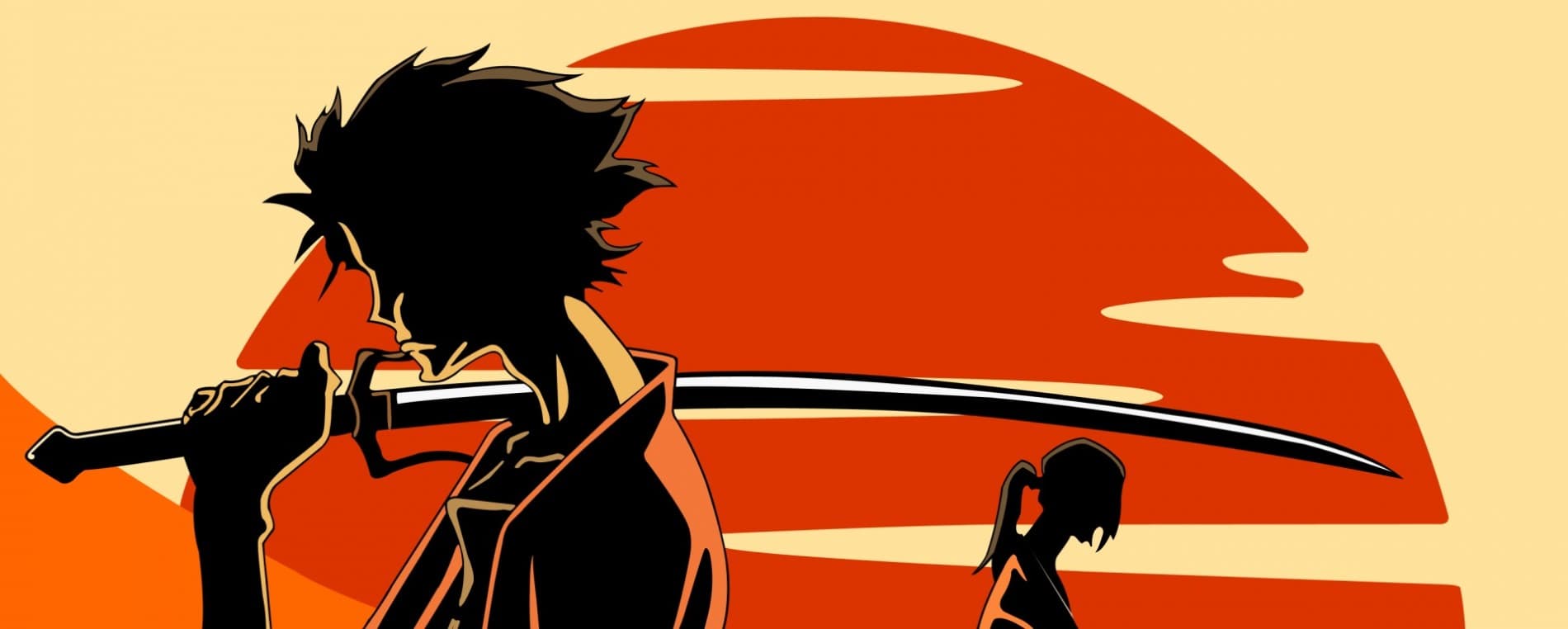
Samurai Champloo
a review by zilqnova
a review by zilqnova
Warning: This review contains spoilers for Samurai Champloo and minor spoilers for Cowboy Bebop.
Samurai Champloo is the first show I've watched where I have felt this level of compulsion to write a review. As such, this is my first review on AniList ever.
From the beginning to the end, every episode explores something new. It is truly profound in every frame of animation and every line spoken. I have nothing but high praise for this show.
However, since there's so much to talk about, I'm only going to focus on three things that really stuck out to me while watching. It's been a little bit since I watched it now, so forgive me if this review is a little bit vague at times (I had wanted to write this sooner but I was really busy for weeks).
So without further ado, let me begin my review by talking about Cowboy Bebop.
Samurai Champloo director Watanabe Shinichirou also directed Cowboy Bebop 6 years earlier. This is probably going to be a little controversial, but I do not like Cowboy Bebop. In fact, I still consider my disdain for episodic anime to be specifically Cowboy Bebop's fault. So, why is it that I have such an opposite reaction to this anime?
I do not feel that each episode of Cowboy Bebop is important to the work as a whole. I wouldn't call it filler, considering that it's only 26 episodes long, but it did certainly feel disconnected. Perhaps it is simply the setting not permitting a physical tie-in between episodes, but I feel it has to do more with the lack of impact any of the episodes not dealing with Spike and Vicious has on the characters. In fact, I feel that there is little character development outside of Spike and maybe Jet. It has been around a year and a half since I watched Cowboy Bebop though, so take my complaints with a grain of salt.
In contrast, Samurai Champloo executes episodic perfectly. From the first episode, it establishes the expectations for the rest of the show. The first episode outlines the general motions of a standard episode: banter towards the beginning, someone getting into trouble or separated, physical conflict, and resolution at the end. It also provides a simple example of the character dynamics so that it can demonstrate how they have changed incrementally (typically in this final "resolution" section of each episode). Both individually and as a group, no episode fails to demonstrate each character's growth. In my opinion, this is the main reason I find this anime so much more enjoyable than Cowboy Bebop; every character and their development is treated with an equal amount of care. This contributes to the main theme I wish to discuss: the theme of change. Keeping that in mind, let's talk a bit about why each character getting this treatment is so important.
Mugen, Jin, and Fuu each have vastly different stories, personalities, and goals throughout the entire show. Despite this, they are always drawn back to each other, whether it be by fate or by their own will. It is clearly intentional that the group is split up in some way almost every episode, as their reunions continually reinforce their inseparable bond. Even little details like how they all bond over food over the course of the show or how Mugen and Jin become closer reading Fuu's diary in the recap episode serve to build up their connections.
The three of them being tied together in this way is vital for their development because they go through their individual growth in each other's presence (and often provide opportunities for each other to grow). By the end, instead of trying to kill each other, Mugen and Jin are willing to die for each other, and die for Fuu. In fact, they can't kill each other, even at the end of the journey, which is a visual depiction of this "inseparable bond." Even when they do part ways, they do so expecting to meet again someday; a far cry from Mugen and Jin wanting each other dead or trying to get away from Fuu early on.
Of course, this theme of change goes far beyond character development. Samurai Champloo's main message is about embracing change and vanquishing the stubborn desire to clutch onto the past.
What I appreciate most about Samurai Champloo and its focus on change is how it brings the journey, the character development, and history together. The theme of embracing change is everywhere, in every episode. This is due to the anachronistic choice of soundtrack and aesthetic.
Samurai Champloo employs anachronism to effectively deliver this main theme to the viewers. Hip-hop permeates every moment of this show from the OP to the ED. Characters act (and sometimes dress) in ways that are much more similar to the ways you would see them act in anime with a modern setting. Each fight is choreographed to keep energy high and many fights end quickly. This all fits together when you consider that this anime started airing in 2004.
Samurai Champloo in its story aims to explore the beginning of the Edo period, where the peace leads to samurai like Jin no longer being needed. In the graffiti episode, we see a once revered temple reclaimed by the new generation and their art. Most conflicts are between the main cast and holdovers from the previous era. The final antagonist aims to return to a wartorn world where his skills are necessary. All of this and more are examples of the changing times. It portrays this with hip-hop, with modern characters, and with high energy combat because it is not only ringing in the Edo period; it is ringing in the new millennium.
This is what resonates with me so much. It portrays what it means to exist in the transitory period between eras. Whether that be the transition into the Edo period or into the 21st century, the experience is the same. Samurai Champloo looks into the future with hope (just take a look at the final credits scene) and it wants the viewers to embrace the future in the same way. It demonstrates that it can be a bumpy ride through its conflict, but it generally holds high spirits.
I definitely have more that I could say about this show (I could talk for hours about each character's arc in much more detail), but I think this pretty much sums up what I think is done so well in Samurai Champloo. I'm going to cap this review here since it's my first one and I don't want to get ahead of myself. My final thoughts are that while it is deep as I've discussed here, it's also great simply because it's cool. Considering the influence this show had on the Western sphere, people clearly agree with that.
I'd also be happy to hear what you think about this review so I can improve in the future, so if you have anything to help, I'd love to hear it! Don't be afraid to send me a message on my profile.
Thanks for reading!
25 out of 26 users liked this review
