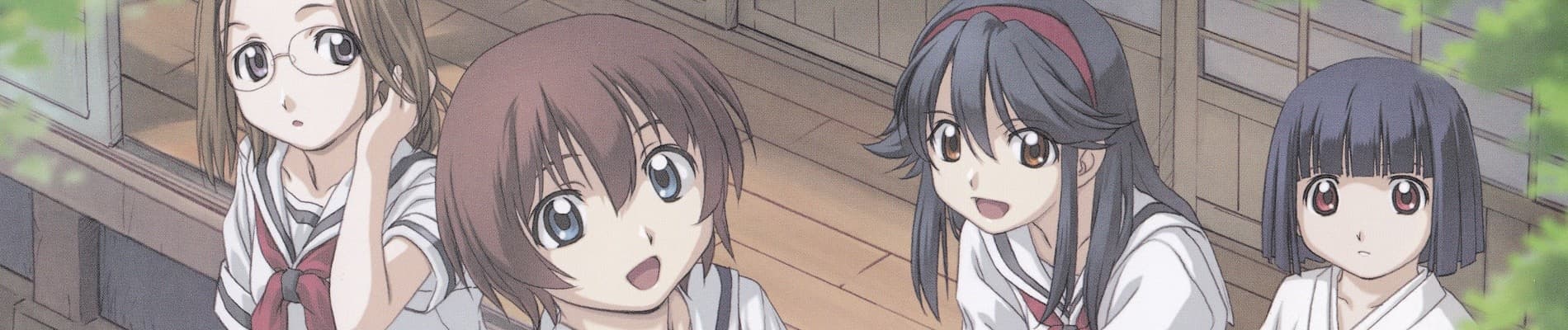
Kamichu is a show that I thoroughly enjoyed but would recommend to almost nobody. Many many times throughout the show I found myself asking "What is the point of this show?", "Who is this for?", "What is the appeal?" and so on. Slice of life is a very well-established style of anime and I am no stranger to it, but I struggled to identify Kamichu as a SoL until the final few episodes. It doesn't register as 'moe', it's not funny, and the vibes are far left field. The premise sounds lame (a middle school student is a GOD!! omg!) and the supernatural element will turn off people who are in the market for something like Tamayura. If you happen to have seen Tamayura and Uchouten Kazoku, this show is like a cross between them, but without the cutesy iyashikei vibes of Tamayura nor the drama and story intrigue of Uchouten Kazoku. Hence the tagline - what is the point of this show??

One thing I consistently and highly respect in and out of anime is an artist's commitment to vision. Very very few shows display this character so well as Kamichu, and it especially shows because of just how bizarre and idiosyncratic this show is. Idiosyncrasy is the name of the game here, absolutely nothing else hits the same way that Kamichu does, and this pattern permeates to all aspects of the product - the designs of the myriads of spirits, the way faces get drawn (it's a goldmine for reaction images), and especially the way dialogue is written and handled. Many anime, TV shows, movies etc. struggle with making dialogue sound like dialogue as opposed to lines, Kamichu solves this issue in the most avant-garde way possible by having characters so unique that every line they deliver can only be attributed to them. The spirit characters are written in a truly inhuman manner, undoubtedly very well influenced by the mythology they come from, and it's a delight to see them engage in small talk and comment on the goings-on of the human world.

Kamichu plays by its own rules. The show can feel like a hodgepodge of scatterbrained ideas, incomprehensible AI-generated slop, a waste of time, and brilliance. Certain episodes go way too far into their own little worlds, with one episode involving a Kirby-jellyfish Martian coming into the protection of the MC to avoid military capture, and another involving a secret cat society run by a cat gangster who runs a fight club. The gimmicks are absolutely not the strong suit of the show, and did little for me beyond make me second-guess whether sticking this show out was really worth it. In my eyes the point of this show is to stick it out to the end, and see the last four episodes of the show. There are 12 adaptation episodes and 4 OVA episodes, but the OVA episodes are woven through (8, 11, 13, 16) and are totally indistinguishable from the rest. Anilist lists the OVA separately but this should be taken as a 16-episode show (this is chronological order). While there is some enjoyment to be had in the body of the show (beach episode comes to mind), it only really hits its stride from episode 13 onwards, where its brilliance shines, the gimmicks fade away, the idiosyncratic visionary ideas are woven into some actual iyashikei entertainment, with characters in the foreground against a backdrop of some truly excellent episode ideas. There are a few great characters in this show but none better than the protagonist Yurie - the shtick of the show is that a middle schooler becomes a god BUT she's a shy ordinary girl with subpar grades, no social skills, and two close friends that make up her support group. After seeing 200 shows and dropping 200 more I can confidently say there's nobody out there written quite like Yurie, and seeing characters that don't fit into archetypes is always a treat. As an example of how character becomes entertainment near the end of the show, in episode 14, Yurie (MC) doesn't leave the kotatsu for the full episode - it's one of the most engaging things I have seen in recent years. Take a moment to imagine how you would storyboard and direct a full-length episode wherein the protagonist never leaves the kotatsu, bearing in mind that this is not comedy nor moe. Were every episode like this, this should would be an easy 10.

The last thing I want to highlight is the attention to the environment and pacing. Kamichu (like Tamayura) is set in a rural coastal town, with a ferry that the main cast take to school each day crossing the river between each side. The show indulges in the setting from start to finish, and it's clear that the mangaka has been or lived somewhere very special to them and replicated it here with lots of love. This location probably exists in real life. If you watch this show, I expect you will come to love this town too, though whether or not you come to love the show itself is anybody's guess. Like I said, I can't imagine ever recommending this show to someone, but perhaps this review has stirred something in you. If so, it's always there waiting for you.


5 out of 5 users liked this review
