
La siguiente reseña está en Español e Inglés (traducida con el apoyo de DeepL)
La versión leída es la traducción al español por xbc del grupo “Onizuka no Fansub”
El anime de Onizuka fácilmente podía estar entre mis favoritos, estuve genuinamente encantado de su historia, arte y música, sólo le hacía falta algo… un final. Dado lo abrupto de su desenlace se notaba como había quedado pendiente material por ser adaptado, al leer el manga caí en cuenta de lo que había sido omitido, “nada menos” que la mitad de la historia. A la vez que disfruté leer cosas que desconocía, lamentaba no estuvieran en la gran adaptación de Pierrot, hubiera quedado una obra maestra.
Sin embargo, me adelanto, es un comentario en honor al anime por darme la motivación para leer su material original. Partamos desde lo básico, he leído el manga desde el comienzo. Onizuka es un planteamiento que puede serte familiar, un profesor “diferente” asignado a una clase “problemática”, poco a poco forma un vínculo con sus estudiantes a través de reformarlos por medio de enfrentar sus problemas, un desarrollo habitual en el anime y series/películas occidentales.
Y en línea con las convenciones de ese enfoque, Onizuka no es un profesor “típico”, de hecho ni siquiera cuenta con una especialidad de estudio definida, sí tiene es una marcada personalidad e ideales obtenidos de una vida difícil; sabe cómo medir el valor de las personas, su nivel de compromiso, hasta qué punto están dispuestos a hacer lo que dicen ser capaces de hacer, y para sí mismo se muestra obstinado y comprometido con el deber.

Lo que le separa del modelo tradicional de maestro es no tener nada de tradicional: Joven, con aspecto de delincuente motero, tiene una actitud gamberra, sin temor a enfrentarse a las autoridades, romper las reglas, es desobediente, pervertido o testarudo, entre otros varios atributos negativos. Chocantes para varios pero perdonados hasta cierto punto, porque como se ha implicado, por encima de todas las cosas, Onizuka es sincero.
Es una buena idea del autor haberle dotado con un trasfondo de líder en una banda de moteros, aparte de las evidentes implicaciones narrativas sobre que un profesor no tiene porque venir de una familia acomodada o un estudiante modelo, brinda justificación para que sencillamente sea fuerte, porque uno de los factores claves de su personaje no es sólo tener ideales, sino tener la fuerza para defenderlos. Eikichi es fuerte, demasiado fuerte y podemos decir que (literalmente) es por el bien de la trama. El enfoque del manga no son las peleas o el combate, es un medio para reafirmar lo absolutamente genial que es Onizuka, su obstinación y dedicación, construir un aura casi mítica.
Y podría parecer contraproducente, si despojas lo humano a un personaje que debería de ser la luz para las enseñanzas de los estudiantes problemáticos se perdería la intención ¿no? Sin embargo, recordemos que Onizuka está muy lejos de ser perfecto, es el personaje que más defectos tiene (en cantidad, no en gravedad) y todavía más importante, su propia revelación y dilema ya han pasado, él comienza la historia con sus ideales inmiscuidos. No implica que a lo largo de la historia no tenga diferentes puntos bajos, pero siempre los superará sea por sí mismo o gracias a los amigos que ha ido adquiriendo en el camino.

Él en sí no es un ejemplo a seguir, lo que cambia la vida de quienes le admiran en cierto punto es su actitud optimista de seguir siempre hacia adelante, superar cada problema aunque parezca imposible, dar todo lo que se tiene por ese objetivo propuesto. Nuevamente, Onizuka es sincero.
Sin embargo, una vez aclarado que, sin importar lo difícil del problema, Onizuka se repondrá, podría parecer que cada arco será iteración de alguno previo, sin conseguir un sentido de peligro o emoción, y en cierto punto el lector lo sabrá “Onizuka superará este problema”, pero seguirá sin importarle porque su interés en cuánto a la resolución no radica en Eikichi, está en los personajes que conforman el arco. Aún siendo similares de resolución, el camino de cada cuál es sustancialmente diferente e igual de emocionante.
GTO consigue crear un salón de clases, un mérito que podría parecer por evidente pero al evaluar a similares, notamos que si bien la escolaridad es de los escenarios más comunes en el anime, son pocas las obras en las que recordaremos más allá del contado grupo principal de amigos, mientras que en GTO tendremos, casi en su totalidad, un salón de clases. Por supuesto, habrá secundarios de paisaje que se mantendrán como secundarios de paisaje, y no importa, aquellos quienes en algún momento estuvieron en primera plana se volverán especiales por su propio mérito y les notaremos desde ahí.

Las diferencias y particularidades les definen como personas que luego se refuerza en la interacción con los otros, abusadores y abusados se intercalan para ir revelando las circunstancias de cada quién. Puede parecer injusto o exagerado dotar de un trasfondo para la razón de ser en todo quien haya sido protagónico, pero considerando la exposición de su historia sobre cómo todos somos personas, es correspondiente. Habiendo personajes que son absolutamente desviados tendrán al menos una viñeta, un plano dónde su alma ha sido desnudada, estarán expuestos como lo que son, imperfectos.
Y la variación de secundarios permite exponer pequeñas reflexiones alternativas relacionadas de una u otra manera con la idea central de vivir la vida al máximo, aliviando la saturación del discurso central sobre el buen profesor, de todas maneras, el manga dura un poco más de lo que debería. Durante el último cuarto la presencia de Onizuka se siente demasiado exagerada, sucede igual con sus adversarios, aún así no sabría a quién omitir debido a lo mucho que me gustaron esos pequeños instantes, en cambio lo condensaría para aliviar la consistencia.
En mi recuerdo no sólo quedará Onizuka, un buen puñado de sus secundarios estarán entre mis memorias, sobre todo quiero destacar a quién es usualmente la destacada, Urumi Kanzaki, mi personaje femenino favorito de la obra y quién estará entre mis personajes femeninos favoritos en general. Relacionado, es importante mencionar el comportamiento pervertido de Onizuka, provocando varias situaciones de acoso a numerosos personajes femeninos, que junto a diferentes tramas en diversos arcos que tienen alguna constante a la sexualidad, puede resultar cansino u ofensivo para varios. Bien resulta gratuito en su mayoría de veces, más corresponde a la caracterización pervertida de Onizuka dentro de los lineamientos que le han guiado, como no cruzar la línea con ninguna estudiante, ni cómo tampoco reduce meramente a atractivo sexual a otros personajes como Tomoko o Azusa.

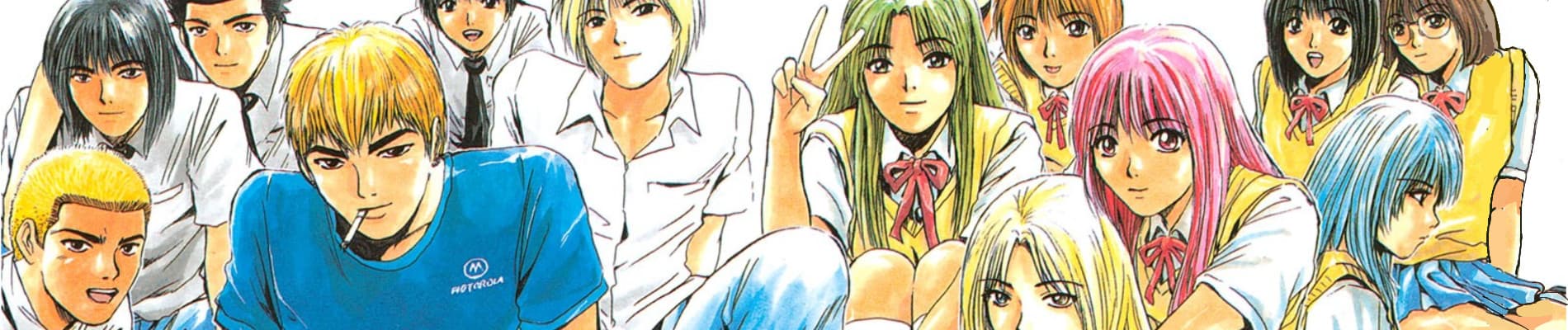
El dibujo de Tooru Fujisawa es una genialidad, no tengo adjetivos suficientes ni merecedores de resumir lo que me ha llegado a gustar su trazo, aún en la escena más simple los personajes están llenos de expresión y caracterización, y en sus momentos de acción no tiene nada que envidiar a los mejores Shonen; pero el factor que especialmente refleja el talento de Tooru es su sentido de la composición, cuándo decide en qué momento jugar con el fondo, los alrededores o la posición para capturar el impacto del clímax en el arco en un sólo plano.
Tras lo insatisfecho que me dejo el anime, su manga me ha recibido y de sobra, tal vez un poco más de lo que hubiera preferido, e irónicamente si sentí a deber un final algo más extendido para darle un pequeño momento de despedida a cada secundario. Pero hecho a los hechos, GTO puede que no haya sido perfecto, más su representación de cómo cada persona es una composición de imperfecciones dónde sólo queda enfrentarlas es a mi parecer, perfecta.
English
Onizuka's anime could easily be among my favorites, I was genuinely enchanted by its story, art and music, it just lacked something... an ending. Given the abruptness of its denouement it was noticeable how there was material left to be adapted, as I read the manga I realized what had been omitted, “nothing less” than half of the story. At the same time I enjoyed reading things I didn't know, I regretted that they weren't in the great adaptation of Pierrot, it would have been a masterpiece.
However, I'm going ahead, this is a comment in honor of the anime for giving me the motivation to read its original material. Let's start from the basics, I have read the manga from the beginning. Onizuka is an approach you may be familiar with, a “different” teacher assigned to a “troubled” class, gradually forms a bond with his students through reforming them by confronting their problems, a common development in anime and western series/movies.
And in line with the conventions of that approach, Onizuka is not a “typical” teacher, in fact he does not even have a defined specialty of study, he does have is a marked personality and ideals gained from a difficult life; he knows how to gauge the value of people, their level of commitment, to what extent they are willing to do what they say they are capable of doing, and to himself he is stubborn and committed to duty.

What separates him from the traditional teacher model is that he is anything but traditional: Young, biker delinquent looking, has a hooligan attitude, unafraid to stand up to authorities, break the rules, is disobedient, perverted or stubborn, among several other negative attributes. Shocking to many but forgivable to a certain extent, because as implied, above all things, Onizuka is sincere.
It is a good idea of the author to have endowed him with a background of a leader in a biker gang, apart from the obvious narrative implications that a teacher doesn't have to come from a wealthy family or a model student, it provides justification for him to simply be strong, because one of the key factors of his character isn't only to have ideals, but to have the strength to defend them. Eikichi is strong, too strong, and we can say that (literally) it's for the sake of the plot. The focus of the manga isn't fights or combat, it's a means to reaffirm how absolutely great Onizuka is, his stubbornness and dedication, build an almost mythical aura.
And it might seem counterproductive, if you strip the human out of a character that should be the light for the teachings of troubled students the intention would be lost wouldn't it? However, let's remember that Onizuka is far from perfect, he's the character with the most flaws (in quantity, not severity) and even more importantly, his own revelation and dilemma are already past, he starts the story with his ideals intruded. It doesn't imply that throughout the story he doesn't have different low points, but he will always overcome them either by himself or thanks to the friends he has acquired along the way.

He himself is not an example to follow, what changes the lives of those who admire him to a certain extent is his optimistic attitude of always moving forward, overcoming every problem even if it seems impossible, giving everything he has for that proposed goal. Again, Onizuka is sincere.
However, once it is made clear that, no matter how difficult the problem, Onizuka will pull through, it might seem that each arc will be iterations of a previous one, without achieving a sense of danger or excitement, and at a certain point the reader will know “Onizuka will overcome this problem”, but we don't care because the interest lies not in Eikichi, it lies in the characters that make up the arc. Even though they are similar in resolution, the path of each is substantially different and just as exciting.
GTO manages to create a classroom, a merit that might seem obvious but when evaluating similar ones, we notice that although schooling is one of the most common scenarios in anime, there are few works in which we will remember beyond the main group of friends, while in GTO we will have, almost entirely, a classroom. Of course, there will be landscape secondaries that will remain as landscape secondaries, and it doesn't matter, those who at some point were in the foreground will become special on their own merit and we will notice them from there.

The differences and particularities define them as people which is then reinforced in the interaction with the others, abusers and abused are interspersed to reveal the circumstances of each one. It may seem unfair or exaggerated to provide a backstory for the raison d'être in everyone who has been the protagonist, but considering the exposition of their story about how we are all people, it is fitting. Having characters who are absolutely deviant will have at least one vignette, one shot where their soul has been bared, they will be exposed for what they are, imperfect.
And the variation of secondary characters allows to expose small alternative reflections related in one way or another to the central idea of living life to the fullest, relieving the saturation of the central speech about the good teacher, anyway, the manga lasts a little longer than it should. During the last quarter Onizuka's presence feels too exaggerated, it happens the same with his adversaries, still I wouldn't know who to omit because of how much I liked those little instants, instead I would condense it to alleviate the consistency.
In my memory not only Onizuka will remain, a good handful of his secondary characters will be among my memories, above all I want to highlight who is usually the outstanding one, Urumi Kanzaki, my favorite female character of the work and who will be among my favorite female characters in general. Related, it is important to mention Onizuka's perverted behavior, provoking several situations of harassment to numerous female characters, which together with different plots in various arcs that have some constant to sexuality, can be tiring or offensive to many. Even, it's gratuitous most of the time, corresponds to Onizuka's perverted characterization within the guidelines that have guided him, such as not crossing the line with any student, nor how he merely reduces other characters such as Tomoko or Azusa to sexual attractiveness.

Tooru Fujisawa's drawing is a genius, I don't have enough adjectives or worthy to summarize what I have come to like his stroke, even in the simplest scene the characters are full of expression and characterization, and in his moments of action has nothing to envy to the best Shonen; but the factor that especially reflects Tooru's talent is his sense of composition, when he decides at what moment to play with the background, the surroundings or the position to capture the impact of the climax in the arc in a single plane.
After how unsatisfied I was with the anime, his manga has received me and more than enough, perhaps a little more than I would have preferred, and ironically if I felt I owed a slightly more extended ending to give a small moment of farewell to each secondary. But in fact, GTO may not have been perfect, but its representation of how each person is a composition of imperfections where the only thing left to do is to face them is, in my opinion, perfect.