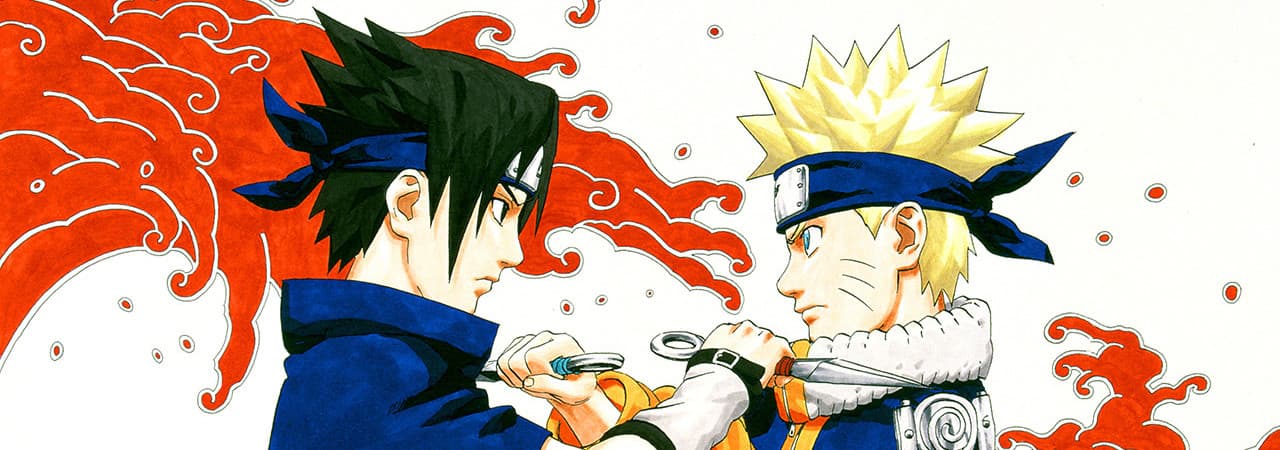
[Full spoilers for the story as it's meant to be a review/analysis. Only read if you've read it]
"Once upon a time, in a village hidden among the leaves, there lived a boy named Naruto Uzumaki. He was an orphan, shunned by the villagers, but he eventually rose to become their leader and the greatest shinobi the world had ever known." This is a brief summary of Naruto, one of the most iconic and popular manga series of all time. Over the years, it has expanded into a massive franchise, spanning movies, TV shows, spin-offs, sequels, and prequels. From Japan to America, Europe, and the Middle East, Naruto has taken the world by storm, leaving an unforgettable mark on global pop culture, especially within the animanga medium. Its legacy is nearly untouchable, standing alongside titans like Dragon Ball and One Piece. But how well does Naruto truly hold up today? Let’s take a closer look.
__Main and Supporting Characters
__
To start, there’s the protagonist - Naruto Uzumaki. He’s a pretty average shonen protagonist as he’s an optimistic fool with a big heart and an even bigger dream to become the Hokage. Every part of his character stems from his tragic backstory of growing up without parents and being left in isolation since the village hates him. He wishes to find connections and forge bonds, and the fact that people like Iruka, Kakashi, Sakura, Sasuke, and Jiraiya are there for him at different parts of the story keeps him from falling into despair. This provides a great contrast for him to the antagonists as he’s defined by his kindness, honesty, empathy, and the ability to understand others, while they all fall into despair. His character is able to see the light in broken people like Zabuza, Gaara, Nagato, Kurama, Obito, and Sasuke which allows him to guide them to fixing themselves. We’ll discuss Talk No Jutsu more later, but know that it’s a unique part of his character that sets him apart from other shonen protagonists.
He takes familiar beats from Goku like optimism, a love for food, idiocy, innocence, blonde hair and blue eyes, and a love for orange. They are, however, contextualized around a different backstory and traits, which makes him feel unique, while also feeling familiar. A lot of people call him a generic “good guy”, but I don’t really see a problem with the fact that he’s like that. His traits all make sense given his backstory and they fit the themes around determination and ending the cycle of hate perfectly. Naruto Uzumaki is an inspiration for the people reading the story, but it’s not like he’s flawless. He starts the story off being arrogant, impatient, and often prone to bouts of disrespect, and that’s something that he grows out of as the story continues. He also becomes better at articulating his philosophy as it grows from being “I’ll be honest” to something more complex and he’s able to truly sympathize with Sasuke as he gets a better grasp on how the world works. Everything is shaping him towards the goal of being a person who can redeem Sasuke and the shinobi world as a whole.
He's not perfect. I find it odd that, despite his goal of becoming Hokage and a leader, he’s never really put in any leadership positions throughout the series. He spends most of the story following others, like Kakashi, Hiruzen, Tsunade, Yamato, and Jiraiya. This might be intentional, showing that Naruto is an optimistic figure of reform who wants to change the system without being tainted by its flaws. Still, it feels a bit strange that someone so focused on leadership is rarely given the chance to step up and make tough decisions on his own. But overall, he's an incredibly compelling character who grows and evolves throughout the series. His journey from an outcast to the leader he always dreamed of becoming is inspiring and perfectly fits the series.
To continue, there’s the deuteragonist, Sasuke Uchiha. At first glance, he seems like the complete opposite of Naruto: cool, handsome, calculated, intelligent, and naturally talented. However, as the story unfolds, we realize he has more in common with Naruto than it initially appears. His motivation stems from the trauma of his parents and entire clan being murdered by his brother, which drives him to seek vengeance. This creates a compelling parallel with Naruto, as both were left isolated at a young age. They are both ambitious and deeply long for connection, but that desire manifests differently. Naruto strives to become Hokage to earn recognition and forge bonds, while Sasuke fixates on what he has lost and is consumed by revenge. This obsession leads him to sever his bonds with Team 7 and join Orochimaru. However, he eventually betrays Orochimaru and, whether he realizes it or not, seeks out new connections once again by recruiting Karin, Jugo, and Suigetsu to his cause.
Sasuke’s character arc takes a controversial turn after the truth about Itachi is revealed, which I consider one of the best twists in the series. His quest for vengeance shifts from his brother to the Leaf Village, with Obito manipulating him into becoming a weapon of destruction. His lowest point comes when he attacks the Five Kage Summit, severs ties with his team, and tries to kill Team 7. While many find this frustrating, it makes sense. Sasuke has spent years seeking vengeance, so it’s natural for his hatred to shift to the village that concealed the truth. His perspective changes again after his encounter with Itachi, leading him to reunite with his team, resurrect the previous Hokage, and seek to understand his brother’s actions. His focus shifts from revenge to fixing the shinobi world’s broken system. This leads him to conclude that the only way to change the world is to become a dictator, executing the Five Kage. While divisive, this decision fits with Sasuke’s character, he’s never been one to accept the world as it is. In his final battle with Naruto, Sasuke is forced to confront the consequences of his actions. Naruto sacrifices his own arm to stop him, which makes Sasuke reflect on the bonds he had rejected and realize that being alone isn’t the answer. Naruto understands him better than everyone else, which leads him to be able to change his mind.
His arc is frustrating because it is not a simple path to redemption. He is deeply flawed, and his choices are often extreme, but that is what makes his development feel so raw and compelling. Rather than immediately embracing the ideals of those around him, he struggles, fails, and learns in his own way. His conclusion is not about becoming a hero but about finding his own way to atone, which makes him one of the most complex and well-written characters in the series. There’s a reason why future shonen rivals like Bakugo, Yuno, Gray, Megumi, and Aki all take inspiration from him in some way. His rivalry with Naruto is iconic and I don’t think there’s a single one in the whole medium that manages to compare to the complex journey that the two of them go on as their relationship changes and evolves.
Sakura Haruno, the female lead, is another link in the controversial chain. The negativity surrounding her character is understandable, as her initial impression isn’t exactly pleasant. She comes across as egotistical, temperamental, and obsessively fixated on Sasuke. While Naruto and Sasuke have deep motivations tied to their identities and personal struggles, Sakura’s early goals seem shallow. This lack of depth is further emphasized by her minimal contributions in the Land of Waves arc. This trend continues until the second stage of the Chunin Exams, where Sakura gains more dimension. We learn about her history of being bullied, her friendship with Ino, and how their rivalry over Sasuke drove them apart. While this doesn’t make her more likable, her decision to cut her hair, symbolizing a rejection of her shallow infatuation, and her fight with Ino mark a turning point for her character. Though she loves Sasuke, she starts to see him more clearly for who he really is and begins to recognize her own shortcomings. When Sasuke leaves the village, it shatters her world, prompting her to focus on herself. She curses herself for being useless and asks Tsunade to train her, proving that she is more than just a girl with a crush. She is determined to grow and become stronger, standing on her own. Realizing how far behind she is compared to Naruto and Sasuke, she shifts her focus and this becomes her primary motivation for the rest of the series.
She then grows during the timeskip. She becomes a medical ninja, excelling under Tsunade’s guidance. Her combat abilities are showcased when she faces Sasori, an Akatsuki member, proving her strength and maturity. While she remains emotionally tied to Sasuke, her feelings go beyond a shallow crush, reflecting the emotional weight of their bond. After the Pain arc, she’s willing to take on the painful task of stopping Sasuke, acknowledging that he’s become a threat. Sakura’s next major moment comes during the war, when she awakens the 100 Seal, proving her strength and solidifying her place as a capable member of the team. She’s then sort of “there” for a while until they defeat Kaguya and Sasuke betrays the Team again and calls her annoying. She then doesn’t really interact with him all that much as we get a small moment in the second to last chapter, and then they end up together in the epilogue.
Sakura is written as the “everywoman” as an ordinary girl without a special clan or bloodline, pushed to grow alongside the ninja world’s two saviors. Her love for Sasuke evolves from a shallow crush to genuine acceptance, then to giving up on him, and eventually ending up with him. She also defies traditional heroine traits, being loud, angry, and selfish, which makes her stand out. However, her handling in the story falls short. She gets little time in the story, has only one major fight, and her growth mostly happens off-screen. She doesn’t have any dedicated bad guys or challenges that reflect her character, she’s just there for a lot of it. Unlike Naruto and Sasuke, whose training is shown in detail, her sudden use of the 100 Seals Jutsu feels unearned. We barely get to see her take steps toward her goal, it just happens in the background. Sasuke also constantly berates her, calls her annoying, and even knocks her out with a genjutsu in the final arc. They barely interact before the story forces them together in the final arc, which makes the whole storyline feel underdeveloped. Unlike Naruto and Hinata, where minimal interaction is forgivable, Sasuke actively mistreats Sakura and this is a major part of her arc. This ultimately weakens her character arc as both parts of it fall flat. I like the idea of her, but it’s clear that Kishimoto lacked interest in exploring her to the same degree that he did Naruto and Sasuke which makes her status as a main character feel odd.
There are also many compelling mentors throughout the series that I think deserve special attention. The first notable one is Kakashi, who has his own traumatic backstory of loss. This shapes his deep respect for teamwork and doing the right thing over simply following a shinobi’s duty. Unlike most mentors, Kakashi isn’t static; he evolves alongside his students, seeing his own past reflected in Team 7 and growing to care for them deeply. His personal antagonist, Obito, challenges the growth Kakashi has undergone and mirrors him in several ways, creating an interesting dynamic. Other significant mentors include Tsunade, Jiraiya, and Orochimaru, each of whom serves as a mentor to one of the three main kids. Jiraiya becomes a father figure to Naruto, Tsunade teaches Sakura independence, and Orochimaru exposes Sasuke to a more dangerous, darker side of the shinobi world. Each of these mentors has a unique arc. Jiraiya is the "failed" shinobi who has lost his mentor, best friend, and students, but ultimately entrusts his ideals to Naruto. Tsunade, who lost both her lover and brother, takes on the responsibility of becoming the Fifth Hokage, forging meaningful relationships with Naruto and Sakura. Orochimaru, with his obsession with ninjutsu and desire for rebirth, represents the darker side of ambition, although his relationship with Sasuke could have been explored further since we barely see them interact in depth.
There’s also Hiruzen Sarutobi, the Third Hokage, who embodies a grandfatherly figure, yet is far more complex than he initially appears. In Part 1, he’s presented as a straightforward good guy, but as the story progresses into Part 2, we see a darker side of him. His leadership style reveals the harsh realities of the shinobi world, making him a "Dumbledore-esque" character, an old mentor who turns out to be more complicated than we first believed. Hiruzen keeps Danzo around and adopts a more passive approach, which ultimately leads to several tragic outcomes. His character serves as a reminder that even the most well-intentioned leaders can make morally questionable decisions that affect those around them. Another key mentor is Killer B, who teaches Naruto to control his tailed beast. He stands out with his very unique personality, characterized by his love for rap and his calm, confident demeanor. His backstory with his brother, the Raikage, is also compelling. The bond they share highlights the theme of brotherhood, with Killer B’s journey emphasizing the importance of acceptance and self-control. I’ve also heard that he’s considered a good example of representation for Black people, but I can't really speak to that experience myself.
There’s also Iruka, who serves as an "olderbrother" figure to Naruto. He is the one who recognizes Naruto’s potential and shows him kindness when others reject him, setting Naruto on the path for the entire series. However, it’s odd that Iruka is only featured in a few scenes, despite having such a significant impact on Naruto’s development. I wish we could have seen more of him, as he’s one of the most important characters in the series. Still, his appearances in Chapter 1, during the Chunin Exams, after Jiraiya’s death, and at the Island of Animals make him a key figure in Naruto's journey. He’s the symbol of Naruto’s well-written mentors as they impart their values upon their students, while also being their own character with arcs. I’d also like to highlight Obito, who serves as a twisted mentor to Sasuke. His influence presents a darker, yet pivotal aspect of mentorship in the story as he attempts to mold Sasuke into a weapon to confront Naruto, his “past self,” in an effort to prove his own beliefs. However, this relationship feels odd once Obito’s true identity is revealed, as their dynamic fades away almost completely. I find this disappointing, as their mentor-mentee connection had the potential to be much more compelling and complex.
Another standout group of characters is Team 10. Shikamaru is one of the most unique characters in shonen with a combination of boredom and intelligence. He has a compelling character arc, playing a significant role during the Chunin Exams, the Sasuke Retrieval Mission, and even as the protagonist of the Suppression Arc. Shikamaru forms meaningful relationships with his teammates, Asuma, Temari, and Naruto, which help strengthen his character. By the end of the series, he feels thoroughly explored. Ino, Choji, and Asuma, though not as prominently featured as Shikamaru, also have compelling backstories and arcs. They are used effectively in the story, appearing during key arcs like the Chunin Exams, Sasuke Retrieval, and the War Arc, with their own moments and battles. Team 10 serves as a great example of how to utilize supporting characters effectively in a shonen. While they don't overshadow the main character entirely, they feel like they go on their own meaningful journeys throughout the series.
However, there are many other supporting characters who don’t get the same depth. Rock Lee, Neji, Hinata, Shino, Kiba, Sai, and Yamato receive some backstory, one or two key fights, and a brief character arc, then disappear into the background. In Part 1, most characters are used effectively, but in Part 2, they often get sidelined with just a line, a gag, or a brief moment if we’re lucky, and then vanish. These characters often feel like props after their small part of the story is done. There’s also a tendency to add characters like Kurenai or Tenten to these groups, only for them to act as NPCs who don’t have much impact. Normally, I wouldn’t have a big problem with this, as side characters are often just that, but the issue is that these characters are clearly framed as important, and we are supposed to care about them. They are featured prominently in the epilogue and have moments like Naruto giving them a Rasengan during the War Arc, making it disappointing that their potential is left untapped.
This leads to the often-discussed issue of Naruto having too many characters, many of whom remain underdeveloped. I understand why some think this, given how many characters don’t get screen time, but I’m usually okay with it. I don’t think we need to know every Jinchuriki, Kage, or shinobi from other villages in great detail because it wouldn’t add much to the story Kishimoto wanted to tell. Sure, we could have had a series of 2000 chapters exploring every character, but sometimes sacrifices must be made for pacing. Some characters are necessarily surface-level, and that’s simply the nature of a series with an ambitious scope where not everything can be explored in depth. This standard isn’t always applied to other popular fiction like The Lord of the Rings, where it would be unrealistic to expect such a level of detail for every character. Similarly, in manga, not every side character needs a detailed backstory or arc. Sometimes, a side character is simply meant to add flavor to the background or contribute to a specific arc. The real issue arises when an author signals that we should care about a character but doesn’t follow through, as is the case with some of the Konoha 13.
Finally, I’d also like to bring up the romance in Naruto. I personally don’t really care about romance since it’s a battle shonen, but I think it’s still nice to mention in this review. The general trajectory of a romance in Naruto is “female character has a crush on a dude, they became “obsessed” with that dude and eventually they end up with that dude in the epilogue”. This is the case for Hinata, Ino, and Sakura who are some of the more prominent characters, and, yeah, I do find it annoying. There are other types of relationships like Shikamaru and Temari where both sides exhibit attraction and Kishimoto actually takes time to develop chemistry between them, which makes me question why he didn’t do that for the others? It’s not a big deal, but I see why a lot of people often cite Naruto as a case study for how not to write romance.
Antagonists
To continue, Naruto also boasts a rich variety of antagonists that stand out compared to other shonen series. There are figures like Gaara, Nagato, and Obito, who serve as dark reflections of Naruto. They represent characters who, like Naruto, have experienced hardship but chose destructive paths, and Naruto finds himself in a position where he has to save them, often facing similar emotional struggles. They are deeply flawed people who can be redeemed by being defeated and then being reminded of the bonds that they had severed and the optimism that they have thrown away. Gaara reflects the idea of a Jinchuriki who grew up without love and didn’t have an Iruka or Hiruzen to care for him. His own father treated him like a weapon, which leads to Naruto redeeming him by appealing to the humanity in him. Nagato is a student of Jiraiya who went on the wrong path as he reached the conclusion that the whole world needs to experience pain, but Naruto changes his mind through optimism. Obito represents someone who has been destroyed by the shinobi system as he lost Rin and came to see the world as broken as a result. He has in particular been misrepresented by the fanbase who sees him as an incel, but as he told Kakashi, it’s not about Rin. Her death represents something more to him as he sees it as the ultimate result for any shinobi to die. He’s a version of Naruto who was groomed and manipulated by Madara, and he constantly tries to convince Naruto that he’s right to help himself feel better, but it doesn’t work as Naruto and the Shinobi Alliance prove that there can be a peaceful solution.
There are also other antagonists like Orochimaru and Madara, who reflect Sasuke’s darker tendencies. Orochimaru is driven by the concept of evolution, seeking to master every jutsu and attain immortality. Having lost his parents at a young age, his ambition and curiosity grew so intense that he was willing to sacrifice human life and sever his bonds. Does that sound familiar? His mindset shifts when he encounters Kabuto, who essentially completed Orochimaru’s work but still failed. This leads Orochimaru to realize that Sasuke’s ‘wind’ offers a more intriguing direction for his own evolution. While Orochimaru’s eventual ‘redemption’ makes sense in some ways, it feels a bit odd that the Hidden Leaf allows him to remain in the Hidden Sound Village after he killed Hiruzen. Madara, on the other hand, mirrors Sasuke both as an avenger and a seeker of revolution. As a fellow reincarnation of Indra, Madara was consumed by hate after losing the one person he loved most, leading him to the conclusion that the world could only be "perfect" without the war and the shinobi system that took everything from him. Madara is charismatic, intelligent, and ambitious, traits that drive him to reject Hashirama’s solution and seek his own path. However, he is also a hypocrite. He wants to create a world without "winners and losers," yet he loves dominating others and allows his ego to control his actions. Madara is a realist who understands that peace can never last, but he seeks to put everyone in a fantasy world instead. He represents what happens when one accepts the cycle of hate as an unchangeable fact, rather than trying to break it. This makes him a strong parallel to Naruto, who seeks to change the cycle with optimism, and to Sasuke, who falls into a similar path for very similar reasons.
Additionally, the series features compelling antagonists with unique motivations that are completely separate from “dominating the world”, such as the members of the Akatsuki, the Sound Four, and Danzo. Each of them is a reflection of the darker aspects of the shinobi world. Danzo, for instance, embodies the extreme of nationalism and is driven by the desire to protect the Leaf Village at any cost, even if it means sacrificing his own morals. His actions speak to the darker side of patriotism, showing how leaders can prioritize their vision of the "greater good" over the lives of individuals. Deidara, Sasori, Kakazu, Hidan, and Kisame all reflect simple ideals that are taken to the extreme to the extent that they don’t fit into society. They join the Akatsuki because it allows them to pursue their own goals, and provide entertaining challenges for the main characters as they use unique ninjutsu and have distinct personalities.
However, Naruto also has a failure associated with its antagonists in the form of Black Zetsu and Kaguya Otsutsuki. Their introduction in the later stages of the series feels like a significant shift in the narrative, as they take over as the ultimate antagonists, relegating the built-up antagonists like Madara and Obito to secondary roles. Black Zetsu’s reveal as the orchestrator behind the chaos, manipulating shinobi for the benefit of Kaguya, undermines the complexity of the world and feels disconnected from the themes that were explored. Naruto rebukes Zetsu’s “manipulation” but it’s done in one line and never mentioned again, leaving the concept underexplored. Kaguya herself, the "final" antagonist, is underdeveloped and lacks proper foreshadowing. Instead of being a natural culmination of the story’s conflicts, her appearance feels more like an afterthought, with little emotional investment from the audience. Kishimoto also doesn’t expand on where she came from and barely has her interact with the characters present in the fight. I was intrigued when she cried upon seeing Naruto and Sasuke’s faces, so something interesting could have been done with that dynamic, but she arrives at the eleventh hour in chapter 679 and is defeated in 690. This leaves little time to explore her character. A series with themes regarding destiny, determination, and the cycle of hatred has a final antagonist who barely speaks and only exists as a mindless boss for Team 7 to fight. While Kaguya and Black Zetsu aren't inherently bad characters, their introduction feels jarring and disconnected, detracting from the emotional weight, built-up relationships, and thematic cohesion that existed prior.
Worldbuilding and consistency
I’m in two minds about Naruto’s worldbuilding. It’s very utilitarian, which means it only explores areas absolutely necessary to the story. We get a lot of background on the Leaf Village, some about the other villages, and almost none about the outside world or the political system, as those aren’t relevant to the plot. We also get some background on Kaguya, but hardly anything about her “clan.” On one hand, this is a strength because we avoid unnecessary filler that doesn’t add to the plot. It keeps the story focused and avoids devolving into excessive exposition for its own sake. Additionally, it makes the world feel larger, as there are clearly many unexplored areas, sparking a sense of mystery and wonder.
On the other hand, this approach also means that Naruto doesn’t fully flesh out its world. We get only limited insight into the larger framework that the shinobi system is part of. The system exists to regulate contracts for missions, but we barely learn anything about the Daimyo or how they interact with other countries without a militaristic state. We also know very little about smaller villages, their clans, or how they operate outside of the main narrative focus. This lack of exploration leaves the world feeling somewhat incomplete, which could have added more depth to the series. In summary, while Naruto’s worldbuilding excels in keeping the story focused and dynamic, it misses an opportunity to flesh out the broader framework in which its conflicts and systems exist, which leaves part of it feeling empty and too centralized, unlike other fantasy stories. It’s not a bad thing in itself, but it’s also a acquired taste as some readers might want to know more.
Additionally, I’d like to touch on some of the retcons and overall consistency issues throughout the series. Inconsistencies are a natural result of a series that spans 700 chapters and ran weekly for years, during which Kishimoto grew as a writer and changed his direction. Some retcons are done seamlessly, such as Gaara being a Jinchuriki rather than being possessed by an evil priest’s ghost, Danzo’s role in Part 2, or Hashirama being the "God of Shinobi" and the strongest Hokage rather than Hiruzen. However, other retcons feel less smooth, like Minato having half of Kurama sealed inside him and being able to access KCM immediately upon being reanimated, Black Zetsu manipulating Madara for Kaguya’s sake, or the Rinnegan being an evolution of the Sharingan. These latter retcons can feel forced, as they lack proper foreshadowing and sometimes undercut existing plot points, which disrupts the story's flow as they clearly originally weren’t planned.
There are also other odd choices that feel inconsistent with the established world. For example, despite Naruto being the son of the village's most revered shinobi, the villagers continue to treat him poorly. This is even stranger given the prominent figures in Minato's life, like Hiruzen, Kakashi, and Jiraiya, who rarely intervene in Naruto’s struggles. Additionally, the retcon of the Senju clan during Shippuden is puzzling, especially considering they were crucial to the founding of the village and should have been more prominently featured. Despite the clan being as powerful as the Uchiha, it’s never really explained why we hardly hear about them. Finally, there's the inconsistency regarding the 4th Shinobi War. While thousands of soldiers are mobilized, the villages have always been portrayed as short on shinobi, with only a few Chunin graduating each year. These contradictions are small but noticeable, and they occasionally pull you out of the story.
To summarize, some retcons feel rushed or underdeveloped, and a few narrative choices seem inconsistent with earlier established themes or world rules. However, these issues usually don't significantly detract from the overall experience aside from the Kaguya-Black-Zetsu retcon. The story still offers plenty of moments that resonate even if parts of it are scuffed due to the format of the release and Kishmoto’s improvisation.
Story
The first part of Naruto is fairly linear, beginning with the Land of Waves arc, which introduces the main characters, themes, and world. It serves as a strong foundation for the series, almost acting as a microcosm of everything Naruto represents—perseverance, bonds, and the harsh reality of the shinobi world. From there, the Chunin Exams arc broadens the scope by introducing Orochimaru as an overarching villain, expanding the cast with other Genin teams, and raising the stakes with the invasion of the Hidden Leaf. Hiruzen Sarutobi’s death removes the safety net that had been in place, making the world feel more dangerous and unpredictable. The Search for Tsunade arc follows, dealing with the fallout of Orochimaru’s attack by introducing the Akatsuki and fleshing out Naruto’s relationship with Jiraiya as he learns the Rasengan. It also develops Tsunade’s character and solidifies her role as the new Hokage. The themes of legacy and loss are particularly strong in this arc, fitting the series’ progression at that point. Finally, the Sasuke Retrieval arc shifts the focus to Naruto’s rivalry with Sasuke while also giving side characters like Choji, Neji, Shikamaru, Kiba, and even the Sand Shinobi time to shine. This arc encapsulates the emotional weight of Part 1, ending with Naruto’s first major failure and setting the stage for Shippuden.
I’d almost call Part 1 of Naruto perfect. The arcs follow a clear progression with a strong chain of cause-and-effect, making the story flow naturally without anything feeling forced or tacked on. Everything fits together like a well-crafted puzzle. The pacing is also excellent, balancing quieter moments that allow the story to breathe with engaging action that keeps it from ever feeling dull. The stakes, various storylines, and character development all progress at a steady and satisfying pace. That said, one shortcoming is the lack of variety in Team 7’s missions. After the Land of Waves arc, the story immediately shifts focus to the Chunin Exams and the larger conflicts involving Orochimaru, Sasuke, and the Akatsuki. As a result, Kakashi, Naruto, Sasuke, and Sakura’s team develop a little too quickly, with their bonds feeling somewhat unearned. More missions could have helped flesh out their dynamics and growth as a team before diving into the heavier plotlines. Kishimoto even mentioned in an interview with Kobayashi that he originally intended to do more missions but his editor recommended doing something else, which I think explains it all. It’s not that big of a deal, but it definitely feels a bit weird in retrospect how short of a time Team 7, which is the emotional core of the series and the entire franchise, actually spent as a team.
The second part of Naruto follows Naruto's journey after the timeskip as he works toward becoming the hero of the Hidden Leaf. The first arc sees Naruto, Sakura, and Kakashi traveling to the Hidden Sand to confront Deidara and Sasori, who have captured Gaara, exploring themes of growth, duty, and the next generation. The second arc, the Tenchi Bridge arc, introduces Sai and Yamato, delving into the dark side of the Leaf through the secret organization, Root. It also reintroduces Sasuke and Orochimaru after the timeskip. The third arc shifts the focus to Shikamaru and Team 10 as they face off against Hidan and Kakuzu, while Naruto is busy training, making for a welcome break from the usual Naruto and Sasuke-centric storylines. The fourth arc follows multiple storylines: Jiraiya infiltrates the Hidden Rain, Sasuke forms a team to confront Itachi, and Naruto begins hunting Sasuke. This arc delivers key character developments, particularly emphasizing the parallel journeys of Naruto and Sasuke as they both lose important figures in their lives, ultimately redefining their respective paths. The fifth arc focuses on Pain’s assault on the Hidden Leaf, where Naruto faces off against the leader of the Akatsuki, leading to a pivotal confrontation that tests his growth and resolve.
I’d say the second part of Naruto is fairly consistent in quality, and I really appreciate how Kishimoto weaves together the two major storylines, the one with Sasuke being with Orochimaru and the Akatsuki’s pursuit of Naruto. The two arcs don’t feel separate because they overlap in meaningful ways: Sasuke is hunting Itachi while Naruto is trying to find Sasuke, creating a natural connection between their journeys. At the same time, Kishimoto leaves room for variety, letting us explore different sets of unique antagonists and follow other characters, like Team 10 and Jiraiya, on their own missions. This balance keeps things fresh and allows the narrative to feel rich and multifaceted. The pacing is definitely slower than the first part as there’s more downtime and the general threat of the Akatsuki doesn’t constantly push the plot to go on, but I think it’s a welcome change as it allows for more introspection and for the types of character interactions that I missed before.
The third part of Naruto expands the scope to a global scale with the Fourth Shinobi War. It begins with the Five Kage Summit arc, where the leaders of the great shinobi nations meet to discuss the Akatsuki's activities, only for Obito to declare war on the world. This arc also highlights Sasuke’s descent into darkness, with Naruto persistently trying to bring him back to the light. The next major arc, the Fourth Shinobi War, takes up a third of the series’ runtime and intensifies the conflict on a massive scale. The war arc begins by following various skirmishes across the battlefield, giving screen time to different characters from different villages, making the conflict feel truly global. As the battle rages on, Naruto masters Kurama's power and gradually makes his way to the frontlines, leading to an epic confrontation between Naruto, Kakashi, Bee, and Guy against Obito and Madara. After a prolonged battle, the summoning of Kaguya shifts the focus, and only Team 7 is spared from the Infinite Tsukuyomi. After Kaguya is defeated in a relatively short span of 11 chapters, Naruto and Sasuke have their long-awaited final confrontation. The narrative then moves into a brief but emotional denouement where the characters work to free those trapped by the Infinite Tsukuyomi and return to the Hidden Leaf. The epilogue shows Naruto realizing his dream of becoming Hokage and watching over the next generation of shinobi.
I have mixed feelings on this part. On one hand, there are certainly a lot of good and memorable fights, and Obito and Madara both offer separate interesting runs as the main villain. It also succeeds in making the scope feel larger as all five of the main villages are involved and the stakes are higher than ever. It’s a natural progression from what came before and some of the moments are the best in the franchise. On the other hand, it suffers because it all takes place in large and open fields with constant battles that hardly leave room to breathe. It all takes place in the span of a couple of days which means that it all feels claustrophobic. We also cycle through three main villains in just 100 chapters which can feel disorienting, and it makes the arc feel a bit overstuffed. The pacing somehow manages to feel too slow and too fast at the same time as the arc somehow manages to combine being bloated and rushed due to the sheer number of ideas and storylines that are stuffed in there. The lack of time for reflection and the overwhelming number of conflicts weaken the overall impact as the story keeps throwing new stuff in. This part is largely a series of highs and lows as it has some of the best stuff in the series and some of the worst stuff in the series in one package.
Mystery
One aspect that I’d especially like to bring attention to is Kishimoto’s use of mystery. A lot of times it works brilliantly as he hides information from the audience and makes us more invested as we get to find out the truth. Questions about Naruto’s backstory, Pain’s true nature, and Madara’s identity make it more engaging to watch the series as there’s always something to keep us going through the series. There are some absolutely fantastic twists with Itachi’s true mission standing out as one of the best in the medium as it recontextualizes the story and changes Sasuke’s whole trajectory, while also making a ton of sense.
However, you can also critique the fact that Kishimoto often makes the reveals too obvious as the audience is able to figure it out the HUNDREDS of chapters before they happen. The one that immediately comes to mind is Minato being Naruto’s father as they are the only two people with spiky blonde hair and blue eyes in the village, and parallels are drawn between them a lot of times. There’s also Obito being “Tobi” as they have the same haircut, the eye is in the right location and their names sound very similar. I get that it’s written for teenage boys and that it’s good to foreshadow a reveal, but this is too ridiculous. It undermines the investment in the series as the viewer is able to guess twists way before they happen, and can leave feelings of disappointment as all of the build-up felt like it happened for a small reveal. It is good to leave clues and not to “subvert expectations” for the sake of it, but Kishimoto could have trusted his audience a little more as he makes them too obvious.
Themes
A common misconception is that Naruto is about "hard work versus natural talent," and it's easy to see why people arrive at that conclusion. Naruto begins the series as an underdog, contrasted with Sasuke, who is naturally gifted. Several speeches reinforce this idea, such as Naruto telling Neji that he comes from nothing. As the story progresses, later developments don’t fit this pattern, leading many to feel confused. This disconnect has caused some to label Naruto a hypocrite and criticize the series for failing to uphold its supposed message. But rather than being a flaw, this shift actually points to Naruto’s true thematic core - one that goes beyond the simplistic idea of "hard work versus talent”.
The true theme of the series, often misunderstood, is about how determination trumps all and believing in yourself. When you view the story through this lens, it suddenly makes a lot more sense. The idea that “Naruto has worked harder than others” isn’t undercut by his special traits (reincarnation, Jinchūriki, Uzumaki blood, etc.) because those traits only come into play because he refuses to give up. His determination is what unlocks his potential, and that’s what makes him truly special because other special individuals, despite their power, have failed. This also provides a broader context for characters like Neji, Sakura, Hinata, and Tsunade, who are all inspired by Naruto’s unwavering determination and continue to pursue their goals because of it. His belief in himself becomes contagious, fueling others to keep going. Furthermore, this theme also offers insight into characters who aren’t directly inspired by Naruto, such as Sasuke, Rock Lee, Deidara, and Hashirama. Despite not following Naruto’s path, they too are driven by their own goals, reflecting the universal nature of determination across the series. The pursuit of one's dream is a central motif, whether it’s through Naruto's example or their own personal journey.
Additionally, it contextualizes broader ideas in the series, such as having the determination to go against your fate or breaking the cycle of hatred. It contrasts Naruto’s steadfast belief in his ideals with the approach of villains like Pain, Madara, and Obito, who give up on the possibility of true peace and instead seek to impose their own distorted version of it. In this way, Naruto isn’t just about fighting external enemies, but also about fighting inner struggles, pushing past limitations, and never surrendering to despair. It’s a series about determination and belief as Naruto has the most determination of anyone else in the series when it comes to facing obstacles - whether these are becoming Hokage, surpassing his rivals, getting Sasuke back, or finding a solution to the cycle of hatred.
Another prominent theme in Naruto is the idea of changing the destiny chosen for you by others. While this theme isn’t immediately evident in the first part of the series, it becomes more prominent as the story progresses and we uncover deeper layers of lore and recurring patterns. A notable example of this theme is the consistent formation of a team consisting of a determined fool, a talented prodigy, and a clever kunoichi. This dynamic appears with both the Sannin and Team Kakashi. It almost feels fated that these teams will eventually be torn apart, whether it’s through Orochimaru and Sasuke leaving the village to pursue their own goals or through the deaths of Rin and Minato, which leave Obito and Kakashi broken. The story suggests that these characters are caught in cyclical patterns that push them toward paths of hardship. This theme is also reflected in the rivalry between the Senju and Uchiha clans. The struggles between Madara and Hashirama are mirrored in the relationship between Naruto and Sasuke, which, as we later learn, is part of a larger cycle tied to the reincarnations of Ashura and Indra. This cyclical nature of conflict reinforces the idea that destiny can feel predetermined and unchangeable.
However, Naruto challenges the concept of a fixed destiny in several ways. Sasuke, for example, initially breaks up Team 7, but they ultimately reunite in the final conflict and make peace. While Sasuke seems to follow the same path as Madara and Indra, Naruto manages to alter the course of destiny by defeating Sasuke in the Valley of the End and changing his perspective. This act heals the wound that fate imposed. Similarly, Neji believed himself fated to die for a member of the Hyuga clan’s main family, seeing his life as a “destiny of hatred.” While Neji ultimately sacrifices himself in battle to protect Hinata, his choice to do so is driven by love and a desire to protect, not by the rigid hierarchy of the clan. This moment highlights that it was Neji’s personal choice to defy his supposed fate, rather than a destiny imposed upon him. Another example is the "child of prophecy," which foretold that Jiraiya’s student would change the world. The prophecy doesn’t specify who would fulfill it or how the world would be changed. While more talented individuals like Minato and Nagato fail to fulfill the prophecy, it’s Naruto who ultimately fulfills this role. Naruto’s success wasn’t due to some inherent gift or predetermined fate; it was because he stayed true to himself, never allowed his determination to waver, and refused to give up.
The idea that individuals can change their fate through their actions and choices is central to Naruto's message. It shows that destiny is not an unchangeable force, and even those who seem predestined can choose to create their own path if they are determined enough. However, the narrative could have made this theme clearer in some areas. A significant portion of the audience believes that Naruto’s and Sasuke’s reincarnations mean that Naruto was fated to save the world, which suggests that the theme of changing destiny wasn’t fully communicated. While the Sage of Six Paths repeatedly mentions “it happens again,” highlighting the cycle of Ashura and Indra, the story could have benefited from more depth, particularly by showing Ashura and Indra’s backstory rather than leaving it to the anime to interpret as filler. Additionally, Black Zetsu claims to have been manipulating history, but this is only briefly addressed when Naruto tells him that people still have autonomy. This idea of "free will" could have been explored more thoroughly to reinforce the theme of changing one's fate, rather than being resolved in just one short exchange.
And a third one is about breaking the cycle of hate which has a lot of parallels to the “changing of fate”. Naruto spent his entire life being hated by the village because of what he was, but he didn’t become a villain because of his bonds to individuals like Iruka, Hiruzen, Konohamaru, Kakashi, Sakura, and Sasuke. The first arc shows us Zabuza who is a product of the system who has become a killing machine without empathy, and Naruto encountering him leads to him developing his own “ninja way” that’s about pure honesty and determination. The villains stand in opposition to this as Gaara made peace with his fate of being hated, Nagato decided to end the cycle by forcing everyone to experience the same pain, and, Obito and Madara tried to end the shinobi system by creating a false reality. There’s also Sasuke who on a parallel journey to Naruto develops his own philosophy about an almighty dictator who forces the cycle to end. The villains all manifestations of the idea that the cycle of hate cannot be broken through peaceful means, and they are going to use force to do it or just exist within it as cogs as there’s no meaning in changing things. There’s obviously also the idea of the eternal hate between Ashura and Indra that’s another way that the theme gets expressed as the reincarnations fight each other.
This brings us to the concept of “Talk no Jutsu,” where Naruto seeks to understand his enemies and end the cycle of hate through forgiveness, communication, and optimism. While the exploration of this idea may seem naive, since, in reality, one cannot change a truly evil person’s mind just by listening to their backstory, it works well within the context of Naruto as a shonen series. The theme effectively symbolizes peace and cooperation, showing us that the villains are human too, and that resorting to violence would only lead to further bloodshed. Does the fact that it’s a shonen series mean we can’t critique the execution? Of course not, but it does mean we’re not going to get hyper-realistic portrayals of these ideas in a Shonen Jump series. That said, I believe Kishimoto conveys this message effectively, particularly because the villains are often defeated when “Talk no Jutsu” succeeds. This shows that their idealized views of reality are disproven through Naruto’s persistence. For instance, Pain is defeated when his ideal of peace is challenged by Naruto, who offers him a different path forward. Obito is broken down after seeing the shinobi world working together and being betrayed, which undermines his thesis. Madara, on the other hand, never truly admits defeat in his ideology, and that’s a crucial part of his character. Sasuke’s change of heart makes sense as well, given the established relationship he shares with Naruto.
However, there are certainly critiques to be made about the execution. For instance, lines like “He [Obito] was the coolest guy” and the sudden shift in Obito’s personality after being influenced by "Talk no Jutsu" feel like a step too far. It’s difficult to believe that such a complex character could change so easily after a single conversation, and the fact that Naruto refers to his parents’ killer as a "cool guy" feels jarring. Additionally, there's the issue with Kaguya, who has little to no connection to the central themes of the series. As a result, the main antagonist of that arc doesn’t contribute much to the broader narrative. Kaguya essentially exists as a plot device to facilitate the defeat of the Ten-Tails and propel the story into the real conflict, the final showdown between Naruto and Sasuke. Furthermore, Black Zetsu undermines the existence of the cycle by claiming that he has orchestrated everything. Although Naruto counters by stating that people still have their choices, this brief exchange still weakens the idea of individual agency in the story. The execution holds as we end on the fight between Naruto and Sasuke which returns us to the main ideas, but I do think that the section with Kaguya undermines the themes of the series.
Art and Combat
The art of Naruto hits a perfect spot between functionality and beauty. It is detailed enough that Kishimoto is able to convey complex locations and designs, but it’s simple enough that he’s able to have the character do cartoony expressions without taking you out of the story. It’s the most fitting style for weekly serialization as Kishimoto can change between detail and simplicity without the audience feeling lost or a particular design feeling out of place. The paneling consistently also leaves enough space to avoid the feeling of claustrophobia that some manga get, which means that the chapters aren’t too dense when you read them. The style changes over the course of the series, but I would argue that it’s for the better as the original style had more personality but also left some things looking odd and rough. The fights are also usually particularly well-drawn as Kishimoto makes full use of the page to convey the intensity of the fight. The characters can be seen clearly and movement is usually depicted in a smooth way rather than feeling “off” like some other manga.
Now, let’s talk more generally about combat. The magic system in Naruto revolves around chakra, which can be used in different ways. Ninjutsu allows characters to manipulate one of the seven elements—or even combine them—while genjutsu creates illusions to deceive opponents. Taijutsu, on the other hand, is pure hand-to-hand combat. Beyond these core categories, there are also unique abilities like summoning, which lets characters call forth familiars to aid them in battle, and dojutsu, powerful bloodline-based abilities contained in the eyes. Then there’s senjutsu, which harnesses nature energy and enables Sage Mode. It’s an incredibly broad system that allows for a lot of variety, ensuring that every character has a unique fighting style and making for interesting interactions between different types of opponents. In that sense, battles in Naruto can sometimes feel like stand battles in JoJo’s Bizarre Adventure due to the sheer variety of techniques. Most characters have a handful of signature moves that define their combat style. Naruto, for example, relies on variations of shadow clones, Rasengan, and taijutsu.
However, this also leads to a drawback: despite the depth of the magic system, most characters end up spamming just one or two techniques. It makes me wonder why elemental affinities and multiple chakra natures even exist if they’re rarely used. Why establish that Kakashi can use wind, fire, and water release if he only ever relies on earth and lightning? Or why give every ninja an elemental affinity if most never use it? Out of the entire Konoha 13, only Naruto and Sasuke consistently use elemental jutsu, which feels odd. There’s also the fact that genjutsu and senjutsu hardly are used despite being introduced as part of the magic system. Sakura was said to have an affinity for genjutsu, but that’s not pursued, and all three of the main characters have summonings but only Naruto (very rarely) uses senjutsu. It’s obviously not an objective flaw in the writing, but it still feels weird.
The fights combine strategy and spectacle as the characters fight hand-to-hand, while also using large-scale techniques to compliment the battles. People like to exaggerate and say that Naruto went from a show about ninjas to a show about wizards, but those large-scale additions were always there as the first page shows the fourth Hokage using a giant frog to face off against a giant nine-tailed fox. The large-scale elements become more used as they go and there’s an obvious addition of power-creep as techniques that Hiruzen used versus Orochimaru that were treated like a big deal turns out to be child’s stuff. The Sharingan gains new abilities, Naruto learns several more powerful variations of the Rasengan, and some of the antagonists get über-powerful forms like the 10-Tails Jinchuriki. I will also admit that particularly the fights against Madara and Kaguya in the final stretch of the war felt a bit out of place and that some of the strategy had been sucked out as it’s mostly just characters spamming their most powerful techniques, but it’s mostly fine through the manga.
Death
An impermanence of death is also something that comes up often in shonen. Whether it’s the magical Dragon Balls that can bring someone back to life or an endless line of fake-outs, it’s a part of the genre. How does Naruto handle death? To its credit, it does it pretty well. Jiraiya, Hiruzen, Zabuza, Nagato, Minato, Asuma, and Kushina are examples of characters that die in a way that enhances the story that’s being told. There’s obviously the reanimation jutsu that allows some characters to come back, fight for the enemy, and “finish their business” with Itachi talking to Sasuke, Asuma facing Team 10, and the Hokage telling their tales, but they stay dead after that and it’s used to further the storylines so I can’t really complain.
On the other hand, there are also some cases that I find less than stellar. A good example of resurrection is Gaara’s as Granny Chiyo brings him back, but there’s obviously a cost associated with it. There are also two bad examples of it. The first one is Nagato using Rinne Rebirth on the Leaf Village, which brings back the people who lost their lives in the attack which fits with the themes of Naruto’s optimism for the future. However, it also drastically undercuts the stakes and impact of the Pain arc as the shinobi who lost their lives defending the village are brought back. It feels cheap. Kakashi could obviously not stay dead since Obito exists out there and you don’t want to undercut that drama, but don’t kill him if you don’t want him to be dead. Secondly, there’s also Might Guy who opens the 8th Gate, fights against Madara, and then dies as he inflicts damage on Madara and reaches the peak of Taijutsu. Naruto then brings him back with Ying style, Guy gets put into the infinite tsukoyomi, and he does nothing for the rest of the franchise. What was the point of that? It undercuts one of the best moments in Naruto as a whole for no reason at all. It feels extremely cheap and again - undercuts the stakes of the war.
This brings us to another major issue with the War Arc: the reluctance to kill characters. It’s the final arc, and the story isn’t continuing, yet Kishimoto only kills a handful of people with the Allied Shinobi Forces’ headquarters staff (Shikaku, Inoichi, etc.), Obito, and Madara. It leaves a bad taste in my mouth. Why not take some risks and kill off more characters? It would raise the stakes, give Naruto and the others stronger motivations, and create more impactful, memorable final moments. It’s a war - people die. The most obvious missed opportunity is Might Guy, who goes out in a blaze of glory but miraculously survives. Then there’s Tsunade, who is literally ripped in half yet somehow lives, only to become irrelevant once Kakashi takes over as Hokage. Killer B is another example as he had his Tailed Beast extracted, which should have killed him, and his death could have highlighted the cost of Naruto bringing him into the war. I’m not saying Naruto should go full Game of Thrones Season 8 and kill characters just for shock value, but a few well-chosen deaths could have made the War Arc feel more meaningful and emotionally impactful.
Conclusion
Naruto is a series that is very much a product of its time and the format in which it was released. Many of its "flaws" could have been addressed with better planning and a broader perspective on the series' trajectory, as most of them become apparent in the final arc. That said, it’s also home to fantastic characters, compelling stories, and solid thematic exploration. I believe that many people (myself included, at times) tend to project their own desires onto the series rather than accepting it for what it is. Sure, it doesn’t offer an engaging romance, fully fleshed-out world-building, or thoroughly developed side characters, but who says it had to? At its core, it’s a story about a boy, his rival, their teammate, and their teacher, and I think it excels at doing just that. Naruto may not be perfect, but it certainly deserves its legacy, and I believe it tells a story that resonates with most people on some level.
23.5 out of 25 users liked this review
