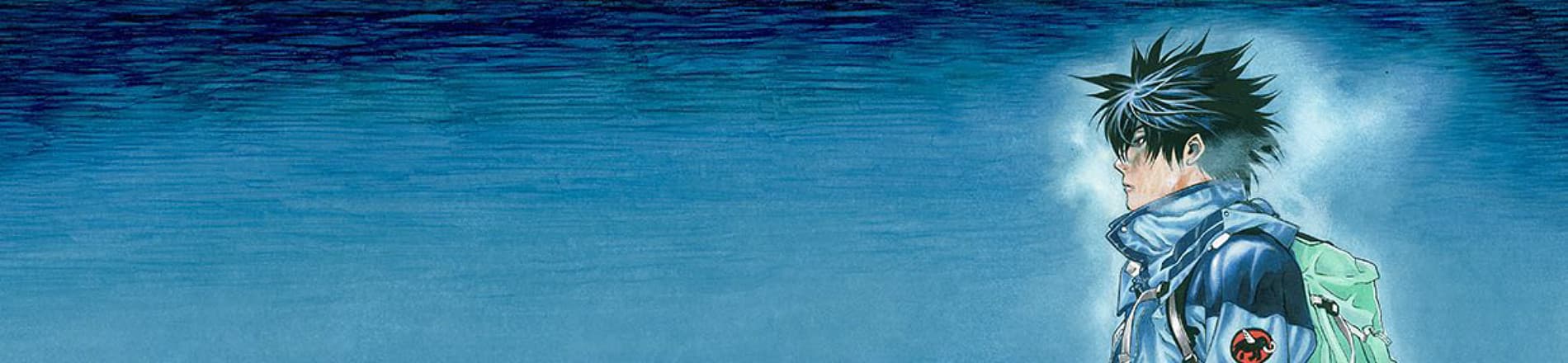
The Climber
a review by NapoJ
a review by NapoJ
La siguiente reseña está en Español e Inglés (traducida con el apoyo de DeepL).
La versión leída es la traducción al español por “EdoEPM” de “Soloist”.
La aclamada obra de Sakamoto comienza precisamente cuando Sakamoto está completamente a cargo de la misma. En principio sólo es el dibujante, es tras la partida de Yoshio Nobeta del proyecto en que él es establecido como guionista, desde ese punto la obra abandona las pocas rencillas convencionales que todavía tenía y se embarca en una narrativa más personal.
Lo cuál le venía ideal al enfoque del proyecto, la biografía típicamente se construye con retazos de la persona para construir una narrativa coherente en algo inmensamente complejo como es el testimonio de una existencia, y la obra tampoco es una excepción de la norma, la diferencia es que su valor no se construye en una presentación de personajes que veremos crecer paralelamente junto al protagonista, únicamente le tendremos a él de constante, a él y su soledad.
Es una convergencia ideal de temática con contexto, la soledad de Buntarou expuesta en el montañismo, una disciplina que tiene dos perspectivas respecto a la misma, por un lado, al ser humano en absolutamente solitario en entornos donde no le está permitido estar, a la vez que dada la naturaleza extrema de la práctica ir en compañía es lo normativo, cuidarse la espalda unos a los otros.

Y en esa línea se expone la historia, en el tira y afloja de Mori con su soledad y la necesaria e inevitable conexión con los demás. Ciudad y montaña se presentan paralelamente de entornos peligrosos para quién esté solo, la diferencia es la preferencia del protagonista por el segundo porque únicamente ahí es cuando más se encuentra consigo mismo.
Tampoco infiere que la montaña sea presentada como un entorno permisivo a sus visitantes, nuevamente, lo normal es la compañía porque es despiadada e imprevisible. La muerte es una constante en la historia, alpinistas son víctimas ante los elementos, accidentes e imprevistos, el mismo protagonista aún con su sobrada habilidad y actitud precavida, está expuesto a ese golpe fortuito del destino.
Ni está en una luz positiva la muerte, en la montaña la muerte es en soledad, la desaparición de un cuerpo o su desfiguración, no quedará o queda poco de ver para quienes quedaron atrás esperando su regreso. Está alineada con la intención principal, abordar la soledad sea en apreciación, especialmente en sus momentos contemplativos teniendo de fondo a sus ambientes naturales, más tampoco enaltecerla.

La obra está compuesta de diferentes saltos temporales, varias de las hazañas del protagonista no son presentadas, únicamente se constituye de momentos puntuales alrededor de su temática principal, representada sea en la escalada que es la conexión humana especialmente en los entornos más inhóspitos, la dificultad de establecimiento de la empatía con un desconocido, o la superación de las continuas traiciones. Hacia su recta final tiene un desarrollo esperable, dado a que las historias sobre soledad y conexión idealmente terminan en el mismo punto, sin embargo, tiene una cualidad que le destaca sobre similares, y es la aplicación de su dibujo.
Lo inmediatamente notable es el inmenso talento de Sakamoto como dibujante, en una historia con énfasis en los paisajes naturales, inhóspitos en inmensas alturas, casi se convierte en requerimiento una presentación a la altura de la exigencia, correspondido sobradamente por el artista. Sea en un sentido estrictamente naturalista, con la presentación de amplios paisajes con picos nevados, enormes muros de piedra, y la extensión de una vista sumergida en el horizonte, o en una apreciación poética en que el impresionante paisaje se entremezcla con la visión del protagonista, con nubes boreales, y un encubrimiento casi religioso dada la perfección del entorno.
Más hay otra genialidad del autor, y es la aplicación de metáforas visuales, correspondiendo a la existencia ilustrada como historia porque la diferencia con la novela es precisamente hacer una adaptación no de únicamente presentación, sino representación. Unos pocos ejemplos son Mori de monstruo reflejando su incomodidad en entornos abiertos, fantasmas que le acosan en la escalada o la división de su cuerpo en dos entre quien ansía la soledad y el que quiere regresar a la conexión que ha conseguido establecer.

Y en el mismo sentido, hay diferentes elementos narrativos que convergen en su narrativa, consiguiendo que una historia de soledad y deporte permita lecturas y reflexiones de sobrado interés para quien quiera extenderse en análisis acerca de la misma, sea en personajes o decisiones artísticas, representado en la importancia de cada elemento por nimio que parezca, la nieve que no deja ver sino lo inmediatamente cercano para acercar al lector a la experiencia por la que pasa el protagonista, o la visión en perspectiva de la montaña en el que sólo se distingue una cuerda en el muro de piedra.
También quiero destacar el énfasis realizado hacia el cuerpo porque usualmente es alabada la dedicación naturalista y detallada de sus paisajes, más también debería serlo su representación del cuerpo masculino tonificado para las extremas condiciones. Recordando a estatuas griegas y estudios anatómicos, la fuerza de los músculos, tensión de los tendones, reflejo del entrenamiento y dedicación son igual de impresionantes, especialmente cuando son utilizados en esos paneles metafóricos para la explicación de diferentes dilemas y emociones.
Tampoco se debe dejar pasar su sentido del posicionamiento y construcción de paneles, aplicando casi todas las técnicas existentes del cómic sea contraposición o consecución, denota el trabajo en planificar cada capítulo en sí mismo y dentro la historia. Nuevamente, para puntualizar todavía más la reflexión sobre el sentimiento inmiscuido del momento.

Y el cuidado detalle alrededor de la escalada, hay numerosas explicaciones técnicas acerca de los métodos y materiales usados profesionalmente, también en las diferentes formas de escalar en que se aprovecha cada elemento a su disposición, y de acotación personal, el interés que me genero sobre la poca cantidad de elementos a llevar en las subidas de alta exigencia con tal de aligerar el peso. En conjunto consiguen robustez sobre la credibilidad del relato.
Kokuo no Hito tiene merecido el reconocimiento que ha conseguido, es una representación en plena forma del medio, porque su cualidad no reside en únicamente la historia, al contrario, una narrativa conocida es elevada por la destreza de su escritor y dibujante al explorarla de forma íntima a través de símbolos visuales e impresionantes paisajes, volviendo todavía más cercano para el lector la reflexión porque no únicamente la habrá leído, la ha visto debido a la dedicación del dibujante, y si puso de su parte, también la ha vivido.
English
Sakamoto's acclaimed work begins precisely when Sakamoto is completely in charge of it. At the beginning he is only the artist, it is after the departure of Yoshio Nobeta from the project that he is established as the scriptwriter, from that point the work abandons the few conventional quarrels it still had and embarks on a more personal narrative.
Which was ideal for the approach of the project, the biography is typically built with snippets of the person to build a coherent narrative in something immensely complex as is the testimony of an existence, and the work is no exception to the rule, the difference is that its value is not built on a presentation of characters that we will see grow in parallel with the protagonist, we will only have him as a constant, him and his loneliness.
It is an ideal convergence of theme with context, Buntarou's loneliness exposed in mountaineering, a discipline that has two perspectives on it, on the one hand, the human being in absolute solitude in environments where he is not allowed to be, while given the extreme nature of the practice going in company is the norm, having each other's backs.

And it is along these lines that the story unfolds, in Mori's tug-of-war with his loneliness and the necessary and inevitable connection with others. City and mountain are presented in parallel as dangerous environments for those who are alone, the difference being the protagonist's preference for the latter because that is the only place where he finds himself.
Nor does it infer that the mountain is presented as a permissive environment to its visitors, again, the normal is the company because it is merciless and unpredictable. Death is a constant in the story, mountaineers are victims of the elements, accidents and unforeseen events, the protagonist himself, even with his great skill and cautious attitude, is exposed to this fortuitous blow of fate.
Neither is death in a positive light, in the mountain death is in solitude, the disappearance of a body or its disfigurement, there will be little or nothing left to see for those who were left behind waiting for its return. It is aligned with the main intention, to approach solitude in appreciation, especially in its contemplative moments, having its natural environments as a background, but not to exalt it.

The work is composed of different time jumps, several of the protagonist's accomplishments are not presented, it is only constituted of punctual moments around its main theme, represented either in the escalation that is the human connection especially in the most inhospitable environments, the difficulty of establishing empathy with a stranger, or overcoming the continuous betrayals. Towards its final stretch it has an expected development, given that stories about loneliness and connection ideally end at the same point, however, it has one quality that sets it apart from similar ones, and that is the application of its drawing.
What is immediately remarkable is Sakamoto's immense talent as a draftsman, in a story with an emphasis on natural landscapes, inhospitable in immense heights, almost becomes a requirement for a presentation at the height of the demand, more than reciprocated by the artist. Whether in a strictly naturalistic sense, with the presentation of vast landscapes with snowy peaks, huge stone walls, and the extension of a view immersed in the horizon, or in a poetic appreciation in which the impressive landscape is intermingled with the vision of the protagonist, with boreal clouds, and an almost religious concealment given the perfection of the environment.
But there is another genius of the author, and it is the application of visual metaphors, corresponding to the illustrated existence as a story because the difference with the novel is precisely to make an adaptation not only presentation, but representation. A few examples are Mori of monster reflecting his discomfort in open environments, ghosts that haunt him on the climb or the division of his body in two between those who crave solitude and those who want to return to the connection he has managed to establish.

And in the same sense, there are different narrative elements that converge in his narrative, achieving that a story of loneliness and sport allows readings and reflections of more than enough interest for those who want to extend in analysis about it, whether in characters or artistic decisions, represented in the importance of each element however small it may seem, the snow that does not let you see only what is immediately close to bring the reader closer to the experience that the protagonist goes through, or the perspective view of the mountain in which only a rope on the stone wall can be distinguished.
I also want to highlight the emphasis placed on the body because the naturalistic and detailed dedication of his landscapes is usually praised, but so should be his representation of the male body toned for the extreme conditions. Reminiscent of Greek statues and anatomical studies, the strength of the muscles, tension of the tendons, reflection of training and dedication are equally impressive, especially when used in these metaphorical panels for the explanation of different dilemmas and emotions.
Nor should we overlook his sense of positioning and construction of panels, applying almost all the existing techniques of the comic, be it contraposition or achievement, denoting the work in planning each chapter in itself and within the story. Again, to further punctuate the reflection on the immersed feeling of the moment.

And the careful detail around the climbing, there are numerous technical explanations about the methods and materials used professionally, also in the different ways of climbing in which each element at your disposal is used, and of personal note, the interest on the small amount of elements to carry in the climbs of high demand in order to lighten the weight. Altogether they achieve robustness on the credibility of the story.
Kokuo no Hito has deserved the recognition it has achieved, it is a representation in full form of the medium, because its quality does not reside only in the story, on the contrary, a known narrative is elevated by the skill of its writer and illustrator to explore it in an intimate way through visual symbols and impressive landscapes, making the reader even closer to the reflection because will not only have read it, has seen it due to the dedication of the illustrator, and if did his part, has also lived it.
11 out of 12 users liked this review
