────୨ৎ──── Opening Thoughts ────୨ৎ────
Going into Final Season Part one, I had no idea what to expect. The studio shift to MAPPA, the change in art direction, the time skip, the promise of war, it was a whirlwind of anticipation and uncertainty. This wasn’t just a continuation of Attack on Titan; it was a reinvention. Everything felt unfamiliar, from the new setting and characters to the ideological stakes. But what I didn’t expect was how quickly this season would pull me into the other side of the conflict and how chillingly human it would make the “enemy” feel. This part of AoT doesn’t just evolve the story, it turns it completely on its head.
────୨ৎ──── Story ────୨ৎ────
The story picks up four years after Season three’s cataclysmic events. Instead of returning to our familiar cast, we’re thrown into the heart of Marley, the supposed villains of the series. What unfolds is not a battle of good vs. evil, but a brutal exploration of nationalism, generational trauma, and cycles of violence. We’re introduced to a new batch of warrior candidates, Gabi, Falco, Udo, and Zofia, children raised to believe they must fight for redemption through servitude and war. It’s harrowing.
And then, Eren appears.
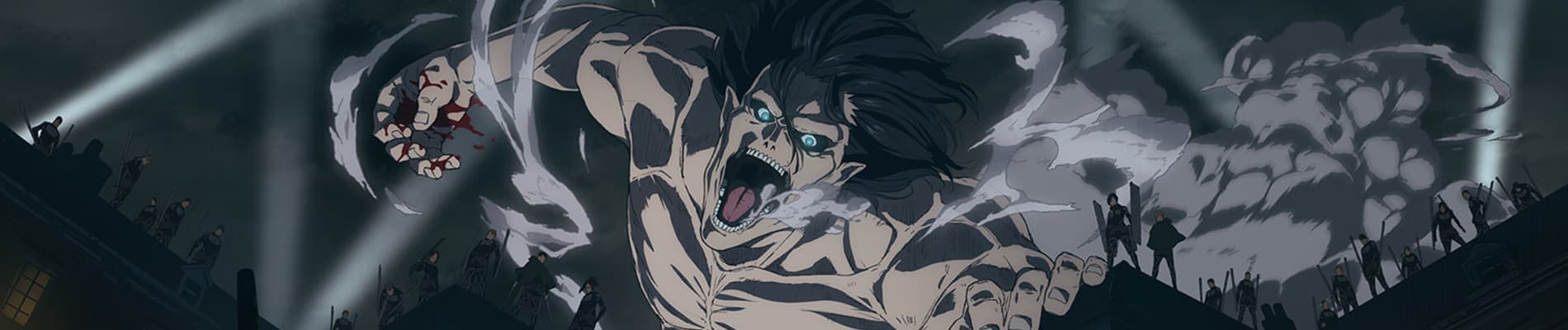
But he’s not the same boy from before. He’s colder, calculating, and terrifyingly distant. He’s become the monster the world feared. His declaration of war, followed by the annihilation of Liberio, isn’t framed as heroic, it’s revenge, raw and terrifying. The series asks, how far would you go to be free? What’s the difference between a soldier and a devil when all lines are blurred?
The pacing is more methodical than previous seasons, but that works in its favour. This is a war thriller now, not a survival horror. The series is narratively flipped on its head, experiencing ideological chess games, quiet moments of unbearable tension and of course we still get those explosive battles. But it’s not about Titans anymore, they are used to teach us the weight of history. And when the threads from past seasons, Zeke’s true plan, the power of the Founding Titan, Marley’s desperation, start intertwining, it feels like the final pieces of a massive, tragic puzzle snapping into place.
────୨ৎ──── Characters ────୨ৎ────
This part is a character study for everyone. Eren’s transformation is perhaps the most jarring. He is no longer our clear-cut protagonist; he’s a walking paradox of pain, guilt, and resolve. You don’t know whether to root for him or fear him, and that’s intentional.
Falco is a standout. He’s earnest, gentle, and the emotional heart of this part. Watching him slowly realize the truth about Marley, Eldia, and Eren is heartbreaking. He’s what Eren could’ve been, had he not been consumed by vengeance. His bond with Gabi is a highlight, especially as Gabi herself spirals into denial and hatred. Gabi is hard to like at first, but she’s written incredibly well, her worldview is realistic, conditioned, and horrifying in its own way. Her growth (and her violent actions) feel earned.
Zeke is fascinating, chillingly calm, manipulative, and deeply tragic. His euthanization plan is horrifying, but his motivations are disturbingly human. Levi and Zeke’s dynamic continues to be electric, with Levi’s fury barely held together.
Meanwhile, Armin and Mikasa struggle with Eren’s descent. Armin’s quiet conflict and Mikasa’s heartbreak add emotional weight to an already heavy arc. Sasha’s death hits hard, and Jean and Connie’s reactions remind us just how far these characters have come.
────୨ৎ──── Visuals & Sound ────୨ৎ────
MAPPA had enormous shoes to fill, and while there’s a notable shift in art direction, they deliver where it matters. The aesthetic is darker, grittier, matching the tone of this new world order. Some CGI (notably the Titans) got criticism, but honestly? The direction of the choreography and emotion carry the visuals just fine. There are of course standout scenes, Eren’s declaration of war, the rooftop battles, the airships and Levi’s ambush on Zeke are all UNFORGETTABLE! The use of subdued colours and shadows keeps a constant feeling of tension. Characters look older, more worn. It's a visual evolution.
And then there’s the soundtrack, incredible. Sawano returns with Kohta Yamamoto, and their combined force brings new depth. Tracks like “Ashes on the Fire,” “Warrior,” and “Splinter Wolf” are masterclasses in atmosphere. The OP, “My War” by Shinsei Kamattechan, is chaotic and symbolic, perfectly capturing the descent into ideological madness. The ED, “Shock,” is melancholic and visually haunting.
────୨ৎ──── Enjoyment & Pacing ────୨ৎ────
This part wasn’t the high-octane sprint of Season 3 Part 2, it was a slow burn. And I loved that. It gave space to reflect, to sit in discomfort. The shift to Marley was jarring, but once the pieces started aligning, I couldn’t look away.
Every episode was filled with dread. Who would die? What was Eren planning? What was the truth? The pacing might frustrate fans expecting wall-to-wall action, but if you enjoy morally complex storytelling, political tension, and character evolution—it’s absolutely gripping.
────୨ৎ──── Final Thoughts ────୨ৎ────
Final Season Part 1 is a bold, haunting shift in the story’s tone and direction. It’s no longer about humanity vs. Titans—it’s about the ideologies that make monsters of men. It asks hard questions with no easy answers. It humanizes the enemy, then turns our hero into one.
It’s not comfortable. It’s not clean. But it’s necessary.
This part sets the stage for a devastating finale, and it does so with maturity, nuance, and narrative courage. For some, it might be too different. For me, it was a masterclass in evolution.
────୨ৎ──── Final Score ────୨ৎ────
Story: 9/10
Characters: 9.5/10
Visuals: 9/10
Enjoyment: 10/10
Overall: 9.4/10
17 out of 21 users liked this review