
~~~~~~ Disclaimer - This Review has Spoilers.
I also recommend skipping to the 5 Stages of Grief section.
- - - -
This story has a lot of impactful and relatable themes, and even though I think the story is rather simple, it's the abundance of dark yet relatable themes that make Takopi's Original Sin so good. For this review, I won't speak about Takopi himself too much. I'll go over some simple themes, and then I'll go over the most significant one in my opinion.
- - -
Everybody has issues, and when you watch this series, that's one of the first things you realize. More often than not, people don't do things without a reason. Whether it be crying, or bullying someone else, or even more positive things, like going out with friends. Everyone does something for a reason, and no matter how positive a life is, that person probably has issues.
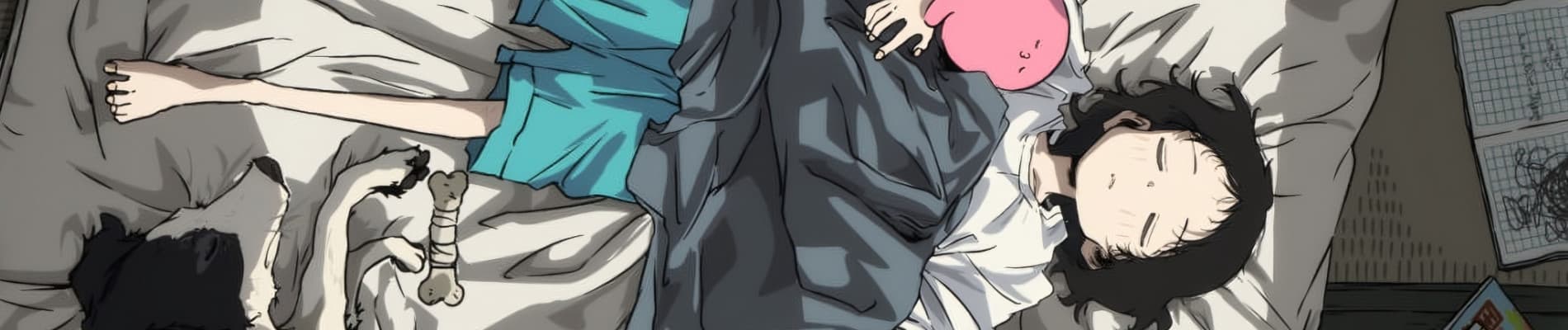
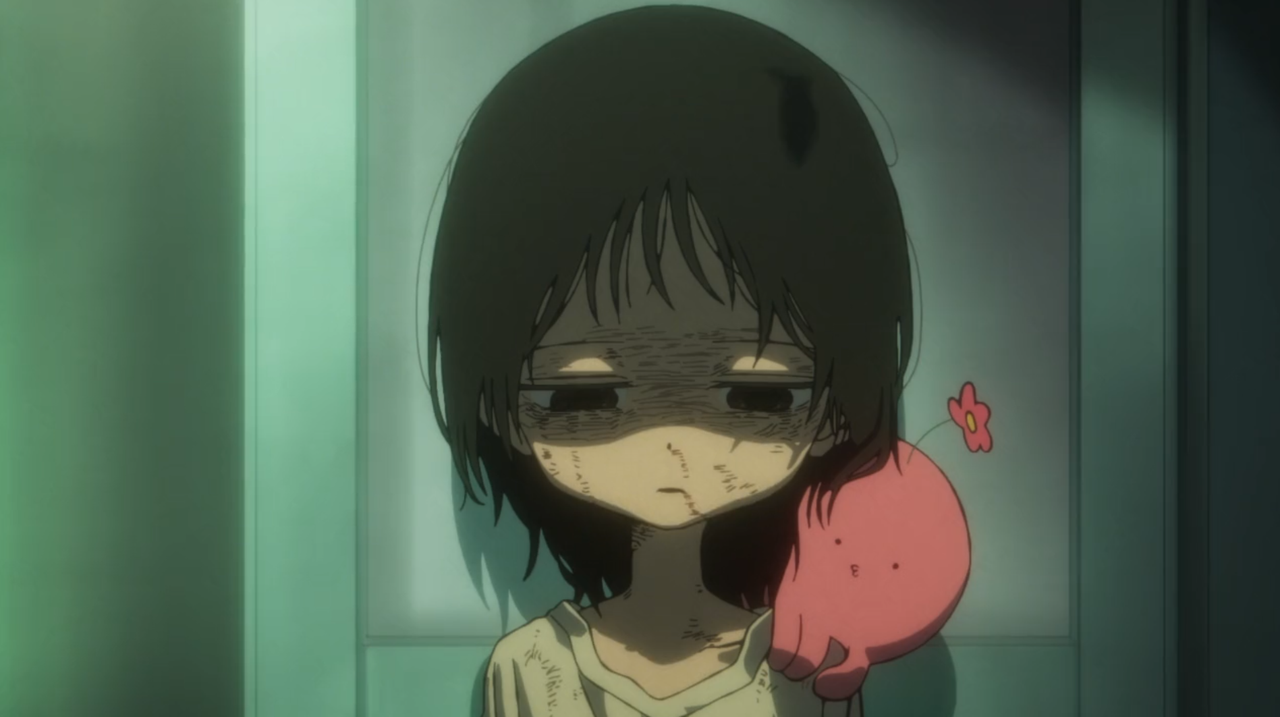
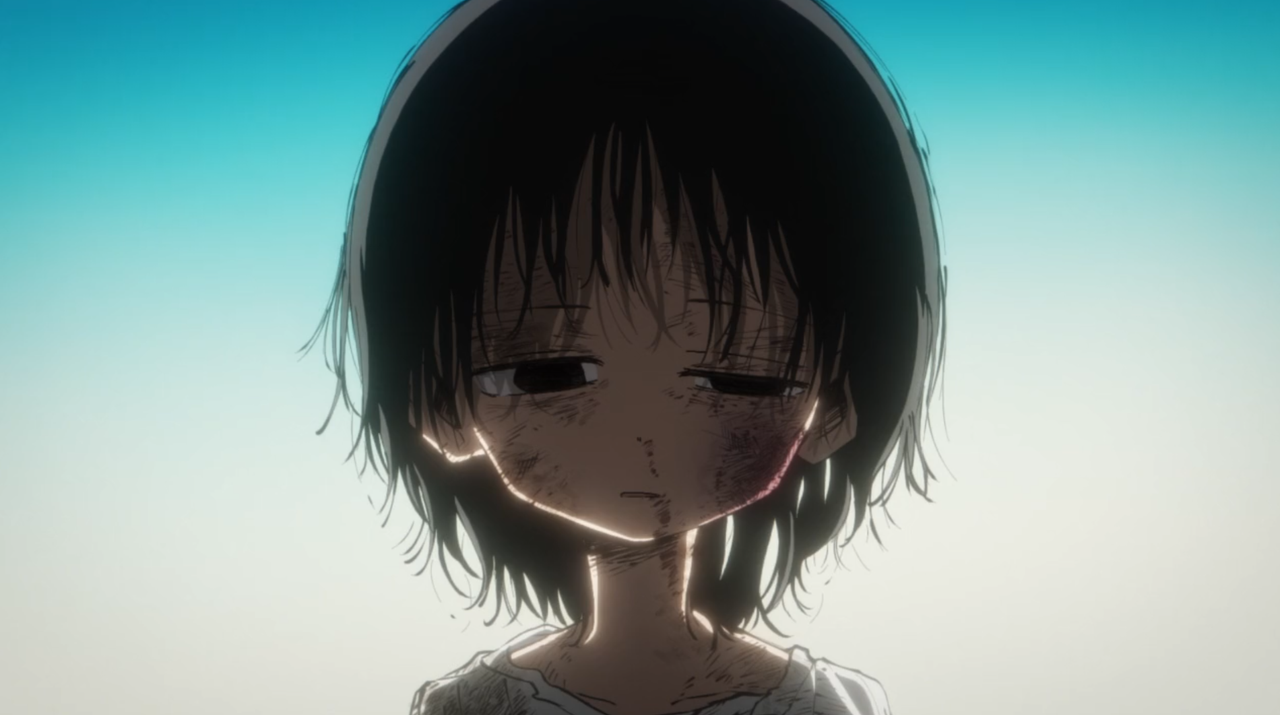
This series displays these two themes in several ways, but mostly in the form of the relationship between Shizuka and Marina. Shizuka is a rather laid-back person, so laid-back that she does nothing about getting bullied. Not only because she is an idiot, but also because she has nobody to run to. On Shizuka's end, her mother is somewhat of a prostitute, which of course is a night business; that being said, she's rarely home besides in the mornings. And due to past issues, Shizuka's parents are divorced; that being said, she only has one "friend," which is her dog named "Chappy", and her dog is the only thing that she's emotionally attached to. Marina is actively bullying Shizuka in & outside of school, not just verbally, but physically, so much so that it's practically psychological torture. Day after day, Shizuka comes home wounded and scarred, and her mother doesn't really care much. But as long as Shizuka has Chappy, she can endure the pain.
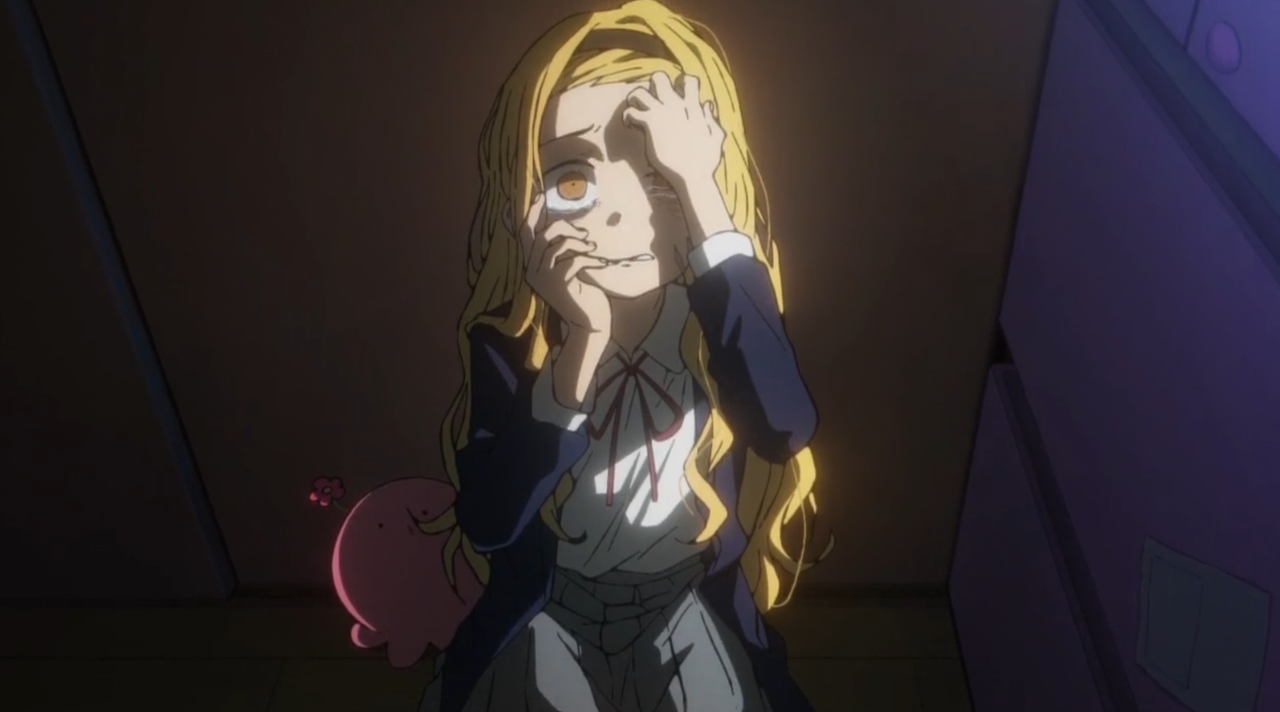
As for Marina's issues, her issues are pretty much tied to her mother's issues, which brings up the theme that kids are influenced by their parents' actions. Marina, at times, is physically assaulted by her mother, and many of her negative tendencies, especially the ones that she uses to bully Shizuka, are derived from her mother. Ever since Marina's father had left to seemingly get down with Shizuka's mom, Marina's home life has become very negative, and it has led to these conditions. Marina, who is a much more expressive and popular girl than Shizuka, copes with these issues by bullying Shizuka, although Marina genuinely believes that she is delivering some kind of "justice" by making Shizuka suffer for the discord in Marina's family. A lot of this starts to make more sense when we figure out Takopi's from the future and whatnot, although I'm not gonna dive into that.
 img250 (https://i.postimg.cc/Kc0cYQX0/marina-2.png)
- - - -
Enough beating around the bush, that was mostly a recap. I really want to get to my main point, which is more or less the reason I made the review.
img250 (https://i.postimg.cc/Kc0cYQX0/marina-2.png)
- - - -
Enough beating around the bush, that was mostly a recap. I really want to get to my main point, which is more or less the reason I made the review.The 5 Stages of Grief
Perhaps on purpose, perhaps not, but a major theme of this series is the 5 stages of grief, a well-known concept, but not many anime break it down like this, although one might say Eva, but that's a talk for another day. It's well known that these stages aren't always in order; the general order is usually: Denial, Anger, Bargaining, Depression, and Acceptance. Although I'll go over these stages for Shizuka's case.
- - -
Depression - In the first 5 minutes of Takopi's Original Sin, you find out Shizuka is getting bullied, 7 minutes later you find out she's depressed, and 3 minutes after that you see her commit ~~suicide~~. Although she's suffering from the start, the phases of grief really do start when she loses her dog Chappy. After this, her entire demeanor changes; she stops talking to others, including Takopi, she has a dead look in her eyes (even more so than before), and she doesn't lift her head up.
Denial - After Marina is accidentally murdered, Shizuka's entire demeanor changes once again. She suddenly becomes weirdly positive, and she has a shine in her eyes, and most importantly, after praising Takopi, Shizuka says
> "Magic is real, so I bet that means Chappy's still alive too."
A ray of hope shone upon her, and from this point on, you'll realize that Shizuka becomes a little deluded. She begins to speak as if she's mentally deranged. At this point, it's become her sole goal to go to Tokyo and see her dad, where she believes Chappy is residing, not only that, but she wants to catch up with her Father as well. This goal is so significant to her that she's willing to do anything to go to Tokyo. This leads her to unknowingly manipulate a love-struck Azuma into devising a plan to get to Tokyo, and get away with the murder that Takopi committed. But Shizuka is so convinced that Azuma would do anything for her that she's willing to have Azuma turn himself in so that Shizuka can freely go to Tokyo without the police suspecting anything.
Anger - Being failing to find Chappy and being neglected by her father, Shizuka starts to not only deny, but rage as well. This leads her to push away the only other person she had, that being Takopi. She begins talking like a lunatic, saying she'll do things like cut up the stomachs of her father's children to see if they ate Chappy. And although I think it's kind of a silent rage, the anger is definitely there. And we even see in a newspaper that Shizuka did attempt to assault the kids.
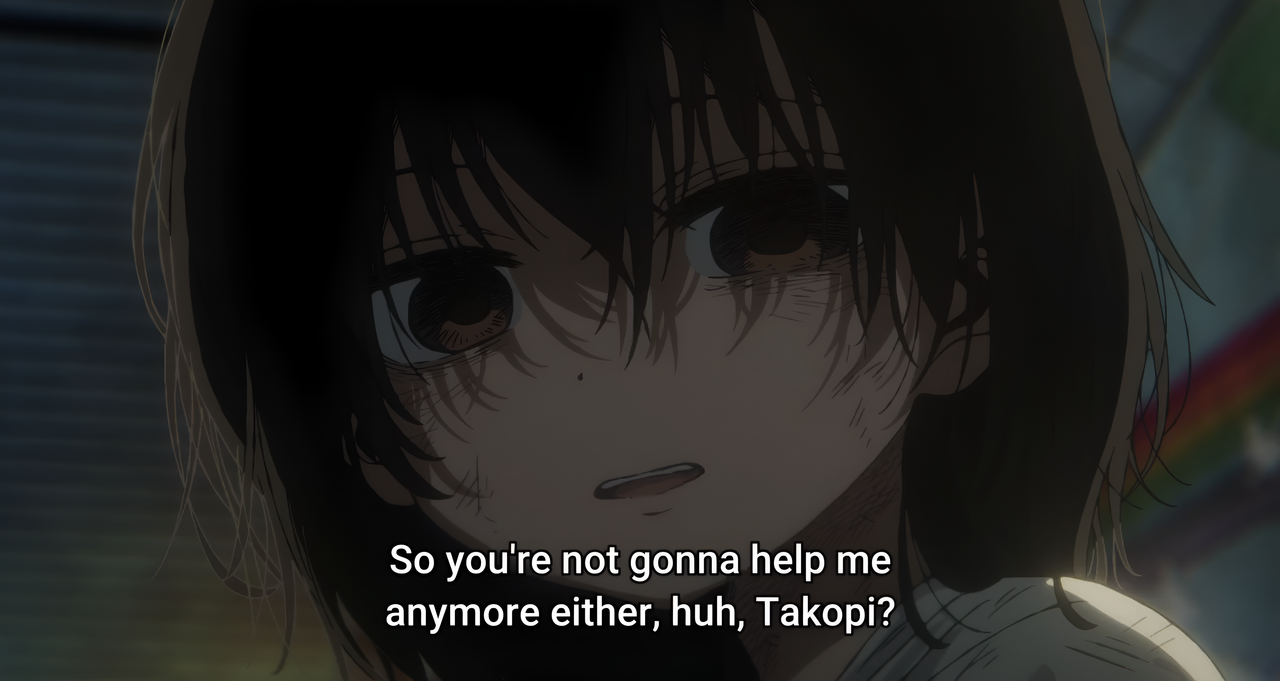
Bargaining & Acceptance - In the final episode "To All of You in 2016", it really all comes together.
▶ Video Shizuka expresses all her troubles and starts asking both herself and Takopi, > "What was I supposed to do?"As I said earlier, Shizuka is pretty laid back; that being said, she's aware her life is messed up, but it wasn't until now that she verbally expressed how messed up her life is. This is because she believes that nobody actually cares about her. But it's also later in this moment that she recognizes Takopi as a friend, and when Takopi sacrifices himself to turn back the clock, she cries and feels emotion for Takopi, and this is the first time we see her emotionally attached to anything besides Chappy.
It's easy to see the Acceptance in the final episode, although the bargaining part is definitely not as clear, I believe it's there. This scene is more or less her asking, "What should I have done?", "What other choices did I have?". And these are clear signs of mental bargaining.
- - -
Conclusion: My reviews are never easy on the eyes, and I rant a lot. But I believe some series need ranting to be properly reviewed, Takopi's Original Sin is one of those. I really love media that have a lot of themes that you can pick apart and relate to, thus why I like Look Back so much. Takopi is the first anime I've seen do it like Look Back, but the difference is that Look Back is a much more positive movie. I'd argue that Takopi is just as good as Look Back in terms of having an abundance of quality yet simple themes.
I'd like to finish with saying, I think the message of Takopi's Original Sin is that - There is no easy way around somebodies problems, but you can mature pass them. And this is exactly what the ending of the series shows us.