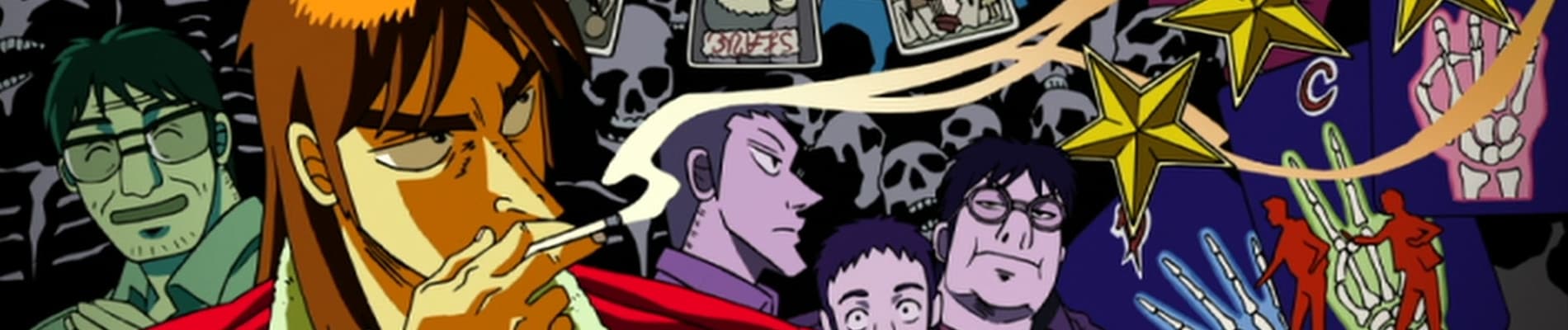
Kaiji: Ultimate Survivor’s striking impact is difficult to comprehend until you’ve experienced it firsthand. While it may appear to be a typical gambling anime, centered around cards, bets, and schemes, the reality is that Kaiji’s journey is not about financial gain. Instead, it delves into the suffocating burden of poverty, powerlessness, and the devastating consequences of a single misstep. This profound relatability is what makes it so profoundly impactful.
The series begins with a simple yet profound premise: Kaiji Ito, a low-income individual burdened by debt and devoid of purpose or pride, embodies the struggles of countless people in the modern world. Overworked, underpaid, trapped in loan debt or credit card bills, or confined to unfulfilling careers, Kaiji’s plight resonates with audiences. Unlike the conventional underdog genius motif, Kaiji is portrayed as a reckless, emotional, and gullible character. This authenticity draws viewers into his world, making him feel real and relatable.
In Kaiji, not all gambles are mere games; they are miniature societies. The initial arc, featuring the “restricted rock-paper-scissors” on the Espoir ship, initially seems absurd. However, it soon transforms into a vicious social experiment that explores trust, betrayal, and survival. Humans unite and stab each other at the back, while others cling to unseen hope only to fall victim to the harsh reality of isolation and the realization that no one is watching over them. This chilling spectacle unfolds with a sense of eeriness, as it blurs the line between fiction and reality, mirroring the distorted amplification of real-world occurrences.
An example is the workplace. Corporations make employees compete with each other, prioritizing survival over stepping over colleagues to climb the corporate ladder. Another example is the culture of lotteries, where individuals spend money on slim chances, desperate for an escape. Kaiji’s world embodies these extremes: capitalism at its worst, with the wealthy arranging games for entertainment while the poor devour each other to survive. The depressing reality is that we’re not far from this in our own lives.
The tension in the show makes it unforgettable. The anime stretches scenes to unbearable lengths, showing Kaiji running through his mind, drenched and his heart racing, while the narrator belches the stakes into your ears. The show has a catchphrase, “zawa… zawa…,” that comes to mind during such moments. It’s not a word; it’s a sense—the buzzing, suffocating air of being observed, judged, and trapped. It’s genius because you can feel it in your chest, as if you’re gambling away your life.
Kaiji’s character is intriguing. He’s not always good; he sobs, he hates, and he strikes back. However, his frailty is what makes him inspiring. He represents the idea that even someone oppressed by the system can struggle and fight back, albeit temporarily. His victories aren’t about being smarter than others; they’re about enduring longer, thinking outside the box, and resisting the temptation to become a monster when others have already succumbed. It’s that theme of maintaining compassion and morality in a world that often makes you think it’s a weakness that makes Kaiji so special.
The art style and direction are also noteworthy. Fukumoto’s designs are rough—pointy noses, exaggerated features, and ugly mouths—and while some beginners might have been deterred by this, it’s entirely fitting. This isn’t meant to be aesthetically pleasing. It’s the ugly, perverted face of greed and survival. The anime amplifies this by exposing it through heavy narration, exaggerated sound effects, and a slow pacing that is unbearable in the best sense. You don’t simply watch Kaiji; you feel it.
After watching Kaiji: Ultimate Survivor, I learned the ease with which ordinary individuals can be manipulated when desperate. Whether it’s debt, jealousy of others, or simply a lack of awareness, the boundary between “I would never do that” and “I have no choice” blurs thinner than we’d like to admit. That’s what makes Kaiji frightening—it makes you question what you would do in his shoes. Would you turn him in to save yourself? Would you risk everything for a slim chance of freedom?
In that sense, Kaiji is not just an anime; it’s a reflection. It shows us the injustice of life, how systems are designed to keep people at the bottom, and how we can survive by sacrificing parts of ourselves that define who we are. But even that couldn’t defeat Kaiji. He gets up, he trips, but he keeps going.
40 out of 41 users liked this review