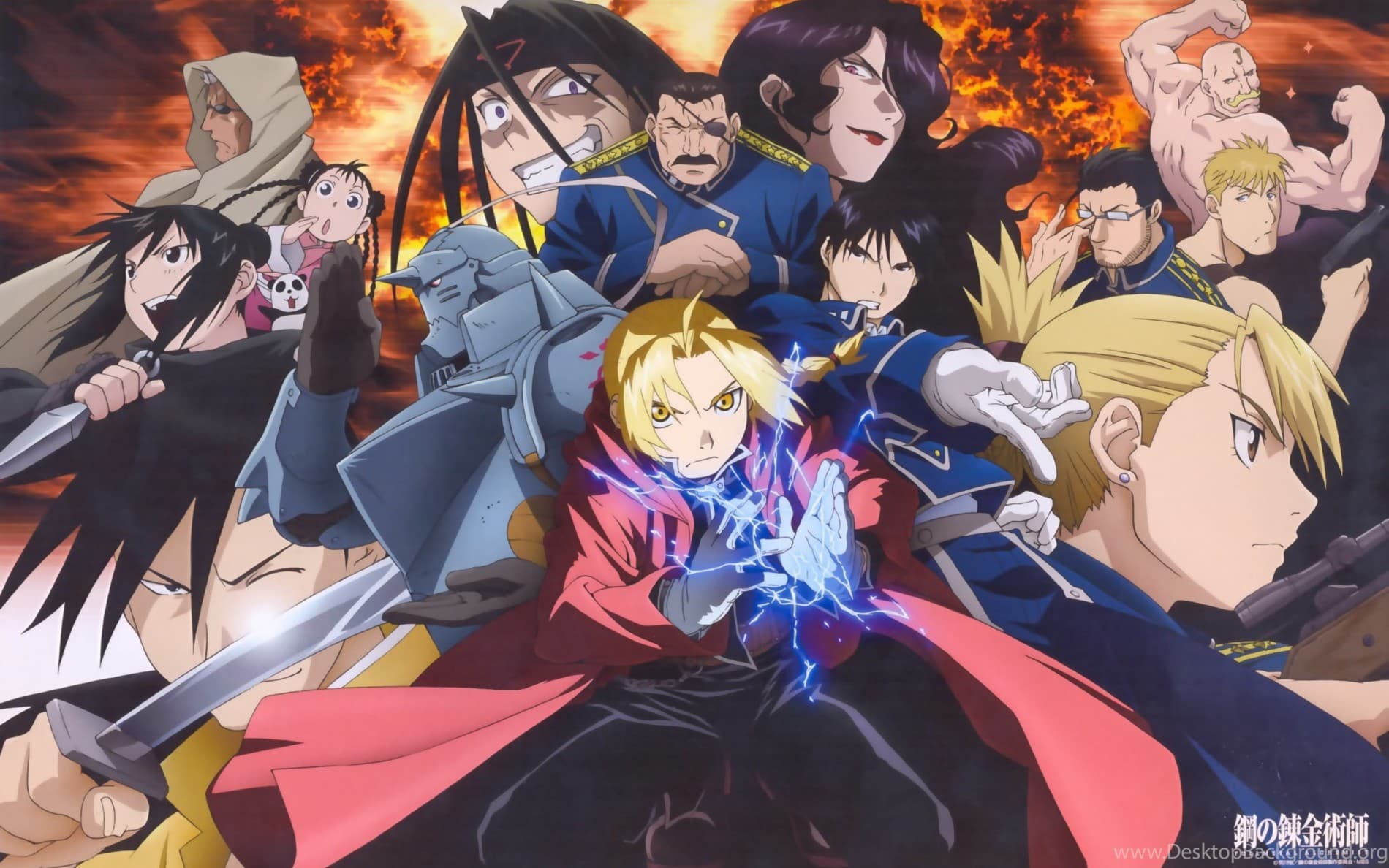
Truly a masterpiece. The story, the characters, the humor, and the deeper philosophical questions that drive it all, everything comes together beautifully. I first watched this about eight years ago. Back then, I liked it, but I didn’t fully understand why it was so highly praised. Now, rewatching it, I see it differently. Maybe it’s a sign that I’ve grown over the years, at least enough to truly appreciate what this anime is.
This is a near-perfect blend of storytelling, philosophy, and emotion. It explores what it means to be human, the search for meaning, and the true cost of sacrifice. Set in a world governed by the law of Equivalent Exchange, its system of alchemy feels both logical and deeply symbolic, a reflection of moral balance and consequence. The characters are very likeable, the villains complex and compelling, and the humour never out of place, making you laugh one moment and tear up the next.
The Elric brothers are incredibly likeable, and their journey of growth and redemption is one of the most beautiful parts of the story. Their ideals may seem childish or naïve, refusing to kill, and rejecting the use of the Philosopher’s Stone to regain their bodies, but that innocence is exactly what defines their strength. Their unwavering resolve becomes the moral backbone of the series, guiding them to the truth that allows Edward to finally restore Alphonse. It’s that same purity of conviction that helps prevent Mustang from losing himself to vengeance. In the end, Fullmetal Alchemist: Brotherhood reminds us that “Equivalent Exchange” is not a perfect rule, because nothing, no matter how great the cost, can ever equal the value of a human soul.
Specially but the main antagonist, The father, (or Dwarf in the Flask). He stands out as a reflection of humanity’s deepest misunderstanding of itself. His story is about emptiness, pride, and the illusion of perfection. In one superb scene at the end we are shown a scene where he says, wile still in the flask; “If it’s not too much to ask, I’d like to get out of this flask.” Though he eventually escapes his glass prison and attains godlike power, he never truly leaves it. His desire for knowledge and control, his rejection of human weakness, and his separation from his own sins show how deeply he misunderstood what it means to live. By trying to become more than human, he became less. In the end, he’s defeated by the very thing he despised, humanity, because he could never grasp its true strength; imperfection, connection, and creation.
The Homunculi are among the best-written villains in anime, each embodying one of the Seven Deadly Sins and reflecting the flaws Father tried to cast away. Born from human weakness yet stripped of humanity’s ability to grow, they each suffer from a desire they can’t understand. Envy despises humans because he secretly longs to be one. Lust seeks satisfaction but never fulfilment. Wrath fights for control and order but loses himself to rage. Sloth runs from effort but suffers from endless fatigue. Pride believed himself greater than all others, but in the end, his illusion of superiority shatters as he’s reduced to a helpless child. Greed, the most “selfish,” is the only one who becomes truly human by sharing his soul with Ling. In the end, he understands that what he really wanted wasn’t wealth or power, it was companionship and belonging.
The story’s world-building is also extremely good. Amestris is a nation built on lies and driven by a corrupt government, where even good people unknowingly serve a dark purpose. The story doesn’t shy away from the moral weight of war or the cost of obedience. Through characters like Scar, whose journey from vengeance to atonement is one of the most powerful in the series, it shows how hatred only breeds more hatred. The cycle can’t be broken through revenge, but through understanding and change. In the end, that’s the heart of Brotherhood: the belief that the world can only move forward when people choose to make it better.
The ending is one of the best, if not the best, conclusions to any anime or show I’ve seen. It ties every story thread together with purpose and emotional weight, delivering an ending that feels both earned and very satisfying. I couldn’t have asked for a more perfect conclusion. For me, it stands alongside Avatar: The Last Airbender as one of the best examples of how to end a story complete, meaningful, and true to its characters.
39 out of 41 users liked this review