Goodbye, Eri
a review by NapoJ
a review by NapoJ
La siguiente reseña está en Español e Inglés (traducida con el apoyo de DeepL)
La versión leída es la licenciada al español por “Norma Editorial”
La publicación del One Shot en 2022 fue directamente en MangaPlus, en un día consiguió más de 2 millones de visualizaciones, recalcando lo evidente. Fujimoto se ha convertido en uno de los autores referentes de la nueva generación, capaz de reunir a millones dispuestos a leer su obra más reciente. Esa fortuna también ha correspondido en la adaptación de sus obras, únicamente faltando la presente de la cuál hay rumores de una futura película (inevitable considerando la excelente recepción de Look Back).
Hasta el momento sus temáticas recurrentes han sido el esfuerzo, amor en condiciones impredecibles, hermandad o validación, también su introspección respecto al arte en el sentido de crear; en este One Shot vuelve a reunir varias de esas ideas pero está vez tiene algo particular, no sólo aborda la creación del arte sino que da una respuesta a la razón para esa dedicación a la par que nos advierte que aún en la genuidad de los sentimientos dispuestos en la creación, se sigue construyendo una ficción.
Es bien conocida la afición de Fujimoto por el cine, el mismo Opening de su obra más famosa tiene múltiples referencias a diferentes clásicos; Sayonara Eri es la que mejor demuestra esa pasión de Tatsuki. La película es el elemento creativo central de la historia, por medio de la elaboración de películas caseras para ahondar en los sentimientos del protagonista y construir un tributo para honrar a la memoria de a quien fue dedicada, más nos recuerdan que una película es un constructo, no una recreación realista sino una ideal.

Por lo tanto, la buena película es manipulativa en los sentimientos del espectador, la fotografía para el encuadre en el enfoque donde la cámara quiere que miremos. Fujimoto le gusta el cómic como medio, ha desarrollado un estilo que utiliza a favor sus características, y en una historia que rinde homenaje al cine, su fuerza narrativa está en el formato de sus paneles.
La conformación de sus paneles es variada conforme a la intención de la escena, en la construcción de secuencias recurre al 4Koma (4 paneles) organizados verticalmente, para momentos especialmente significativos sólo 1 o 2 paneles bastan para toda la página, el detalle se centra en el dibujo, no en el orden. Y este sentido no puede trasladarse a una película (al menos en sentido tradicional, espero su adaptación sepa a su manera trasladarlo correctamente). Esas largas secuencias donde sólo cambian ciertos aspectos son “frames” claves de una escena, en los cuáles se focalizan los manierismos del personaje, detalles especiales que conforman quien es a través de los cambios mínimos, exhibidos como sólo el cómic lo permite.
Y en su dibujo aplica diferentes recursos para reforzar el aspecto cinematográfico, utilizar en su mayoría una primera persona a modo del lente de una cámara, con efectos Blurry y variación de ángulos que hacen sentido en un ejercicio de edición. En la visión general de su narrativa tiene diferentes instantes en que nos hará reevaluar lo que hemos aprendido hasta entonces, donde terminó la ficción y empezó la realidad. Especialmente porque sucede fuera del plano, donde la cámara no está viendo y que sólo ocasionalmente llegamos a conocer. Nuevamente, el refuerzo de que se nos ubica y muestra donde quieren que veamos.

Los personajes no son excepcionales, he ahí su excepcionalidad. Frente a la cámara si pueden adoptar otra actitud más misteriosa, interesante o atractiva, para los propósitos de que la historia sea interesante para quien la vea. Por eso mismo puede que en realidad no conozcamos a la persona, sino al personaje construido. Y aún así hay un arco del protagonista aprendiendo, no huir cuando no debería sino valerse a su manera de lo que tenga a su disposición para el entendimiento de su contexto.
En sí la estructura se ha beneficiado de la conocida imprevisibilidad de Fujimoto, ha jugado a su favor porque utiliza apropiadamente la narrativa para su propósito “mayor”. En la relectura podemos apreciar todavía más esa construcción expectante ante lo próximo que va a ocurrir, fijándonos en cada detalle y cómo iban formando gradualmente esa revisión sobre lo narrado.
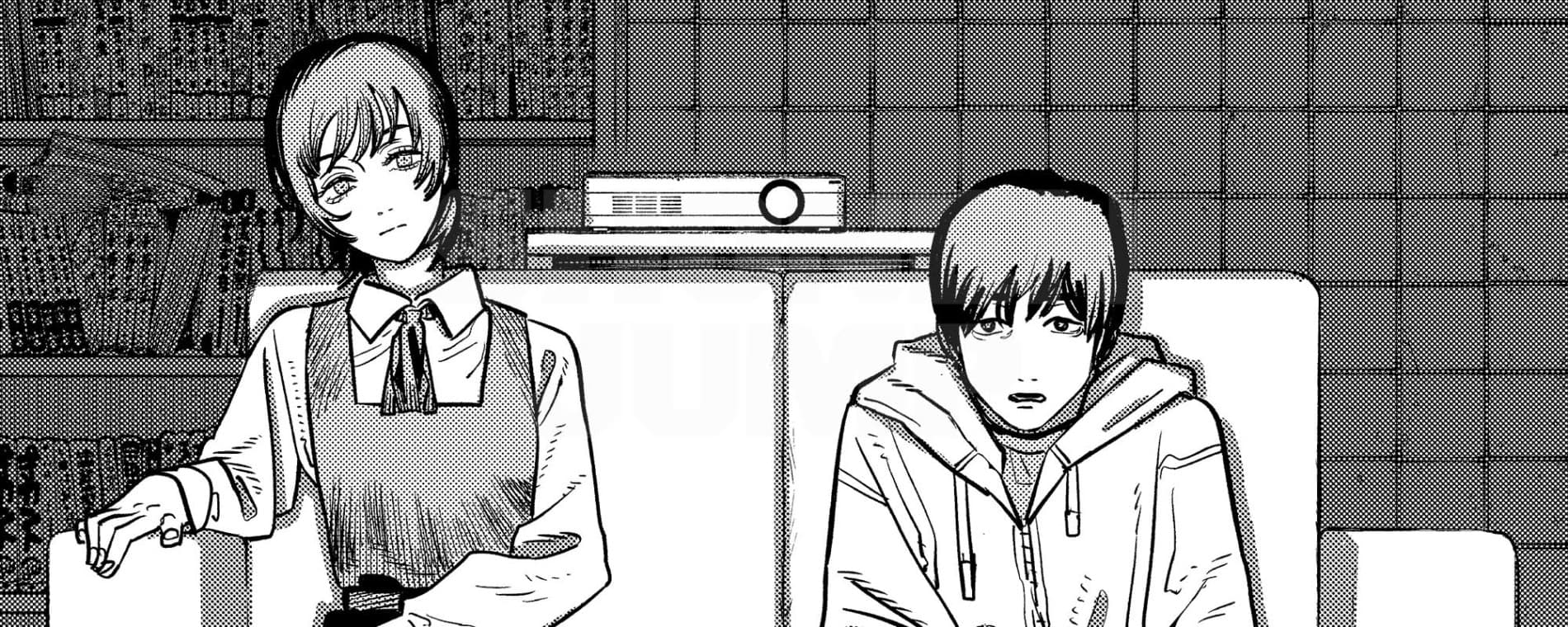
Fujimoto vuelve a superarse en su dibujo, las permisiones del tiempo dado el formato le ha permitido ser más detallado y experimental, especialmente sigue mejorando las expresiones de sus personajes, en poco tiempo le he convertido en referente en cuánto al ejercicio de plasmar una basta variedad de sentimientos en el rostro. El One Shot tiene una duración perfecta, termina cuando debería antes de volverse redundante o perder su fuerza, y especialmente quiero destacar su espectacular portada que resume perfectamente la intención de su historia.
Porque el arte como tributo es también una forma selectiva de recuerdo, de cómo queremos visionar cierta situación frente al lente; formando así una ficción, la cuál queremos, y a veces damos, por verdadera.

English
The release of the One-Shot in 2022 was directly through MangaPlus, and in just one day it surpassed 2 million views, a clear testament to the obvious. Fujimoto has become one of the most representative authors of the new generation, capable of gathering millions eager to read his latest work. That success has also carried over to the adaptations of his works, with only the current one pending, surrounded by rumors of a future film (which seems inevitable, considering the excellent reception of Look Back).
So far, his recurring themes have been effort, love under unpredictable circumstances, brotherhood or validation, and his introspection regarding art in the sense of creation itself. In this One-Shot, he brings together many of those ideas once again, but this time with something particular, he not only addresses the creation of art, but also provides an answer to the reason behind that dedication, while warning us that even in the genuineness of feelings embedded in creation, what’s being built is still fiction.
Fujimoto’s fondness for cinema is well known, even the opening of his most famous work contains multiple references to various classics. Sayonara, Eri is the piece that best showcases Tatsuki’s passion for film. The movie is the central creative element of the story, through which homemade films are crafted to delve into the protagonist’s emotions and build a tribute honoring the memory of the person to whom it was dedicated. Yet, it also reminds us that a movie is a construct, not a realistic recreation, but an idealized one.

Therefore, a good movie is manipulative in how it steers the viewer’s emotions, its cinematography, through framing and focus, directs our gaze precisely where the camera wants us to look. Fujimoto loves comics as a medium and has developed a style that fully embraces its characteristics; in a story that pays homage to cinema, his narrative strength lies in the format of his panels.
The composition of his panels varies according to the intention of each scene. In constructing sequences, he often uses the 4Koma structure arranged vertically, while for particularly meaningful moments, one or two panels may fill an entire page. The emphasis lies in the drawing itself, not in the order. This effect cannot be replicated in a movie, at least not in the traditional sense (I only hope its adaptation manages to translate it in its own way). Those long sequences where only certain aspects change are key “frames” of a scene, focusing on the character’s mannerisms, small, distinctive details that define who they are through minimal changes, portrayed as only comics can.
In his artwork, Fujimoto employs different techniques to reinforce the cinematic feel, often using first-person perspectives as if through a camera lens, along with blurry effects and varied angles that make sense as part of an editing exercise. Throughout his narrative, there are moments that force us to reevaluate everything we’ve learned so far, to question where fiction ended and reality began. Especially since those moments occur off-screen, beyond what the camera sees, and which we only occasionally come to know. Once again, this reinforces how we are positioned and shown only what the creator wants us to see.

The characters are not exceptional, and therein lies their exceptionality. In front of the camera, they can adopt a more mysterious, interesting, or appealing demeanor, serving the purpose of making the story engaging for the audience. Because of that, we may never truly know the person, only the constructed character. Yet, the protagonist still experiences an arc of growth, learning not to run away when he shouldn’t, but instead to make use of whatever he has at his disposal to understand his circumstances.
Structurally, the work benefits from Fujimoto’s well-known unpredictability, something that plays to his advantage, as he uses narrative itself to serve a “greater” purpose. Upon rereading, we can better appreciate that slow, deliberate buildup that keeps us anticipating what’s next, noticing how every detail gradually forms that reflection upon what has already been told.
Fujimoto once again surpasses himself in his art. The time allowed by the format has let him be more detailed and experimental, particularly improving the way he expresses emotions through his characters’ faces. In a short time, he’s become a benchmark in depicting a vast range of emotions visually. The One-Shot has a perfect length, it ends exactly when it should, before becoming redundant or losing impact. And I especially want to highlight its spectacular cover, which perfectly encapsulates the essence of its story.
Because art, as a tribute, is also a selective form of memory, a way of framing how we wish to see a certain situation through the lens; thus forming a fiction we want to be true, and sometimes even take as truth.

27 out of 27 users liked this review
