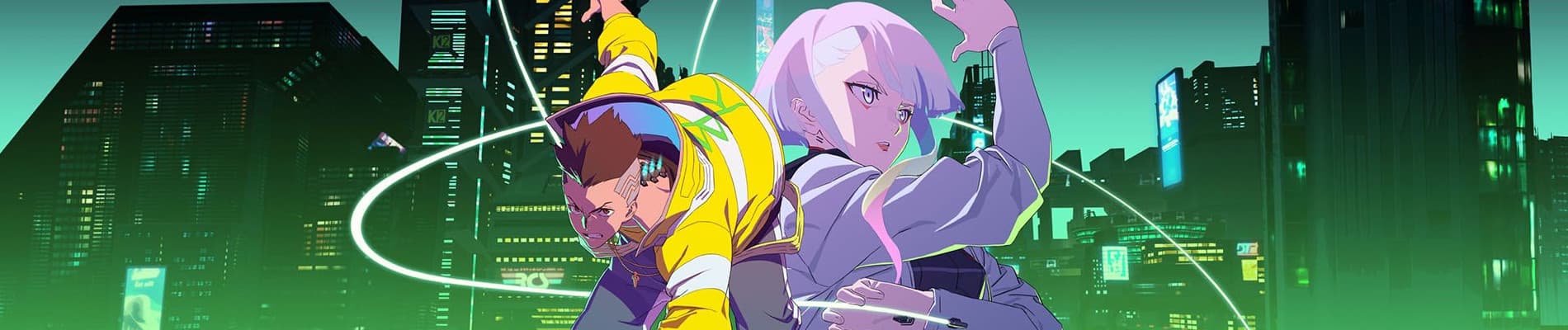
The internet did not prepare me for this at all. I kept side-stepping it for months after Arcane fried my brain - I just didn’t have the emotional bandwidth for another show to body-slam me. Turns out that hesitation was completely justified. Edgerunners goes past simple “that was sad” territory and into the kind of heartbreak that keeps you sitting in the dark after the finale, wondering what you’re even doing with your life. It doesn’t have Arcane’s painterly flex, but on a pure emotional level it hit me way harder than I expected. I finished the last episode and just... sat there.
I’m not really an anime guy. I never stayed up to catch late-night Toonami. I'll admit that I absolutely had some preconceived notions about what anime was, and most of them were not positive. Lately, though, I've I found myself seeking out impactful stories agnostic of medium. Before this, Night City was just that place from the buggy Keanu game in my head. Then I read that this show hits like Arcane but with chrome and neon, and that was not an exaggeration. You’re not signing up for some twisty, 4D chess plot. It’s pure vibes and characters, plus an ending that feels like someone took sandpaper to your ribcage.
David and Lucy are the whole show. I’m a total sucker for doomed couples, and this might be the cleanest version of that I’ve seen in years. Their connection snaps into place fast - there’s this feeling that they’ve been orbiting the same empty space forever and finally bump into each other. Those quiet moment in Lucy's apartment Episode 2, the BD trip to the moon, “I Really Want to Stay at Your House” easing in... somehow, I got choked up right then, way earlier than the show had any right to hit that hard. Something about how they move around each other, the awkward little pauses, the song - it flipped a switch in my head. I pretty much ruined that track for myself; it comes on now and I’m instantly back in that scene (or in the other scene when it plays, which is even worse). That’s about the highest praise I can give any soundtrack choice.
From there, you get the whole tragic arc. David starts as this broke kid with raw potential and a chip on his shoulder - wrong side of Night City, mom grinding to push him up the ladder, nothing in this world actually built for someone like him. When everything collapses, he throws himself into the edgerunner life, mods up way too fast, and basically wills himself into becoming a legend. Then that legend curdles. He buys into the myth that he's different, that he can handle more chrome than anyone else, that he can drag everyone he loves into a better life if he just keeps sacrificing pieces of himself.
Lucy starts out looking like the classic cool, detached mystery girl. But as things unfold, she becomes the only person actually trying to stop David from destroying himself instead of cheering the legend on. She's way more than a secretly soft enigma - she's someone who already knows exactly what Night City and Arasaka do to people, and she's fighting like hell to keep David from becoming another body in the pile. The way she keeps alternating between pulling him close and pushing him away - that tension is the entire reason the romance thread works. You want them to make it out so bad, even as your gut keeps telling you it's not happening.
What really messed me up is how the show treats all the standard cyberpunk stuff. It’s not just cool chrome and glitches. Cyberpsychosis, corpo experiments, piling on implants - none of it is window dressing. Every bit of it sits right on top of the characters’ nerves. David’s literally trading pieces of himself just to make a city that never gave a damn finally give him some respect. And tragically, the one person who actually loves him is standing there begging him to stop, while he keeps hitting the gas. That’s the real tug-of-war: becoming this legend people whisper about, or pulling back and trying to build an actual life with someone. Boiled down, it’s a simple question - do you want your name etched into Night City’s history, or do you want a chance to reach the moon with the person next to you? That hits way harder than any surprise twist.
And that’s the thing: the core plot is fine, but it’s rarely the star of the show. Kid with abnormal cyberware compatibility becomes Arasaka’s obsession while his crew runs jobs and his girlfriend tries to protect him from the shadows... it's solid, genre-appropriate scaffolding. It’s also pretty generic. If you’ve seen any cyberpunk at all, you can see most of the big beats coming. It’s functional, it fits the setting, it gives everyone excuses to run headfirst into disaster, but compared to the emotional arcs, it feels more like a serviceable background process than the main event.
The supporting cast does a ton of work grounding the world, even if some of them deserved more screen time. Rebecca is the clear MVP: pure, pint-sized chaos. She's hyper-violent, trigger-happy, and somehow remains deeply sincere. The English dub cast absolutely crushes her performance, giving off massive Jinx vibes but trading the paint bombs and metaphors for a shotgun and a quicker finger. She could have easily just been a walking meme, yet the show is careful enough to include small moments of care that let her feel like a real human being under all that neon.
Maine’s arc is another highlight: you understand why David idolizes him, why being in his crew feels like belonging to something real. Watching Maine slowly unravel into cyberpsychosis hurts because you can see the warning signs and still feel why he keeps pushing. Kiwi’s whole thing with trust, distance, and betrayal fits thematically too, even if her turn feels a bit rushed. The rest of the crew mostly fills out the found family doomed to be picked off one by one. They’re not bad, they just don’t linger the way David, Lucy, Rebecca, and Maine do.
The villains, though, are more functional than memorable. Arasaka is the mega-corp you've already seen a hundred times: pristine offices, rotten ethics. Faraday is your standard sleazy fixer with a nice suit, good smirk, and nothing underneath worth poking at. And Adam Smasher isn't even really a character. He's just a reminder that Night City's cold math always saw these people as expendable. That setup serves the bleakness - this world is brutal and way bigger than any one crew - but if you want antagonists with actual interiority, you're not getting that here.
Trigger absolutely shows up swinging. Night City looks disgusting and mesmerizing in the same breath, like a place that should smell awful but you’d still book a trip just to say you survived it. The designs are razor-sharp. Even background characters feel like they wandered in from their own side stories. My only gripe is with the fights. Some sequences spiral into pure visual static: lights strobing, bodies flying, metal tearing, and then suddenly the scene is over and only the named characters are upright. There were a few times I caught an action scene ended and I sat there wondering what had actually just happened. The chaos fits the setting, sure, but a bit more breathing room in the choreography would have turned several cool moments into genuinely iconic ones.
The soundtrack is what pushes Edgerunners from great show into an instant classic. The music is more than just background flavor. It’s doing serious emotional heavy lifting. There’s almost always something playing, and it always feels weirdly precise. “I Really Want to Stay at Your House” is the obvious centerpiece. It’s one of those needle drops that rewires your brain. The way the show teases it earlier and then fully leans on it in the finale completely recontextualizes the song. From that point on, it’s welded to this very specific mix of loss and almost-hope, and hearing it outside the show feels like reopening a wound on purpose. Arcane probably still wins if we’re talking full-score variety, but in terms of one song absolutely obliterating you, Edgerunners walks away with the trophy.
If I have one major craft-level complaint besides the occasionally messy action, it's the English dub's dialogue. I'm not talking about the overall writing - the character arcs and structure generally work - but the line-by-line script. Arcane's writing favors layered, subtext-heavy conversation. Edgerunners often opts for the most direct statement of what a character is feeling. People tend to say exactly what they mean. I suppose that on one hand, that bluntness makes sense when you acknowledge these are mercs and fixers in a world that doesn’t tolerate subtlety. But at times, it moves past raw and honest and lands squarely a little too on-the-nose. It's never embarrassing, and for an anime dub it’s quite strong, but a bit more nuance in the scripting would have pushed already good scenes into genuinely great territory.
The biggest overarching issue - which is also a weird kind of compliment - is the show's length. Ten episodes at 25 minutes apiece is just not much runway for a story this emotionally heavy. On the plus side, it's incredibly refreshing. Zero filler, no pointless side quests, and easy to recommend to anyone who won’t sign up for a 60-episode epic. On the downside, so many key threads feel like they needed just a little more air. Maine’s slide into cyberpsychosis, David becoming a leader and then a legend, Lucy’s secret battle with Arasaka, even just David and Lucy's downtime - it’s all there, and it all works, but it registers mostly as sharp, impressionistic snapshots rather than fully fleshed-out character arcs.
For me, it was enough. The emotional throughline hits hard regardless. But I can clearly see the 12–13 episode version of this show that gives those beats just one extra lap each. A little more air in the middle stretch and we’d be talking about something truly genre-defining. I’ll admit my bias here: a big part of me saying it’s too short is absolutely just me coping because I didn’t want to leave this world or watch everyone get chewed up by it. Still, even trying to be objective, it's fair to acknowledge that despite being incredible, it feels slightly compressed.
All of that said, the landing is so strong it almost buffs everything before it retroactively. The final episode is relentless. David’s last stand, Lucy finally getting to the moon but alone, the realization that David essentially becomes her moon - the thing she’s always reaching for - is brutal in that perfectly bittersweet way. It hits so many themes that personally affect me: wasted potential, burning yourself up chasing someone else’s idea of what success looks like, getting everything you thought you wanted only to realize the person you wanted to share it with isn’t there anymore. I ugly cried on my couch as the credits rolled. For someone who’s pretty unshakable in day-to-day life but falls apart at good fiction, that’s about the highest praise I can give.
If you’re still side-eyeing anime, or if Cyberpunk 2077 never fully clicked for you but the setting seemed cool, this is an easy yes. It’s short, stupidly stylish, and way more emotionally punishing than a 10-episode show has any right to be. You can jump in cold and be fine. And if that ending doesn’t at least make your throat tighten, I’m going to start wondering if you’re secretly running too much chrome. The fact that future seasons won’t bring this crew back hurts, but it’s the right move. This story actually ends - ugly, final, no take-backs - and dragging it out would only dull the impact.
What stays with me: Edgerunners is a reminder that chasing the idea of a legendary life can cost you the actual life you could've had. The quiet moments. The people who care. The stupid little dreams, like just making it to the moon with someone you love. Night City doesn't care about any of that. The show does. That's what makes it stick.
38.5 out of 45 users liked this review