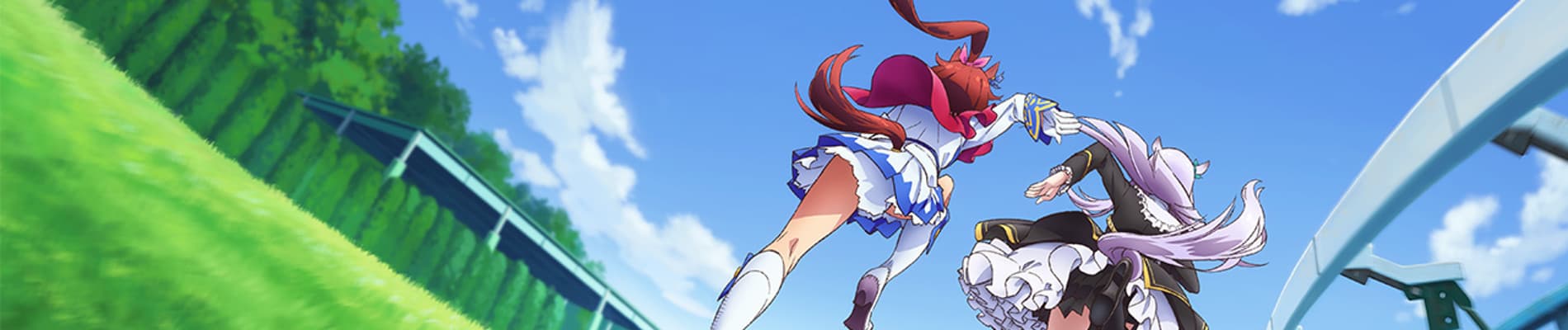

If there's an anime that can blend passion and tenderness, regret and fulfillment into a force that deeply touches the heart, "Uma Musume Season 2" is undoubtedly a prime example. It transcends the conventional "race-victory" framework, centering on Toukai Teiou's three fractures and three comebacks, It allows every viewer to see their own reflection on their journey of pursuing dreams amidst the exhilarating speed of the racetrack.


The most impactful aspect of the anime is its realistic portrayal of "setbacks." From a genius aspiring to become an "undefeated Triple Crown horse girl," Toukai Teiou suffers repeated injuries. From the regret of missing the Kikuka Sho to the pain of a crushing defeat in the Spring Tenno Sho, the production team doesn't downplay the hardships. Instead, they use delicate psychological monologues, shifts in perspective, and environmental metaphors to meticulously dissect her unwillingness, confusion, and struggles. When she forces a smile at her farewell concert but can't bring herself to say the words "I can't run anymore"; when she watches her former rivals galloping on the track while she can only find meaning in running through support work, this sense of powerlessness is so real, yet it makes the subsequent "miraculous comeback" even more significant. In episode ten, Twin Turbo's cry of "That's what you call never giving up! Tokai Teio!" not only ignites emotions but also reveals the core of the work—true strength isn't about never falling, but about the courage to stand up again after falling.


The warmth of the work lies in the bonds between rivals and companions. The relationship between Mejiro McQueen and Teio, from racetrack rivalry to mutual support, and their comforting each other and rebuilding their faith after both suffering fractures, transforms "competition" from a zero-sum game into a catalyst for mutual achievement. Rice Shower's storyline, from being misunderstood as a "villain" by the audience to confronting her own value with Bourbon's encouragement and ultimately becoming a "hero of the night," illustrates the power of recognition and acceptance. There are no stereotypical characters here; each horse girl has her own obsessions and vulnerabilities. They strive for victory but also cheer for their opponents. This camaraderie adds a touch of tenderness to the otherwise action-packed series.
Even more remarkably, the anime, while based on horse racing history, breaks free from the constraints of mere "recreation" and achieves a spiritual elevation. In the Arima Kinen race, when Teio looks back at her past setbacks before the final sprint and shouts, "It's definitely me!", time seems to stand still, and all the hardships transform into fuel for her dreams. The ending, with McQueen and Teio's reunion at the training ground and the simple line, "Grass, 2400 meters, sunny," beautifully conveys the theme of "inheritance"—dreams never end, they continue through generations of runners. The production team stripped away the gambling aspect of real-life horse racing, focusing on pure sportsmanship and the innocent hearts of the girls, giving the work both the excitement of competition and the depth of human emotion.

This work is not only a visual feast but also a spiritual cleansing. It makes us believe that as long as the passion in our hearts remains, and as long as our unwavering belief persists, everyone can become their own "Toukai Teiou," running their own miracle on their own track.