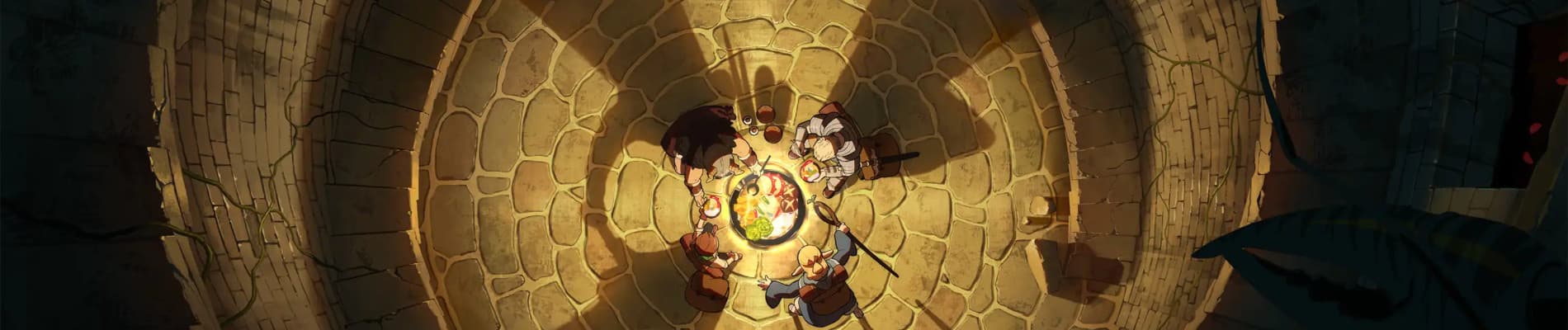
Dungeon Meshi takes an idea that sounds like a throwaway joke, a deadly dungeon crawl framed as a cosy cooking show, and treats it with such straight faced commitment that it becomes something genuinely compelling. The more time I spent with it, the less that central premise felt like a quirky hook and the more it felt like the most natural way to explore this world and these characters. The cooking is not just decoration on top of a standard fantasy plot; it is the engine that keeps the story moving and the lens through which the world is explained.
What stood out to me most is how thoughtful the setting feels. The dungeon is not just a backdrop of corridors and boss rooms, it behaves like a living place with its own logic, an ecosystem and a rhythm of danger and rest. You see levels that feel distinct but connected, and spaces where people stop to eat, trade, patch up wounds and quietly try not to die long enough to make another attempt. When someone suggests turning a monster into dinner, it doesn't feel strange, it feels like the only reasonable response in a world where supplies are scarce and every trip back to the surface costs time your party cannot afford.
The hook is simple, a party of adventurers fails to defeat a red dragon.
That is where the characters start to shine. Laios is an endearing oddball whose fascination with monsters and their edible potential constantly teeters between useful expertise and social disaster. He will happily dissect anatomy, enthuse about texture and flavour, and propose meals that leave the rest of the party somewhere between horrified and resigned. The series never lets that obsession be only a joke. Sometimes it saves their lives because he knows exactly how a creature behaves, or which parts are safe to eat. Sometimes it makes situations worse because he forgets to consider how upsetting his suggestions are for other people.
Marcille brings a different energy, all nerves, frayed patience and underlying care, the one who remembers what a normal adventuring job might look like and who now lives with an endless parade of ethically and biologically questionable meals. She is cautious, emotionally aware and academically talented, and the series lets that combination coexist with the more absurd elements. Her frequent protests, small panics and bursts of anger are funny, but they are also human reactions to being pushed outside her comfort zone in ways that feel genuinely stressful. Chilchuck, the halfling locksmith and trap expert, is a lovely study in tired competence, someone who feels like he would much prefer a quiet, reliably paid job and has instead been stuck babysitting eccentrics in increasingly dangerous situations. Senshi, the dwarf who has made the dungeon his home, completes the core party dynamic. He embodies the practical philosophy at the heart of the show: if you must live in danger, you may as well learn to live well.
What I like is how their group chemistry so often develops around food rather than bonding only through fighting side by side. They build trust by cooking together, tasting each other’s experiments and slowly adjusting to the idea that sharing a strange meal can be as intimate as sharing a campfire confession. A dish can be a peace offering, an apology, a lesson or a bribe, and the little rituals that form around preparation and mealtimes say as much about them as any dramatic speech.
Worldbuilding is one of the series’ strongest aspects. The dungeon is full of familiar archetypes if you have spent time with role playing games and fantasy novels or any other dungeon anime, but everything is nudged in a slightly stranger, more grounded direction. Monsters do not exist purely to be fought, they occupy ecological niches. Slimes, mimics and animated suits of armour are treated simultaneously as threats and potential ingredients. There are rules about how magic interacts with biology, and those rules show up in both combat and cooking, which makes the whole place feel more believable.
Production wise, I love how this show looks. The colours tend towards warm, earthy tones that make even eerie locations feel oddly homely, and the character animation is expressive in the ways that matter. Faces crumple at the thought of eating something disgusting, eyes light up at the first bite of a surprisingly delicious dish, shoulders sag when exhaustion finally catches up with them. The dungeon’s many layers, from damp caverns to lush underground forests and stranger environments, are drawn with enough detail to feel solid without overwhelming scenes with clutter. On the voice acting side, both the original Japanese track with subtitles and the English dub work well, and the performances sell the idea that these are people who have known each other long enough to get on each other’s nerves and still come back to the same campfire.
Tonally, Dungeon Meshi walks a very fine line and manages to stay balanced. It is happy to be openly daft, to indulge in running gags and slapstick reactions to culinary horrors, but it never treats its characters as throwaway pieces. When the story wants to explore heavier topics like grief, obsession, responsibility or the cost of survival, it does so without playing those moments for cheap sentiment. The presence of food actually enhances those themes. A meal can be a reminder of someone who is missing, a symbol of how much the party has changed, or a quiet moment where someone finally admits what they are afraid of.
For me, what started as a curiosity quickly became something I looked forward to returning to. I enjoyed the pacing, the way each episode found room for exploration, quiet character beats and at least one inventive recipe. I liked that the dub and the Japanese voice acting with subtitles both felt natural and well suited to the material. And I appreciated that beneath the jokes and cooking tips there is a consistent, carefully considered vision of a world where even the most unusual idea, a dungeon cooking show, can feel completely believable once you have lived in it for a while.
29.5 out of 31 users liked this review