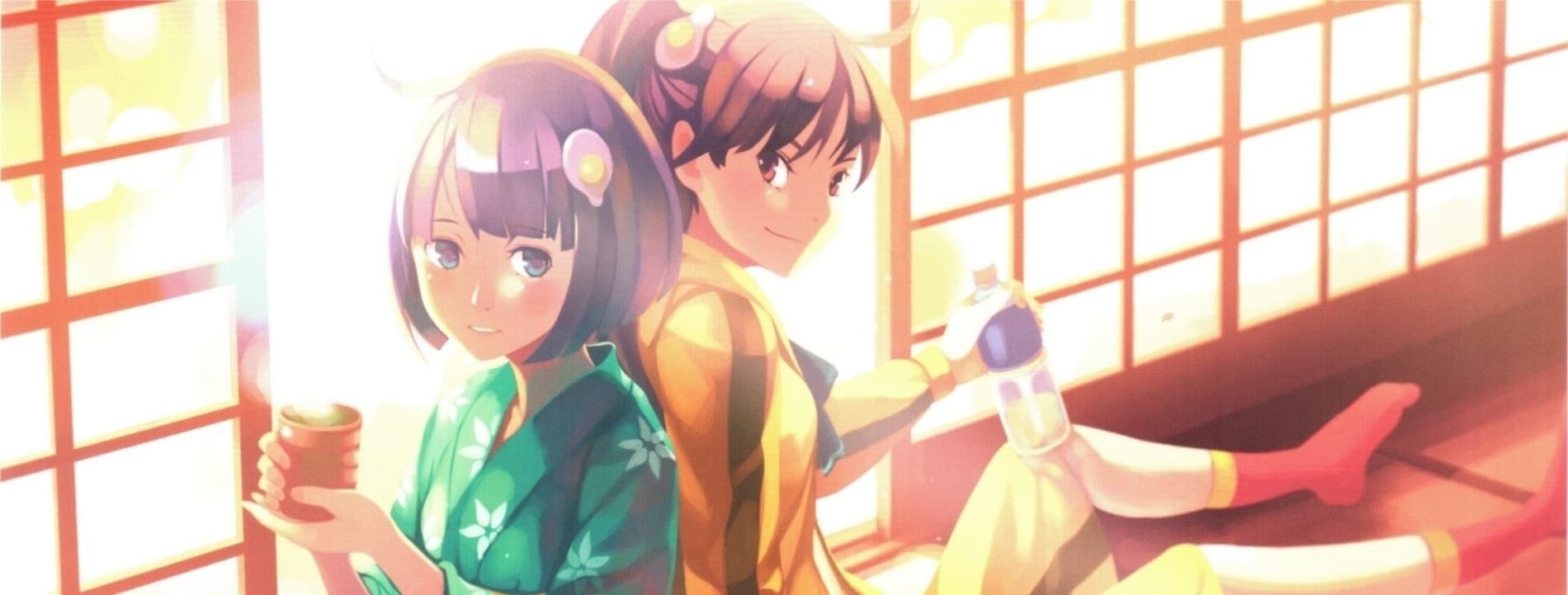
Nisemonogatari
a review by Grassman
a review by Grassman
Nisemonogatari picks up right after the events of Bakemonogatari. With Oshino gone, Araragi is left to deal with the various aberrations that posses those around him, alone. He takes a more leading role in protecting those he most cares about, his sisters being the focus of the two arcs (Karen Bee and Tsukihi Phoenix). Instead of being an assistant of Oshino, he becomes a more active protagonist. This will propel Araragi to question his philosophy and relationships with his friends and family.

Whereas Bakemonogatari utilizes most of its run time to introduce and develop its characters and their distinct motivations and personalities, Nisemonogatari introduces philosophical concepts and explores the reactions of its established cast of characters towards these adversarial situations.
The Karen Bee act focuses on the topic of justice and the relationship of Karen Araragi and Koyomi Araragi. Deishu Kaiki works as the main antagonist throughout the first part of the series, but we soon realize its just a matter of perspective, a recurrent theme throughout the series. Kaiki is introduced to us in a menacing tone with demonic visuals, but we later meet him casually eating at a doughnut restaurant. Araragi's real struggle in the Karen Bee arc is mending his relationship with Karen, finding conviction in his new purpose in life, and understanding his feelings for Senjougahara.
Araragi doesn't exactly loves his sisters. Even if he would do anything to protect them, it is because he believes its his duty to do so, and not because he loves them. He constantly criticizes her self-destructive nature and black-white (yellow-black if you will) view on the world. Even when Araragi utilizes similar methods to solve his problems. However through learning about each other's views on justice they come to a mutual understanding of each other, culminating in the infamous toothbrush scene (more on that later). Apart from developing their relationship further, each character grows individually. Both learning how to approach adversity with new methods. Araragi learns from Senjougahara to not be vengeful and to be more level headed. On the other hand Karen will continue to be a vigilante of justice, but she has a newly founded conviction that is more realistic (and less heroic); and will be sure to take care of herself to not hurt those around her.
Araragi and Senjougahara's confrontation with Kaiki is an important step for their relationship and their individual views on the world. Araragi learns that sometimes you do not have get yourself killed to solve a problem, and address the situation internally. Senjougahara forgives Kaiki for all of the misfortune he has caused her and is ready to move on, she decides not to dwell on the past and appreciate the present, one where she can live happily with Araragi. This marks the complete transition of a reserved and aggressive Senjougahara, into a more kindhearted one (even if she remains a tsundure).
Kaiki is the first to introduce us into the concept of fakes. This presents a question that bugs the minds of our characters throughout both arcs, but the Tsukihi Phoenix explores it more deeply. Is it better to be real or fake? Or is there even a difference? What are the positives and negatives of being fake? Kaiki, being the cynic that he is, takes pride in being a fake con man. In his eyes that doesn't invalidates his motivation of gaining wealth, it empowers him because he has aspirations (to be real) instead of being a natural born "real con man". Kagenui, another character knowledgable in the supernatural and ex-companion of Oshino and Kaiki, presents a different point of view. Her view on fakes is similar to that of Karen at the beginning of the series, fakes are evil and should be stopped. This is her motivation to kill Tsukihi Araragi, a fake human that is in reality an immortal phoenix. Araragi's becomes uncertain if he should accept his other little sister after this revelation. Just as he learn to accept Karen's fake sense of justice, Araragi learns to accept her immortal sister as a fake human but real sister. Even if he despises Kaiki for being a fake, he still loves his sister.

"The fake is of far greater value. In its deliberate attempt to be real, it's more real than the real thing."
Nisemonogatari is a less outgoing with its visual directing compared to Bakemonogatari. It has a lot less abstract imagery and experimental sequences. However, it maintains that trademark Monogatari aesthetic. It utilizes clever visual and sound editing to deliver its jokes, it has fantastic and aesthetically pleasing shot compositions, and constantly utilizes symbolism and color to transmit information through its visuals rather than its dialogue.The most notable uses of symbolism (in my opinion) are the introduction of Kaiki, the bee outfit of Karen, and Tsukihi's egg. Even if Tsukihi's origin is that of a phoenix she is still molded by her family and is more than just a fake sister, the same way an egg is cooked by a flame, she is who she is because of the Fire Sisters. Might I also add that Platinum Disco is the best.
There is nothing much to criticize here apart from the increase in "fan-service" and decrease in the surreal stylistic direction of Bakemonogatari. The explicit sexual imagery and near incestuous relationships can disturb some viewers, but it serves a purpose, at least most of the time. Sexuality is a medium used by the creators to define the relationships Araragi has with the girls around him. Hanekawa being glorified for its body, Sengoku trying to seduce Araragi but failing, Kanbaru having a more dominant role over Araragi, Senjougahara being uncertain of having a more intimate relationship with Araragi as expressed by her in the last episodes of Bake but finally giving in during Nise. However the most important uses of sexuality in Nise are the relationships between Araragi with his sisters, and Shinobu. Araragi finally loves his sisters as represented by the toothbrush scene and the kiss that Araragi gave Tsukihi. Just the way Tsukihi and Karen have a strong bond between each other (and sleep together naked), Araragi uses his sexuality to demonstrate his new feelings for his sisters. In the same way Shinobu and Araragi forgive each other, at least a little bit, with one another through a very intimate bath scene.
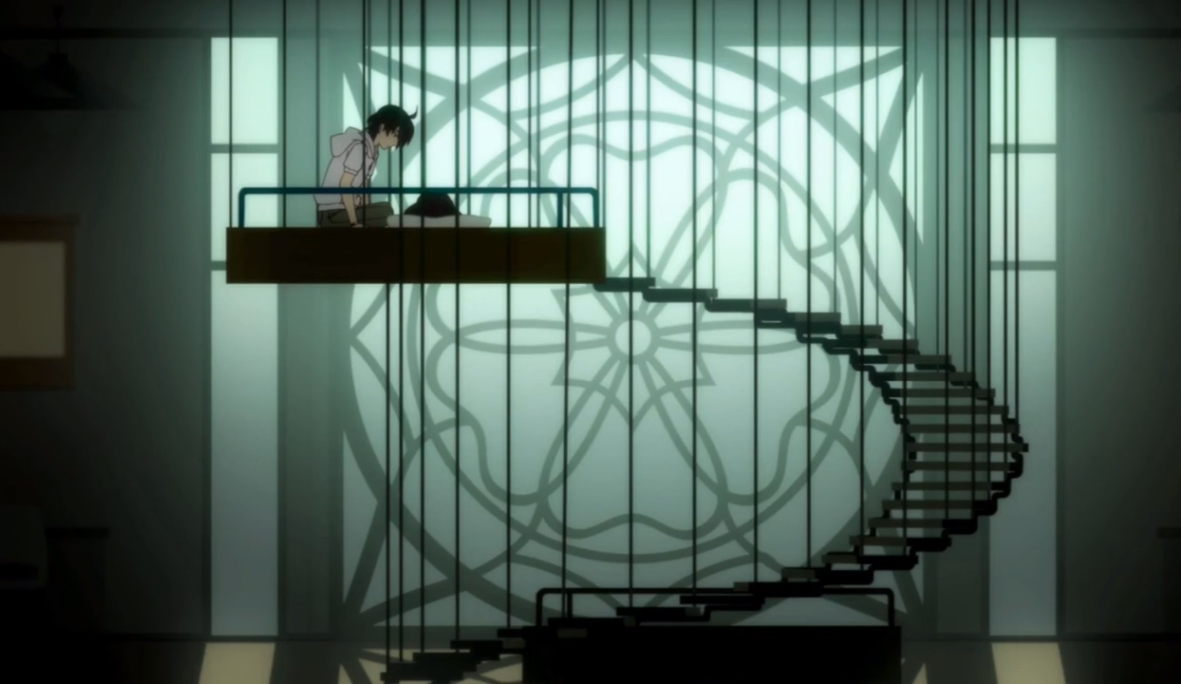
Nisemonogatari suffers from slow pacing, cryptic dialogue, less astounding visuals, excessive fan-service, and a lack of a reason for the audience to care about what is happening on screen. It can feel tiring at times to have to watch Nisemonogatari, as scenes often go for longer than they should without much happening. However with all of these flaws, upon further inspection there is a lot to appreciate here. If you are new to the franchise (start with Bakemonogatari), and when you reach Nise try not to pay much attention to the fan-service if you are not into stuff like this. If you are a fan of the Monogatari series and dislike Nise, I would like you to re-watch it with a different perspective.
41 out of 46 users liked this review
